Leonberg Castle: A Medieval Family Seat in Germany
Site at a Glance
- Rating
- 3.5
- Popularity
- Very Low
- Country
- Germany
- Primary era
- Medieval
- Eras represented
- Medieval, Early Modern
- Civilizations
- Duchy of Bavaria, Holy Roman Empire
- Site type
- Military
- Remains
- Castle
On this page7 sections
History
Leonberg Castle is a medieval hilltop castle in Germany that served as the Limperger family’s seat during the 13th and 14th centuries.
Medieval ownership
In 1378, the fortress of Liemperg passed from Chaloch Hofer to the Losnitzer family. The Sinzenhofers later succeeded them and also held property in Teublitz. Ludwig von Sinzenhof was associated with the property in 1422, and Hans Gnädendorfer in 1429.
Early modern transfers and wartime damage
In 1603, Georg Leo von Sinzenhof transferred the property to Wolfgang Teufel von Pirkensee. Later holders included Johann Georg Hofer von Lobenstein in 1640 and Friedrich Adamb Thumb in 1671. The Stich family held it until 1699, followed by Lorenz Tünzler and Georg Ferdinand von Gugl, the Francken family, and Franz Anton, Imperial Count von Oexle, in 1771.
The castle was destroyed during the Thirty Years’ War, the major European conflict of 1618–1648. Only its main building was rebuilt. The manor’s holders moved to other castles within their estates, while its administration remained in Leonberg.
The Eckart estate and later changes
On 6 October 1796, Wilhelm Carl Baron von Eckart bought the castle and manor from Maria Antonie Baroness von Öxle. He became a count in 1799. The Leonberg manor was dissolved in 1827, and its property was assigned to the Leonberg-Fischbach fideicommissum, an estate legally bound to a family and inherited under specified rules. It brought together Pirkensee Castle and manor with those of Leonberg, the landed properties of Stockenfels and Fischbach, Hof and the Zangenfels castle site, the Steinsberg manor, and the Stefling holding. Other properties formed the Bertolzheim-Winklarn fideicommissum, which included Trugenhofen and Bertolzheim castles, as well as Winklarn, Frauenstein, and Reichenstein with their manorial jurisdictions.
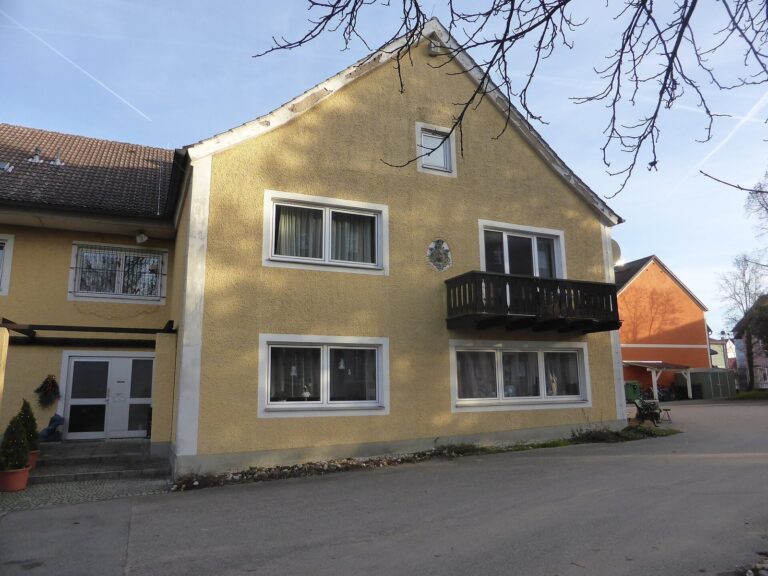
After Eckart’s death in 1828, his daughter Eugenie Katharina Countess von Eckart inherited both family estates. She was married to Charles, Count Du Moulin, a former lieutenant general in Napoleon’s forces. Their sons Karl and Gustav Adolf each received one estate. During the reign of King Ludwig I of Bavaria (1825–1848), the family name Du Moulin was rendered in German as von der Mühle; the full name became von der Mühle-Eckart. After a new castle was built in 1890, the owners moved out of Leonberg Castle, which was converted into owner-occupied and rental apartments.
Remains
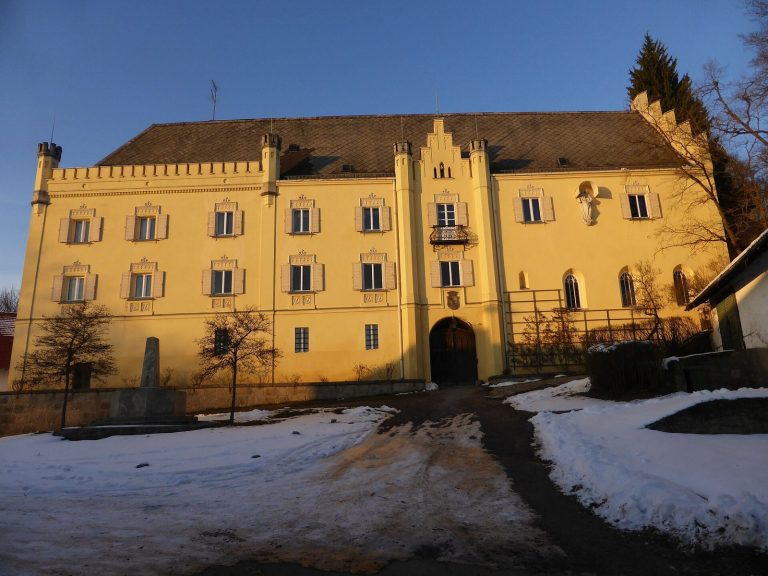
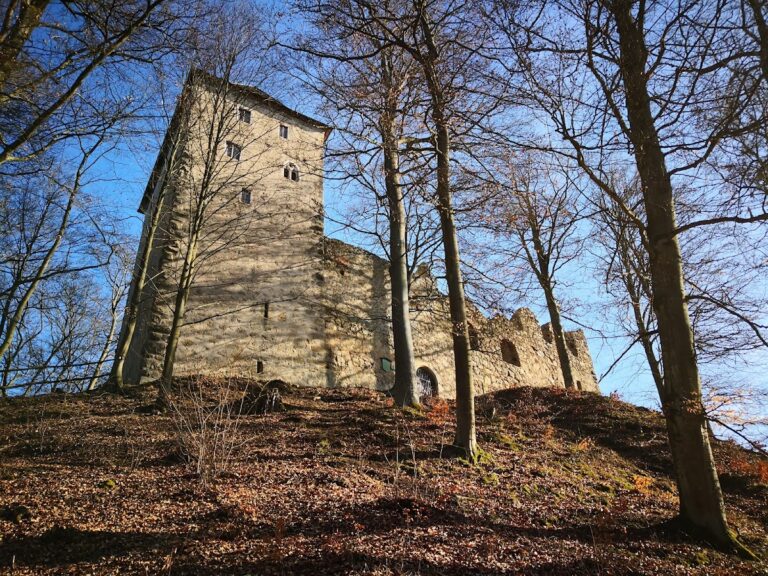
The castle occupies Leonberg’s highest point, on a rock foundation at an elevation of 416 m above NHN, Germany’s national height datum. The site overlooks the surrounding countryside and is visible from a distance. Its irregular mass of buildings preserves substantial parts of the complex.
Main buildings and tower
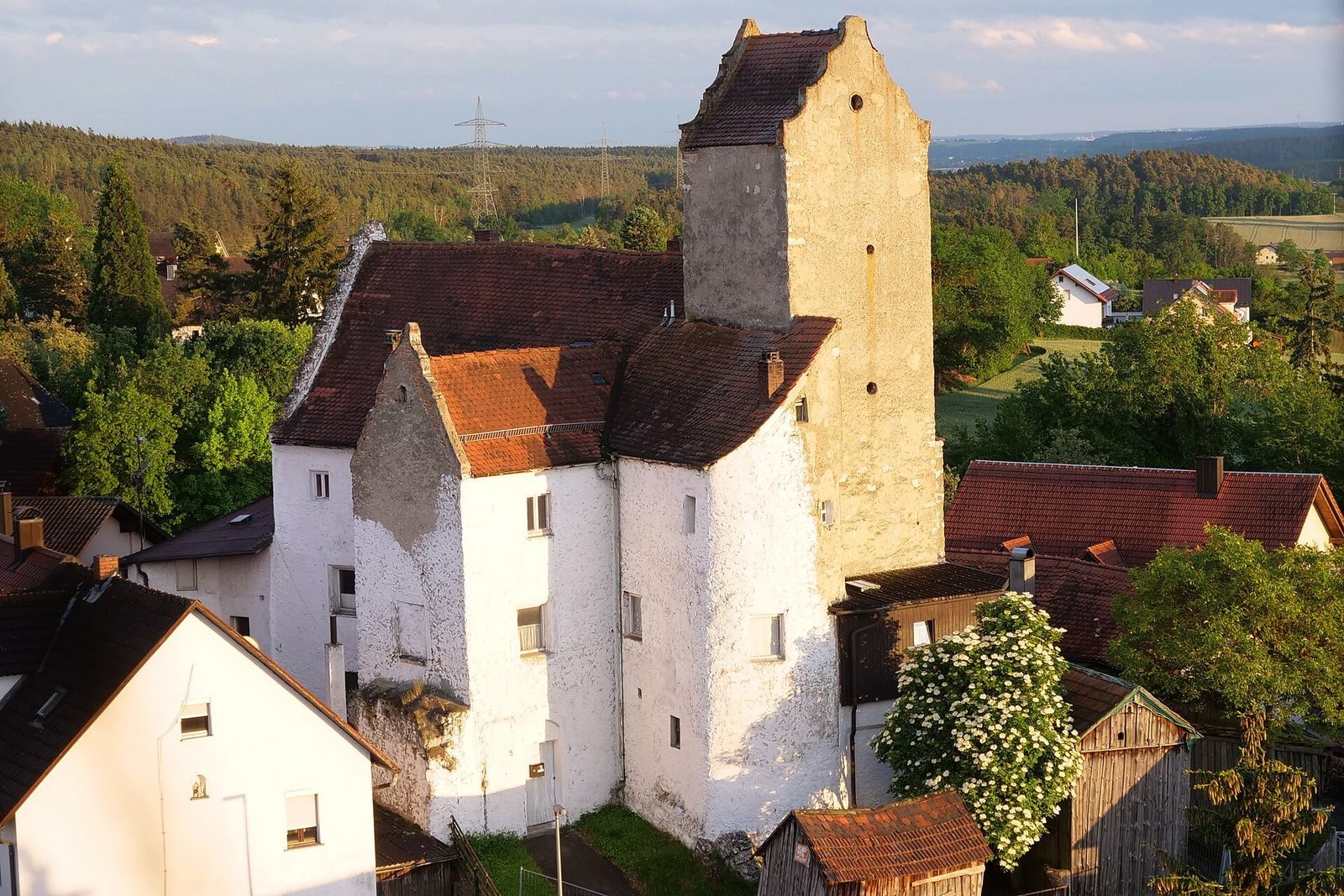
The surviving buildings include structures from the 14th and 16th centuries. A tower with a roof formed by two sloping sides has stepped roof-end walls and a curved profile on its north side. Two residential buildings adjoin it.
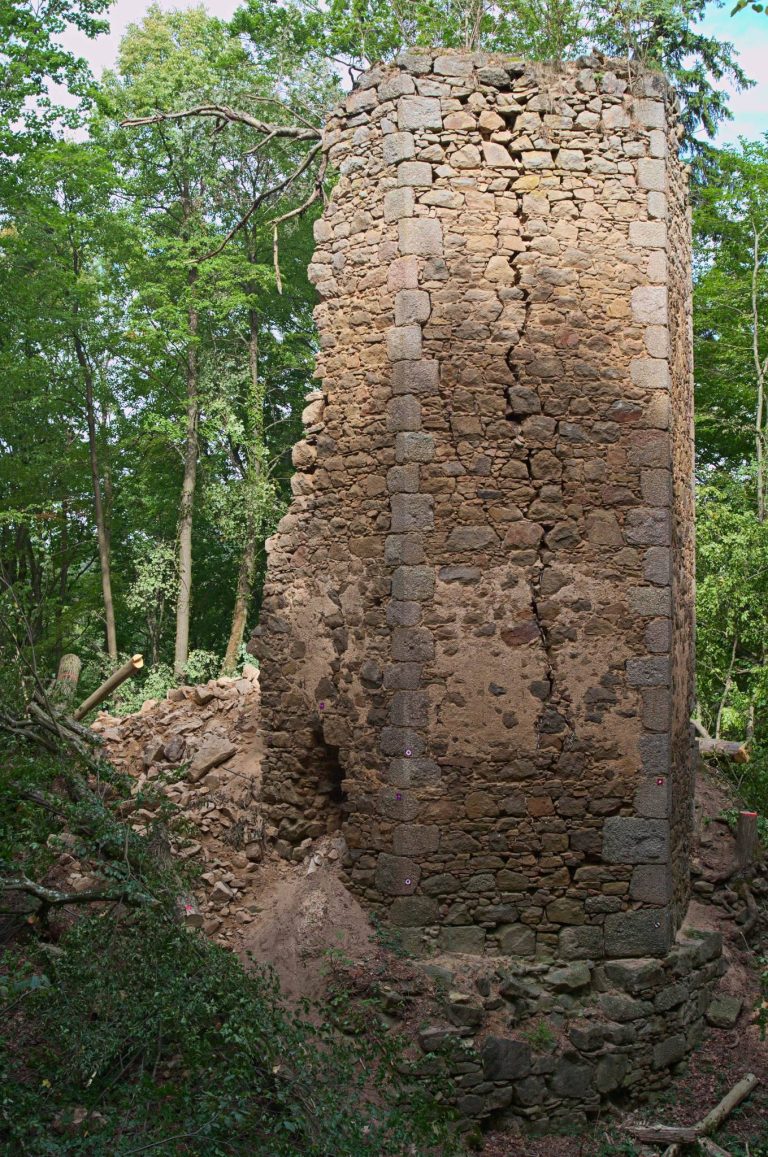
Former defenses
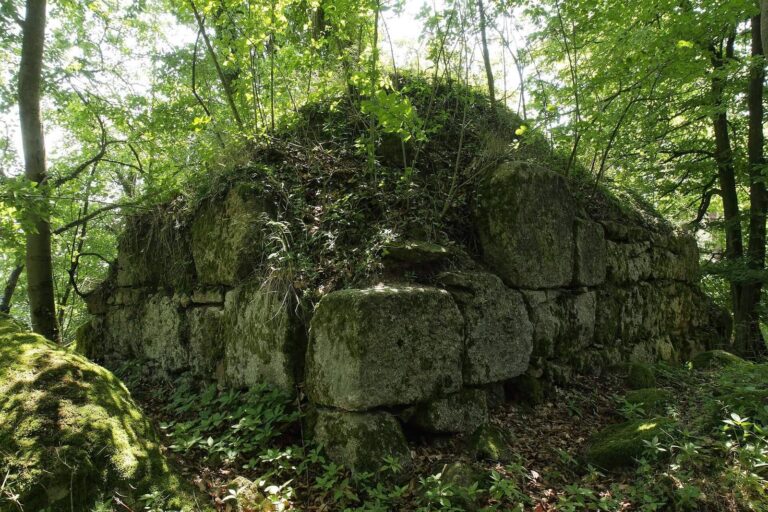
The fortress once had four round towers, two of which can now be partly made out. Traces of its enclosing wall and moat are faint, and the southwestern section of the wall ring forms part of a residential building. The castle remains inhabited and has seven owners.