Groot-Bijgaarden Castle: A Historic Flemish Renaissance Castle in Belgium

Visitor Information
Google Rating: 4.5
Popularity: Medium
Official Website: www.floralia-brussels.be
Country: Belgium
Civilization: Early Modern, Medieval European, Modern
Site type: Military
Remains: Castle
History
Groot-Bijgaarden Castle is located in Dilbeek, Belgium, and was originally built in the early 12th century by the lords of Bijgaarden. The first known lord, Almaric (Amelricus) de Bigard, acquired the domain around 1110 from St. Bavo’s Abbey. Arnulfus III likely ordered the construction of the initial motte castle to defend the southern lands of the domain.
In the early 14th century, the original family line ended through a double marriage, transferring the lordship to a new house in 1347. Willem IV Rongman, a descendant, held the position of alderman of Brussels in 1418. During the 1421–22 crafts rebellion, Philip the Good appointed him captain of the city, but Duke John IV of Brabant relieved him of this role in 1423.
The castle changed hands in 1486 when Willem Estor, from a longstanding Brussels family bearing the Berthout coat of arms, acquired it. His grandson Jan Estor and Jan’s mother Margriete van Baenst were accused of Protestant heresy. After a 36-hour siege in 1546, they surrendered, were tried, and executed in 1548, with their possessions confiscated.
In 1549, Gaspard II Schetz purchased the castle for 17,800 pounds but sold it six years later to Laurens Longin of Lembeek. Count Ferdinand van Booischot acquired the property in 1634 and spent 15 years transforming it, including adding a chapel in 1640.
During the 18th century, the castle passed to Helena van Booischot, who married Charles Ferdinand, Count of Königsegg-Rothenfels and interim regent of the Netherlands. Empress Maria Theresa elevated the lordship to a marquisate named Booischot at this time.
By 1902, the castle had fallen into disrepair. Raymond Pelgrims de Bigard began a restoration project that lasted 30 years, aiming to preserve and restore the structure.
Remains
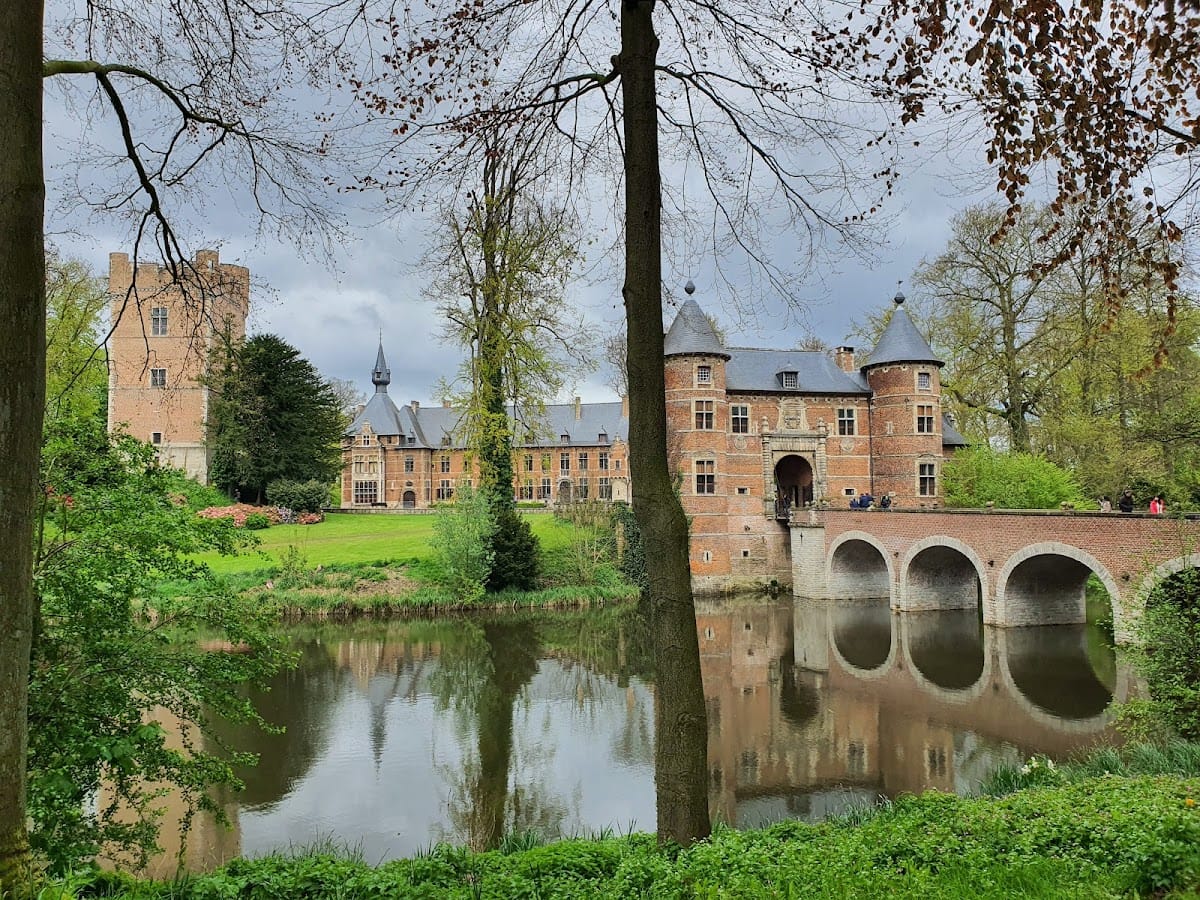
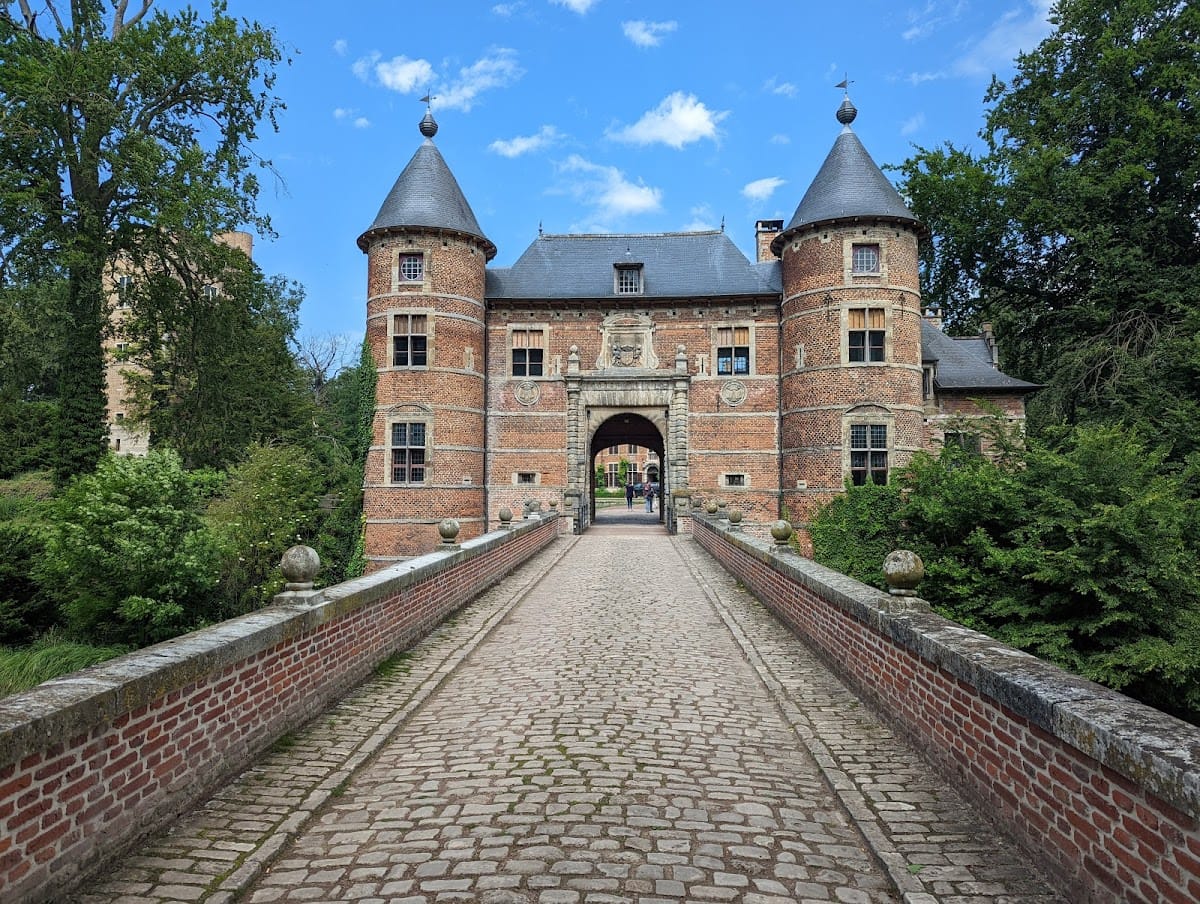
Groot-Bijgaarden Castle is built in the Flemish Renaissance style, featuring red brick walls with white stone window frames topped by decorative horizontal bands called entablatures. The roof is covered with blue slate. The castle is surrounded by a wide moat, crossed by a five-arched stone bridge leading to a drawbridge.
The central part of the gatehouse dates back to the 14th century. Next to it stands a four-storey tower, known as the donjon, constructed in 1347. This tower reaches 30 meters (98 feet) in height.
At the entrance, two heraldic lion sculptures from the 17th century stand guard on either side of the bridgehead. These lions are notable decorative features marking the castle’s approach.
A chapel was added to the right wing of the castle in 1640. Inside, it contains two commemorative obits—memorial plaques—for Ferdinand van Booischot, dated 1649, and Charles Ferdinand de Königsegg-Rothenfels, dated 19 December 1759.
The castle underwent extensive restoration beginning in 1902 under Raymond Pelgrims de Bigard to halt further decay. Today, the structure stands restored and preserved.
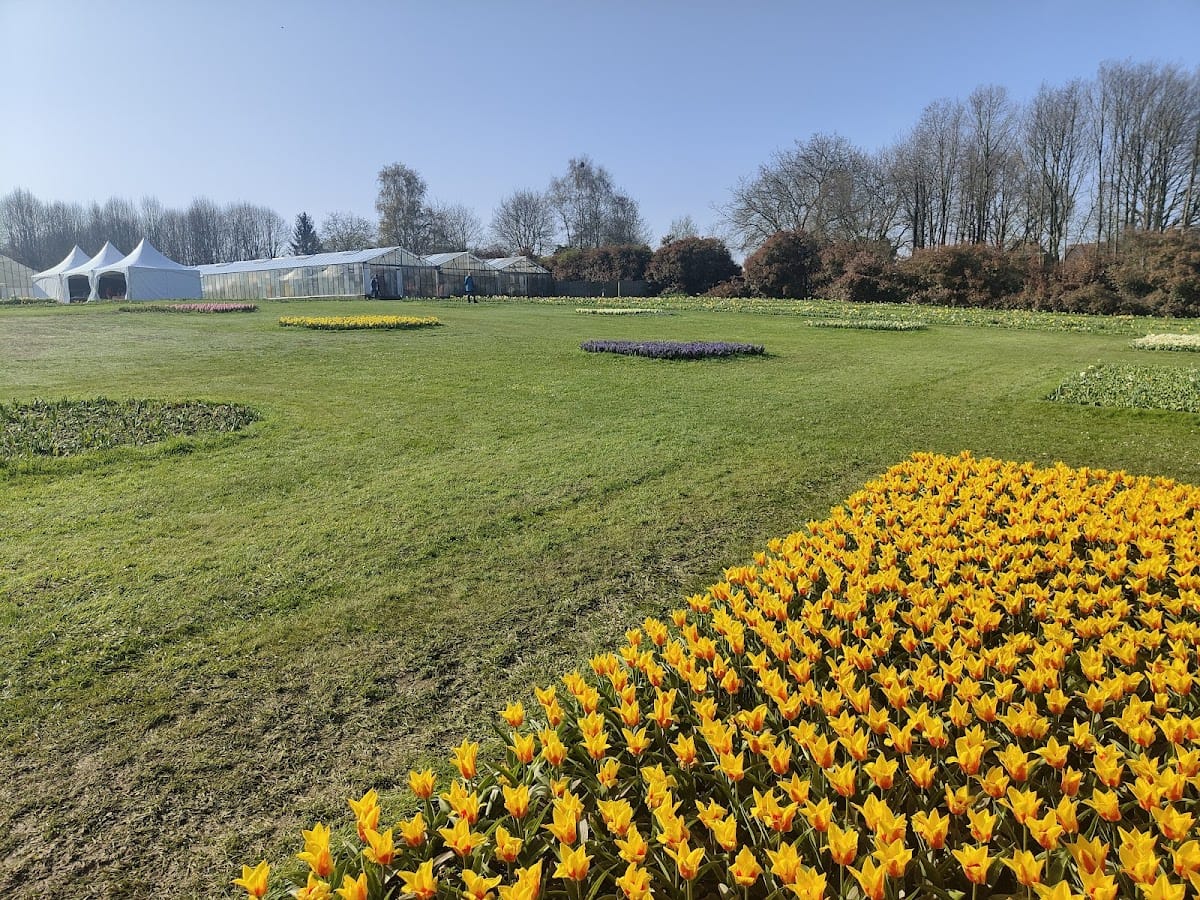
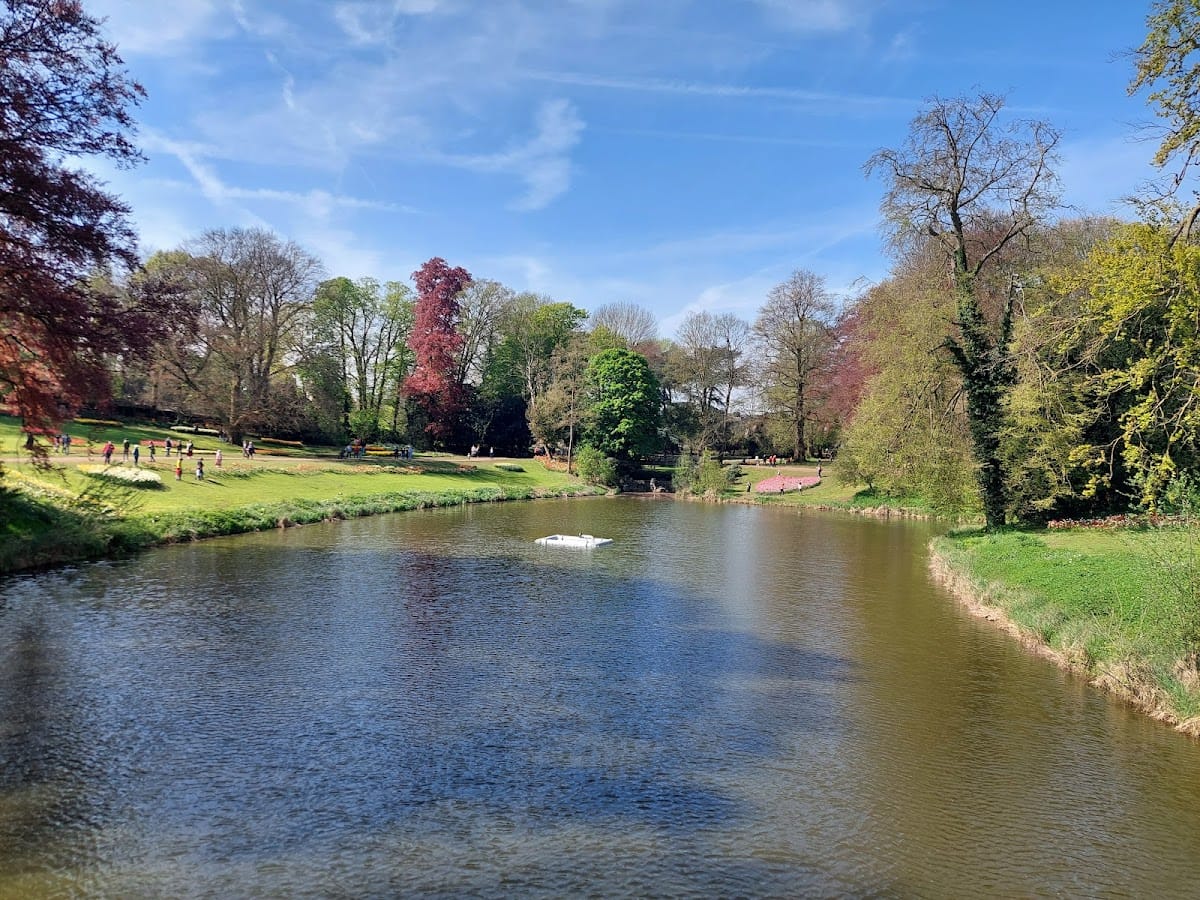
The castle is situated 47 meters (154 feet) above sea level and is surrounded by a 14-hectare park designed by Louis Fuchs in the early 20th century. This park hosts an annual international tulip exhibition featuring over 300 varieties and more than one million bulbs planted.
Nearby sites