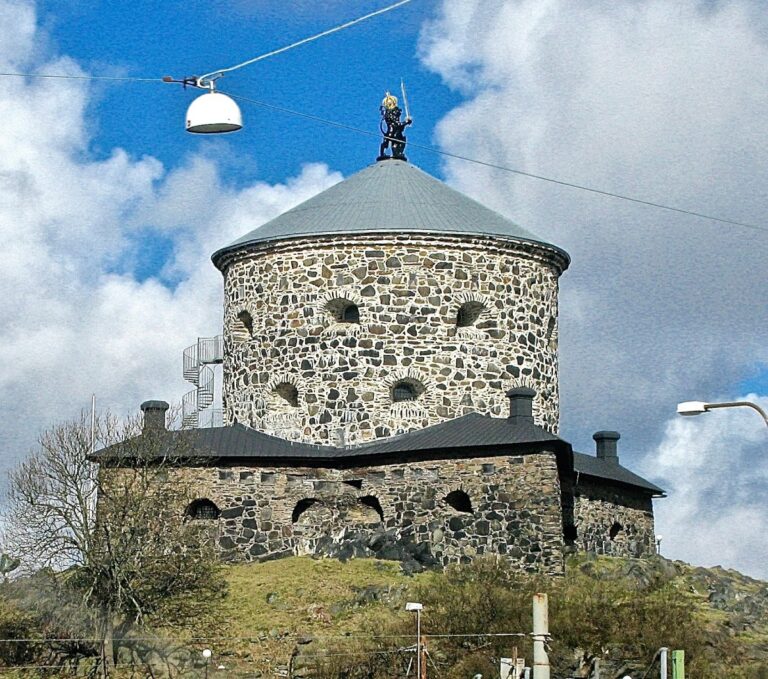
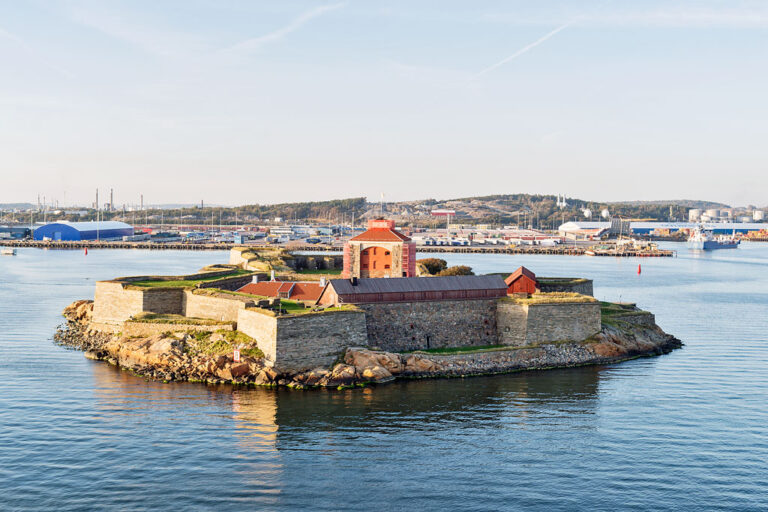
Tureborg Castle: A National-Romantic Ruin in Sweden
Site at a Glance
- Rating
- 3.8
- Popularity
- Low
- Country
- Sweden
- Primary era
- Modern
- External website
- Open
- Eras represented
- Modern
- Civilizations
- Swedish
- Site type
- Domestic
- Remains
- Castle
On this page6 sections
History
Tureborg Castle is a faux-medieval structure in Sweden, built by the newspaper founder and local politician Ture Malmgren on a hill overlooking Uddevalla’s Tureborg neighborhood. Construction began in 1899 and continued until about 1912 in the national-romantic style, an approach that drew on medieval forms, folklore, and ideas of national history. Malmgren’s journeys through Germany, where he saw medieval castles, appear to have inspired the project.
Construction and use
Malmgren, who founded the newspaper Bohusläningen, worked on the castle with the assistance of his close friend, the builder J. A. Widén. The project was a major expense even for Malmgren, who possessed a substantial fortune. To reduce costs, old timber houses in Uddevalla were bought and demolished so their materials could be reused. The castle was apparently never fully completed, although an opening ceremony for invited journalists from Gothenburg took place at Pentecost in 1911. Pentecost is a Christian feast held seven weeks after Easter.
After the principal construction period, Malmgren held grand feasts at the castle in a national-romantic style. Whole roasted pigs and mead served in wooden tankards formed part of these gatherings. During the last six years of his life, Malmgren could no longer reach the castle and instead viewed it from a distance from his home near the foot of the hill.
Decline and destruction
Malmgren died in 1922, and his widow Hilma never returned to the castle. The building deteriorated over the following decades. August Löfgren bought the land in 1942 and divided it into smaller plots, while the castle itself remained unsold. Possible purchasers included two businessmen who wanted to live there, the Swedish Authors’ Association, which proposed dismantling and moving it to the Stockholm archipelago, and a communist organization in Uddevalla.
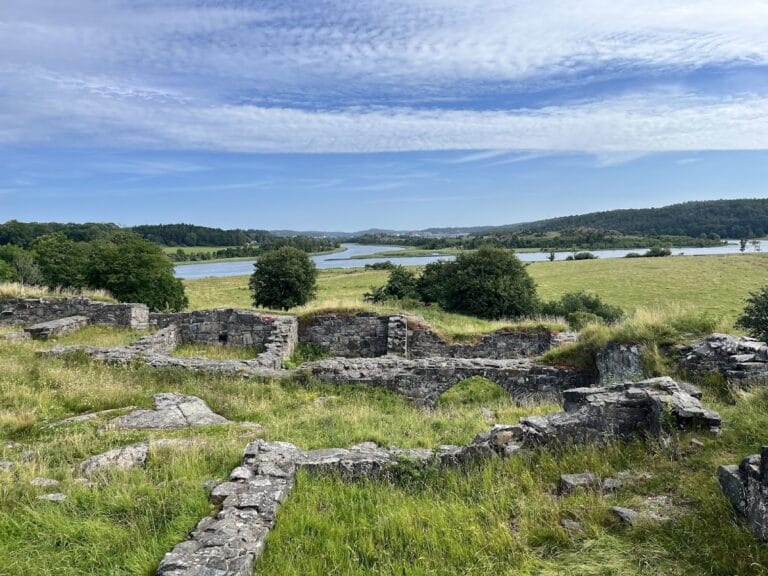
During the Second World War, mobilized soldiers were housed in the castle. Continued deterioration and vandalism later led the builder Kjell Stolt to buy it, intending to dismantle the structure and reuse its timber. Before that plan could be carried out, the castle was set on fire during the night of 26 November 1950 and burned to the ground. It became a ruin and has remained a prominent landmark in Uddevalla.
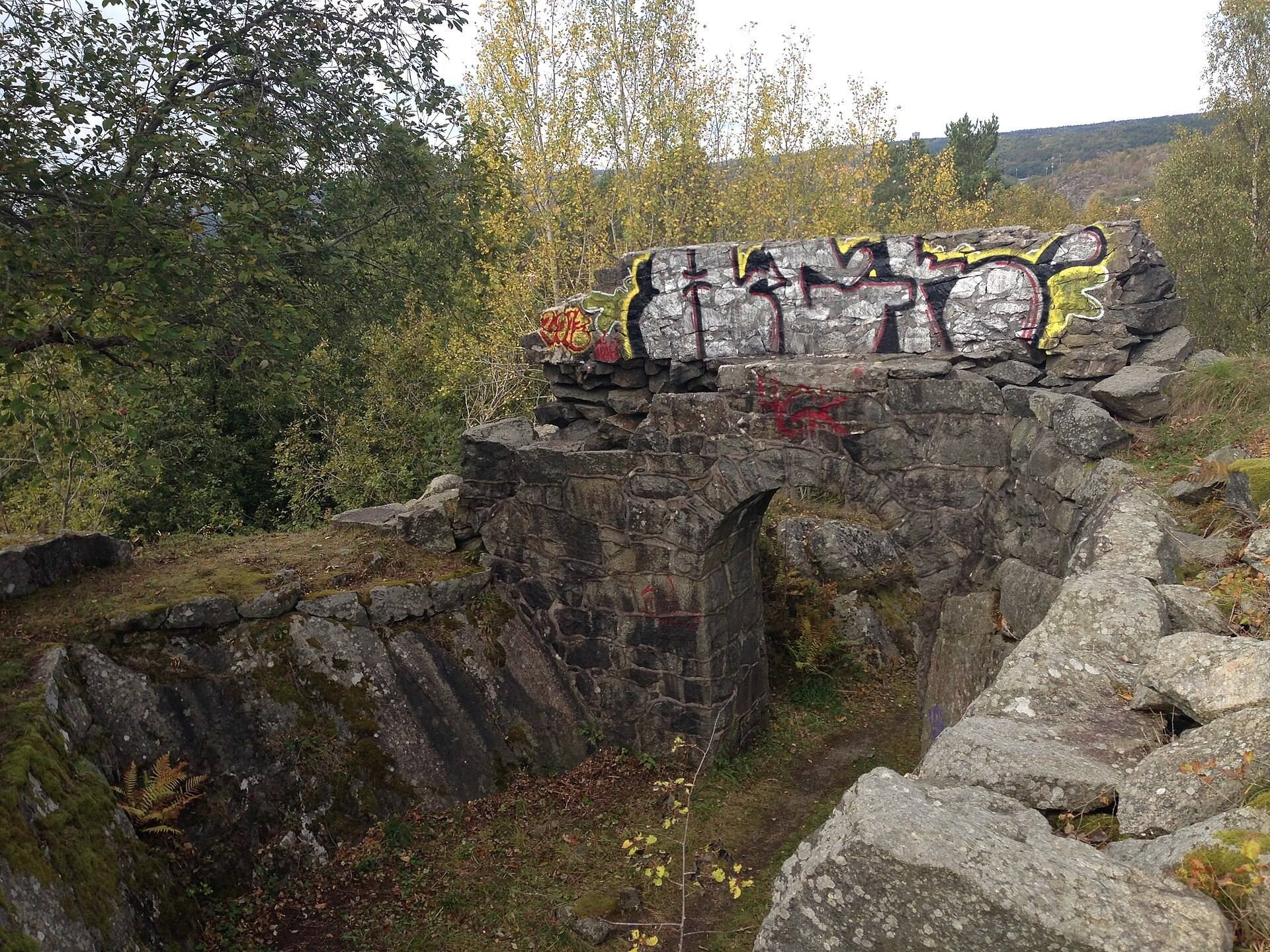
In the twenty-first century, irregular maintenance was followed by overgrown vegetation, vandalism, littering, and general decay. The newly formed Tureborgen Society began maintenance work in September 2014. Its first work, begun on 22 September, included minor repairs and the removal of vegetation encroaching on the remains.
Remains
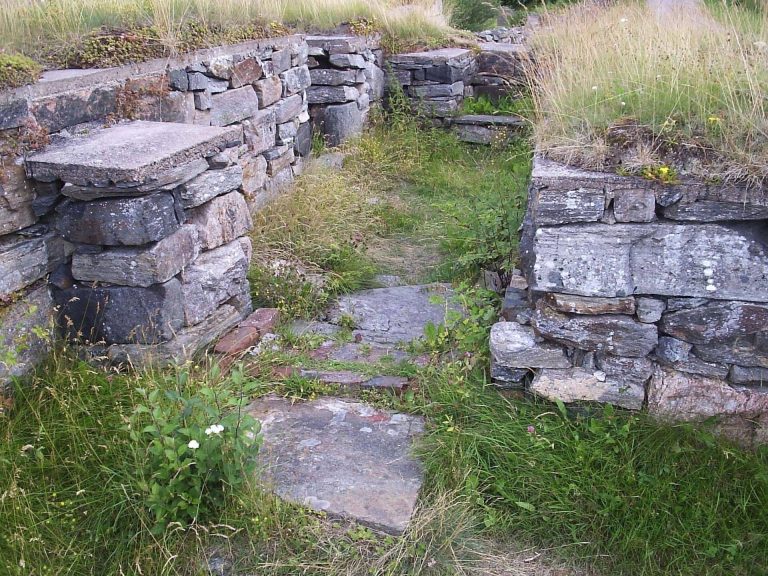
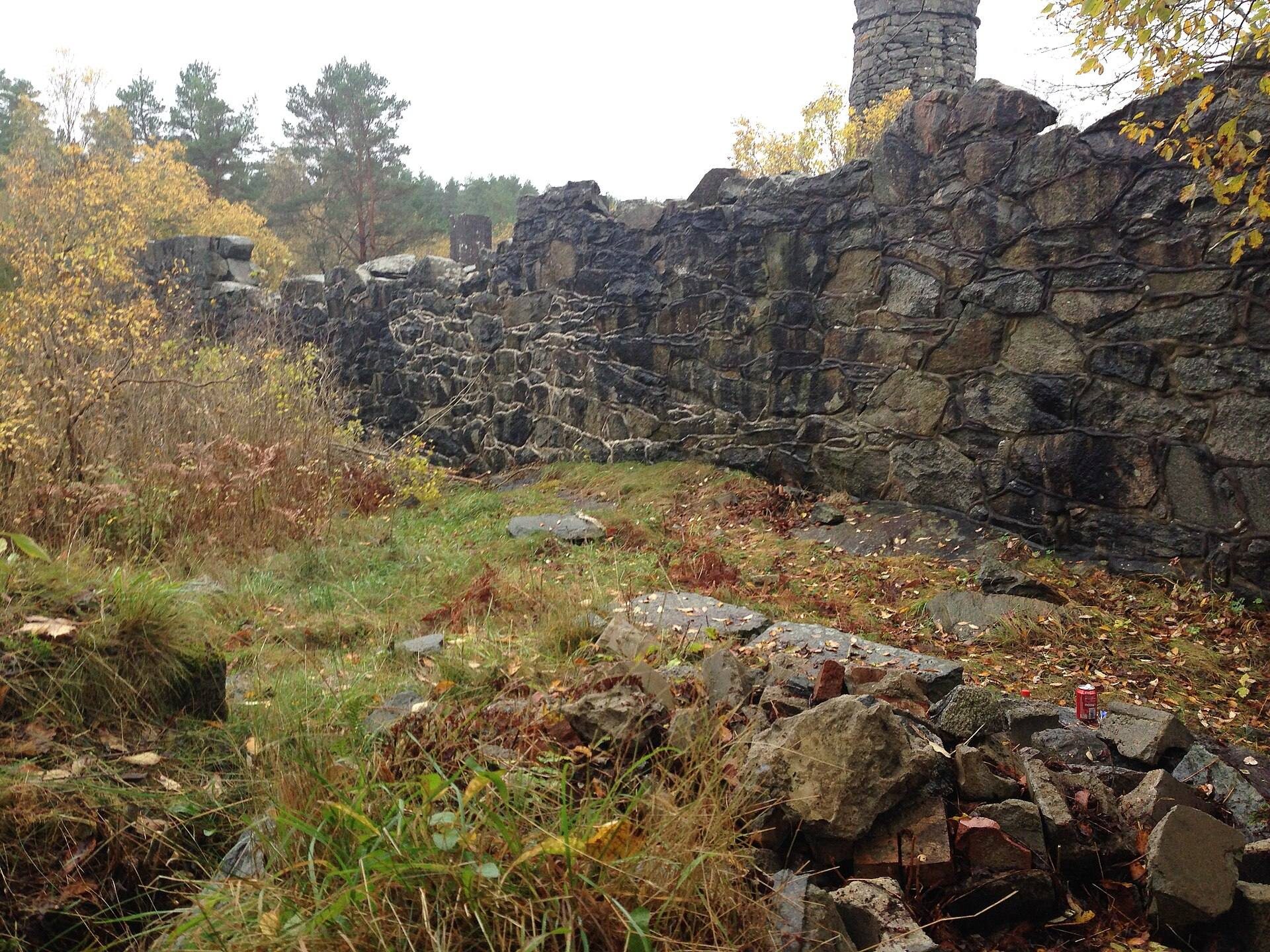
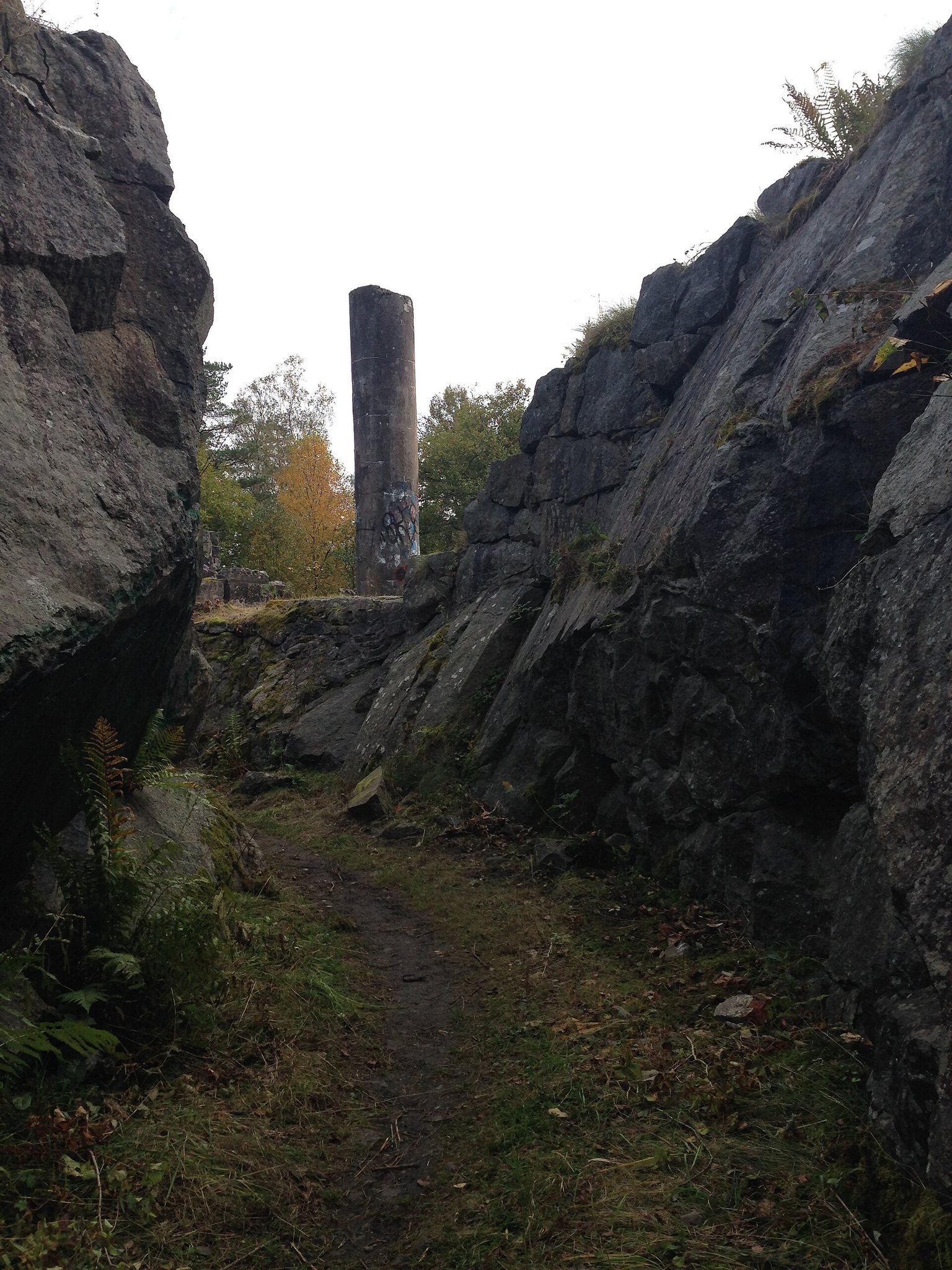
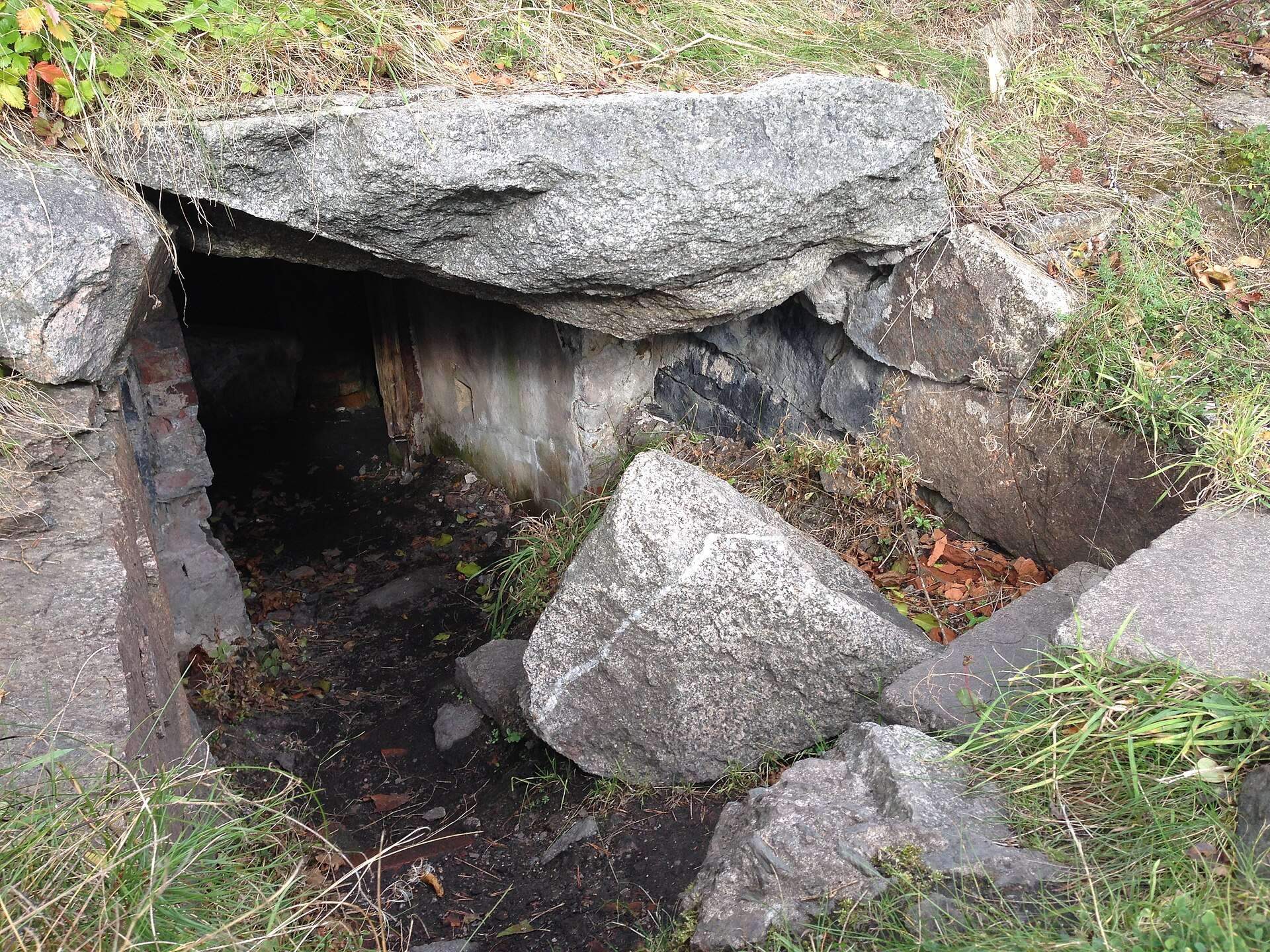
Tureborg Castle survives as the ruin of a large faux-medieval complex built on a hill in southeastern Uddevalla. The original structure combined tall stone walls with several towers and balconies. Its surviving condition reflects the 1950 fire as well as later overgrowth, vandalism, and general deterioration.
Castle structure
The castle contained almost forty rooms and included a large knights’ hall with rough stone pillars. It was built without proper architectural blueprints, with much of its form improvised from postcards depicting castles in the Rhine Valley. This process produced an irregular national-romantic design rather than a structure based on a single historical castle.
Interior features
The rooms included a bedouin-style room, a bowling alley, and a music room containing three pianos. Several art rooms held works by painters including Anders Zorn, a Swedish artist known for portraits, scenes of everyday life, and depictions of light and water. A secret passage was also incorporated into the building and opened when a concealed button in the wooden paneling was pressed.