Svenneby Old Church: A Romanesque Church in Sweden
Site at a Glance
- Country
- Sweden
- Primary era
- Medieval
- Eras represented
- Medieval, Early Modern
- Civilizations
- Norwegian, Swedish
- Site type
- Religious
- Remains
- Church
On this page13 sections
History
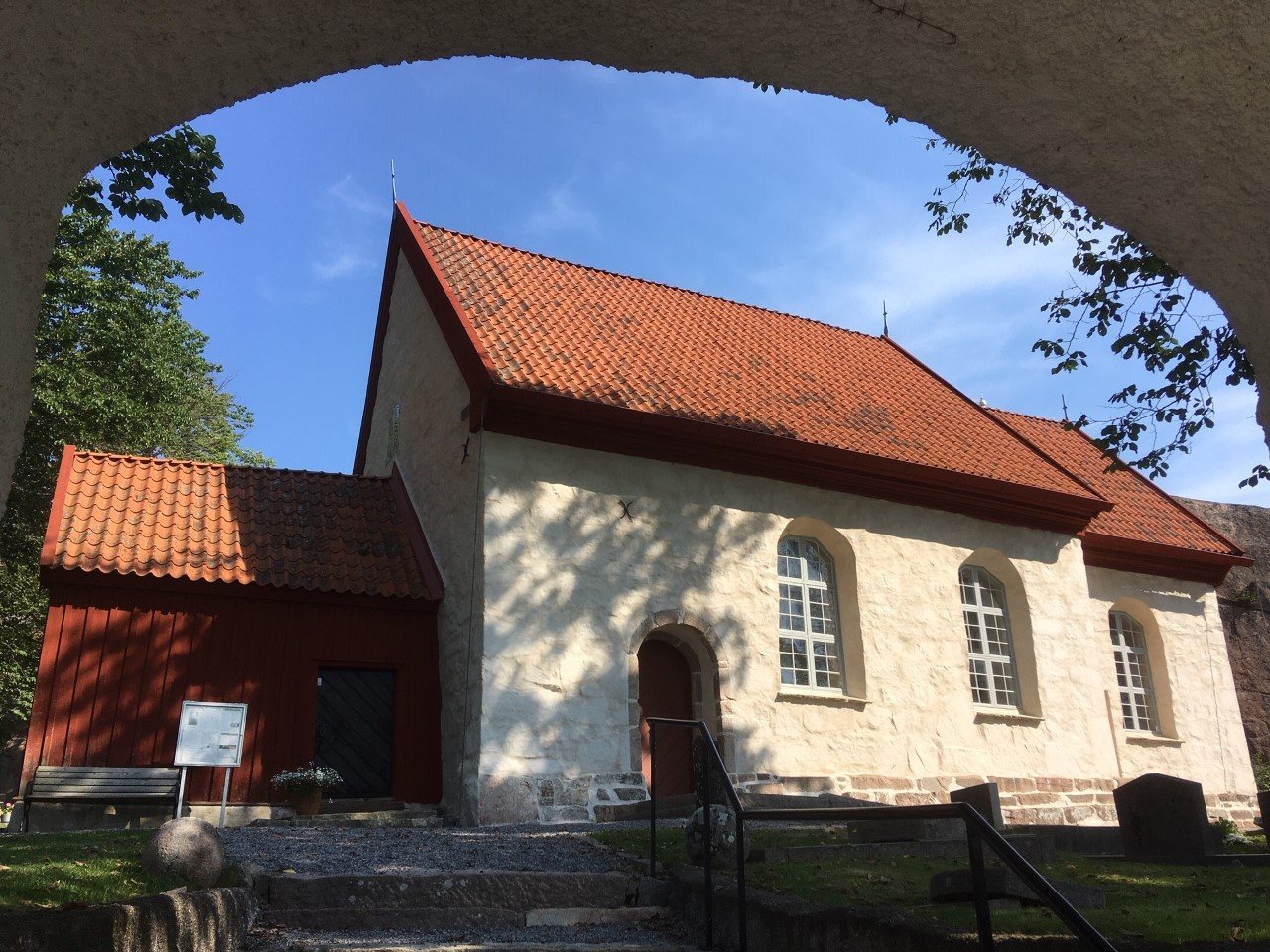
Svenneby Old Church is a Romanesque church in Hamburgsund, Sweden, begun in the early 12th century and among the oldest churches in Bohuslän. It belongs to Svenneby Parish, a local church community, in the Diocese of Gothenburg, a regional church district within the Lutheran Church of Sweden.
Foundation and changing setting
The church originally stood at the centre of its village. As the settlement changed, it came to lie outside the village, in the southernmost part of Tanum Municipality.
Eighteenth-century renovation
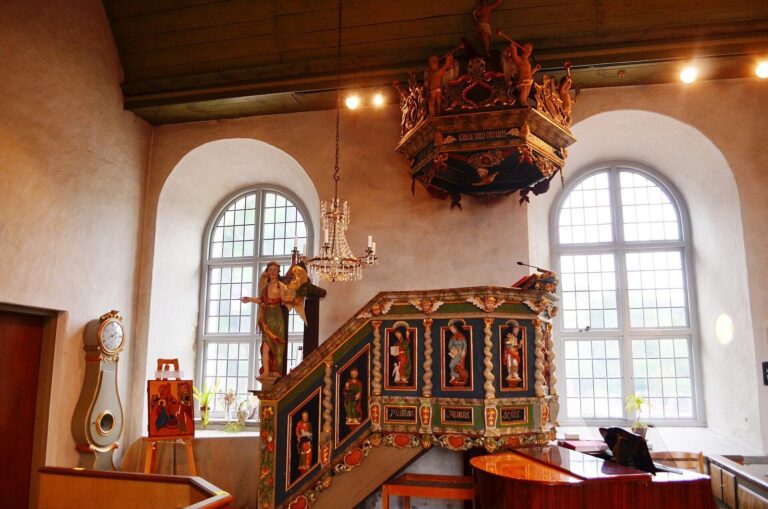
A major renovation in 1729–1730 gave the church much of its present appearance. Its interior was further embellished in the 18th century, including with painted decoration and furnishings.
Changing use and conservation
The congregation held its last high mass, the principal Eucharistic service, in the old church on 5 December 1915, then moved to the new church in Svenneby. The old building has continued to host summer services. In 1962, Thorbjörn Engblad reconstructed painted decoration on replacement ceiling boards and brought Ahlstedt’s painted work on the furnishings to light. The entire building was renovated from 2015 to 2017 because it faced an acute risk of collapse.
Remains
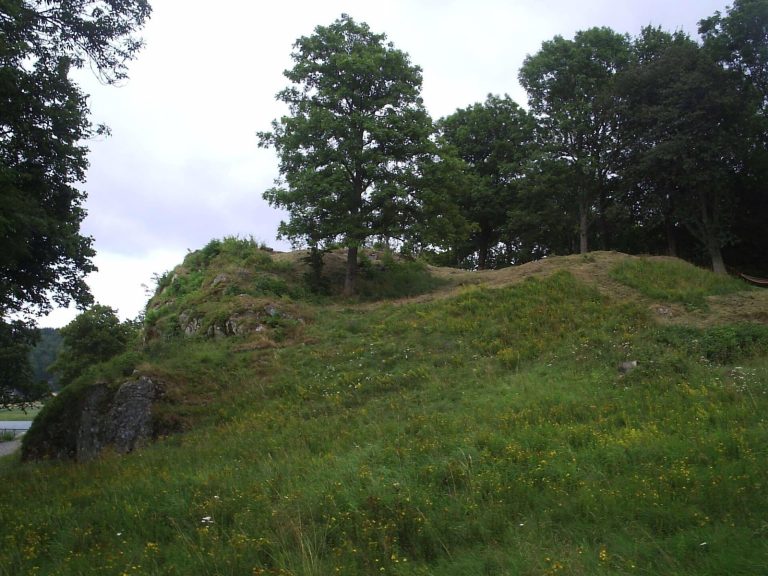
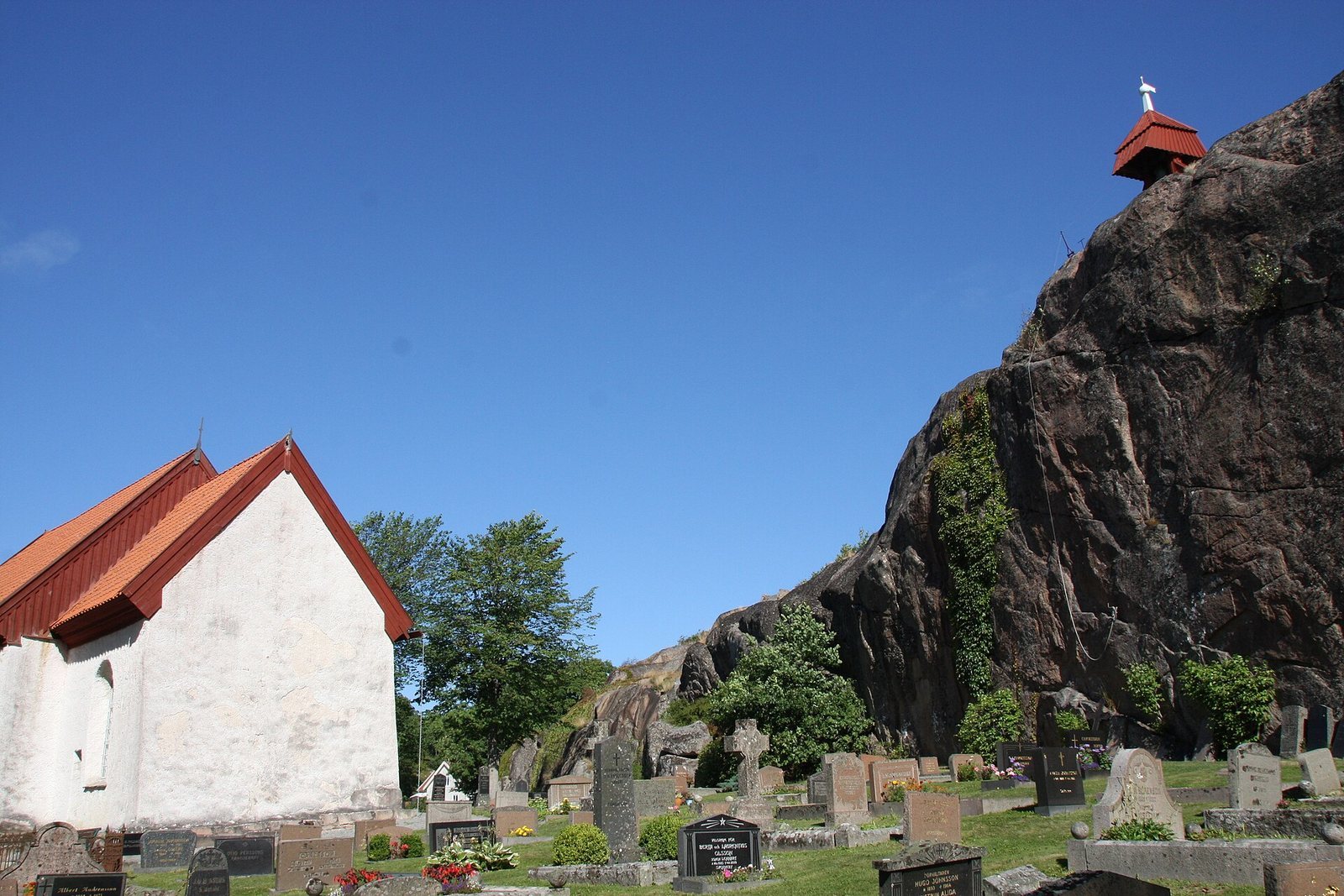
The Romanesque church measures 17.5 metres long and 9 metres wide, and its walls are between 1 and 2 metres thick. A churchyard surrounds the building, which is sheltered by a cliff rising slightly above it. A separate bell tower stands on the steep rock above the church.
Church structure
The church’s main body, or nave, and the choir, the area around the altar, have wooden ceilings curved into barrel shapes. These ceilings were installed during the major renovation. Small openings on the building’s sides were enlarged over time, including the south-wall windows during the renovation. The south entrance to the choir retains its original form, while a gallery was added in the 18th century.
Painted decoration
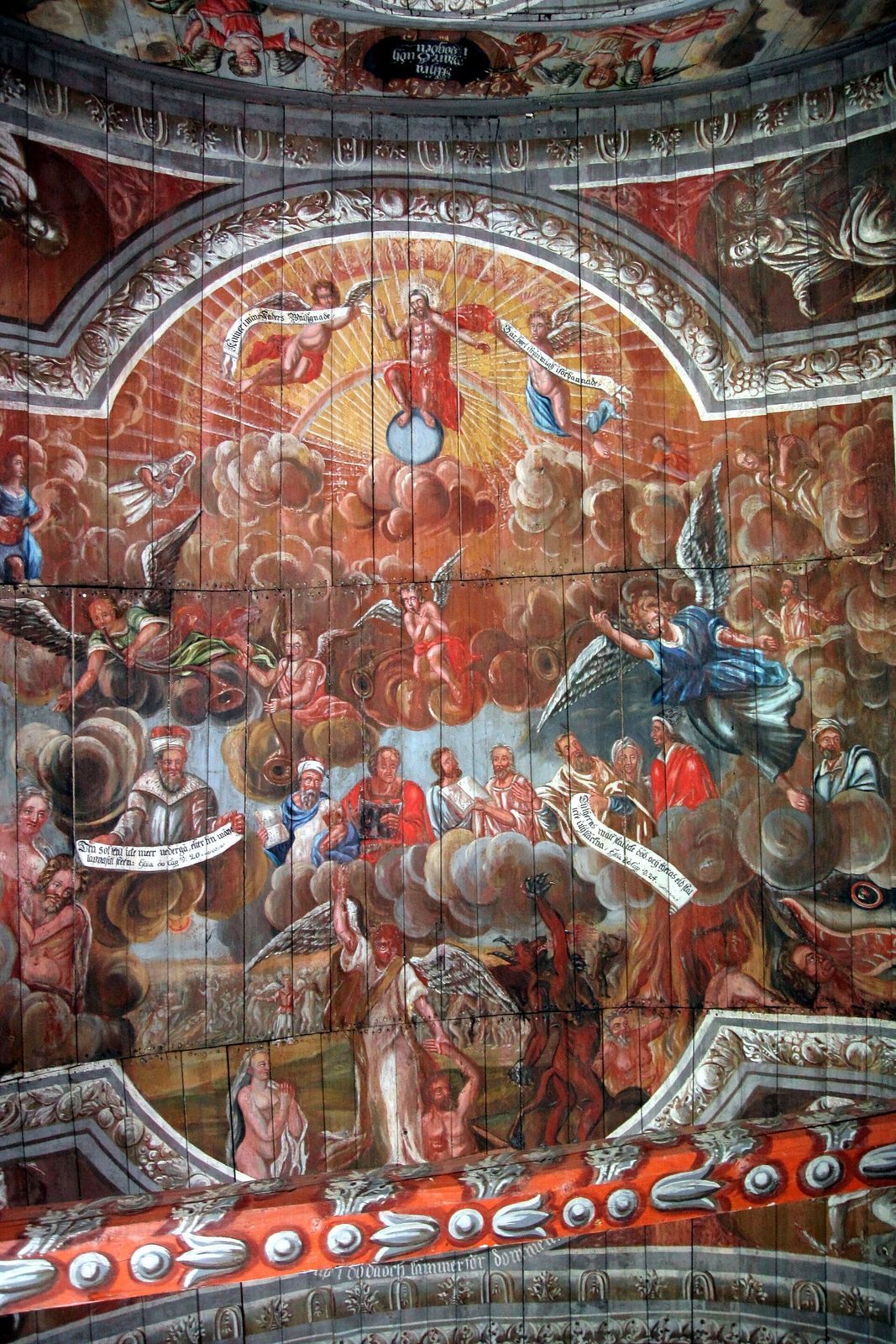
Jonas Ahlstedt painted the ceiling and furnishings in 1741. His ceiling scenes show the Transfiguration, in which Jesus is revealed in divine glory, in the choir, and the Last Judgment, the final judgment of humanity in Christian belief, at the centre of the nave. Images of the four Evangelists, Matthew, Mark, Luke and John, occupy the corners, with ornament framing the scenes. Ahlstedt had recently become a master and had trained under Christian von Schönfeldt and Alexander Fox. His paintings follow Schönfeldt’s example but are less accomplished than comparable work by that painter. The ceiling paintings retain their original painted scheme, with retouching. Ahlstedt also painted the altarpiece, pulpit and gallery front; the altarpiece depicts the Last Supper.
Furnishings and sculpture
Altar and pulpit
The medieval altar was covered with wood in 1731. The pulpit dates to the mid-17th century and is attributed to Hans Swant. It is Baroque, an ornate European style that flourished in the 17th and 18th centuries.
Baptismal font
The soapstone font, probably made in Norway, dates to the first half of the 13th century. It is formed from two pieces and stands 60 centimetres high. Its cylindrical bowl has a bulging underside that ends in a simple moulding. Five broad, framed arches circle the bowl, with distinctive irregular, three-lobed lily ornaments between them. The disk-shaped foot is undecorated, and a drainage hole runs through the centre. The font rests on a modern circular granite slab. It belongs to a group of three fonts associated with Dalsland, including the finest example at Ödeborg Church; a comparable font is at Bärfendal Church in Bohuslän.
Medieval sculpture
A damaged 13th-century triumphal crucifix, a large cross traditionally placed between the nave and choir, is among the church’s medieval works. The church also contains four medieval sculptures.
Votive ship
A votive ship, a model ship offered as a religious dedication, is associated with the church. It may have been made by a prisoner at Marstrand Fortress.
Bell tower
The freestanding tower contains a medieval bell believed to date to the 13th century. The cliff is part of the Klockberget nature reserve.