Dragsmark Abbey: A Premonstratensian Canonry in Sweden
Site at a Glance
- Rating
- 4.5
- Popularity
- Very Low
- Country
- Sweden
- Primary era
- Medieval
- External website
- Open
- Eras represented
- Medieval
- Civilizations
- Norwegian
- Site type
- Religious
- Remains
- Monastery
On this page13 sections
History
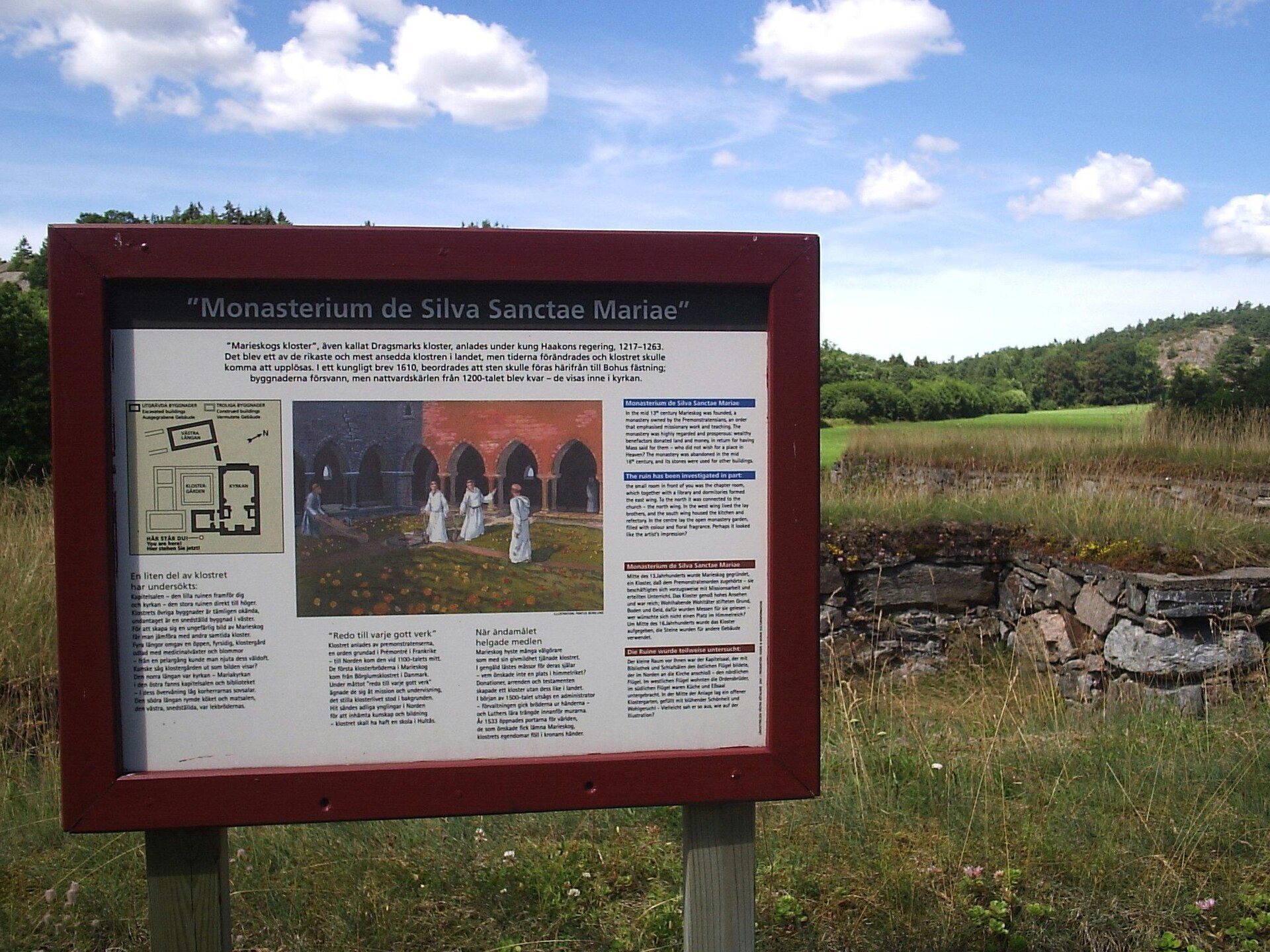
Dragsmark Abbey is a former Premonstratensian canonry in Sweden, founded in the mid-thirteenth century, probably in 1234 or before 1260. The Premonstratensians were a Catholic order whose communities combined monastic life with pastoral and clerical work. The abbey was established with the support of the Norwegian king Håkon Håkonsson and was dedicated, along with its church, to the Virgin Mary.
Foundation and early prosperity
The monastery was also known as Marieskog and as Monasterium de Silva Sanctae Mariae. During its early period it became wealthy and influential. It maintained a prestigious school or academy for sons of the nobility. A tradition that it also operated a clerical school, or perhaps a scriptorium, remains uncertain. A scriptorium was a place where manuscripts were copied and produced.
Among the abbey’s benefactors were King Magnus Eriksson, his consort, and Queen Dorotea. Several abbots are known by name. Nikolaus was recorded in 1423 and 1430, Thore in 1489, 1490, and 1492, Helge in 1500, and Jens Vernicksson at a date not specified here.
Decline and secularization
The monastery declined during the fifteenth century and had a secular administrator from 1519. In 1532 it was fully secularized, meaning that its religious institution and property passed from ecclesiastical control to lay or state administration. This took place before the Norwegian Reformation of 1536, and Dragsmark is described as the first monastery in Norway to undergo secularization.
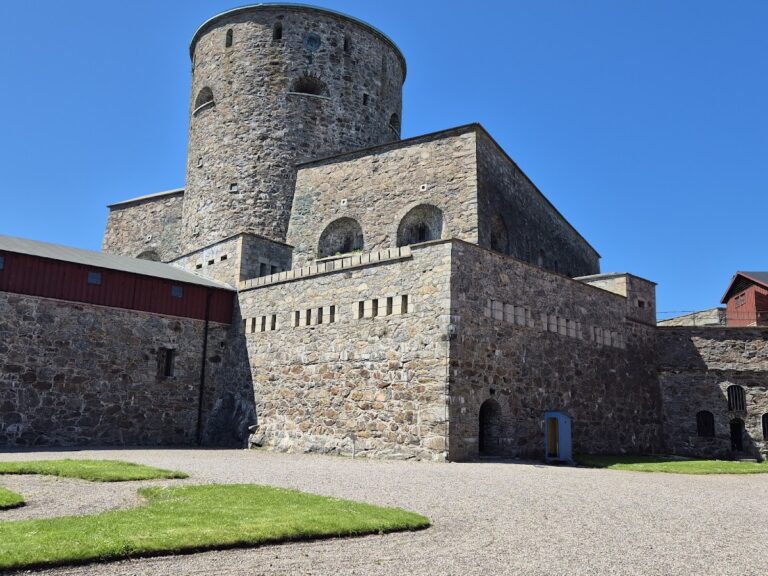
The Crown granted or leased the abbey’s property to a lay tenant, while the remaining canons were to be maintained. By the late sixteenth century, the monastery church had become unusable for worship. The monastery buildings were demolished in the early seventeenth century, around 1610, and their stone was reused in the construction of Bohus Fortress.
Later history and archaeological investigation
After Sweden conquered Bohuslän in 1658, part of the former abbey estate was granted to Rutger von Ascheberg, a Swedish military commander and governor. A new wooden church, the present Dragsmark Church, was built beside the abbey ruins and consecrated on 1 January 1756.
The last remaining sections of the medieval church walls collapsed in 1846. The ruins were investigated more extensively in 1897 and 1898. Around 1900, the Göteborg and Bohus County Antiquarian Association cleared the church site, exposing its substantial foundations and wall remains to a height of about one metre.
Ballad, tradition, and historical interpretation
Dragsmark is associated with the popular ballad of the tragic lovers Axel Tordsson and Valborg Ingemarsdotter. The story was widely known in Bohuslän by the early eighteenth century and placed the lovers’ tale at Dragsmark, although it overlooks the fact that the institution was a male monastery. In the nineteenth century, the Danish poet Adam Oehlenschläger adapted the story as the tragedy Axel and Valborg, moving part of the action to Trondheim Cathedral.
Some details in the ballad have been used in attempts to date its setting. Its reference to an emperor has been interpreted as Heinrich Raspe, who briefly claimed the title of Holy Roman Emperor in opposition to Frederick II in 1246 and 1247. A reference to the Gudsivio law has been connected with legislation introduced in 1247. The ballad also places the Norwegian king and his son at the monastery. These details have been associated with Håkon Håkonsson’s presence in the region during the winter of 1247 to 1248, although the identification and interpretation remain conjectural.
A medieval Eucharistic chalice of English origin, traditionally said to have been donated by Håkon Håkonsson, has been dated to 1247 or 1248. It was used continuously in worship by the Dragsmark parish until the 1970s. Its date and traditional royal association have encouraged speculation that Håkon may have donated it during a visit to the area.
Other traditions have connected the abbey with the English chronicler Matthew Paris, Cardinal William of Sabina, and Archbishop Sigurd. Matthew Paris was in Norway from 1248 to 1249 in connection with the affairs of Nidarholm Abbey, and his friendship with Håkon Håkonsson encouraged theories of an additional connection with Dragsmark. No such role is established.
Remains
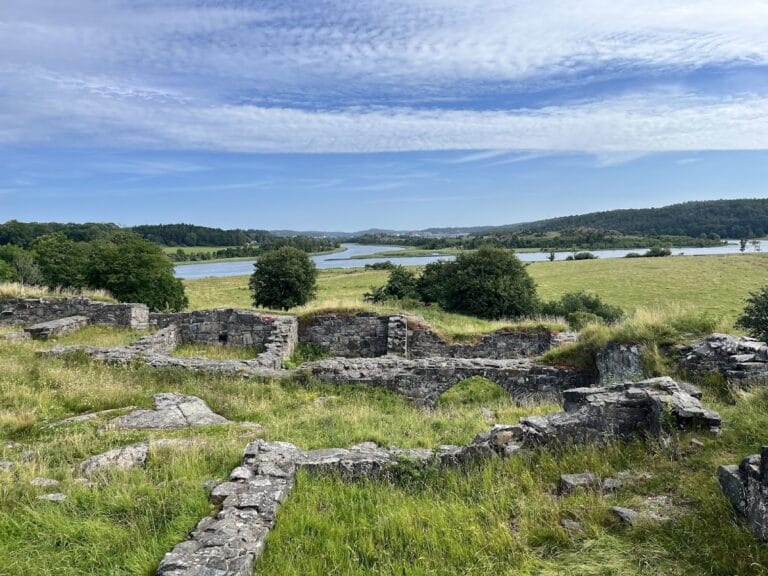
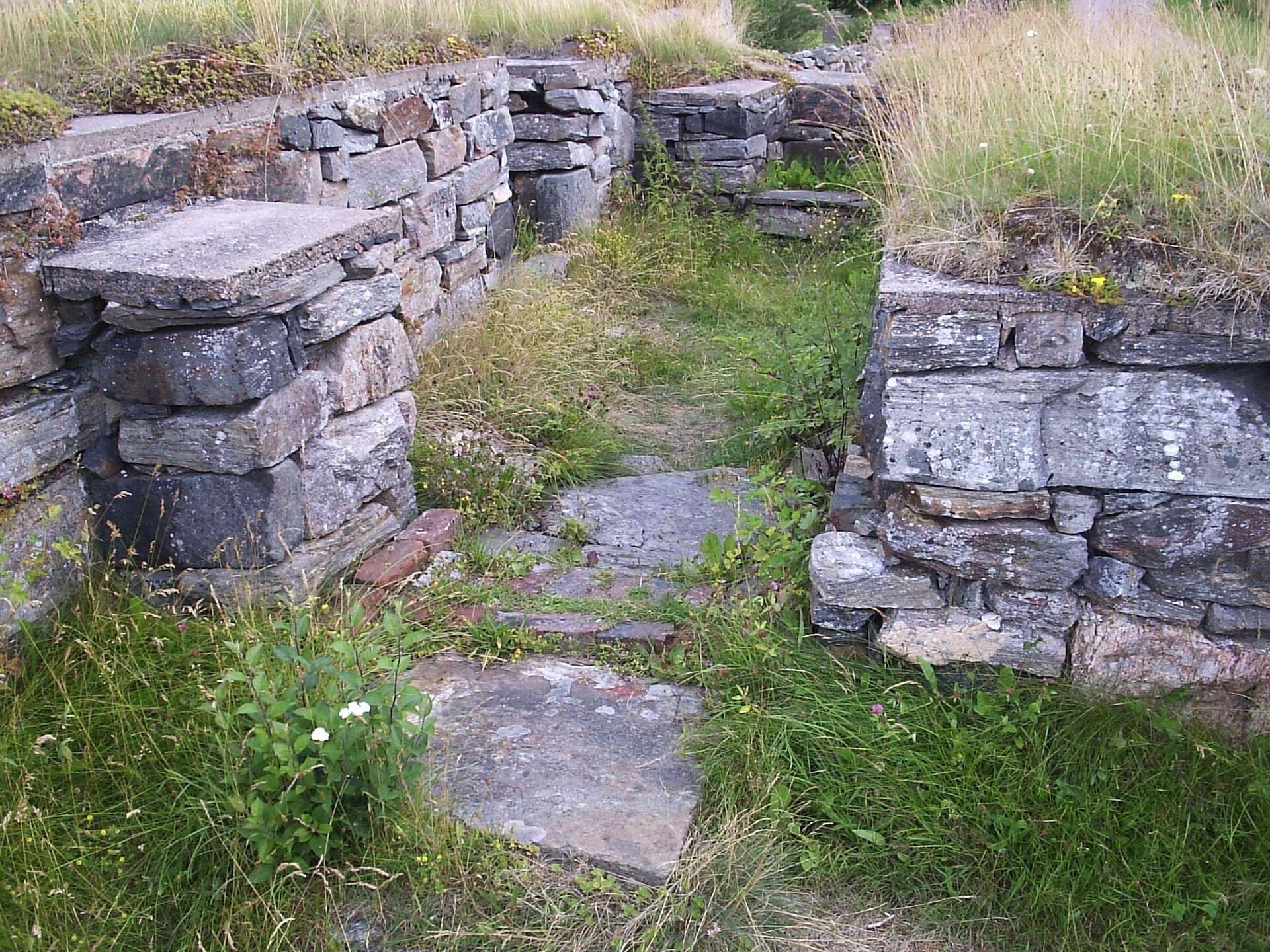
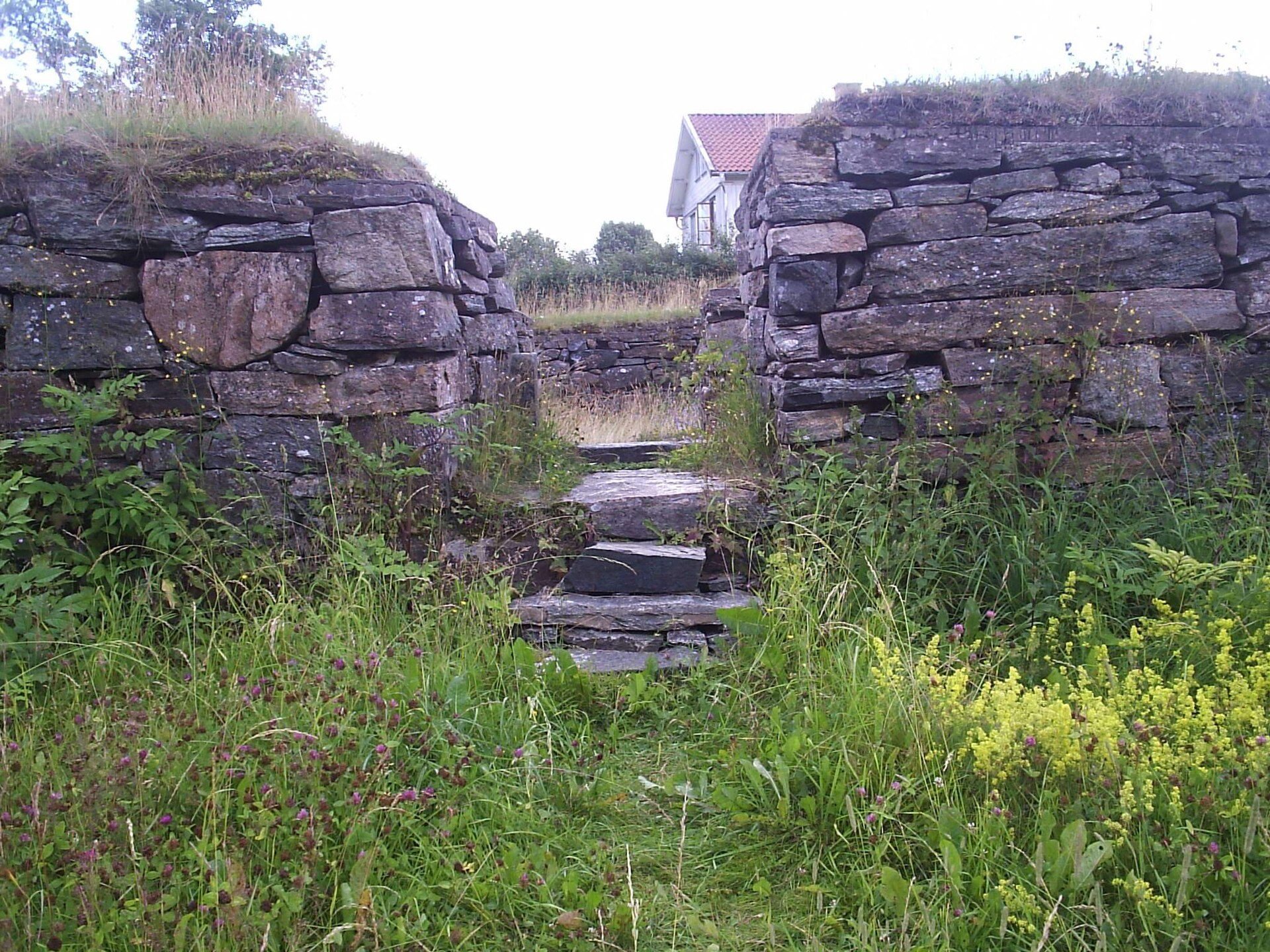
The ruins occupy the western extremity of Bokenäset, in a coastal setting between Uddevalla and the sea and north of the island of Orust. The surviving remains lie beside the present Dragsmark Church and preserve the basic arrangement of the medieval religious complex.
The medieval monastery
Medieval church
The medieval church measured approximately 20 by 10 metres. The building itself no longer stands, but its substantial foundations remain exposed. Sections of its walls survive to a height of about one metre, reflecting the clearing and investigation of the site around 1900.
Conventual buildings
The conventual buildings stood south of the church. Only the two chambers nearest to the church had been excavated. They were probably the sacristy, where church vessels and vestments were kept, and the chapter house, where members of the community met. Traces of further buildings extend farther south.
Western building
Another building remains west of the church and conventual complex. Its relationship to the rest of the monastery has not been established, but it forms part of the surviving archaeological remains at Dragsmark.
Later church and surviving object
Dragsmark Church
The present Dragsmark Church is a wooden building constructed beside the medieval abbey ruins. It was consecrated on 1 January 1756, after the medieval church had become unusable and before its remaining wall sections collapsed in 1846.
Eucharistic chalice
The medieval Eucharistic chalice associated with Dragsmark is of English origin and dates to 1247 or 1248. It was used in the parish church’s Eucharistic rites until the 1970s. Its traditional connection with Håkon Håkonsson has contributed to interpretations of the abbey’s relationship with the Norwegian king during the period of its foundation.