Abbaye de Clairmarais: A Cistercian Abbey in France
Site at a Glance
- Rating
- 4.8
- Popularity
- Very Low
- Country
- France
- Primary era
- Medieval
- External website
- Open
- Eras represented
- Medieval, Early Modern
- Civilizations
- County of Flanders
- Site type
- Religious
- Remains
- Monastery
On this page13 sections
History
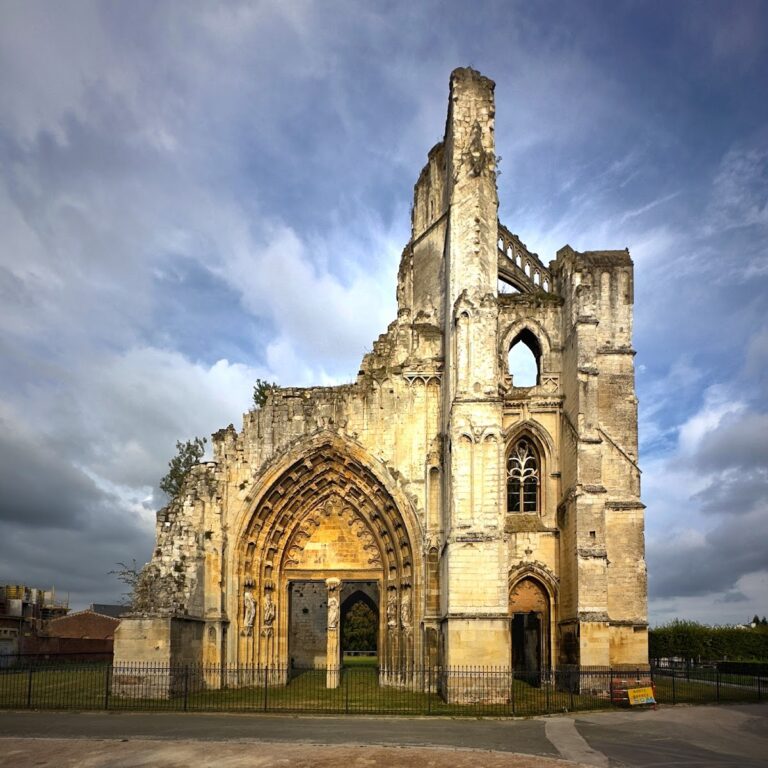
Abbaye de Clairmarais is a former Cistercian abbey in Clairmarais, France, founded in 1140 during the medieval expansion of the Cistercian Order. Dedicated to Notre-Dame, a title meaning Our Lady and referring to the Virgin Mary, it became a daughter house of Clairvaux, one of the leading centers of Cistercian growth. Its church was built in the Gothic tradition, a medieval style associated with pointed arches, ribbed vaults, and strong vertical emphasis.
Foundation and settlement
The abbey developed from a proposal made around 1128 by Foulques, abbot of Gunes, for a Benedictine monastery. The project was later redirected to the Cistercian Order. Bernard of Clairvaux selected a site in the Rihoult forest, northeast of Sithieu, now Saint-Omer, and appointed Gonfroi, also known as Gunfrid, to lead the foundation. Gonfroi arrived from Clairvaux with twelve monks.
The first community prepared ground in the marshes before laying the foundations of an initial monastery and a Marian oratory on 26 April 1140. The name Clarus Mariscus, meaning clear marsh, referred to the surrounding terrain. Gonfroi became the first abbot. The community settled permanently at the present Clairmarais location in 1161, after initially holding about 65 measures of land, roughly 20 hectares, with almost half consisting of pasture and marsh.
Growth and endowment
Clairmarais expanded through grants of land, rents, rights, and other privileges from regional rulers and noble families. Benefactors included Thierry of Alsace, count of Flanders, and Sibylle of Anjou; Mathieu of Lorraine, count of Boulogne; Arnould I of Guînes; Gauthier, castellan of Saint-Omer; the castellans of Bourbourg; and the lords of Ardres.
In 1145 Arnould I of Guînes, his wife Mathilde, and their son Baudouin granted the abbey their possessions at Niwerlede, probably Nieurlet, together with property and rights associated with digging ditches. Milon II, bishop of Thérouanne, confirmed the donation at a synod that year. Around 1150, the same family exempted Clairmarais, Clairvaux, and other Cistercian monasteries from tolls on goods travelling toward England.
Further grants followed. Thierry of Alsace gave the abbey part of the Rihoult wood in 1156, an area later known as the forest of Clairmarais. Arnould IV of Ardres granted the tithe from land at Nieurlet around 1149. Baudouin II of Guînes and his wife Christine of Ardres made substantial donations in 1174 and confirmed earlier grants. Later counts of Guînes continued this support, including Arnoul III, who in 1270 confirmed an annual rent of 40 Parisian sous previously donated by his aunt Béatrix.
Pope Alexander III confirmed the abbey’s possession of several properties in 1170 and 1171, including land reclaimed from the sea and previously granted by Philip of Alsace, count of Flanders, and the castellan of Bourbourg. In 1176 Philip placed Clairmarais under his protection and granted it about 1,283 measures of land at Loon-Plage. The holding covered roughly 570 hectares, including about 130 hectares of dunes, and was free from feudal obligations.
Monastic administration and intellectual life
The Loon-Plage estates, known as the Enna farms, became involved in repeated disputes because rabbits damaged surrounding land. After the dikes broke in 1720, the magistracy of Bourbourg and successive abbots disputed responsibility for the damage and for the repairs that followed.
Over the centuries, Clairmarais acquired property in numerous nearby villages. At its greatest extent, the community included approximately 100 religious members and 200 lay brothers, while 59 abbots succeeded one another during about six centuries. The abbey’s agricultural network included numerous granges, estates operated to support the monastery, as well as woodland, reclaimed land, rents, and other holdings.
Several abbots and monks shaped the institution’s administration and cultural life. Simon de Markette led the abbey from 1225 to 1257, while Lambert arbitrated a dispute in 1220 between the lord of Haverskerque and Saint-Bertin Abbey of Saint-Omer. Hertault began the abbey library in 1527. Morand Blomme later expanded it and received the mitre in 1615. Hubert Raoul published an account of Alexander Farnese’s exploits in 1598.
Dom Jean Ballin, a sixteenth-century monk who died in 1593, first served as chaplain to the abbey’s household. He wrote manuscripts about the counts of Flanders and the history of northern France. Versions or excerpts survive in the libraries of Saint-Omer and Mons, and an abridgement carries a preface dated 23 November 1588. Eleven folios from the abbey’s cartulary, including documents dating from 1153 and 1297, were examined in connection with a sale in 2009.
Revolution and later survival
The French Revolution brought the abbey’s institutional history to an end. When closure was imposed on 29 August 1791, only 23 monks remained. The community’s possessions, including the dunes at Loon-Plage, were sold as national property. Demolition began in 1802 and continued for about ten years, destroying much of the complex. Material from the buildings was reused for purposes including the supply of a saltpetre factory, while objects and architectural elements were dispersed elsewhere.
Clairmarais entered France’s register of historic monuments in 1946 and again in 1987 through protections covering its ruins. The farm of La Cloquette received separate protection in 1991 for the façades and roofs of its eighteenth-century small pavilion. A craft brewery opened around 2019 in a surviving building of the abbey farm, renewing an activity formerly carried out by the monks.
Remains
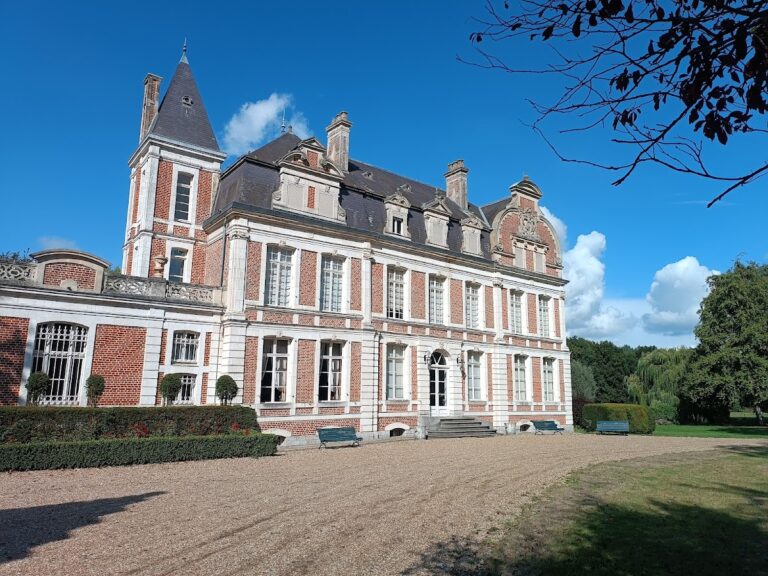
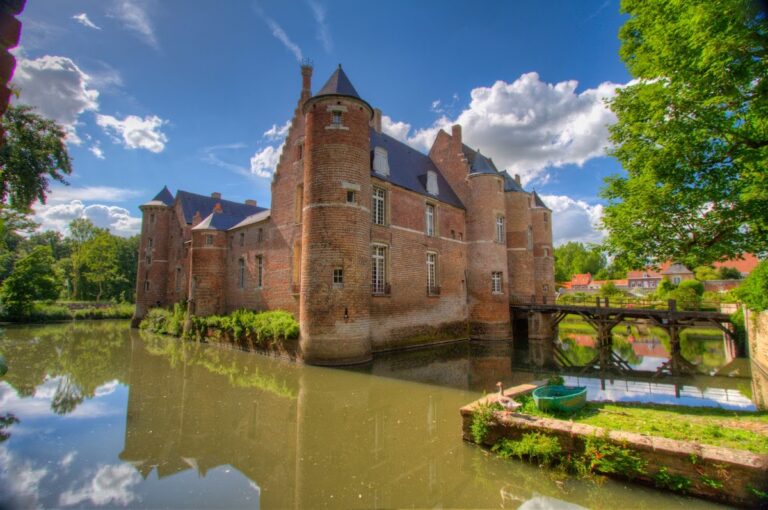
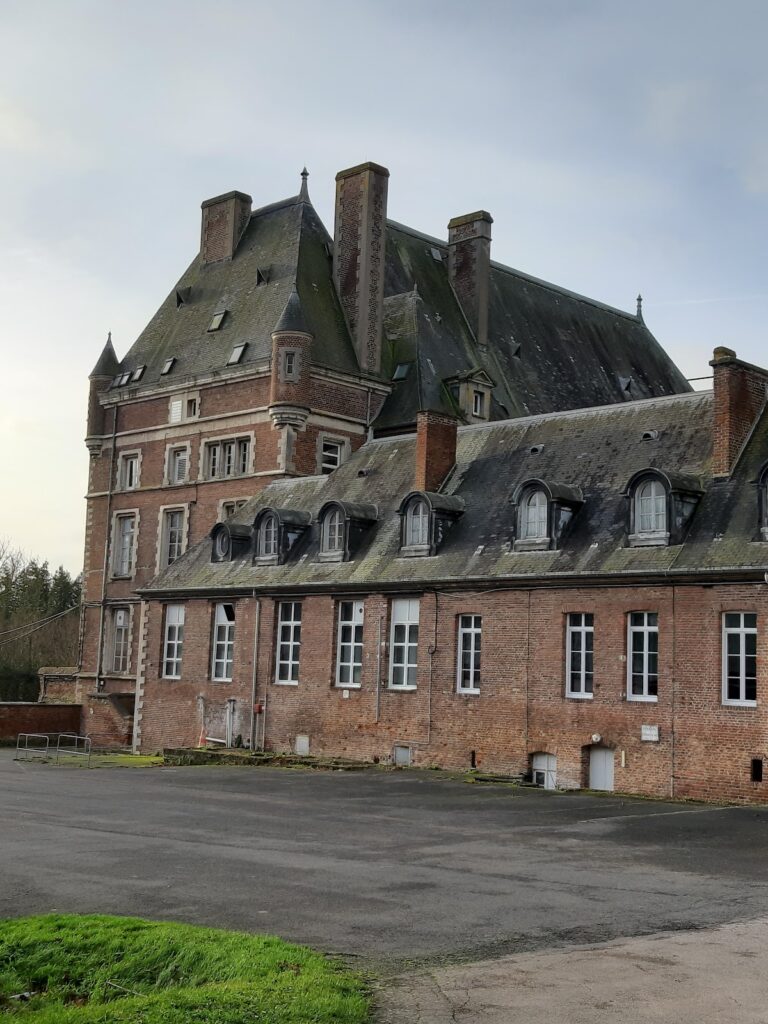
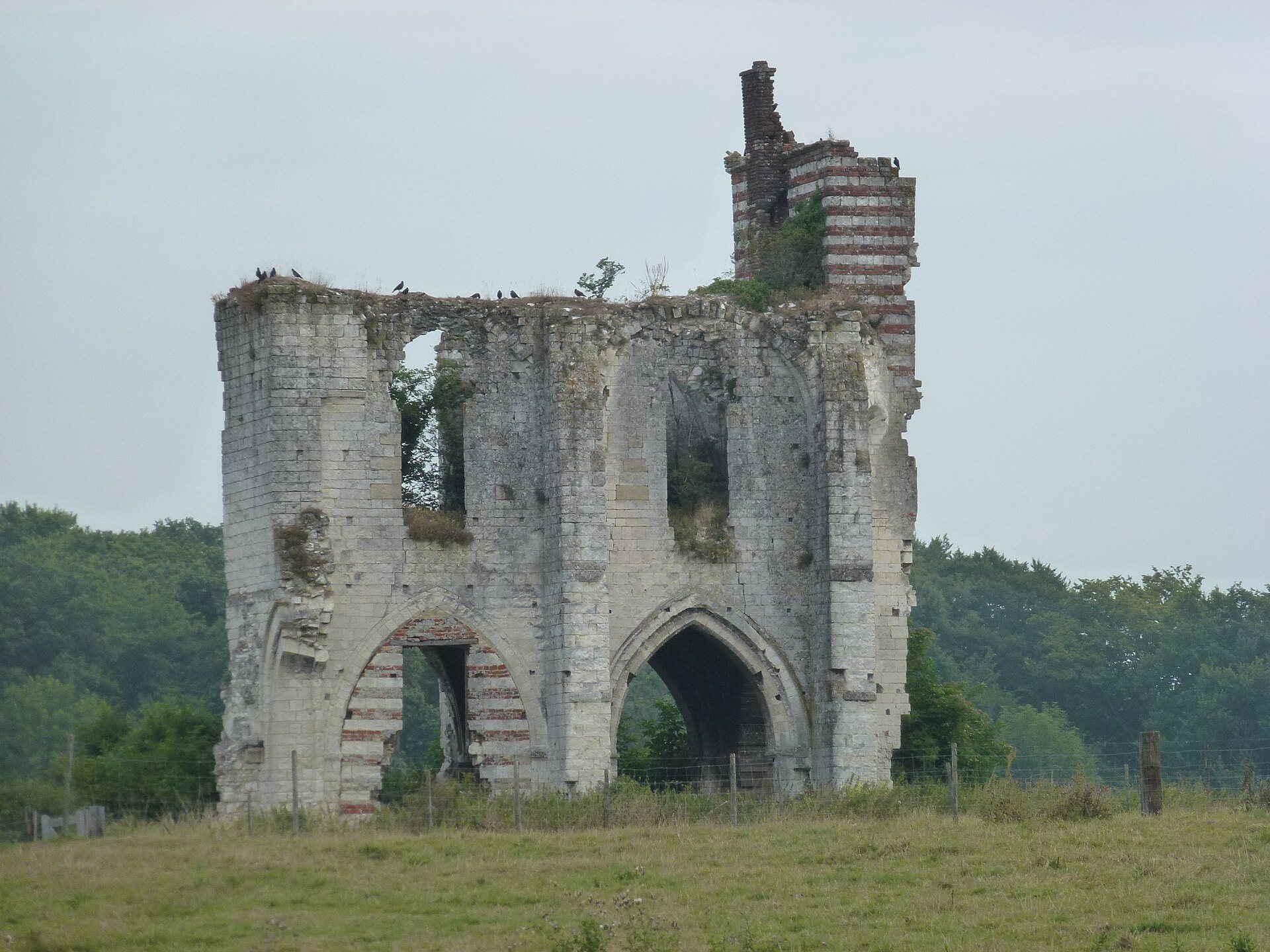
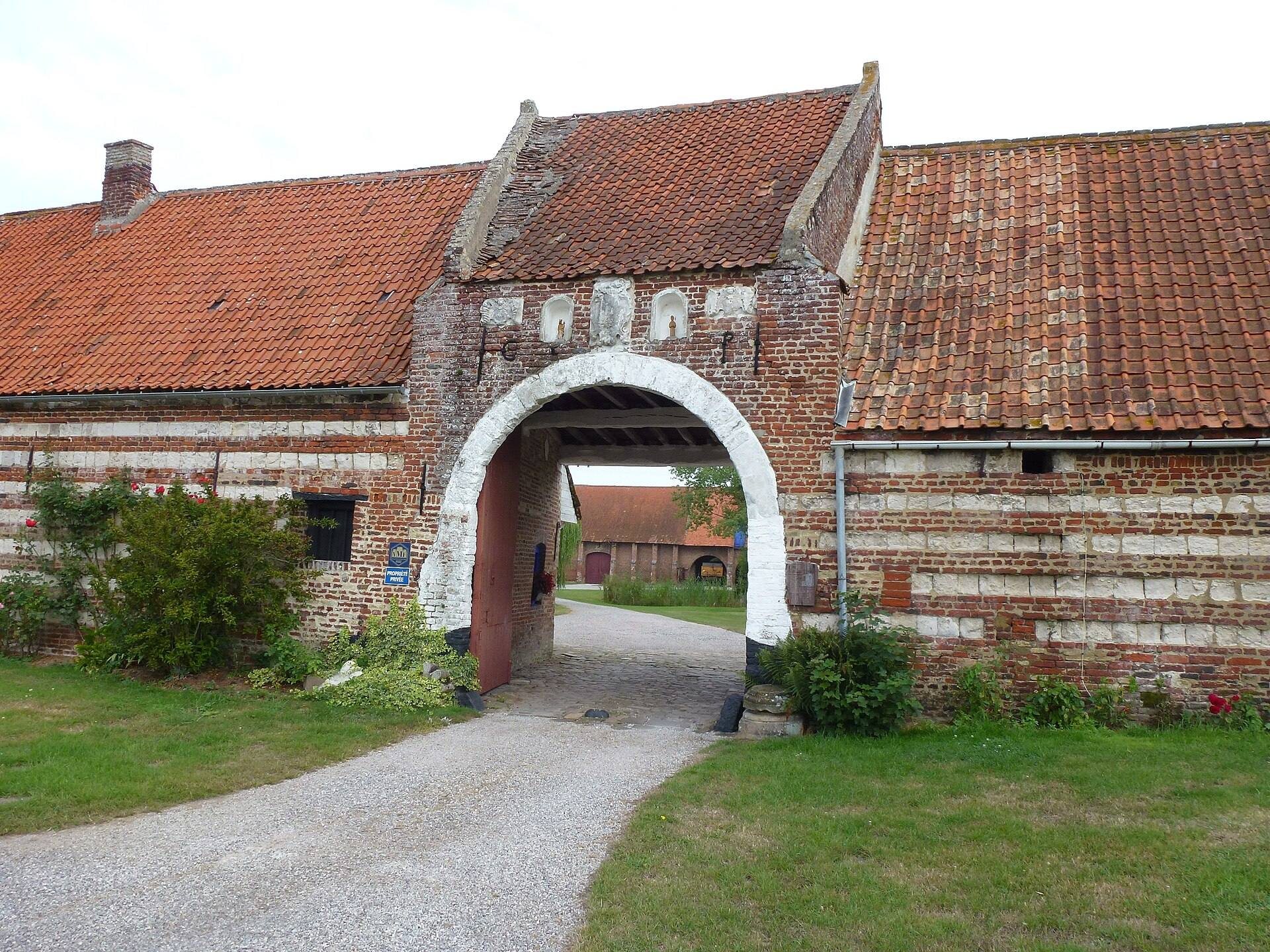
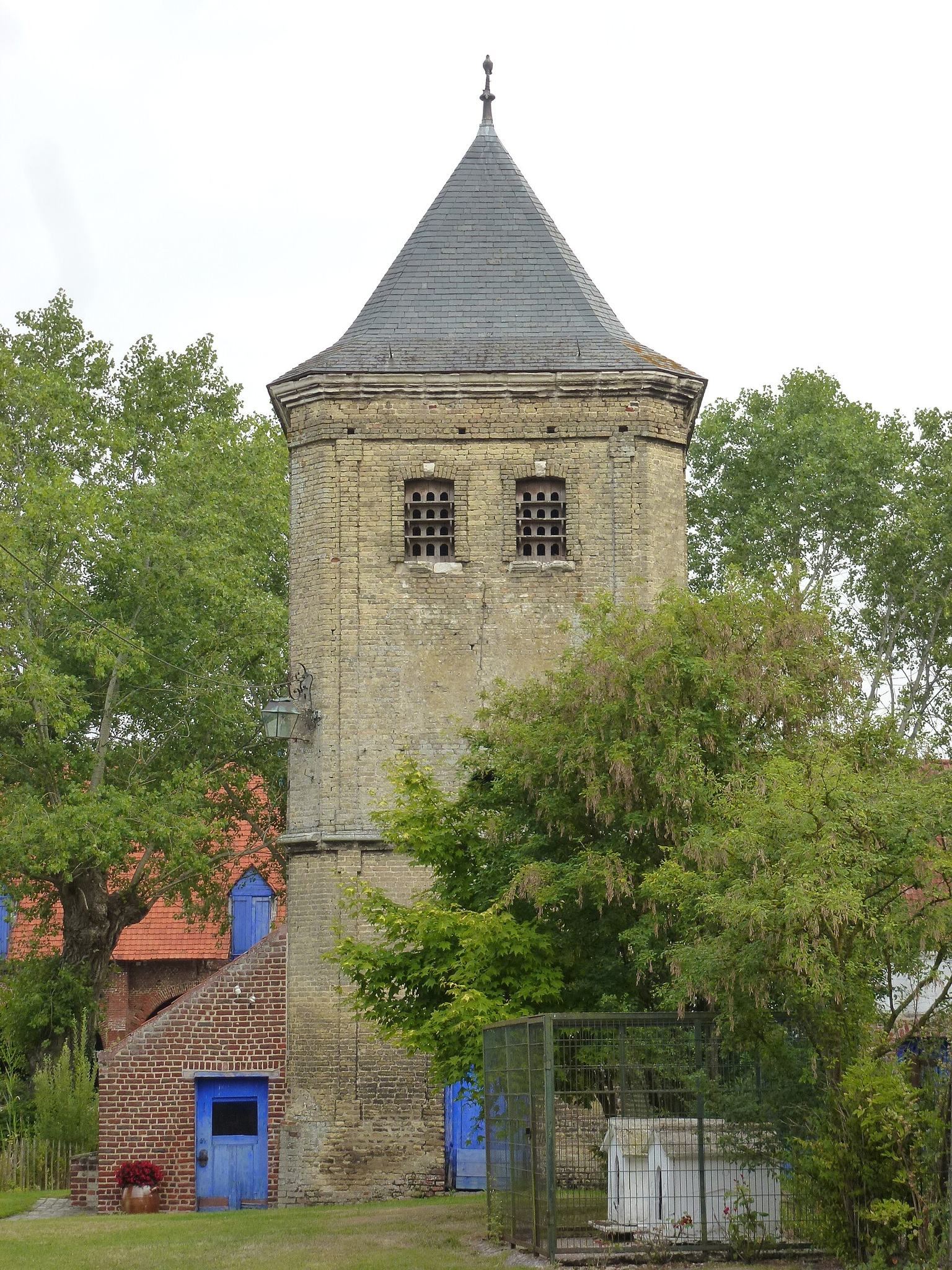
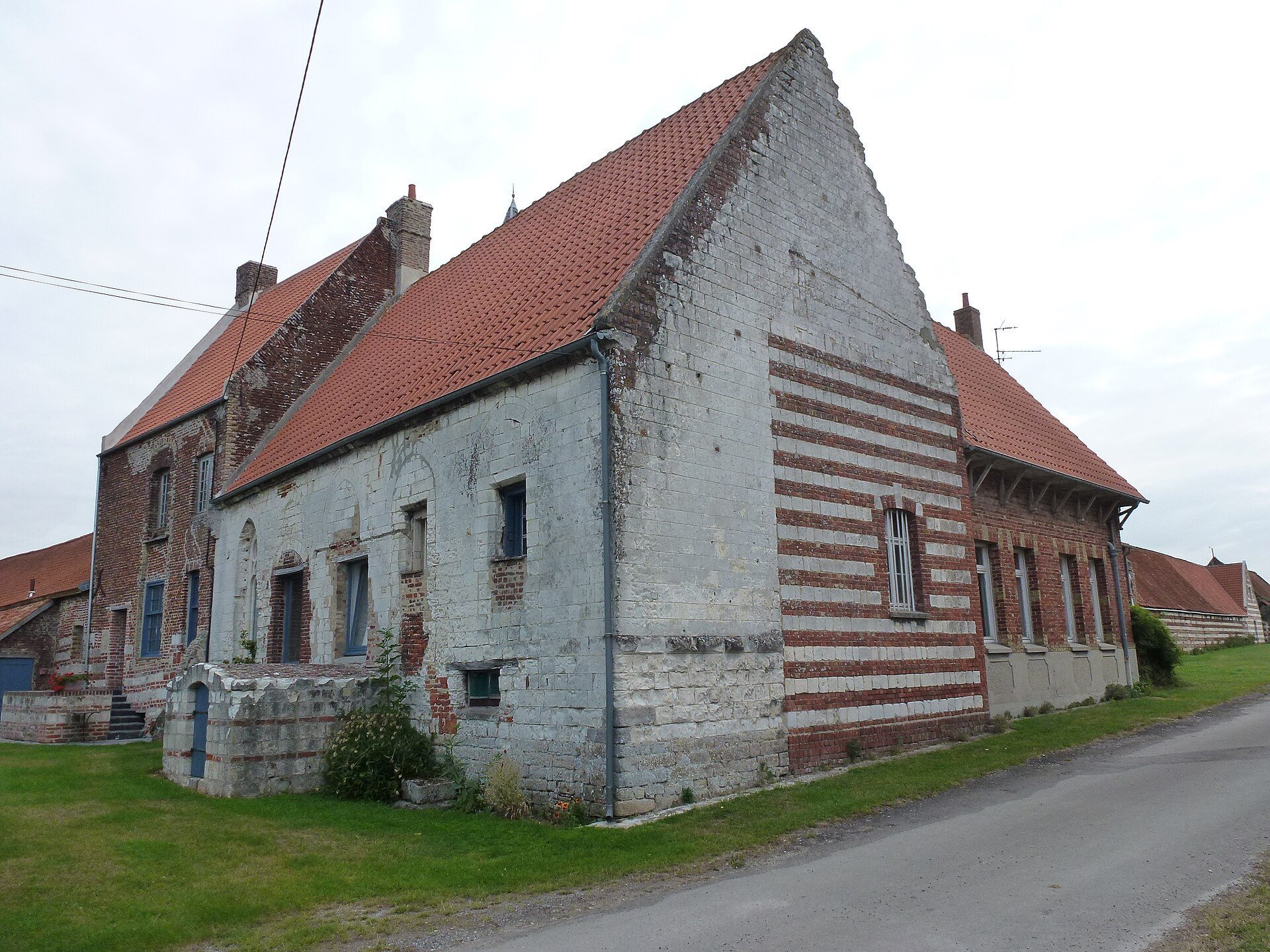
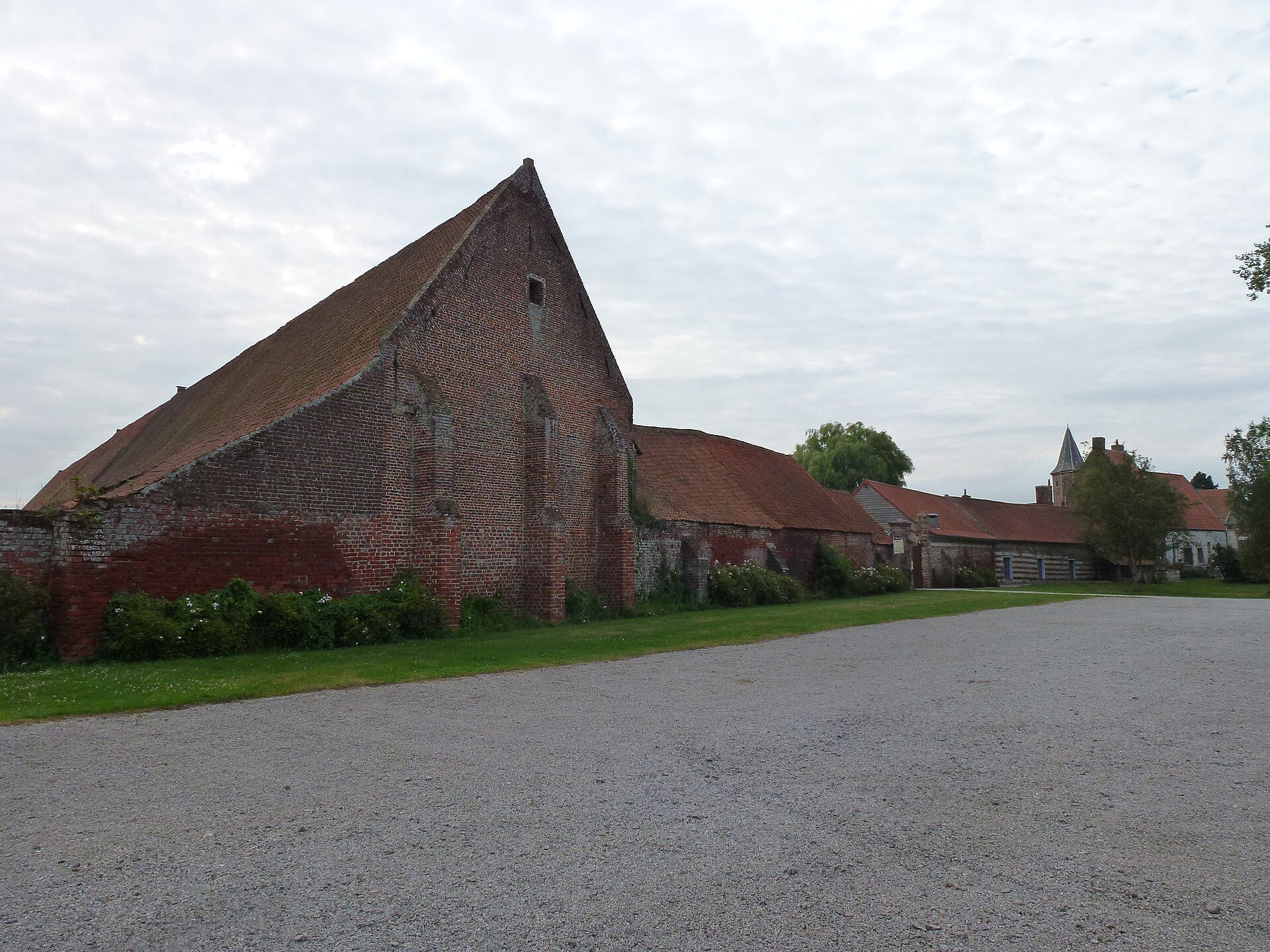
The surviving remains extend across the former monastic complex and its agricultural dependencies. They include part of the cloister, the wall of the dormitory above it, portions of the entrance area, the guesthouse and its chapel, barns and stables, a long agricultural barn, a staircase turret dated 1680, and a dovecote dated 1731. The associated farm at La Cloquette retains eighteenth-century architectural elements.
Monastic buildings
Cloister and dormitory
Part of the cloister survives with the wall of the dormitory rising above it. These fragments preserve the relationship between the covered central circulation space and the monks’ residential quarters. They form a limited but direct remnant of the conventual buildings that developed after the first marshland foundation.
Entrance and guesthouse
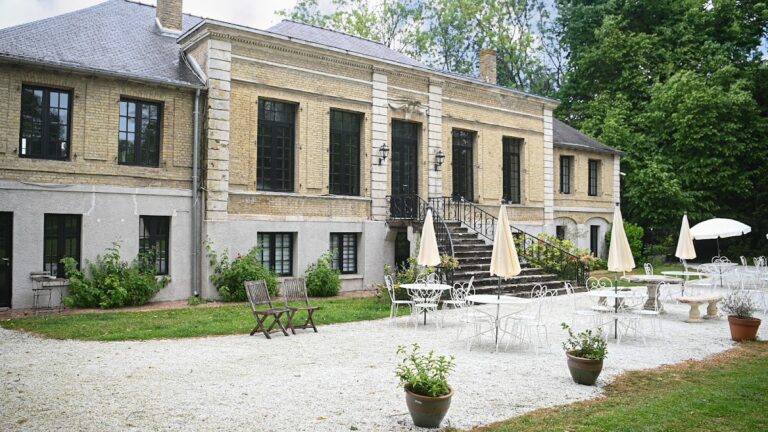
Portions of the entrance area and guesthouse remain, including the guesthouse chapel. Together, these elements represent the outer reception and accommodation buildings of the abbey. Their survival gives the former complex an architectural component distinct from the cloister and residential wing.
Abbey church
The abbey church was designed by Geoffroy d’Ainay and built in the Gothic style over more than three centuries. It had a carillon of 19 bells, stained-glass windows, sculptures, paintings, and several chapels. Demolition had removed the church by 1802, while some furnishings and architectural elements were transferred elsewhere. An old stone baptismal font and church furnishings from Clairmarais are preserved in Saint-Samson Church at Ebblinghem.
Agricultural buildings and estates
Abbey farm
The surviving agricultural buildings include barns and stables, among them a barn more than 100 metres long. A staircase turret dated 1680 remains within the farm complex, and a dovecote dated 1731 preserves another element of the abbey’s agricultural infrastructure. The former complex also contained service installations such as ovens, a bakery, a butcher’s shop, and a brewery.
La Cloquette farm
La Cloquette was a separate Cistercian farm associated with Clairmarais. Its surviving eighteenth-century features include the façades and roofs of a small pavilion. The protected farm forms part of the wider group of agricultural buildings through which the abbey managed its rural possessions.
The abbey’s agricultural network extended through granges and estates at Neuville, Furnes, Beaumont, Enne, Leulinghem, Maninghem-au-Mont, Muncq-Nieurlet, Rihoult, Loo and Beauloo, Ostreville, Antin, Monchy-Cayeux, Fiefs-Quevraussart, Livossart, Laires, Bomy, Beaumetz-lès-Aire, Fevin, and Prés de Dixmude. The surviving farm buildings and related structures therefore preserve parts of both the religious center and the working landscape that supported it.