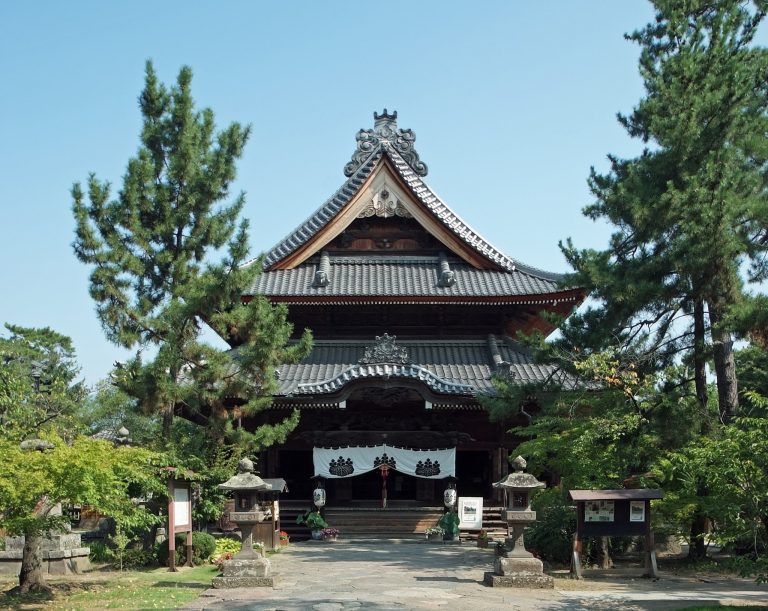
Nishina Shinmei Shrine: A Historic Shinto Shrine and Center of Periodic Renewal in Japan


Site at a Glance
- Rating
- 4.4
- Popularity
- Low
- Country
- Japan
- Primary era
- Early Modern
- External website
- Open
- Eras represented
- Early Modern
- Civilizations
- Tokugawa
- Site type
- Religious
- Remains
- Sanctuary
On this page14 sections
History
Nishina Shinmei Shrine is a Shinto shrine in Ōmachi, Nagano Prefecture, Japan, built and maintained in connection with the Nishina clan’s worship of Amaterasu, the Shinto sun kami traditionally regarded as the imperial ancestor. Its foundation is linked to the enshrinement of the deity of Ise Grand Shrine’s Inner Shrine to protect the Nishina Mikuriya, an estate that supplied offerings to Ise. The shrine’s exact foundation date is uncertain, although tradition places it between the reigns of Emperor Sujin and Emperor Keikō, around the beginning of the Common Era.
The Nishina Mikuriya
Historical evidence places the establishment of the Nishina Mikuriya no earlier than 1048. By 1192, it was already regarded as ancient, and it came to be considered the oldest Mikuriya in Shinano. The estate centered on three areas in present-day Ōmachi and extended to Fujio township in present-day Yasaka. Its sacred territorial status continued even after the Nishina clan developed a separate Nishina Estate.
The shrine’s history was closely tied to the fortunes of the Nishina family. During the Jōkyū War of 1221, a conflict between Emperor Go-Toba and the Kamakura shogunate, Nishina Morito died while serving the emperor at the Battle of Mount Tonami in Etchū. The shogunate confiscated his lands, which later passed through the imperial family before becoming the property of Muromachi-in, an imperial princess and estate holder.
Clan rule and medieval renewal
For centuries, the Nishina clan maintained the shrine’s rites and its twenty-year cycle of rebuilding and renewal. This practice, called shikinen zōtai, renews shrine buildings according to established precedent and imitates the traditions of Ise Shrine. After the Nishina clan was destroyed by the Takeda clan at the end of the Eiroku era, Takeda Shingen’s fifth son, Morinobu, entered Ōmachi, adopted the Nishina name, and continued to serve the shrine.
The shrine’s rebuilding tradition is traced through ridge tags preserved from renewals beginning in 1376. These records show more than six centuries of continuous practice, an unusual survival in Japan. After the Nishina family disappeared, the lords of Matsumoto assumed responsibility for the renewals. The rebuilding of 1636 was the last complete new construction, after which the twenty-year cycles generally involved repairs. The 2019 renewal included replacement of the roof and related repairs.
Early modern patronage and modern status
In 1582, the Oda clan’s conquest of Kai destroyed both the Takeda and Nishina houses. Ogasawara Sadayoshi then received the former Nishina territory and granted fifteen koku of shrine land under a red seal. A koku was a historical measure of agricultural production and a basis for assessing stipends. From 1638, the allocation became twenty-three koku under a black seal, and successive lords of the Matsumoto domain supported the shrine’s buildings and rites until the Meiji Restoration, the political transformation that began in 1868 and ended the shogunate.
The shrine was classified as a district shrine in 1872, a prefectural shrine in 1876, and again within a prefectural shrine category in 1893. It was traditionally regarded as the general shrine of the sixty-six Nishina townships and as one of Japan’s Seven Shinmei Shrines. Its Main Hall and Inner Gate are National Treasures of Japan. The sacred grove, a descendant of the former sacred tree, and the Three Cedars hold prefectural natural-monument status. The shrine’s Daidai Kagura and old-style work-commencement rite are designated intangible folk cultural properties of Nagano Prefecture.
Ritual traditions
Annual observances include the Festival of Origins on January 1, the prayer-for-harvest rite on March 15, the main festival on September 15, and the first-fruits festival on November 23. Other rites include ceremonies for the mountain deity, the Tsubakigi Shrine rite, the Great Purification rites on June 30 and December 31, and the Wind Festival on August 20.
The annual Daidai Kagura is said to have been transmitted from the period of the Nishina clan. Its seven dances are the Sword Dance, Iwato Kagura, Five Elements Dance, Water Relay, Sacred Wand Dance, Dragon Dance, and Dōsojin. The work-commencement ceremony held on March 15 follows an old form modeled on Ise Shrine’s prayer for the harvest.
Remains
Nishina Shinmei Shrine occupies the southern slope of Miyayama. Its rectangular precinct rises toward the mountain and covers approximately 19,258 square metres. Fields and a road border the southern side, while woodland surrounds the other three sides. The approach passes through a heavily wooded setting from three torii gates toward the Inner Gate and Main Hall, with a covered passage linking the principal buildings. The precinct overlooks rural land and the Takase River to the west, while the Ōmine mountain range lies to the east and the Northern Alps are visible farther away.
Principal shrine buildings
Main Hall
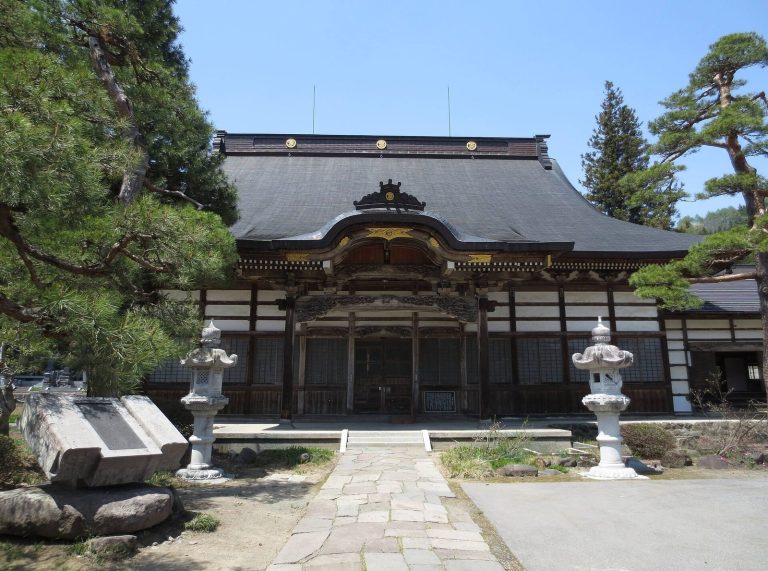
The Main Hall is built in shinmei-zukuri, an ancient Shinto style based on simple, carefully finished timber construction. Its form includes a raised floor, a gabled roof, entry from the non-gabled side, and straight eaves. Projecting vertical roof ornaments called chigi and short horizontal ridge timbers called katsuogi complete the roofline. The essential characteristics of the style are associated with Japanese architecture from the Kofun period, conventionally dated to about 250–538. The present building is generally considered to derive from the 1636 rebuilding and has been maintained through later repairs.
Inner Gate and approach
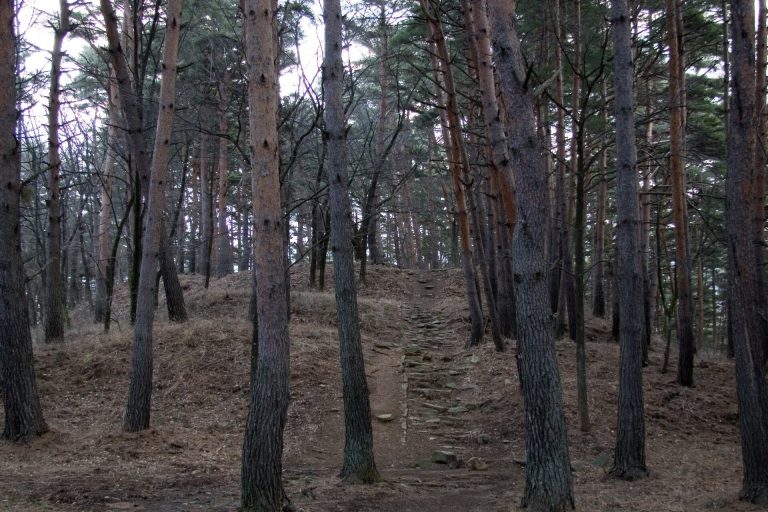
The approach rises from the torii gates through the wooded precinct to the Inner Gate. The Main Hall is seen beyond the gate, and the covered passage connects these structures within the shrine compound. The second torii was constructed with materials granted through an Ise Shrine rebuilding cycle. Together, the gates, approach, passage, Inner Gate, Main Hall, and shrine office form the principal arrangement of the precinct.
Sacred grove and trees
Sacred grove
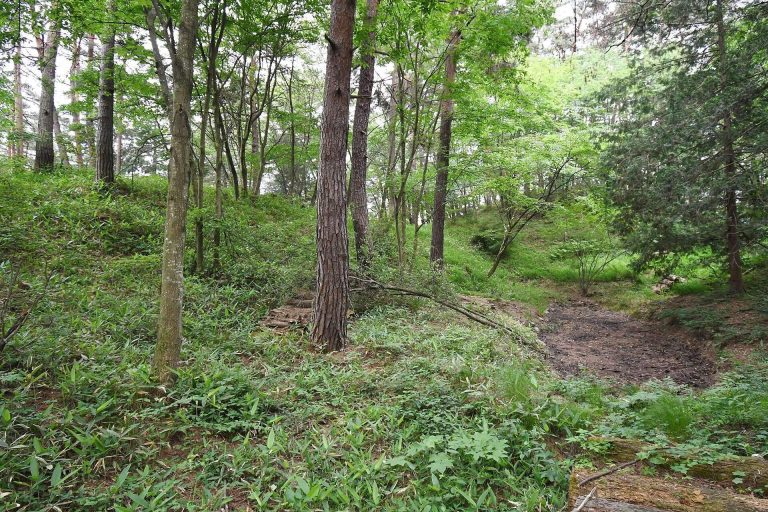
The sacred grove covers 19,258 square metres and is especially dense around the entrance and shrine buildings. Giant cedar and cypress trees form its principal growth, alongside Japanese red pine, chestnut, konara oak, Japanese hemlock, and fir. Large timbers needed for repairs were traditionally felled in the shrine’s forest along the Takase River, with labor supplied by groups from Ōmachi, Ikeda, and Matsukawa.
Sacred cedar
A descendant of the former sacred cedar was propagated from a branch cut after the original tree fell in 1966. The descendant was planted for permanent preservation and continues the physical line of the earlier sacred tree within the shrine’s protected landscape.
Three Cedars
The Three Cedars were estimated to be more than 800 years old, with circumferences exceeding 5 metres and heights greater than 50 metres. In 1979, a strong gust brought down the central cedar because its roots had fused. Its basal section was restored to its original position and preserved.
Votive Buddhist images
The shrine is associated with sixteen copper circular votive Buddhist images, made either by attaching separately cast figures to copper discs or by carving and embossing figures into the metal. Five are designated Important Cultural Properties, with eleven additional associated pieces. Some carry inscriptions dated 1278 and 1284, providing material links between the shrine complex and the religious practices of the medieval period.