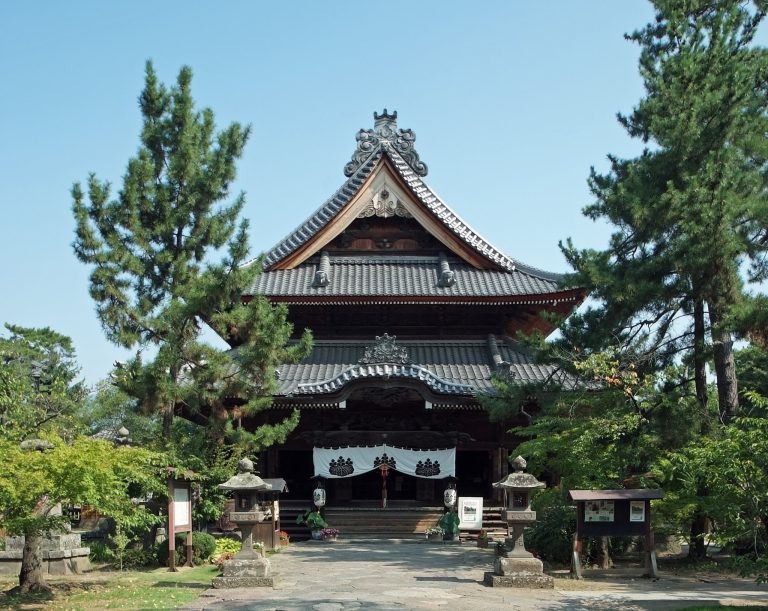
Hayashi Castle: An Ogasawara Mountain Fortress in Japan
Site at a Glance
- Rating
- 4
- Popularity
- Very Low
- Country
- Japan
- Primary era
- Medieval
- External website
- Open
- Eras represented
- Medieval
- Civilizations
- Ashikaga shogunate
- Site type
- Military
- Remains
- Castle
On this page8 sections
History
Hayashi Castle is a Japanese mountain castle in Matsumoto, Japan, built in 1459 during the Muromachi period as the residence and headquarters of the Ogasawara clan. The clan held the office of shugo, a provincial military governor appointed under the shogunate, in Shinano Province. Ogasawara Kiyomune constructed the castle to replace the smaller fortified residence at Igawa Castle.
The Ogasawara stronghold
After Ogasawara Nagamune subdued the related Matsuo branch and unified the Ogasawara clan, he moved its base to Hayashi Castle. The fortress became part of a network of Ogasawara strongholds around the Matsumoto Basin, including Kirihara, Yamabe, Haibara, and Fukashi castles. Fukashi Castle later became known as Matsumoto Castle.
During the Sengoku period, an era of prolonged warfare among regional military powers, the Ogasawara position came under pressure from Takeda Shingen, the leading warlord of the Takeda clan. In 1548, Ogasawara Nagatoki was defeated by Shingen at the Battle of Shiojiritoge Pass and forced to abandon Shinano. Takeda forces retained Hayashi Castle and other fortifications in the Matsumoto Basin, using them to secure their rear while Matsumoto Castle served as a base for operations against Uesugi Kenshin in Echigo Province.
Fall and later political changes
On 15 July 1550, Ogasawara Nagatoki, the son of Ogasawara Nagamune, was attacked by Takeda Shingen, and Hayashi Castle fell in a single night. The Ogasawara later returned to Shinano with the support of Tokugawa Ieyasu after Oda Nobunaga destroyed the Takeda clan. Kiso Yoshimasa briefly ruled the Matsumoto area after Nobunaga’s death in 1582, but the Ogasawara subsequently had to leave the province.
The clan definitively abandoned its Shinano castles in 1590, after Toyotomi Hideyoshi ordered the Tokugawa clan to relocate to the Kanto region. Hayashi Castle and the associated ruins of Igawa Castle were designated together as a National Historic Site in 2017. Hayashi Large Castle had already received prefectural historic-site status in 1970, and the smaller fortification was proposed for addition to the national designation in 2018.
Remains
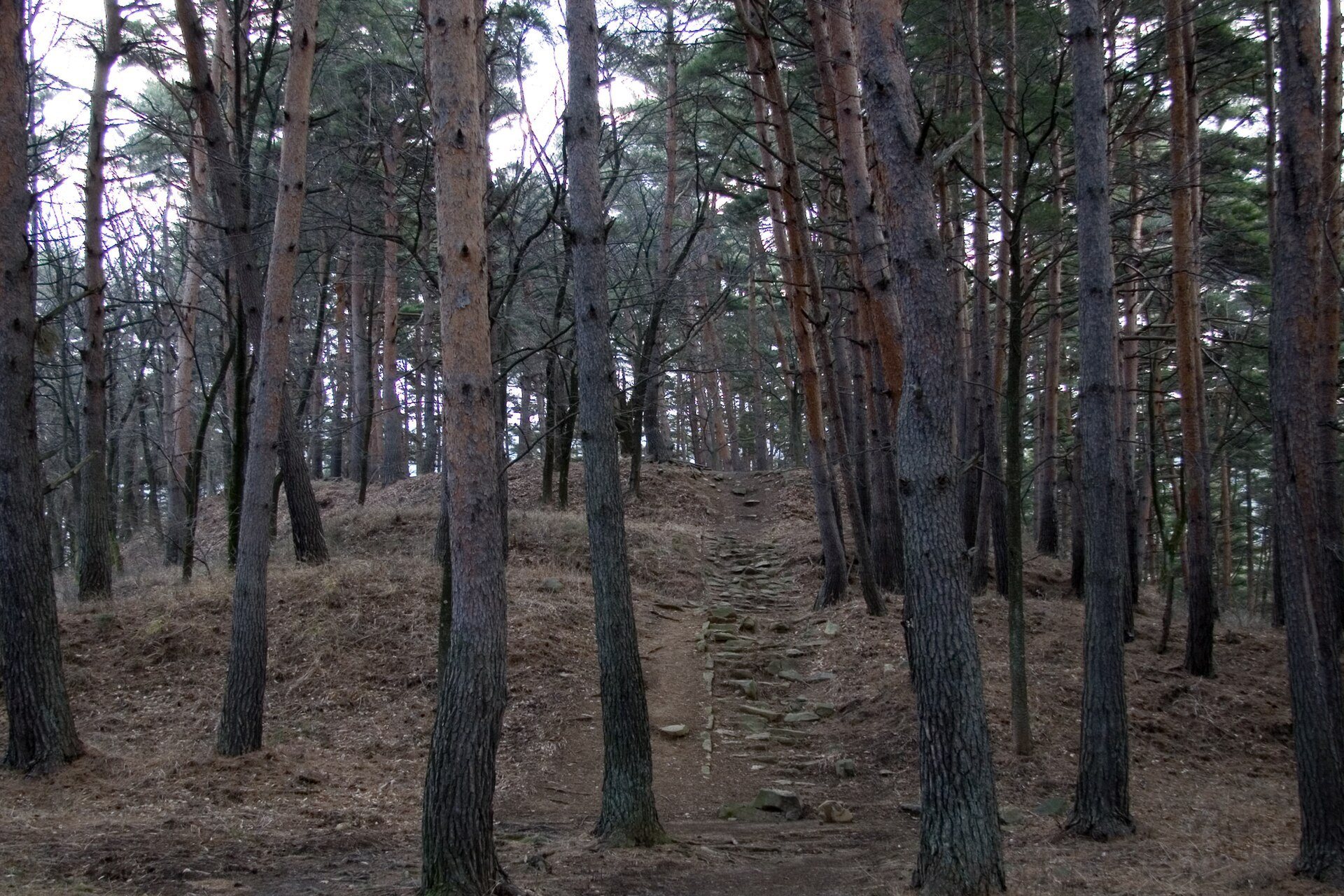
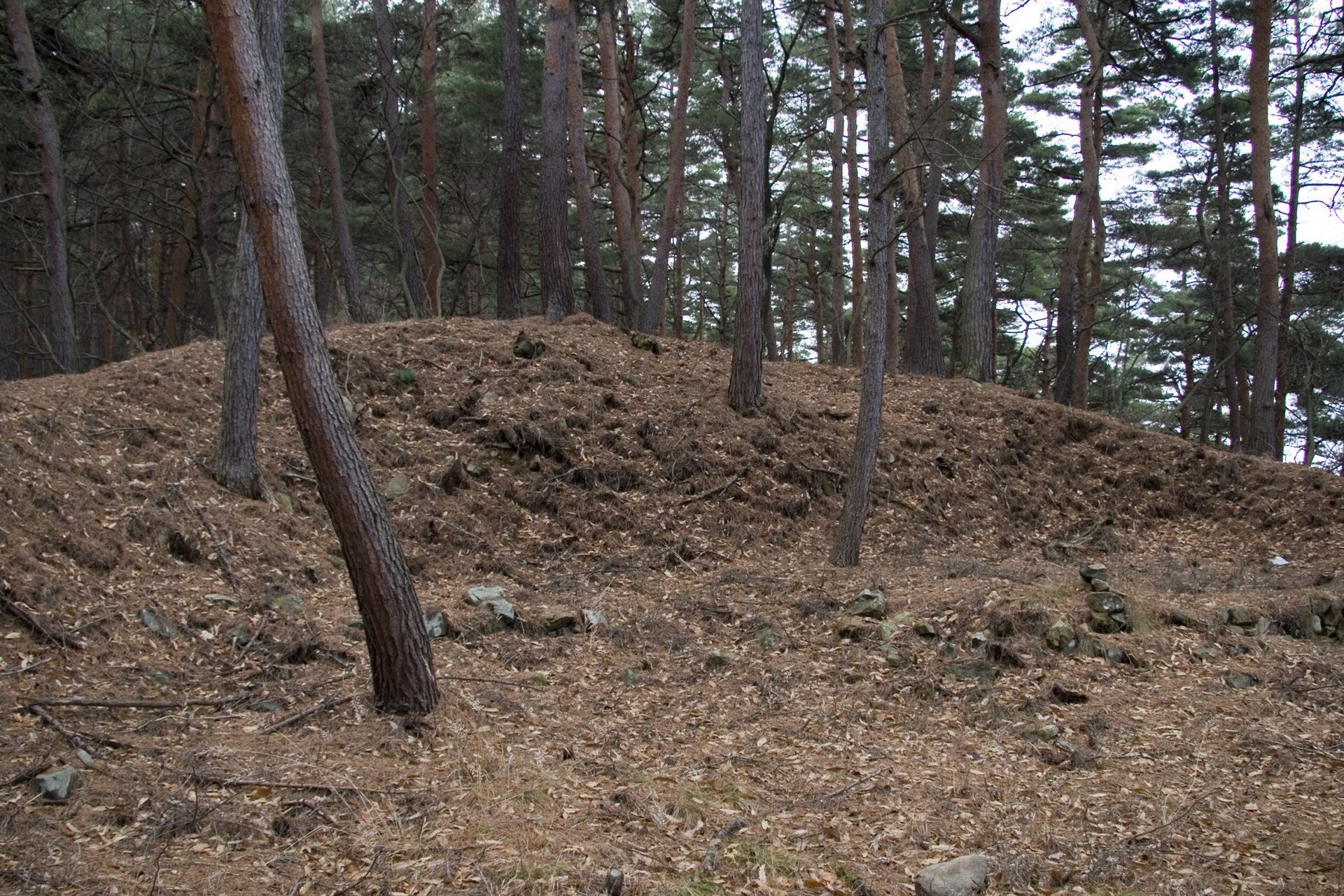
Hayashi Castle occupies a ridge extending northwest from the Takato Mountains in southeastern Matsumoto. The site consists of two fortifications on opposing ridges, separated by a small valley. The northern and larger stronghold served as the residential area of the Ogasawara lords, while the southern fortification formed the main defensive center. Together, the surviving remains include enclosures, earthwork walls, stone walls, stairs, a well, and dry moats. Above-ground remains are limited, and the site is chiefly characterized by its earthworks and excavated moats.
Ridge fortifications
Hayashi Large Castle
Hayashi Large Castle, also called Kinkazan Castle, lies on the northern ridge. Its summit contained a relatively level area of about 100 square meters, enclosed by earthworks and stone walls. Terraces protected the front of the summit, while dry moats guarded the rear. The central area was not readily defensible, reflecting the distinction between this residential stronghold and the more heavily defended southern fortification.
Hayashi Small Castle
Hayashi Small Castle, also called Fukuyama Castle, stood about 500 meters south of the larger castle. Several terraces were arranged at different levels, supported by strong stone ramparts and dry moats. Its complex plan and defensive construction have led to the view that it was built later than Hayashi Large Castle, rather than representing an earlier old castle as once believed.
Foothill settlement
At the foot of the ridges, the settlement of Otakasaki developed as a castle-town area associated with the two fortifications. The relationship between the settlement and the ridge strongholds forms part of the surviving archaeological setting of Hayashi Castle.