Inariyama Kofun: A Sixth-Century Elite Burial Mound in Japan
Site at a Glance
- Rating
- 4
- Popularity
- Very Low
- Country
- Japan
- Primary era
- Medieval
- External website
- Open
- Eras represented
- Medieval
- Civilizations
- Yamato
- Site type
- Burial
- Remains
- Burial Mound
On this page12 sections
History
Inariyama Kofun is an ancient Japanese elite burial mound in Kamo, Takashima, Japan, probably built during the first half of the sixth century. It was a keyhole-shaped kofun, a large burial mound with a circular rear section and a rectangular front section, and stood on the right bank of the Kamogawa River in the central Takashima Plain. Its date is supported by Sue ware, a high-fired ceramic tradition of the Kofun period.
Tradition and Transformation of the Mound
The mound originally occupied communal village land and was traditionally connected with the worship of Inari. Earlier local traditions called the place “Tenno” and described it as the site where a portable shrine had been buried. Fear of divine retribution helped protect the mound from being converted into cultivated land.
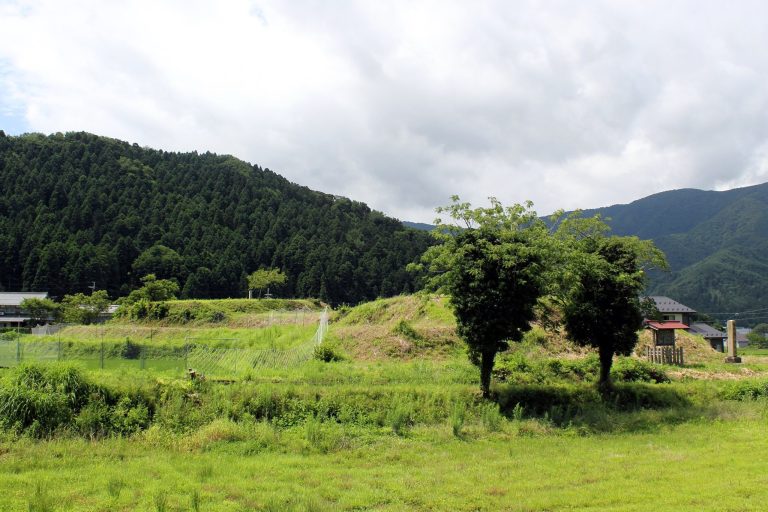
Even so, the surrounding area was gradually reclaimed for rice fields, reducing the mound over time. By the Meiji period, it was described as a wooded, roughly domed rise several dozen metres across and 5 to 6 metres high. A stone exposed on its surface created a cavity that became a den for foxes and other animals.
Discovery and Early Investigations
Road-improvement work began in 1902, with soil taken from the mound. On August 9, workers exposed a stone sarcophagus and thereby revealed the site’s funerary purpose. Excavation stopped, and on the following day local and county officials, together with police, supervised the opening and examination of the sarcophagus.
A local resident recorded the arrangement of the burial and prepared a plan. In November 1902, investigators from the Imperial Household Agency’s Office of Imperial Mausolea examined the burial, and major objects were sent to Tokyo. Some were later returned to the village, but the Tokyo Imperial Museum ordered the principal finds to be submitted in October 1912.
Kyoto Imperial University carried out a preliminary investigation on July 15 and 16, 1922, followed by a full investigation from April 17 to 19, 1923. The detailed excavation report appeared on November 25, 1923. These investigations preserved information about the sarcophagus, the burial arrangement, and the condition of the objects placed with the deceased.
Interpreting the Burial
The deceased is generally associated with the Mio clan, a local lineage connected with the Takashima area and traditionally linked to Emperor Keitai’s family. One interpretation identifies the burial as that of a Mio chief who supported Keitai. Another proposes that the deceased was a son of Emperor Keitai, possibly the prince whose name is understood to mean “eldest son.” These identifications remain hypotheses.
The tomb’s luxurious grave goods, house-shaped stone sarcophagus, and other forms associated with the Kinai, the central region around present-day Nara and Osaka, have been interpreted as evidence of a direct connection with central royal authority. The combination of a broad-banded double-mountain crown, a twisted ring-pommel sword, and a trefoil-decorated oval horse fitting occurs at this tomb and at Moshime Kurumazuka Kofun. Together, these objects have been regarded as a distinctive form of royal prestige equipment.
The objects also point to strong connections with Greater Gaya and Silla, major Korean Peninsula polities whose material culture and exchange networks influenced elite burial goods in the Japanese archipelago. The 1922 and 1923 investigations interpreted the objects as evidence of advanced foreign cultural and technical influence, while rejecting the claim that these connections alone prove the deceased was an immigrant or descended from immigrants.
An earlier interpretation identified the deceased as Hikonushi no Ō, the figure presented in traditional genealogy as Emperor Keitai’s father. This view is now generally rejected because the tomb dates too late. Tanaka Ōtsuka Kofun, a late-fifth-century round or scallop-shaped mound, is more often associated with that earlier ruler.
Protection and Later Research
Research continued through surveys in 1978, a road-related excavation in 1981, investigations connected with construction of a shelter for the sarcophagus in 1986 and 1987, and monitoring during development north of the mound in 1990. Further work in 1993 supported preservation of the site, while a topographic survey was completed in 2015.
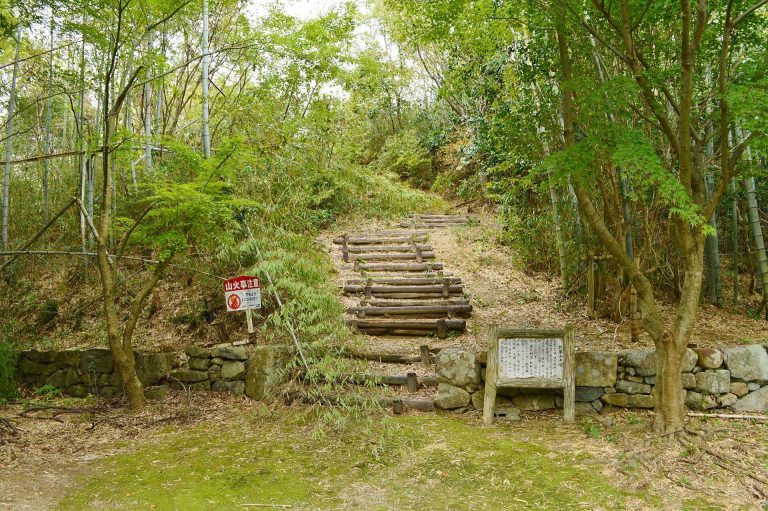
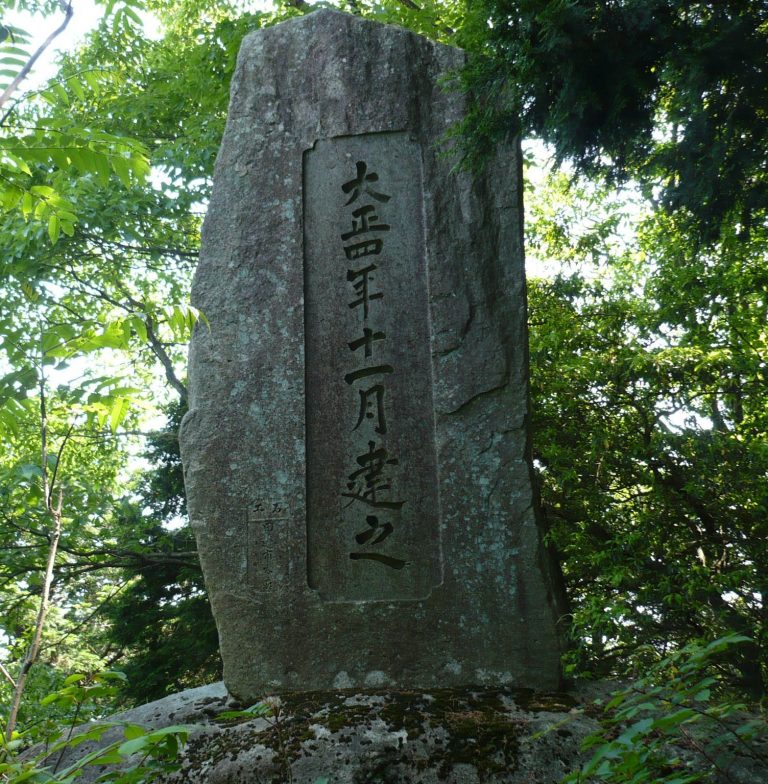
Inariyama Kofun became a Shiga Prefectural Historic Site in 1964. After the 1993 investigation, the designated area was backfilled and covered with soil. This protective treatment preserved both the burial mound’s archaeological setting and the wider remains while the site was developed as a historic-site park.
Remains
Inariyama Kofun was laid out as a keyhole-shaped mound with a rectangular front section facing south and a circular rear section containing the burial. Its former length is estimated at approximately 50 metres. The monument was the only known keyhole-shaped mound in the western Lake Biwa region situated on an open plain. The burial facility and associated archaeological layers are now protected beneath the covered historic-site area.
Mound and Burial Facility
Keyhole-Shaped Mound
The mound’s plan combined a circular rear with a south-facing rectangular front, the characteristic form of an elite tomb in the Kofun period, an era of increasingly powerful regional rulers and expanding political integration in Japan from about the third to the sixth centuries. The mound was gradually reduced as land around it was reclaimed for rice cultivation, but its former scale and orientation remain important for understanding the site’s original design.
House-Shaped Stone Sarcophagus
The burial lay in the circular rear section inside a house-shaped sarcophagus carved from tuff. This type of coffin imitates a small dwelling, with a roof-like lid, and was made by hollowing out a principal block or blocks of stone. When discovered beneath a large ceiling stone in 1902, the stone chamber was reported to measure about 9 metres long, 1.8 metres wide, and 1.8 metres high.
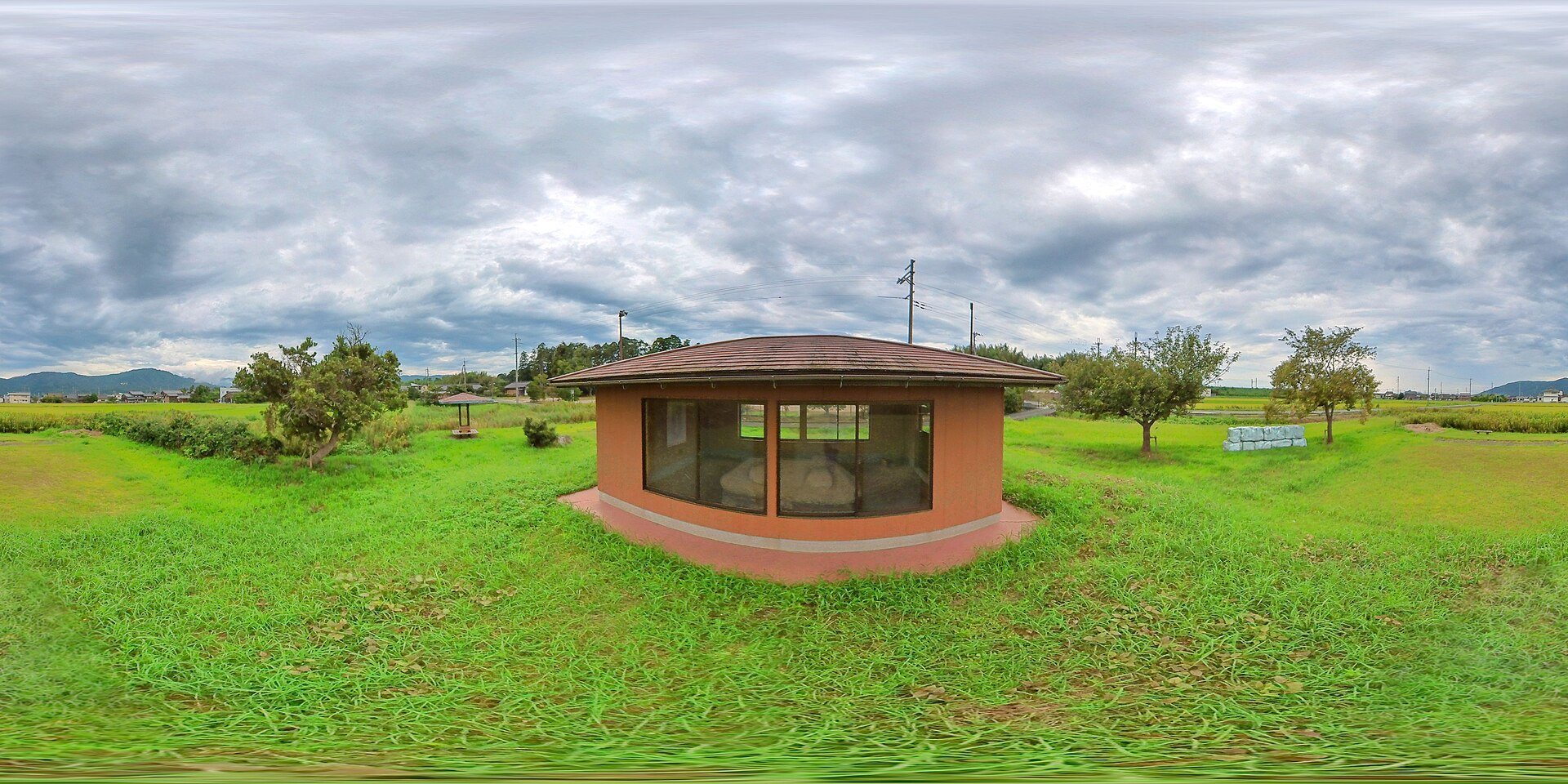
The chamber was later dismantled, while the sarcophagus remains preserved in a shelter at the site, reportedly in the position in which it was placed about 1,500 years ago. The sarcophagus measures approximately 2.5 metres long, 1.2 metres wide, and 1.5 metres high, with a weight estimated at several tons.
The tuff came from Mount Nijo on the border of Osaka and Nara prefectures. It travelled more than 100 kilometres by water, along the Yamato River, through Kawachi Lake and the Yodo River, across Lake Ogura, and along the Uji and Seta rivers. From there it was moved north beside the western shore of Lake Biwa to Takashima. This transportation effort has been interpreted as a display of political power.
Grave Goods and Archaeological Finds
Royal Prestige Equipment
The burial contained an elaborate collection of grave goods, including a crown, shoes, swords, ornaments, horse fittings, and gold earrings. Excavators recorded two swords beside the body and another blade laid diagonally across it. Crown-like material and beads lay near the head, while shoes were placed near the feet.
Three objects form the most distinctive group: a broad-banded double-mountain crown, a twisted ring-pommel sword, and an oval horse fitting decorated with a trefoil motif. Their combination is associated with royal authority during the period. The crown and other ornaments were considered to have prototypes on the Korean Peninsula. They may have been imported or made in Japan by artisans of Korean origin, but the excavators did not treat them as proof of the buried person’s immigrant ancestry.
The principal excavated objects are preserved in the Tokyo National Museum. The stone sarcophagus remains at Inariyama Kofun in its protective shelter.
Clay Figures and Ceramics
Fragments of cylindrical haniwa, clay funerary figures and cylinders placed on or around burial mounds, were found north of the mound in 1990. One interpretation connects their manufacture with the Niike haniwa kiln associated with Imashirozuka Kofun.
Complete Sue-ware cup lids and cup bodies were recovered during the 1986 and 1987 investigation. They belong to the TK10 phase of the Tanabe chronology and helped place the tomb in the first half of the sixth century. The 1993 investigation also detected stones east of the sarcophagus that may have formed part of the stone chamber. Pottery fragments dating from the Yayoi through the Kofun period were found in an underlying dark-brown clay layer, and the remains were reburied for protection.