Kannonji Castle: A Sengoku Mountain Stronghold in Japan


Site at a Glance
- Rating
- 4
- Popularity
- Low
- Country
- Japan
- Primary era
- Medieval
- Eras represented
- Medieval, Early Modern
- Civilizations
- Ashikaga shogunate
- Site type
- Military
- Remains
- Castle
On this page8 sections
History
Kannonji Castle is a Sengoku-period mountain castle in Japan, established by the Rokkaku clan on Mount Kinugasa as an administrative center, military rallying point, principal residence, and base for defending Ōmi Province. Its origins reach back to the fourteenth century, while rebuilding during the Ōnin era, the civil war fought from 1467 to 1477 and often regarded as the beginning of the wider Sengoku period, led to its reported completion by 1468 under the name Sasaki Castle.
The Rokkaku Stronghold
The Rokkaku were a samurai branch of the Sasaki clan. Under the Ashikaga shogunate, the medieval military government associated with the Ashikaga family, they held the office of shugo, or provincial military governor, of Ōmi. Their effective power lay mainly in southern Ōmi, while the rival Kyogoku clan controlled the northern part of the province. This division made Kannonji Castle a base from which the Rokkaku could administer their territory and confront competing regional powers.
The castle changed hands three times during the Ōnin War. Twice, the conflict involved the Rokkaku and Kyogoku clans; on the third occasion, rival branches of the Rokkaku fought one another. The instability gradually gave way to renewed Rokkaku authority under Rokkaku Takayori, who died in 1520. With support from the Muromachi shogunate, Takayori seized estates belonging to nobles and Buddhist temples, reunifying and strengthening the clan’s position.
Prosperity and Political Strain
Takayori’s son, Rokkaku Sadayori (1495–1552), presided over a period of prosperity. At Ishidera, the settlement at the foot of the mountain, he abolished the local guild system. He also supported the expelled shogun Ashikaga Yoshiharu and used his political influence to bring the Azai clan under Rokkaku control. Kannonji therefore stood at the center of both local administration and wider struggles over the Ashikaga political order.
Renovations carried out during the Kōji era (1555–1558) enlarged the castle’s stone ramparts so that they could accommodate small cannons. The improvement came during the rule of Rokkaku Yoshikata (1521–1598), when the clan’s authority was beginning to weaken. Azai Nagamasa broke away from Rokkaku control and defeated a large Rokkaku army. Revolts by senior retainers followed, and Yoshikata was temporarily driven from Kannonji Castle by his own followers.
Fall to Oda Nobunaga
In 1568, Oda Nobunaga defeated the Rokkaku after they attempted to block his march toward Kyoto. Nobunaga was escorting the exiled Ashikaga Yoshiaki, who was seeking installation as shogun and would become the last Ashikaga shogun. Nobunaga entered Kannonji Castle without resistance and continued toward Kyoto, bringing the Rokkaku stronghold into the orbit of his expanding power.
Yoshikata fled to the mountainous Kōka region and continued resistance from Mikumo Castle, but he did not regain Kannonji. Nobunaga kept the castle as a defensive position after completing nearby Azuchi Castle. Rokkaku resistance continued, including a major defeat by Shibata Katsuie in 1570, while Kannonji remained under Nobunaga’s control.
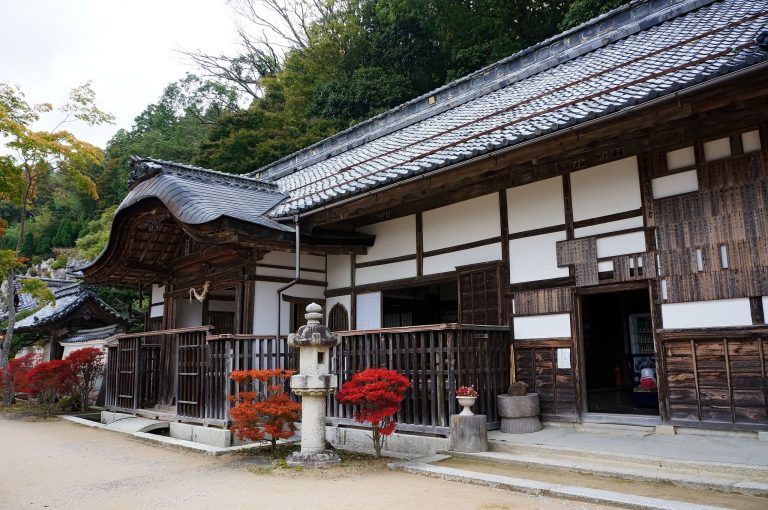
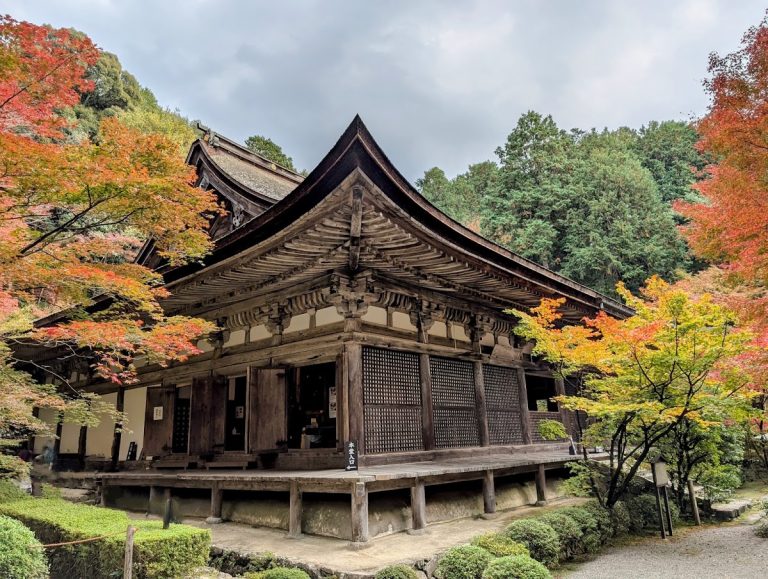
After Nobunaga was assassinated in 1582, Kannonji Castle was attacked and burned together with Azuchi Castle. Local peasant looters may have been responsible for the destruction. The fire ended the castle’s active role, although parts of its former area later came to be associated with Kannonshō-ji, the Buddhist temple near the summit. During the Edo period, the temple became a popular pilgrimage destination, and its activity helped recover secondary parts of the former castle area.
Excavation and Protection
Archaeological excavations in 1969 and 1970 uncovered artifacts in the main enclosure. The ruins received protection as a National Historic Site of Japan in 1982, and the protected area was expanded in 1984. In 2006, the Japan Castle Foundation included Kannonji among Japan’s Top 100 Castles. It is also regarded as one of Japan’s five greatest mountain castles.
Remains
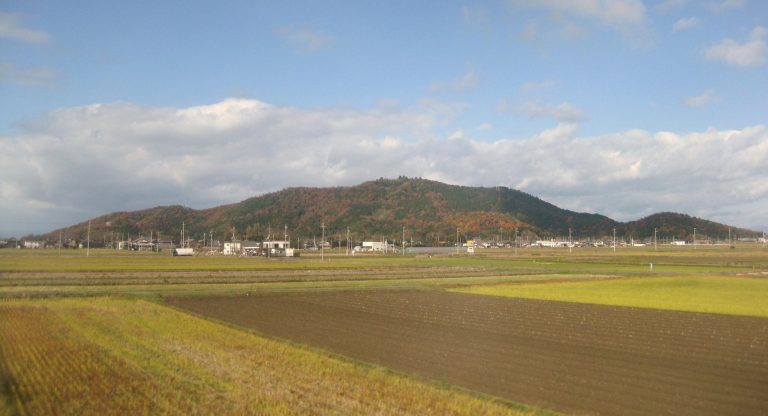
Kannonji Castle occupied the ridgeline of Mount Kinugasa near Lake Biwa and close to the ruins of Azuchi Castle. Its elevated position overlooked the surrounding plains and placed the stronghold near routes linking Kyoto with the eastern provinces and the Sea of Japan, including the Nakasendō, Tōkaidō, and Hokkoku Kaidō highways. As a yamashiro, or Japanese mountain castle whose ridges and slopes formed much of its defense, it spread gradually across much of the mountain.
Mountain Layout and Defensive Works
The principal areas extended along the southern slope and along ridges running east and west from the summit. The castle covered an estimated area about 800 meters long and 400 meters wide. Numerous terraces occupied the slopes and provided space for residences belonging to the Rokkaku clan and their retainers. Stone walls marked the outer lines and central areas, while the principal defenses also relied on earthen ramparts, dry moats, and enclosures positioned to overlook one another.
The castle was built mainly from stone and wood. Its stone ramparts were comparatively low because stone fortification was still a relatively new technique, and the Kōji-era enlargement adapted them for the use of small cannons. The combination of terraces, earthen embankments, dry moats, and mutually overlooking enclosures extended the defensive system across the mountain rather than concentrating it in a single compact structure.
Main Enclosure and Summit Area
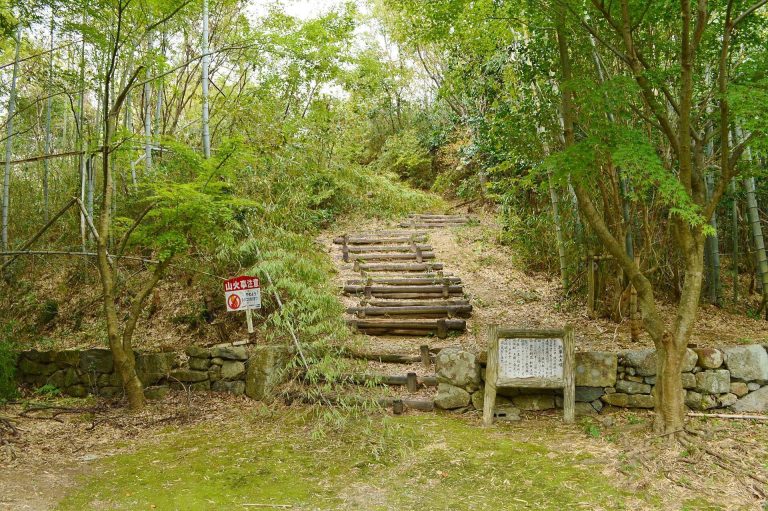
The main enclosure, or hon-maru, was the principal defensive and residential area of the castle. Artifacts were found there during the 1969–1970 excavations, providing archaeological evidence from the castle’s central area. The surviving remains are fragmentary, with sections of stone walls and a stone-lined well forming the principal physical evidence, together with a historical signboard.
Kannonshō-ji stands near the mountain summit and gave the castle its name. The temple also became associated with the recovery of secondary parts of the former castle area. Together with the terraces, ridges, stonework, and summit remains, it forms part of the surviving physical setting of the former Rokkaku stronghold.