Azuchi-Hyōtanyama Kofun: An Early Kofun-Period Burial Mound in Japan
Site at a Glance
- Rating
- 3.7
- Popularity
- Very Low
- Country
- Japan
- Primary era
- Classical
- External website
- Open
- Eras represented
- Classical
- Civilizations
- Yamato
- Site type
- Burial
- Remains
- Burial Mound
On this page10 sections
History
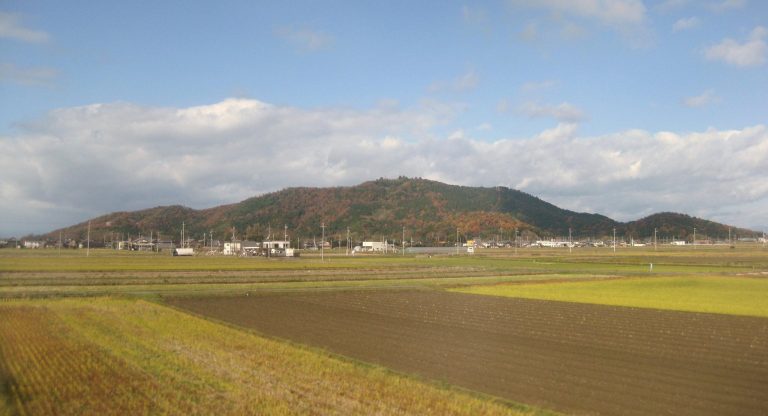
Azuchi-Hyōtanyama Kofun is a large burial mound in Omihachiman, Japan, probably built around the middle of the fourth century AD during the early Kofun period. A kofun is a monumental Japanese burial mound associated with the formation and expansion of powerful regional chiefdoms and the Yamato polity, the political authority based in the Kinai region that helped form the ancient Japanese state. The mound occupies a ridge on the eastern shore of Lake Biwa and is the largest kofun in Shiga Prefecture.
A strategic fourth-century burial place
When the mound was constructed, Lake Biwa stood at a higher level and the ridge extended into the lake as a peninsula. A major land route linking the Gamō and Kōka districts passed at the peninsula’s base. From this position, the burial mound overlooked important communications by both land and water, placing it within a strategically valuable landscape.
Its principal burial is generally identified with the central stone chamber in the circular rear section. This chamber is thought to have been built first, while the other four burial facilities may have been intended for close relatives. The identity of the principal occupant remains uncertain. One interpretation identifies the deceased as a chief of the local Sasaki-yama no kimi lineage, an ancient chiefly family associated with the surrounding area. Another sees the person as an individual sent by the Yamato polity to counterbalance that local power. The nearby Yukinoyama Kofun has also been considered in relation to these interpretations.
Excavation and protection
The mound was excavated in 1935 and 1936. The first investigation examined the front section after two box-type stone sarcophagi were discovered. The following year, three stone chambers in the rear section were investigated. Sueji Umehara directed both projects, with the 1935 work carried out by the Japanese Institute for Ancient Cultural Research and the 1936 investigation conducted by Shiga Prefecture.
The site was designated a National Historic Site of Japan under the name “Hyōtanyama Kofun” on July 1, 1957. Part of the designated area was removed from the designation on January 31, 2000. The mound’s length was formerly stated as 162 meters, while more recent Shiga Prefectural Board of Education materials give 134 meters. An older display at the Shiga Prefectural Azuchi Castle Archaeological Museum gave 136 meters.
Remains
Mound and orientation
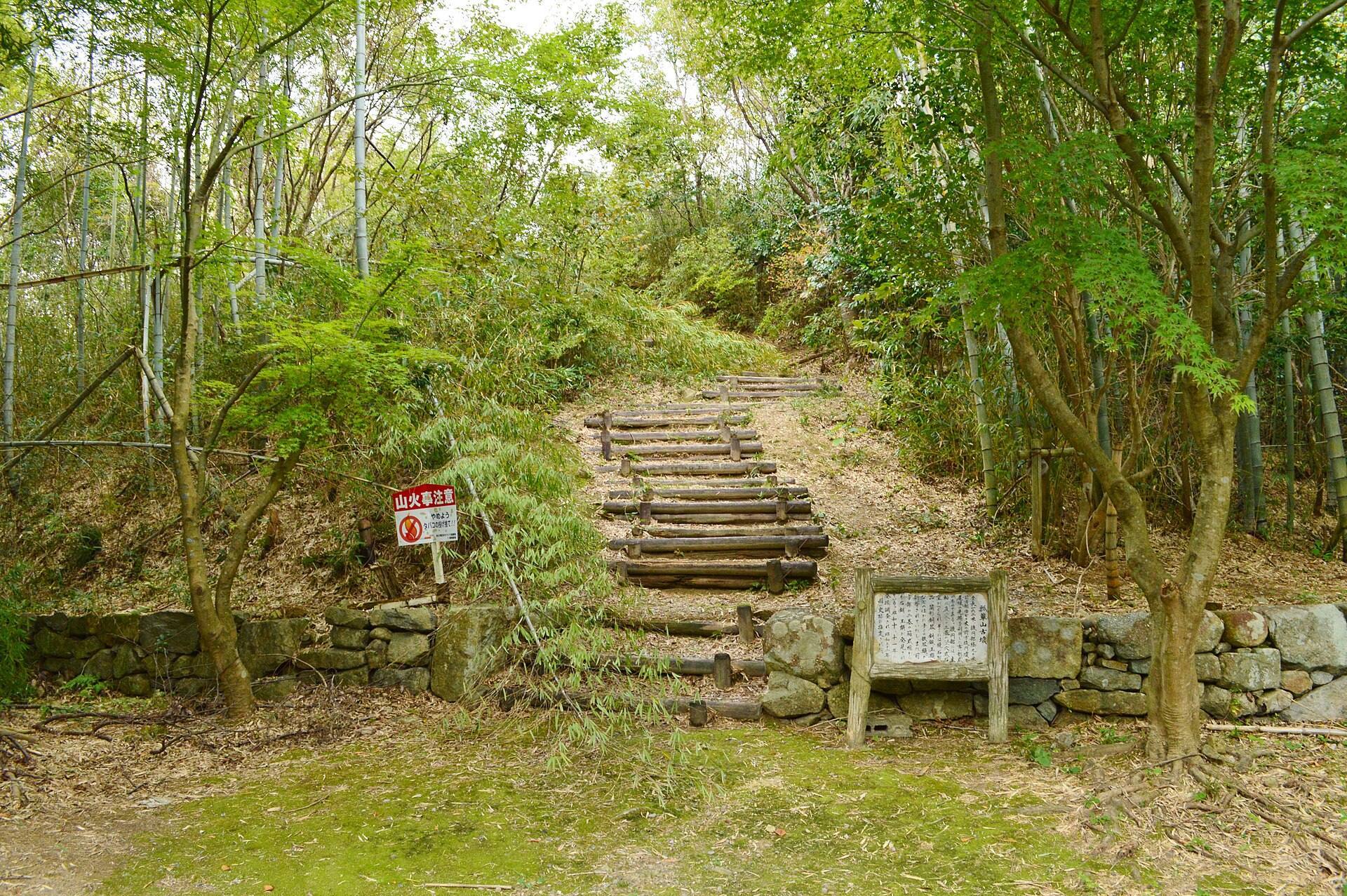
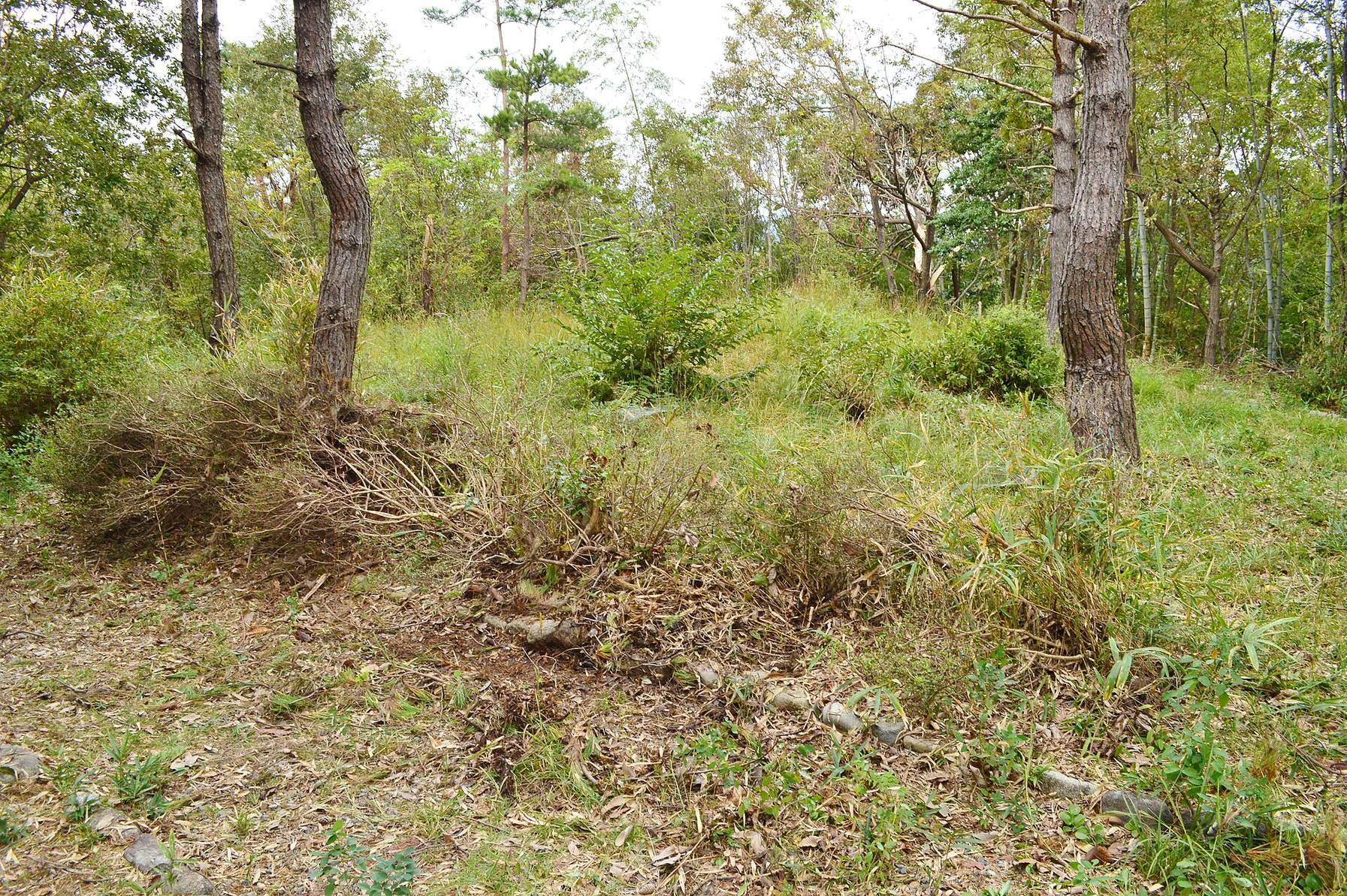
Azuchi-Hyōtanyama Kofun is a keyhole-shaped mound, or zenpō-kōen-fun, a form combining a rectangular front section with a circular rear section. It lies on a ridge extending from Mount Kinugasa, at the western foot of Mount Kannonji. The mound is oriented toward the northwest, with its front section facing the plain.
Using the more recent measurement, the mound is approximately 134 meters long, and the rear section rises about 13 meters high. Its original terraced construction cannot be determined, and clearly identifiable stone revetment on the exterior has not been established.
Burial facilities
Central posterior chamber
The central stone chamber in the circular rear section measures 6.6 meters in length, 1.3 meters in width, and approximately 1.08 to 1.1 meters in height. Neatly cut stones were laid in short-face masonry to form the chamber. A clay floor supported a coffin shaped like split bamboo and made from Japanese umbrella pine. Traces of the coffin survived, although the coffin itself had disappeared. This chamber contained a much more varied group of grave goods than the other burial facilities, supporting its identification as the principal burial.
Other posterior chambers
The northwestern chamber is 6.9 meters long, 1 meter wide, and 0.9 meters high. It was built with large, irregular stones. The southeastern chamber measures 5.7 meters in length and 0.75 meters in width, with its height unknown, and was likewise constructed from large irregular stones. The different masonry used in the three rear chambers indicates that they were built at different dates. Their main axes run perpendicular to the long axis of the mound.
Anterior stone sarcophagi
Two box-type stone sarcophagi were directly interred in the rectangular front section. The first measures 1.9 meters long, 0.6 meters wide, and 0.6 meters high. The second is 1.6 meters long, 0.7 meters wide, and 0.6 meters high. Unlike the three rear chambers, the sarcophagi are arranged parallel to the mound’s main axis.
Haniwa and grave goods
Cylindrical haniwa, clay objects placed on and around burial mounds, and jars with holes in their bases were recovered from the mound. The grave goods included bronze mirrors, stone bracelets, hoe-shaped stone ornaments, wheel-shaped stones, comma-shaped and tubular beads, small round beads, shell ornaments, tubular bronze objects, swords, knives, spearheads, bronze and iron arrowheads, axes, hoes, spear-shaped woodworking tools, and short armor.
Among the mirrors were a Chinese-made kui-phoenix mirror and a locally produced imitation of a two-deity, two-beast mirror. Tubular bronze objects and square-plate, leather-laced short armor point to connections with southeastern Korea, while the jasper ornaments have characteristic forms. The excavated artifacts are preserved at the Kyoto University Museum. A reconstructed model of the central chamber and replicas of many of the artifacts are displayed at the Shiga Prefectural Azuchi Castle Archaeological Museum.