Iina Shrine: An Ancient Sacred-Rock Shrine in Tsukuba, Japan


Site at a Glance
- Rating
- 4.2
- Popularity
- Very Low
- Country
- Japan
- Primary era
- Unclassified
- Eras represented
- Unclassified
- Civilizations
- Unclassified
- Site type
- Religious
- Remains
- Sanctuary
On this page7 sections
History
Iina Shrine is an ancient Shinto shrine in Tsukuba, Japan, at the southern foot of Mount Tsukuba. Its identity may be connected with the Iina kami mentioned in the Hitachi Fudoki, an eighth-century account of the geography, traditions, and local institutions of Hitachi Province. The shrine’s foundation date is unknown, but its association with Mount Tsukuba’s sacred traditions gives it an important place in the history of the Usui area.
Ancient traditions and the name Iina
The Hitachi Fudoki does not describe a shrine in Tsukuba District under the name Iina. It refers to the name indirectly through a branch shrine in Shida District. For this reason, Iina Shrine is considered a possible identification rather than a certain continuation of the ancient institution. Another interpretation connects the Iina kami of Mount Tsukuba with Inamura Shrine, one of the subsidiary shrines of Tsukuba Shrine, the principal Shinto shrine complex on the mountain.
One tradition views Iina as a village sanctuary associated with the sacred mountain of Mount Tsukuba. In this respect, it has been compared with the former Rokusho Shrine, a village or remote-worship sanctuary traditionally linked with the deities of the mountain. No foundation record survives among the documents of the former Usui village, so the shrine’s earliest development cannot be dated with certainty.
The place-name also appears in literary and geographical traditions. A poem about Mount Tsukuba in the Man’yoshu contains the expression “ina o kamo,” which has been read as wordplay on Iina Hill or Ina Hill. Historical gazetteers and shrine registers place Iina or Ina Hill in the Usui area, suggesting that the name remained attached to the local landscape.
Medieval and early modern worship
Medieval references call the institution Iinano Shrine or Inano Shrine. The form “Iinano” survives in documentary and archaeological traditions connected with the shrine, while the date when the present name, Iina Shrine, came into use is unknown.
A shrine tradition states that Uke Mochi, a kami associated with food and sustenance, was invited and enshrined at Iinano in 1456. If this event is regarded as the shrine’s foundation, a direct continuity with the much earlier Iina kami of the Hitachi Fudoki remains unproven. A bronze hanging gong associated with Inano Shrine carries an inscription dated 1479 and identifies the shrine as being in Usui, then part of Hojo District.
Another record places a transfer or completion of shrine works on the first day of the Snake in 1591. The wording can refer either to the completion of repairs or to the relocation of the enshrinement, so the precise nature of the event is uncertain. It nevertheless indicates an important phase in the shrine’s physical or institutional history.
In 1660, Benzaiten was established at the shrine with Ichikishima-hime as her deity. Benzaiten is a religious figure associated with water, prosperity, eloquence, and the arts, while Ichikishima-hime became closely identified with Benzaiten in Japanese worship. This addition strengthened Benzaiten devotion, which later became more prominent than the earlier tradition centered on the food deity Uke Mochi. Local usage continues to associate the shrine with several forms of the name Benzaiten of Inano, Iina, and Usui.
Modern status and recovery
Iina Shrine had no rank in Japan’s modern shrine-ranking system and was formerly treated as an unranked shrine. It became a religious corporation on January 23, 1952. The shrine is also regarded as a shikigai shrine, meaning a shrine outside the officially registered system established by the Engishiki. This interpretation reflects its association with the Hitachi Fudoki despite its absence from the Engishiki and later official records.
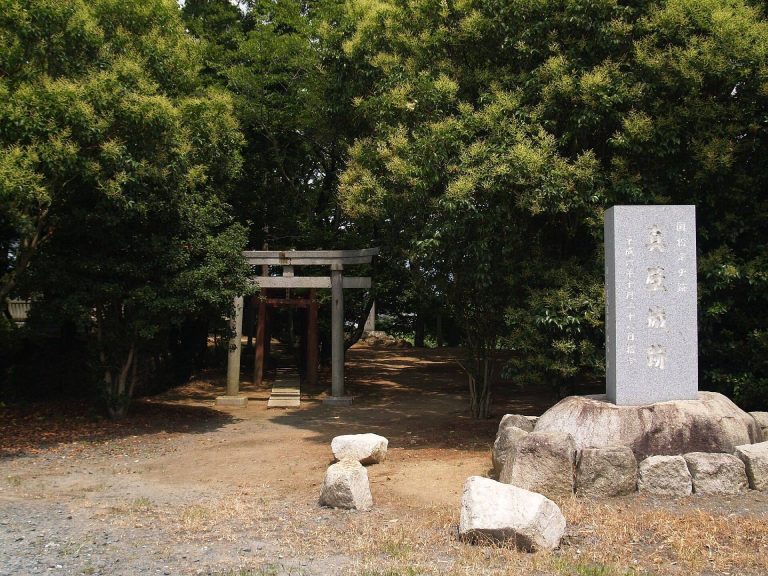
The Great East Japan Earthquake of 2011 damaged parts of the shrine precinct. A recovery and restoration project completed in 2012 improved the torii, stone steps, and stone sacred fences. A stone monument within the precinct commemorates that work. The shrine’s First Day of the Snake Festival, held in the first month of the traditional lunar calendar, generally around February, continues the local Benzaiten tradition through a daruma market, coin washing, and the distribution of auspicious “seed money.” The festival has also traditionally brought vendors of Tsukuba citrus, marine products, bamboo goods, and agricultural supplies.
Remains
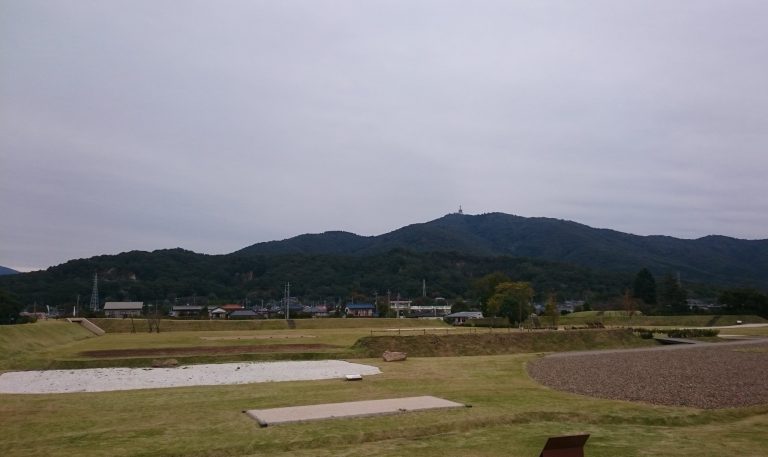
Iina Shrine occupies ground at about 80 metres above sea level in the northwestern part of the Usui district. Mount Tsukuba’s twin peaks stand to the north-northeast, behind the shrine buildings, which face away from them. The precinct combines a sacred natural rock formation with shrine buildings, subsidiary sanctuaries, stone features, and water associated with Benzaiten worship.
Sacred rock and paired stones
The central sacred object is a large naturally occurring rock, or iwakura, a formation treated as the manifestation or dwelling place of a deity. Known as the Female Stone, it has a prominent cleft. Numerous other large rocks in the precinct are marked with sacred ropes, preserving a form of megalithic worship that can exist alongside shrine architecture.
A small Inari Shrine and a standing stone are positioned on top of the Female Stone. The standing stone is identified as the Male Stone. Their female and male contrast has led the Female Stone to be regarded as an embodiment of Benzaiten and to be called Iina Benzaiten. The arrangement connects the natural rock itself with the shrine’s later devotional identity.
Shrine buildings and precinct features
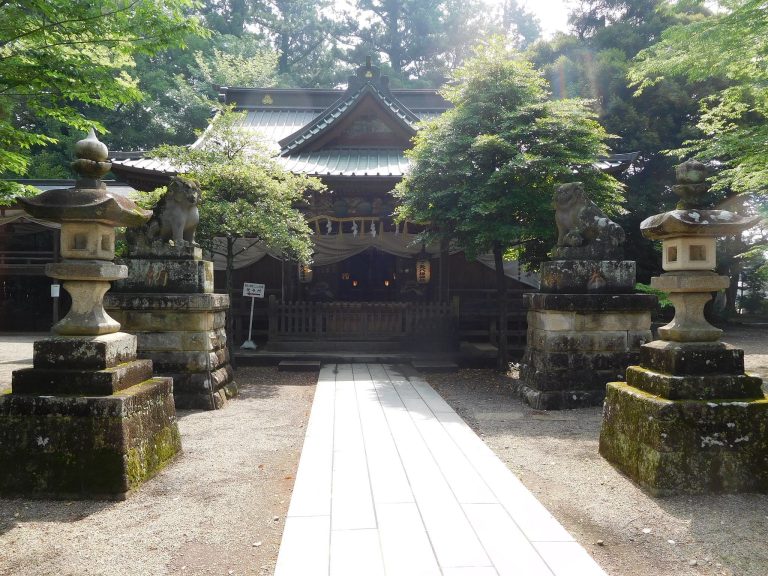
South of the sacred rock, a shrine building and shrine office stand on level ground. The precinct also contains a separate one-bay main sanctuary in nagare-zukuri style, an architectural form with a gabled roof whose front slope projects beyond the rear slope to create a canopy over the entrance. The sanctuary is protected by a covering structure.
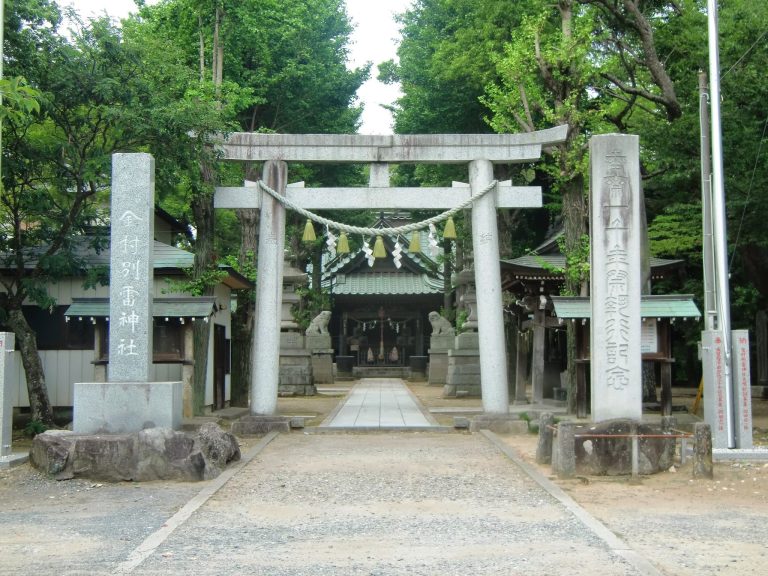
Four subsidiary shrines occupy the precinct: Inari Shrine, Atago Shrine, Mitsumine Shrine, and Yama-no-Kami Shrine. A clear stream runs near the shrine and serves as a place for washing coins. West of the grounds, the Minano River rises near Miyuki-ga-hara, between Mount Tsukuba’s two peaks, and then flows past the shrine area. From the settlement, a paved approach road reaches the precinct, where the torii, stone steps, and stone sacred fences were improved during the 2012 recovery works. The commemorative stone monument for that project is also preserved on the site.