Zeniarai Benzaiten Ugafuku Shrine: Kamakura’s Money-Washing Shinto Shrine


Site at a Glance
- Rating
- 4.3
- Popularity
- Medium
- Country
- Japan
- Primary era
- Modern
- External website
- Open
- Eras represented
- Medieval, Modern
- Civilizations
- Japanese
- Site type
- Religious
- Remains
- Sanctuary
On this page10 sections
History
Zeniarai Benzaiten Ugafuku Shrine is a Shinto shrine in Kamakura, Japan, whose present institution probably took shape in the late nineteenth century around an older sacred spring. Popularly called Zeniarai Benten, it venerates a combined deity formed from Ugafukujin, a water-associated kami, and Benzaiten, the Japanese Buddhist form of Sarasvati.
Foundation traditions and the sacred spring
Tradition places the shrine’s foundation in 1185, when Minamoto no Yoritomo, founder of the Kamakura shogunate, reportedly dreamed of Ugafukujin. He then found a spring rising from the rocks in Sasukegayatsu Valley and established a place for worship of Shinto kami and Buddhist hotoke, with the hope that peace would come to the country.
The shrine’s existence in 1185 remains uncertain. Edo-period topographical records and the Meiji-period Kōkoku Chishi mention the spring or its surrounding area, known as Kakurezato, meaning “hidden country,” but do not mention a shrine. The institution was therefore probably established in the late nineteenth century.
The custom of washing money at the spring is traditionally dated to 1257. Hōjō Tokiyori, the fifth shikken, or senior regent of the Kamakura government, is said to have washed coins there while praying for his family’s prosperity and urging others to follow his example. The practice continued with the belief that Ugafukujin would multiply the money and bring prosperity to later descendants. The spring became known as Zeniarai-mizu, or “money-washing water,” and during the Edo period it was counted among the Five Famous Springs of Kamakura, whose waters were renowned for their quality.
Shinto and Buddhist development
Ugafukujin was later identified with Benzaiten through honji suijaku, a theory that understood Japanese kami as local manifestations of Buddhist deities. The combined deity also acquired associations with harvests and is worshiped at the shrine as a kami of prosperity.
The grounds preserve an uncommon surviving combination of Shinto and Buddhist elements. This religious fusion, known as shinbutsu shūgō, was widespread in Japan before the Meiji period, when the government’s separation of Shinto and Buddhism led many shrines to remove Buddhist objects. Buddhist statues and the use of incense remain part of Zeniarai Benzaiten’s religious character.
Institutional history and archaeology
Zeniarai Benzaiten was formerly an external subsidiary shrine of Yazaka Daijin in Ogigayatsu. The parent shrine had previously been called Soma Tenno before its renaming as Yazaka Daijin during the Meiji separation of Shinto and Buddhism. Zeniarai Benzaiten became independent under its present name in 1970 and is now managed concurrently by Suwa Shrine in Wakamatsu, Yokosuka.
A 1970 field survey identified a group of yagura, rock-cut or cliffside funerary chambers characteristic of medieval Kamakura, above the shrine tunnel. Excavations connected with the group uncovered Buddhist steles, which are preserved at the Kamakura Museum of National Treasures. In 2016, the shrine was recognized as a component cultural property of Japan Heritage.
Remains
Rocky setting and approaches
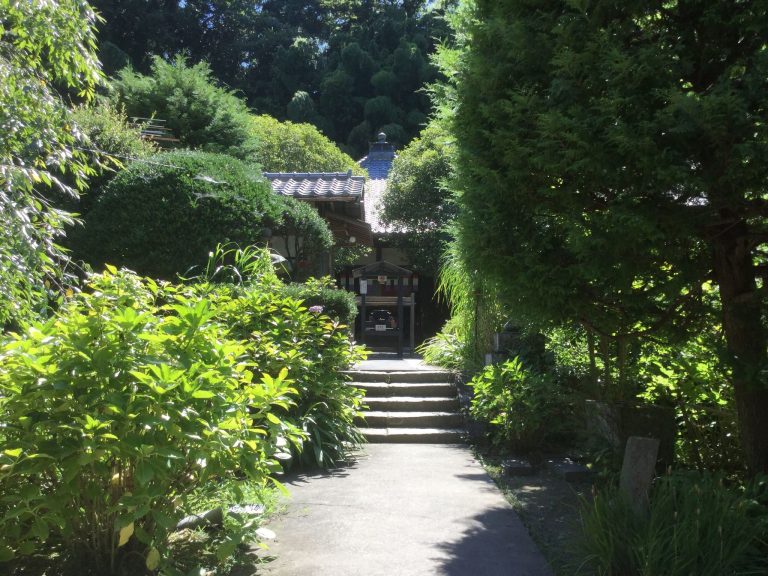
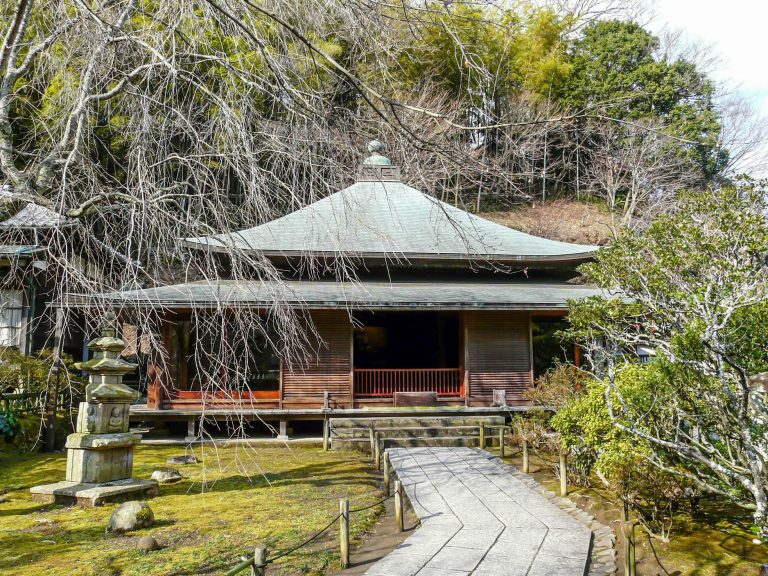
The shrine occupies irregular ground in a narrow rocky setting enclosed by steep, high rock walls on every side. Its buildings stand at different elevations, and stairs connect the separate levels within the grounds.
The present tunnel and its approach, or sandō, were built in 1958 and now serve as the de facto main entrance. Before the tunnel existed, the narrow southern route now called the rear approach formed the original entrance. The older approach lies on the opposite side near the tea houses, passes through several torii donated by worshipers, follows a narrow road, and continues toward Sasukegayatsu Valley.
Sacred buildings and water features
Naikū
The Naikū, or inner shrine, enshrines Ichikishima-Hime-no-Mikoto. It forms one of the principal sacred spaces within the elevated, stair-connected grounds.
Okugū
The Okugū, or inner sanctuary, stands beside the Naikū and takes the form of a cave rather than a separate building. The cave is dedicated to Ugafukujin and Benzaiten, and water flows within it. Sieves are provided for washing coins and banknotes in the spring water. The shrine’s shintai, the sacred object believed to house or embody a kami, is a stone serpent with a human head, the symbolic form of the water-associated Ugafukujin.
Subsidiary shrines
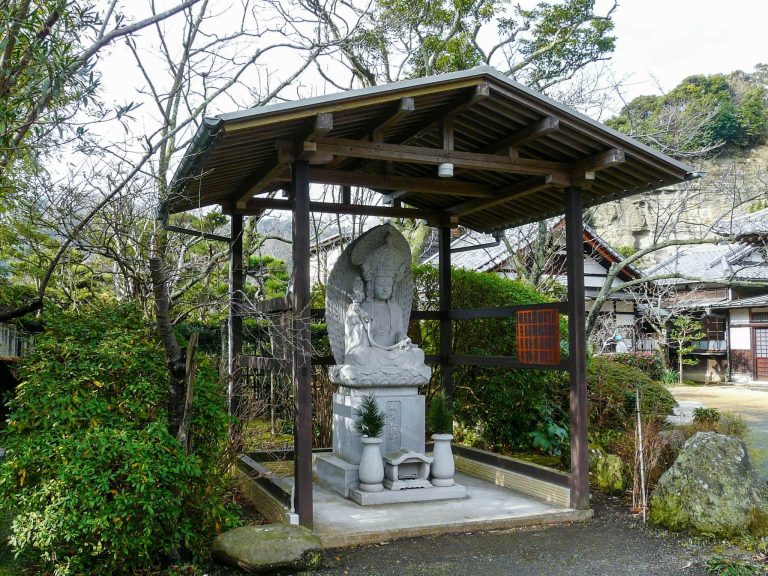
Three subsidiary shrines occupy the grounds: the Upper Water Shrine, the Lower Water Shrine, and the Seven Lucky Gods Shrine. The wider complex also contains dozens of torii, numerous Buddhist statues, and facilities for burning incense, preserving the combination of Shinto and Buddhist features associated with the site.