Iwafune Jizō-dō: A Buddhist Jizō Hall in Kamakura, Japan


Site at a Glance
- Rating
- 3.7
- Popularity
- Very Low
- Country
- Japan
- Primary era
- Modern
- Eras represented
- Early Modern, Modern
- Civilizations
- Japanese, Tokugawa
- Site type
- Religious
- Remains
- Sanctuary
On this page9 sections
History
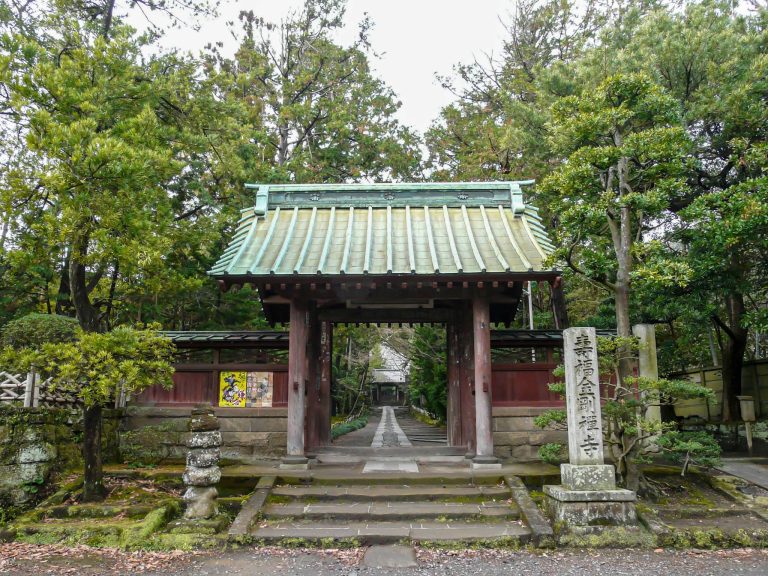
Iwafune Jizō-dō is a Buddhist hall in Kamakura, Japan, administered by Kaizō-ji, a temple in the Kenchō-ji branch of the Rinzai school of Zen Buddhism. Dedicated to Jizō Bodhisattva, a Buddhist figure associated with protecting travelers, children, and the dead, it is the 15th site on the Kamakura Twenty-Four Jizō Pilgrimage. Its foundation date is unknown, but the hall was established by the early eighteenth century and has been rebuilt several times.
Origins and Minamoto Associations
A popular tradition describes Iwafune Jizō-dō as a tomb chapel for Ōhime, the eldest daughter of Minamoto no Yoritomo, who founded the Kamakura shogunate, the military government that ruled from Kamakura during the late twelfth and thirteenth centuries. According to this tradition, the hall was created to enshrine Ōhime’s personal Buddhist image. The story has no firm historical foundation and is treated as a tradition rather than established fact.
Several other interpretations have been proposed. Katsuo Miura suggested that an older, weathered stone image was supplemented during the Edo period by a newly carved wooden image, with a hall built or renewed around it. Other interpretations hold that a stone image once associated with a burial ground became an object of worship, leading to the construction of an enclosure and the addition of a wooden image. Tatsuhiko Ōmiwa questioned this burial-ground interpretation. Takayuki Okutomi instead proposed a connection with Sanman, Yoritomo’s second daughter, who was buried at a hall in Kamegayatsu in 1199. Yukihiko Seki connected this possibility with the former residence of the Ōtomo family south of the hall. The family traced its ancestry to Nakahara Chikayoshi, a Kamakura-period court and military official who was the husband of Sanman’s wet nurse and participated in her memorial observances.
Edo-Period Evidence
The earliest documentary evidence places the hall at least as early as the Hōei period, from 1704 to 1710. A map of Ōgigayatsu Village from that period marks a Jizō hall, while an inscription on an old hall plaque records construction on August 5, 1711.
The association with the Minamoto family had become established by the Edo period. An inscription inside the wooden Jizō image describes it as the guardian image of Yoritomo’s daughter. The wooden image was produced in 1690 by the Buddhist sculptors Mitsuhashi Sōyū, Mitsuhashi Sakyo, and Mitsuhashi Satsuma. Its inscriptions also preserve records of later repairs, including work by Mitsuhashi Zenzō in 1705, Mitsuhashi Kozaemon between 1751 and 1764, and Izawa Zensuke between 1831 and 1845.
Earthquake, Reconstruction, and Conservation
The hall completely collapsed in the Great Kantō Earthquake of 1923, a major earthquake that devastated the Kantō region of Japan. Kaizō-ji rebuilt it as a hip-roofed structure, and an image-installation ceremony took place on March 18, 1925. During the Taishō period, a nenbutsu devotional group, centered on reciting the name of Amitabha Buddha, held gatherings in the main hall.
In 2001, the hall was rebuilt in an octagonal form. During this work, the Cultural Properties Department of Tsurumi University’s Faculty of Literature investigated and conserved the stone image. The restored image was installed in the rebuilt hall, where it remains enclosed behind the altar.
Remains
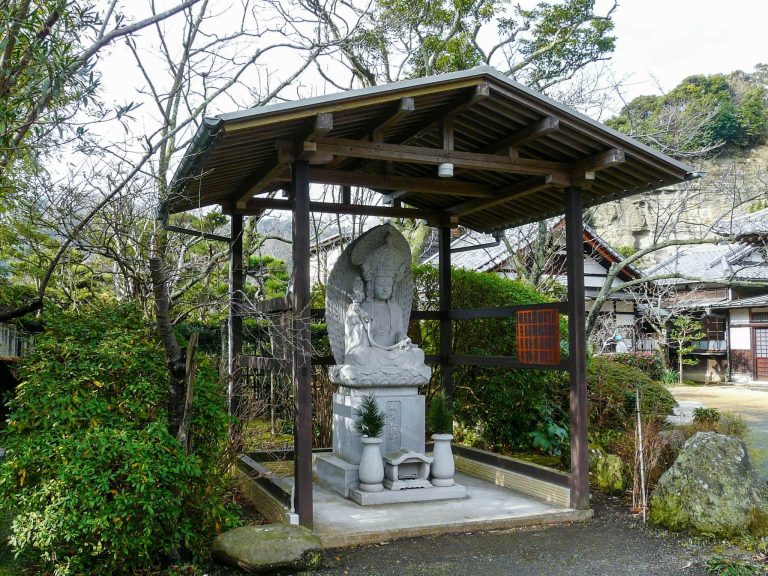
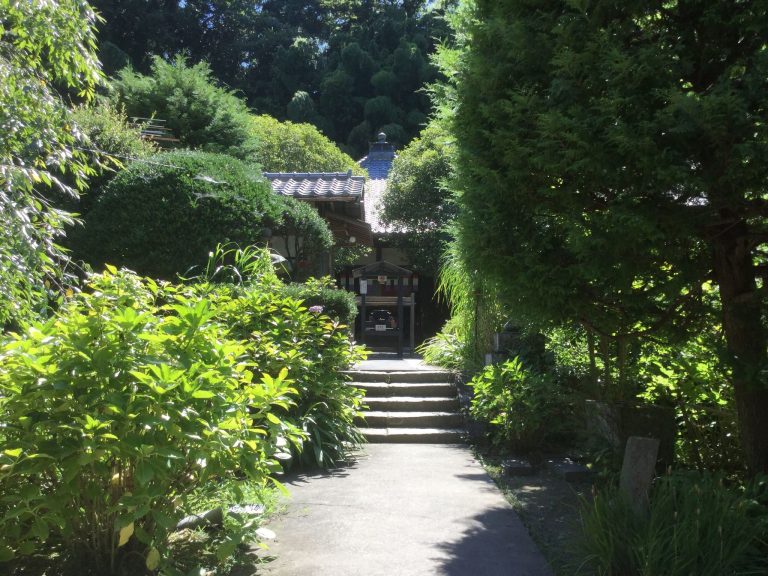
The present structure is an octagonal hall in a Chinese-style design. It is built entirely of Japanese cypress and covered with copper-sheet roofing. The building surrounds the stone Jizō image, which stands directly on the ground, while a wooden Jizō image is placed on the altar as the visible front image before the more restricted stone principal image.
The Present Hall
The octagonal building dates from the 2001 reconstruction and provides the enclosure for the two Jizō images. Its copper roofing and Japanese-cypress construction define the present architectural form of the monument. The hall’s arrangement separates the visible wooden image on the altar from the concealed stone image set behind it.
The Two Jizō Images
Wooden Jizō and Child Attendants
The wooden standing Jizō is approximately 90 centimetres tall and is accompanied by two child attendants. It was made using joined-block construction, in which separately carved sections of wood are assembled into a single figure, and its eyes are inlaid with crystal. Inscriptions inside the image and its attendants attribute their production in 1690 to Mitsuhashi Sōyū, Mitsuhashi Sakyo, and Mitsuhashi Satsuma. Because of this date and its role as the visible front image, it is generally distinguished from the traditionally venerated Iwafune Jizō. The recorded repairs preserve the history of its maintenance from the early eighteenth through the mid-nineteenth century.
Stone Iwafune Jizō
The image known as Iwafune Jizō is a concealed standing figure carved from so-called Kamakura stone, a tuffaceous sandstone. It is approximately 130 centimetres high and 60 centimetres wide. The upper end of its halo is shaped like a boat, a feature that gives the hall its name. The image is heavily flaked and weathered. In a survey conducted on June 13, 1937, the faint outline of its ritual staff was clear enough to identify the figure as Jizō. An incense stand was also reported directly in front of it beneath the eaves.
By the time of the 2001 conservation investigation, the stone figure had broken into 13 fragments, most of them in its upper half. An earlier repair had joined its upper and lower portions with an iron core and poor-quality mortar. Moisture from rain, dew, and damp conditions caused the iron to rust and expand, resulting in further damage. Conservators removed the mortar and rust, then reassembled and reinforced the fragments with a stone-strengthening agent made by Wacker Chemie and a stainless-steel core 30 millimetres in diameter. The work took approximately one year, after which the repaired image was sealed behind the altar in the rebuilt hall.