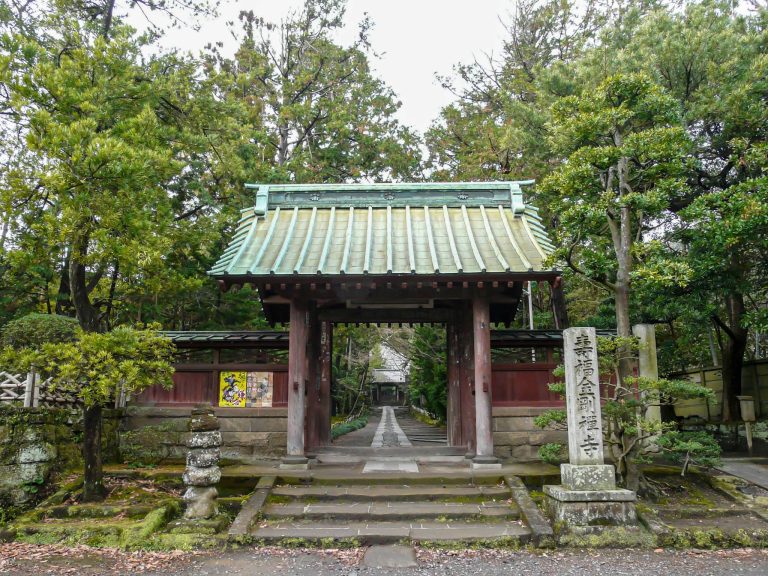
Ennō-ji Temple: A Kamakura Buddhist Temple and Enma Hall


Site at a Glance
- Rating
- 4.3
- Popularity
- Low
- Country
- Japan
- Primary era
- Unclassified
- External website
- Open
- Eras represented
- Unclassified
- Civilizations
- Unclassified
- Site type
- Religious
- Remains
- Temple
On this page11 sections
History
Ennō-ji Temple is a Buddhist temple in Kamakura, Japan, belonging to the Rinzai school and the Kenchō-ji branch. Traditionally founded in 1250 during the Kamakura period, it is associated with Enma, the Buddhist judge who examines the deeds of the dead, and is known as the New Residence Enma Hall and the Hall of the Ten Kings.
Traditional Foundation and Early History
Tradition attributes the temple’s foundation to Kuwata Dōkai, also called Chikaku Zenji, who is said to have been a disciple of Lanxi Daolong, the founder of Kenchō-ji. This attribution remains uncertain. The traditional date also presents a chronological problem because Dōkai reportedly died in 1309, while 1250 came before the completion of Kenchō-ji. For this reason, the idea that Ennō-ji began as a Zen temple has been questioned.
The institution was first established at Mikoshiiwa in Yui village, east of the Great Buddha, and was soon transferred to the bank of the Namerigawa River. Devotion to its principal image led to the name New Residence Enma Hall. The lower course of the Namerigawa later became known also as the Enma River after the hall.
Relocation to Yamanouchi
A major change came after the Genroku earthquake and tsunami of December 31, 1703, which severely damaged the temple buildings. In the following year, Ennō-ji moved to its present location in Yamanouchi, on slightly raised ground formerly occupied by Daitoan, a subtemple of Kenchō-ji. The temple now stands opposite Kenchō-ji, with the Kamakura Highway between them.
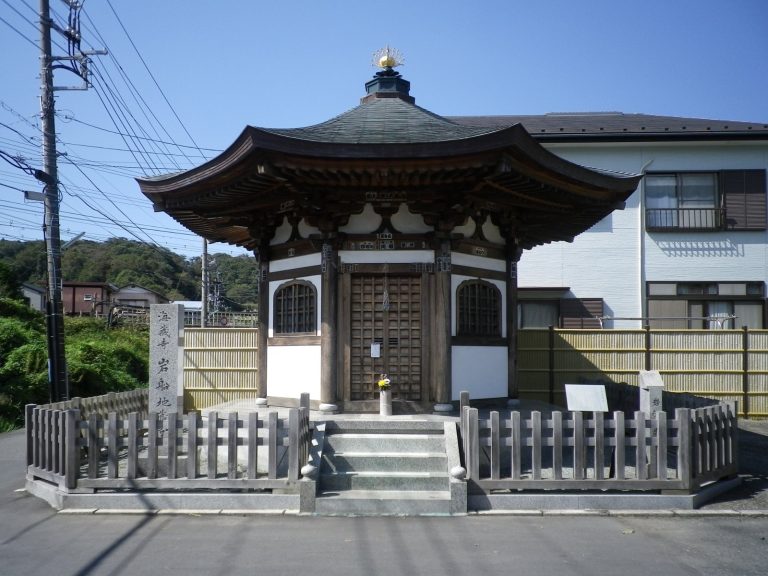
The former New Residence Enma Hall site is commemorated by a stone marker in Zaimokuza. The marker stands about 200 to 300 meters east of the present riverbank, although the river is thought to have reached that area when the hall was founded. Ennō-ji is also the eighth station of the Kamakura Jizō pilgrimage and the fifth station of the Kamakura Thirteen Buddhas pilgrimage, where it is dedicated to Jizō.
Cultural-Property Designations
The temple’s principal group of wooden Buddhist and underworld figures became an Important Cultural Property, a Japanese designation for heritage considered important to the country. The Enma, First River King, and two Co-born Deity statues were separately designated as former National Treasures in 1900. The demon attendant and the ritual standard, formerly called the Human-Headed Staff, were recognized as Important Art Objects in 1933.
These designations were consolidated in 1972. At that time, the former Human-Headed Staff was renamed a Danda standard, while the demon attendant and standard were treated as supplementary designations. In 2020, they received full designation, and the previously undesignated Datsueba statue was added to the protected group.
Remains
The present temple occupies a slightly elevated site in Yamanouchi on the former grounds of Daitoan. Its surviving material heritage centers on wooden images associated with Enma and the Ten Kings, together with other Buddhist figures and a ritual standard. The former location beside the Namerigawa is represented by a stone marker in Zaimokuza.
Enma and the Underworld Figures
Enma and the River King
The principal image is a wooden seated statue of Enma. In Buddhist belief, Enma is the underworld judge who examines the deeds of the dead. The designated group also includes a wooden seated statue of the First River King, one of the judgment figures associated with successive examinations after death.
Co-born Deities and Datsueba
Two wooden seated statues represent the Co-born Deities, paired figures traditionally believed to accompany each person from birth and record or witness that person’s deeds. The group also contains a wooden seated statue of Datsueba, an underworld figure associated with the river crossing faced by the dead.
Demon Attendant and Danda Standard
A wooden standing demon attendant forms part of the same sculptural group. The group also includes a wooden ritual standard, formerly designated the Human-Headed Staff and later identified as a Danda standard.
Additional Buddhist Images
Eight further statues of the Ten Kings are housed at the temple. They represent the kings other than Enma and the First River King and date from the Edo period, the era of Tokugawa rule from 1603 to 1868. Ennō-ji also houses a seated statue of Jizō and a seated statue of Chikaku Zenji.
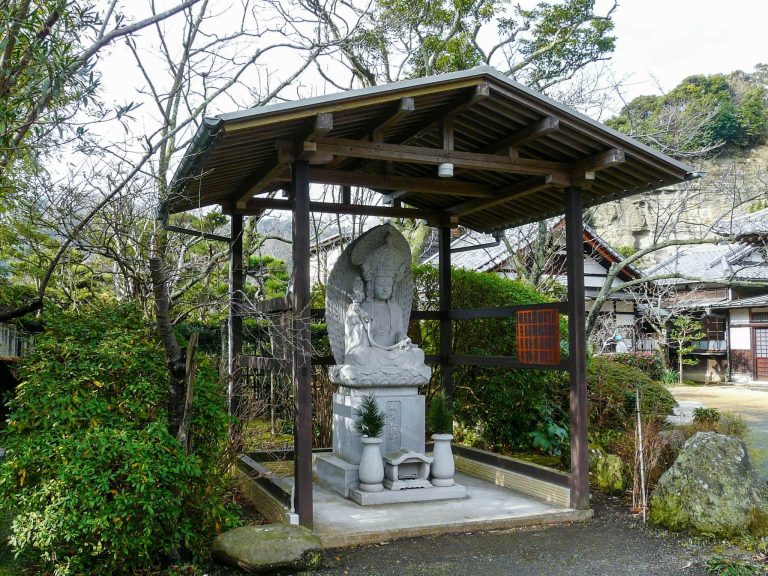
The Jizō image is described in some records as a half-lotus statue. Its right foot, however, does not rest on the left thigh, making it more precisely a seated figure with one leg lowered. Jizō is widely associated in East Asian Buddhism with the protection of travelers, children, and beings in difficult realms.
Former Enma Hall Site
A stone marker remains at the former site of the New Residence Enma Hall in Zaimokuza. The lower Namerigawa, historically also called the Enma River, is explicitly associated with this earlier location and preserves the geographical memory of the temple before its move to Yamanouchi.