Yoshinogari Site: A Fortified Yayoi Settlement in Japan

Site at a Glance
- Rating
- 4.2
- Popularity
- Medium
- Country
- Japan
- Primary era
- Classical
- External website
- Open
- Eras represented
- Iron Age, Classical, Medieval
- Civilizations
- Yayoi
- Site type
- Military
- Remains
- Fortified Town
On this page11 sections
History
Yoshinogari site in Japan is a large archaeological settlement developed by Yayoi communities between the 3rd century BC and the 3rd century AD, with its earliest component dated by absolute methods to before 400 BC. Extending across Yoshinogari Town and Kanzaki City in Saga Prefecture, it preserves a fortified settlement, cemeteries, and several ditched enclosures on a low ridge descending from the Sefuri Mountains toward the Saga Plain and the Ariake Sea.
Before the Yayoi settlement
Human activity in the Yoshinogari area began much earlier. Knife-shaped stone tools, trapezoidal tools, and projectile points belong to the Japanese Paleolithic period. Late Jomon pottery indicates later activity around the hills. Access to the Ariake Sea, tidal flats, rivers, shellfish, and crabs helped make the area suitable for early settlement.
Formation and growth during the Yayoi period
The first Yoshinogari settlement formed at the southern end of the ridge during the Early Yayoi period. It covered about 3 hectares and included a ditch-enclosure, pit dwellings, storage pits, and burials in large ceramic vessels. The Yayoi period is associated with wet-rice agriculture, expanding metallurgy, increasing social differences, and fortified settlements, although its chronology varies according to the dating method used.
During the Middle Yayoi period, moats spread around the hills and defensive works became more elaborate. Burial mounds and jar coffins became increasingly common, while large graves with rich objects point to the emergence of local leaders. More than 2,000 Middle Yayoi jar burials have been identified inside and outside the ditched areas, including burials of residents and soldiers. Injuries, embedded arrowheads, and burials lacking the head and neck indicate episodes of violent conflict.
In the Late Yayoi period, the settlement reached its greatest development. The defenses expanded into a double system of moats, ramparts, palisades, and barriers made from sharpened branches or stakes. Larger buildings appeared, and the North Inner Enclosure and South Inner Enclosure became the principal political and ritual precincts. The settlement may have housed about 1,200 people, while the wider polity centered on Yoshinogari may have included approximately 5,400 inhabitants.
Connections, decline, and later use
By the Late Yayoi period, the coastline lay about 2 to 3 kilometers from Yoshinogari. A port-like facility is inferred near the relocated mouth of the Chikugo River, with access to the hills through the Shirohara and Tade rivers, tributaries of the Chikugo. Objects from northern Kyushu, other parts of Japan, mainland China, the Korean Peninsula, and the Ryukyu Islands indicate connections extending beyond the immediate settlement.
At the beginning of the Kofun period, large quantities of discarded Yayoi pottery were used to fill the moats, and the inhabitants dispersed. The Kofun period takes its name from large burial mounds and saw the growth of powerful regional elites. As warfare declined, communities shifted from defended highland settlements toward the plains, where wetlands could be converted into rice paddies. The Yoshinogari hilltops were then used for burials, including keyhole-shaped mounds and three square-front, square-back mounds.
During the Nara and Heian periods, a kanga, or district administrative complex under the centralized Ritsuryo governmental system, is thought to have occupied the area. Boundaries and ancient roads associated with the jori land-division system also remained part of the landscape. The area later became involved in the Saga Rebellion during the early Meiji period.
Discovery, protection, and interpretation
Yayoi pottery and jar-coffin burials attracted scholarly attention during the twentieth century, but farmland, orchard construction, and soil extraction damaged parts of the site in the 1970s. A proposed high-school relocation was abandoned after extensive archaeological material was found. Plans for an industrial park were reduced after surveys in the 1980s revealed the site’s broad extent. Preliminary cultural-heritage surveys began in 1983, and full-scale excavation started in 1986. Investigations showed that archaeological remains extended across about 59 hectares.
Large-scale coverage of the moated settlement began on February 23, 1989, and development in overlapping areas was halted the following month. Yoshinogari became a National Historic Site in May 1990 and a Special National Historic Site in April 1991, with the protected area expanded in 1999. Its excavated artifacts were collectively designated a National Important Cultural Property in 1991. In 1992, the government decided to create a national historical park, which opened in 2001.
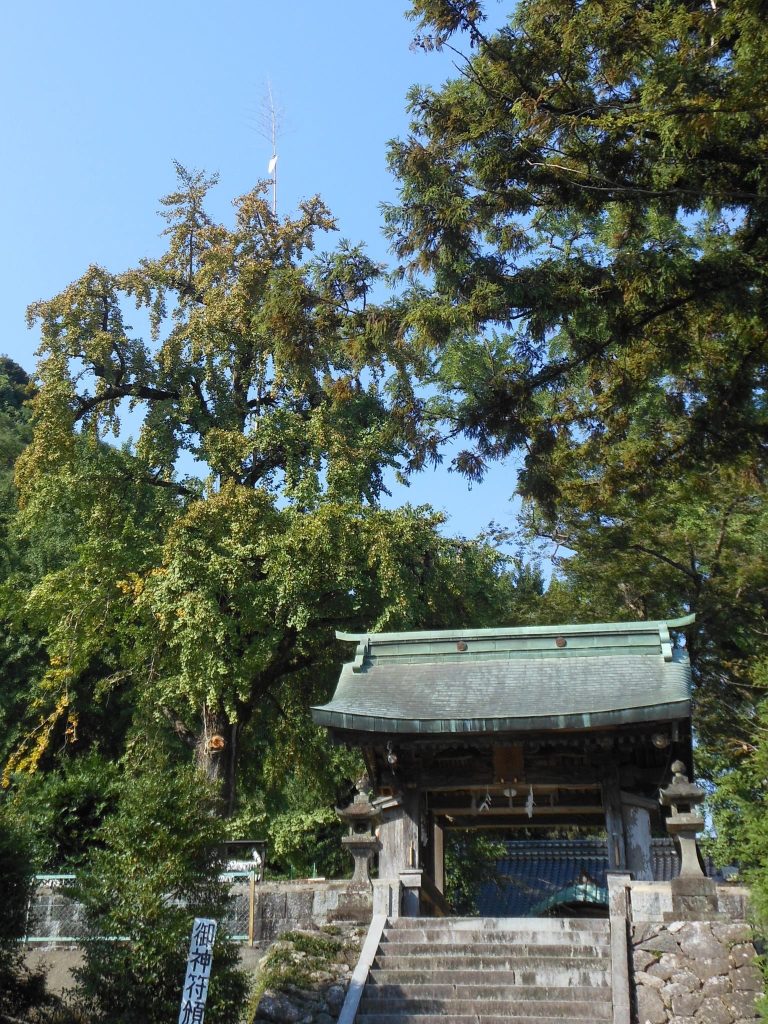
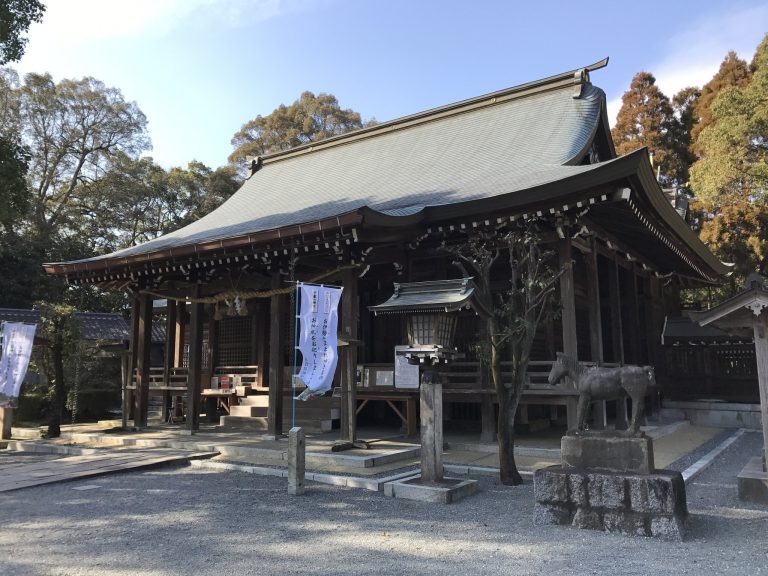
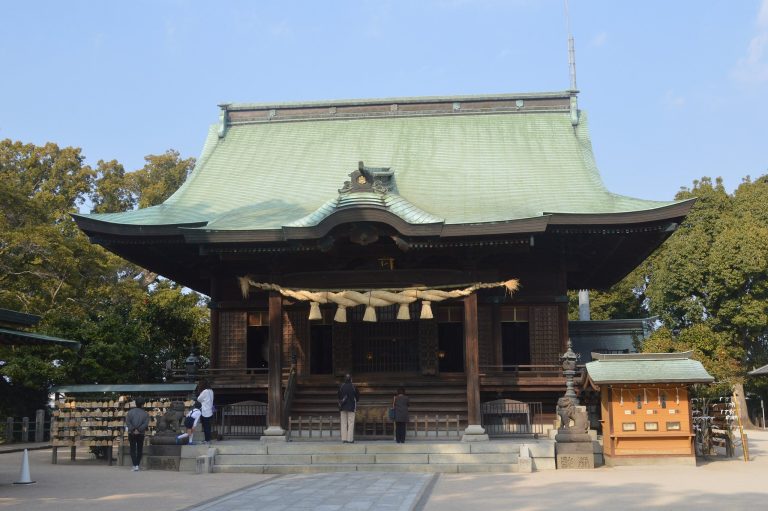
The scale of the defenses led to Yoshinogari’s selection as one of Japan’s Top 100 Castles in 2006. The site also became associated with debate over Yamatai, a polity described in Chinese records about early Japan. Chronological and evidential difficulties make a direct identification difficult, and the interpretation remains disputed. The former Hiyoshi Shrine compound was relocated and rebuilt about 150 meters east of the North Burial Mound, with its completion ceremony held on September 18, 2022. Excavation of the previously unexplored area then revealed a stone-coffin burial in April 2023, possibly dating to the period associated with Yamatai, although its exact date and interpretation remain uncertain.
Remains
Moats and defensive enclosures
The Late Yayoi settlement occupied a low, southward-sloping ridge and was enclosed by a V-shaped outer moat about 2.5 kilometers long. Two inner moats surrounded clusters of buildings, while cemetery areas also lay within the outer defensive line. The North Inner Enclosure had a further double ditch, and the North and South Inner Enclosures formed the central precincts of the settlement.
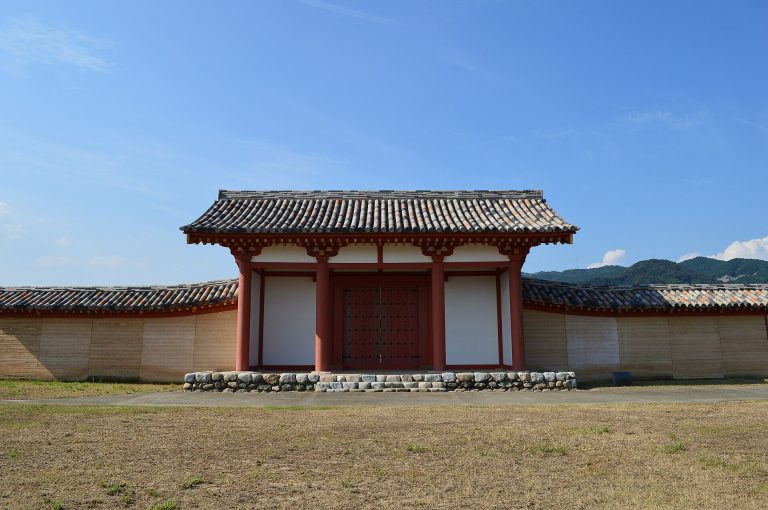
Wooden palisades stood inside the ditches, supported by post holes preserved in the ground. Earthen ramparts, sharpened-branch barriers, and several watchtowers strengthened the defenses. The principal Late Yayoi outer enclosure covered about 40 hectares, while the wider distribution of archaeological remains reached approximately 59 hectares. Protective earth now covers completed excavation areas, and reconstructed moats, fences, ramparts, barriers, and watchtowers occupy the historical park.
Dwellings, ritual buildings, and storage
Pit dwellings and raised-floor buildings stood both inside and outside the inner enclosures. A raised-floor building is supported above ground on posts, a form used at Yoshinogari for storage and other purposes. Ritual personnel and their attendants occupied buildings within the enclosures beside the Main Ritual Hall, East Ritual Hall, and purification hall. Raised-floor warehouses, storage pits, and other pits were also excavated.
Large raised-floor granaries appeared toward the end of the Middle Yayoi period in the central and southern parts of the site. The largest identified raised-floor building was square, measuring about 12.5 by 12.5 meters, with post holes approximately 40 to 50 centimeters in diameter. An area associated with bronze-tool manufacture contained moulds from a Middle Yayoi bronze-casting workshop.
Burial areas and mounds
Jar coffins, stone coffins, and pit tombs formed extensive burial grounds. Many jar coffins were arranged in rows running for hundreds of meters parallel to the central ridge. The North Burial Mound and South Burial Mound occupy the northern and southern parts of the site. The larger mounds were approximately rectangular, about 46 meters from north to south and 27 meters from east to west, and rose more than 4.5 meters high. Summit burial pits held more than 14 jar coffins in some cases.
Burials contained evidence of both status and conflict. Some jar coffins held individuals with injuries or arrowheads embedded in their remains, while other graves contained ornaments such as glass tubular beads. Cylindrical, jade-like glass ornaments associated with China and bronze daggers associated with the Korean Peninsula were found in some burial mounds. Three square-front, square-back mounds were constructed after the settlement disappeared, and later Kofun-period cemeteries included keyhole-shaped mounds on the hilltops.
Objects and craft production
Excavated materials include Yayoi pottery, stone tools, bronze and iron objects, wooden implements, ornaments, textiles, and cloth products. Finds include magatama and tubular beads, bronze swords, mirrors, halberds, bells, coins, iron tools, wooden tools, and prehistoric human hair. A bronze dōtaku, a large Yayoi ritual bell used in ceremonial practice, was discovered near the site in 1998. It is considered a Fukuda-type bell thought to have been made in northern Kyushu.
The National Important Cultural Property group from Yoshinogari includes four thin bronze swords, a copper pommel, 79 glass tubular beads, seven fragments of bronze mirrors, another thin bronze-sword fragment, mould fragments for thin bronze swords and a spear, fragments of bronze-vessel moulds, a comma-shaped bronze-vessel mould fragment, and a tin ingot. These objects are owned by the national cultural-heritage authority and exhibited at the Saga Prefectural Museum.
Park reconstruction and the Hiyoshi Shrine area
Yoshinogari Historical Park covers about 117 hectares, including areas still undergoing excavation and development. Reconstructed pit dwellings, raised-floor buildings, warehouses, watchtowers, moats, fences, barriers, and burial mounds are based largely on surviving post holes, timber traces, and related archaeological evidence. Some stand on their original locations, while others were placed elsewhere to protect excavated or unexcavated remains. Many artifacts are stored and displayed within park facilities.
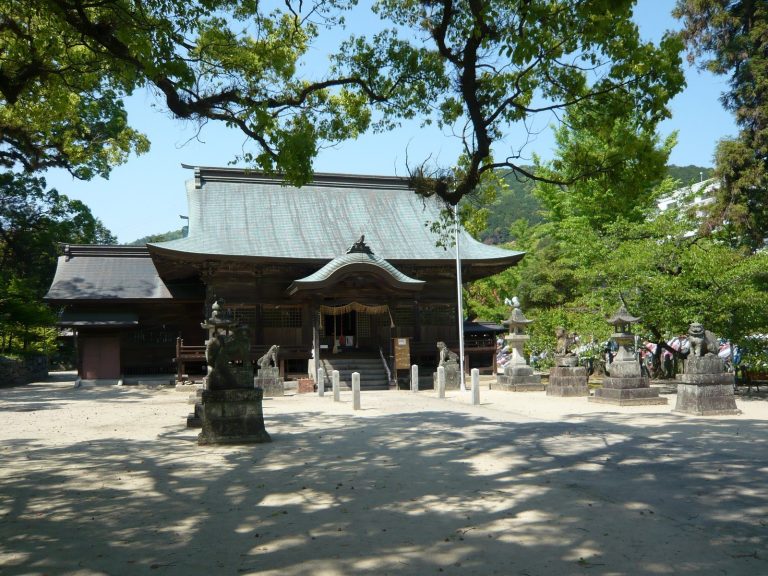
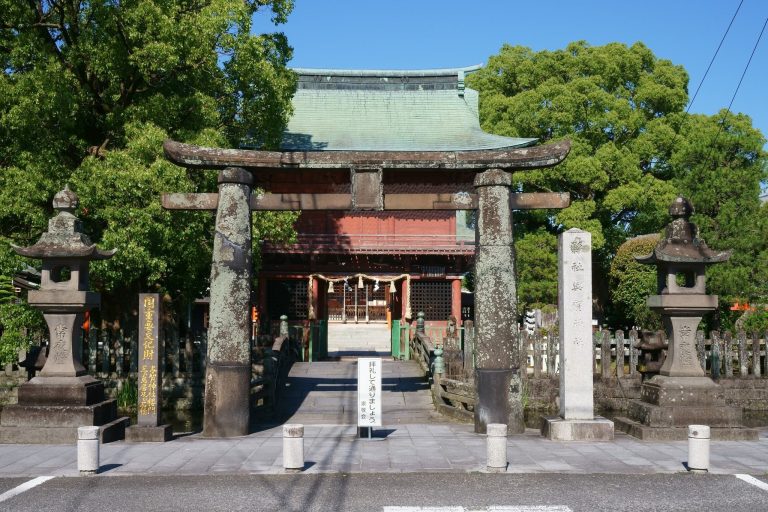
The former Hiyoshi Shrine compound lay inside the archaeological area. Scattered stone slabs there have been interpreted as possible jar-coffin lids, and fragments of Yayoi pottery were found in the compound. The area may contain further jar-coffin-related remains and is also associated with the presumed Hiyoshi Castle mountain-fortification site. A stone-coffin burial found near the relocated shrine in April 2023 adds to the evidence from this previously unexplored part of Yoshinogari, although its connection with the Yamatai period remains provisional.