Kurume Suitengū: Headquarters of Japan’s Suitengū Shrines


Site at a Glance
- Rating
- 4.3
- Popularity
- Medium
- Country
- Japan
- Primary era
- Early Modern
- External website
- Open
- Eras represented
- Early Modern
- Civilizations
- Tokugawa
- Site type
- Religious
- Remains
- Sanctuary
On this page9 sections
History
Kurume Suitengū is a Shinto shrine in Kurume, Japan, beside the Chikugo River, and serves as the headquarters of the Suitengū shrines in Japan. Shrine tradition traces its foundation to the 1190s, when a survivor of the Taira defeat at the Battle of Dan-no-ura in 1185 established a small shrine connected with Emperor Antoku and the Taira family.
Foundation beside the Chikugo River
According to the foundation tradition, Azechi-no-tsubone Ise, who had served Taira no Tokuko, fled after the Battle of Dan-no-ura to Saginogahara beside the Chikugo River. During the 1190s, she founded a small shrine there for Emperor Antoku, the child emperor whose death is associated with the Taira defeat, and for the spirits of the Taira family.
Ise took religious vows and adopted the name Chiyo. She performed prayers and religious rites at the request of local communities, and the shrine became known as Amagozen Daimyōjin, Amagozen Shrine, or Amagozen-gū. A descendant of Taira Tomomori’s second son, Taira Tomotoki, later travelled from Higo Province to visit Chiyo and succeeded her. His descendants formed the Maki family, which became the shrine’s hereditary priestly line.
River worship and the Kurume Domain
A record submitted during the Kurume Domain’s investigation of temple and shrine histories in 1670 identifies three deities at the earlier Amagozen Shrine. Amagozen Daimyōjin was understood as a water deity of the Chikugo River, Aragorō Daimyōjin as its rough spirit associated with protecting cattle and horses, and Anbō Daimyōjin as a benevolent spirit identified with Emperor Antoku. Worship of the river deity Kahaku also took place, linking the shrine’s early development with popular beliefs connected to the Chikugo River system.
The shrine moved to Shinmachi in Kurume during the Keichō period. In 1650, Arima Tadayori, the second lord of the Kurume Domain, established shrine buildings at the present site and transferred the shrine there. This relocation created the current headquarters, which continued to receive the devotion of successive lords of Kurume.
Branches and modern religious identity
In 1818, Arima Yorinori, the ninth lord of the Kurume Domain, invited a divided spirit of the shrine to the domain’s residence in Edo. A divided spirit is understood as the presence of a deity ritually invited to another shrine without diminishing the original enshrinement. That branch was transferred in 1872 to the present Tokyo Suitengū. Another divided spirit was moved in 1868 to Motoshinmei Shrine, where it was enshrined with the shrine’s existing deities.
The principal deities now enshrined at Kurume Suitengū are Amenominakanushi, Emperor Antoku, Taira no Tokuko, and Taira no Tokiko. Amenominakanushi is a primordial Shinto deity whose name is commonly understood as “Lord of the Center of Heaven.” Tokuko, also called Kenreimon-in, was Emperor Antoku’s mother, while Tokiko, known as the Nun of the Second Rank, was his maternal grandmother.
Kurume Suitengū formerly held the status of a prefectural shrine and is a Beppyo Shrine, meaning that it appears on the Association of Shinto Shrines’ special listing of significant shrines. Its principal annual festival is held on May 5, with other listed observances from May 5 to 7 and August 5 to 7. The fifth day of each month is a shrine fair day. Kurume Suitengū explains this monthly observance as deriving from the May 5 festival, while Tokyo Suitengū preserves the reverse explanation.
Because of its connection with water, the shrine was historically revered as a guardian of marine transportation and became associated with traditions concerning the kappa, a water creature of Japanese folklore believed to inhabit rivers and ponds. It is also regarded today as a shrine associated with safe childbirth.
Remains
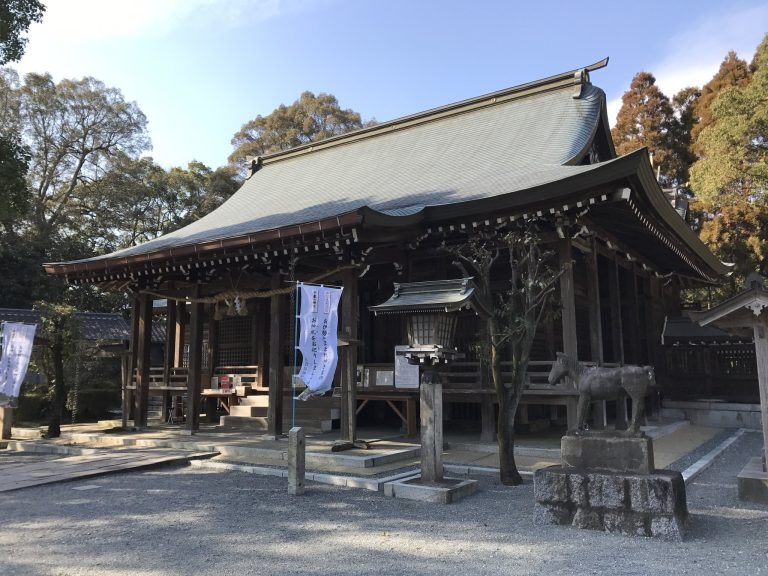
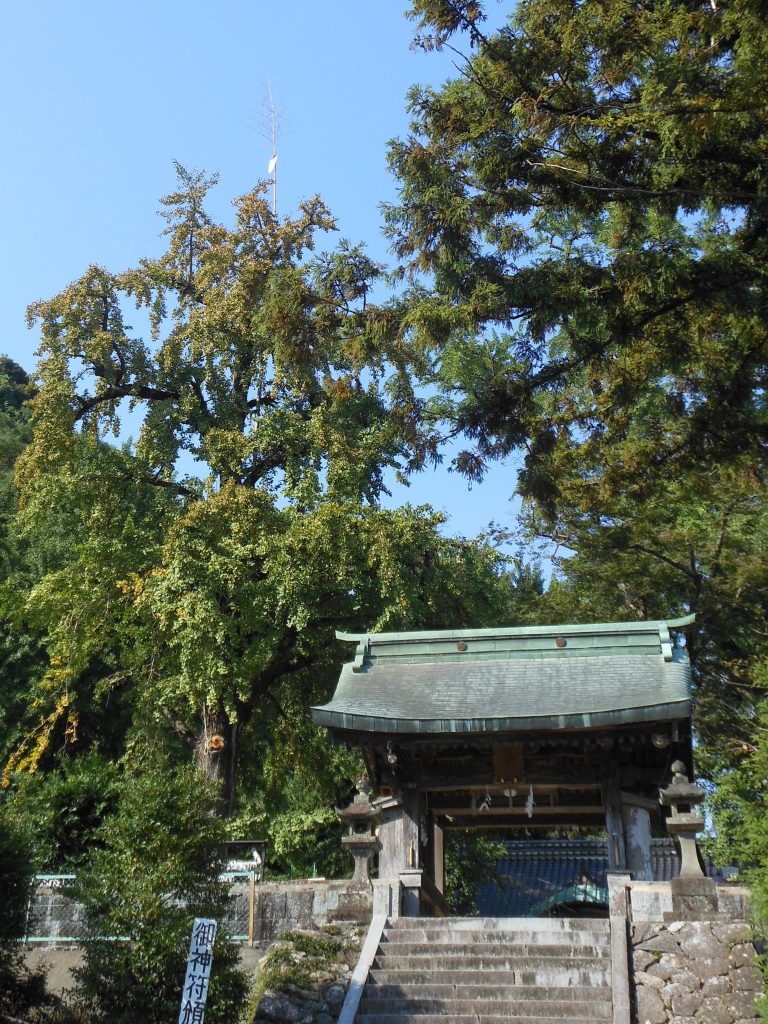
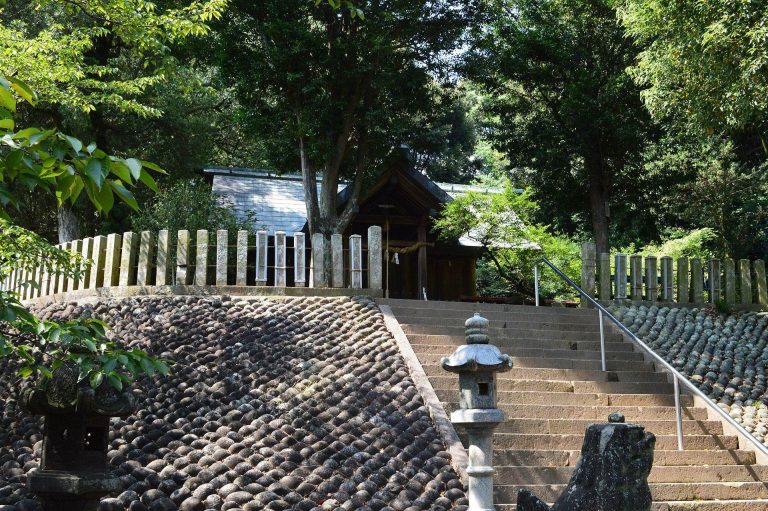
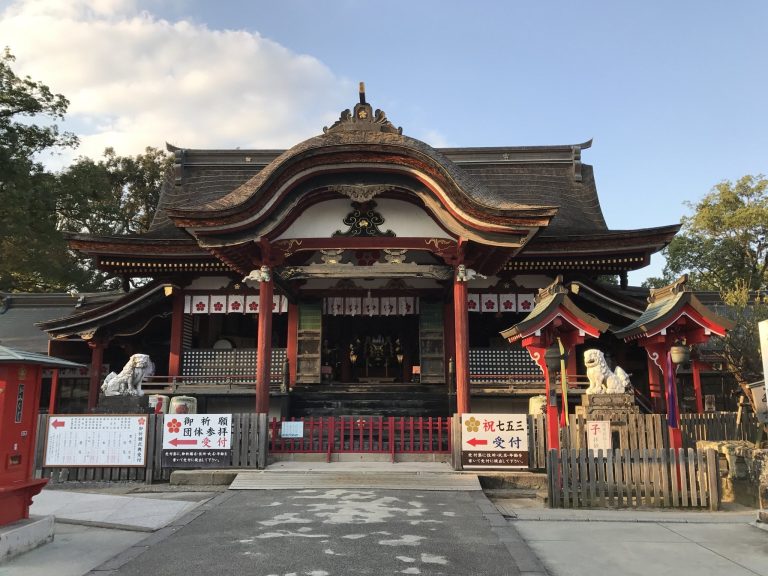
Kurume Suitengū occupies a precinct beside the Chikugo River in Senoshita-machi, Kurume. The site contains the principal shrine buildings, including a worship hall, together with several smaller shrines. Its physical setting preserves the connection between the present institution and the river landscape associated with the shrine’s foundation tradition at Saginogahara.
Principal shrine precinct
Main shrine buildings
The main precinct includes the shrine buildings and a worship hall used for Shinto rites. These structures form the central architectural group at the present headquarters established after the transfer ordered by Arima Tadayori in 1650.
Maki Shrine
Maki Shrine stands within the precincts and is dedicated to Maki Yasuomi, also known as Maki Izumi no Kami, together with others. Yasuomi was the shrine’s twenty-second chief priest and belonged to the Maki family, the hereditary priestly line descended from the successor of Chiyo.
Associated shrines
Other shrines in or associated with the precincts include Chiyomatsu Shrine, Akiba Shrine, and Suijin Shrine. Suijin Shrine has a Hizen-style komainu, a guardian-lion figure of a regional form associated with the former Hizen area. The precincts are also connected with the former Saginogahara site beside the river, where tradition places the earliest shrine of the 1190s.