Fuwa no Seki: An Ancient Barrier Station in Japan


Site at a Glance
- Rating
- 3.6
- Popularity
- Very Low
- Country
- Japan
- Primary era
- Medieval
- External website
- Open
- Eras represented
- Medieval
- Civilizations
- Yamato
- Site type
- Military
- Remains
- Fort
On this page9 sections
History
Fuwa no Seki is an ancient barrier station in Japan, located in Matsuo, Sekigahara, Gifu, and organized in the early eighth century under the ritsuryō system, Japan’s centralized framework of law and administration. It stood on the Tōsandō route and formed one of the Three Barriers with Suzuka no Seki on the Tōkaidō and Arachi no Seki on the Hokurikudō. These checkpoints helped guard approaches to the political center, and the lands east and west of them came to be known respectively as Kantō and Kansai.
The Jinshin War and the Fuwa route
During the Jinshin War of 672, Prince Ōama, later Emperor Tenmu, ordered Murakuni no Muraji Oyori and others from Mino Province to block the Fuwa route. An official responsible for the imperial estate in Anpachi District recruited soldiers there, and the blockade contributed to victory in the conflict. The route referred to in this episode is generally understood as a temporary blockade in the surrounding area rather than the later permanent barrier facility.
Establishment and administration
After the war, Fuwa no Seki was organized to protect the capital within the ritsuryō administrative order. Its foundation is generally placed in the early eighth century. Most excavated artifacts date from the beginning of that century onward, while the Three Barriers first appear together in the historical record in 708. Under military regulations, a barrier requiring defense was staffed by soldiers serving in rotating shifts. Because Fuwa no Seki belonged to the Three Barriers, the four grades of officials in the Mino provincial government took turns guarding it.
Abolition and continuing ritual
In 789, an imperial order abolished the Three Barriers. Their weapons and provisions were transferred to the Mino provincial government, and the barrier buildings were moved to district-government offices and other facilities. Ash-glazed pottery and Yamachawan bowls from later periods indicate that some form of facility continued at the site after the formal abolition.
The ceremonial practice of sealing the barriers continued until the late Edo period, even after the permanent stations had been discontinued. The first recorded performance took place in 721, following the death of the retired Empress Genmei. The reason the same ritual was not performed at the deaths of the retired Empress Jitō and Emperor Monmu remains debated.
Archaeological investigation and preservation
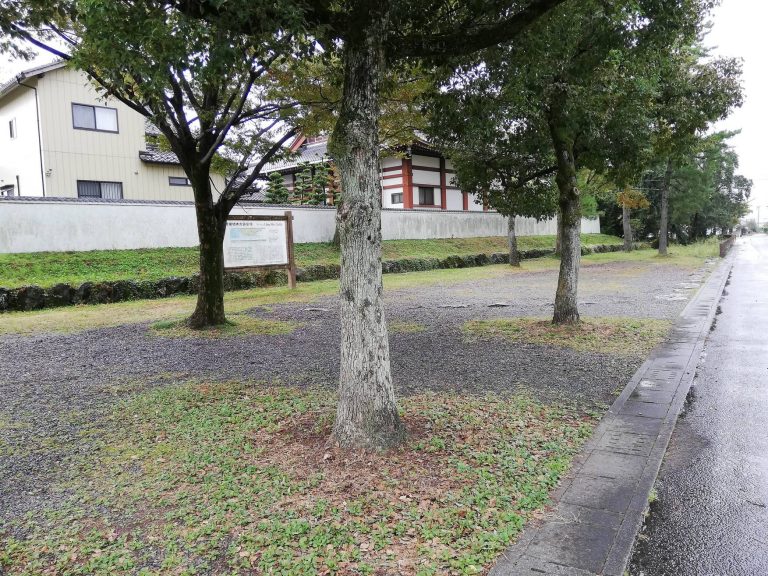
Archaeological investigations began in 1974 and established the approximate extent of Fuwa no Seki. In 2023, remains interpreted as an early administrative complex from the first half of the eighth century were identified for the first time, including a building possibly associated with that initial government complex. The site is designated as a historic site by Gifu Prefecture and Sekigahara Town. The Fuwa no Seki Museum occupies part of the site and displays excavated Wadō Kaichin coins and pottery.
Remains
Enclosure and strategic setting
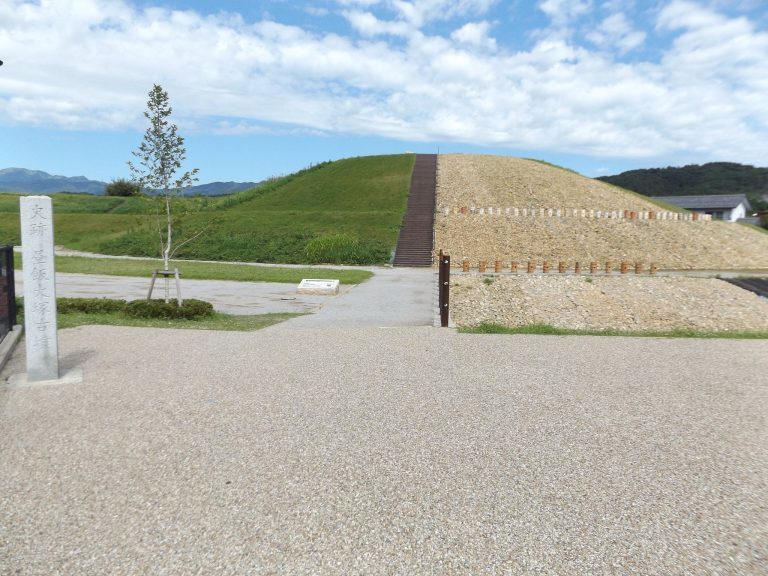
Fuwa no Seki occupied a roughly trapezoidal area of about 12.4 hectares. The Fujikogawa terrace formed the western boundary, where a steep terrace edge provided the enclosure’s natural limit. Earthen ramparts enclosed the northern, eastern, and southern sides, creating a fortified perimeter beside the river. The site stood on the river’s left bank, in a position associated with the ancient Tōsandō and with later routes including the Nakasendō, Hokkokukaidō, and Isekaidō.
Administrative complex
Among the archaeological remains is an administrative complex dating to the first half of the eighth century. It has been interpreted as a possible initial government complex for the barrier, providing physical evidence for the station’s organization during the early ritsuryō period. A building possibly connected with this early complex was identified in 2023.
Coins and pottery
Excavations have produced Wadō Kaichin coins, pottery, ash-glazed pottery, and Yamachawan bowls. These finds span the early development of the barrier and the period after its abolition, when some facility is thought to have remained in use. Selected coins and pottery are displayed at the Fuwa no Seki Museum.