Ayabe Shrine: A Hachiman Shrine and Center of Wind Divination in Japan


Site at a Glance
- Rating
- 4.2
- Popularity
- Low
- Country
- Japan
- Primary era
- Early Modern
- Eras represented
- Early Modern
- Civilizations
- Tokugawa
- Site type
- Religious
- Remains
- Sanctuary
On this page9 sections
History
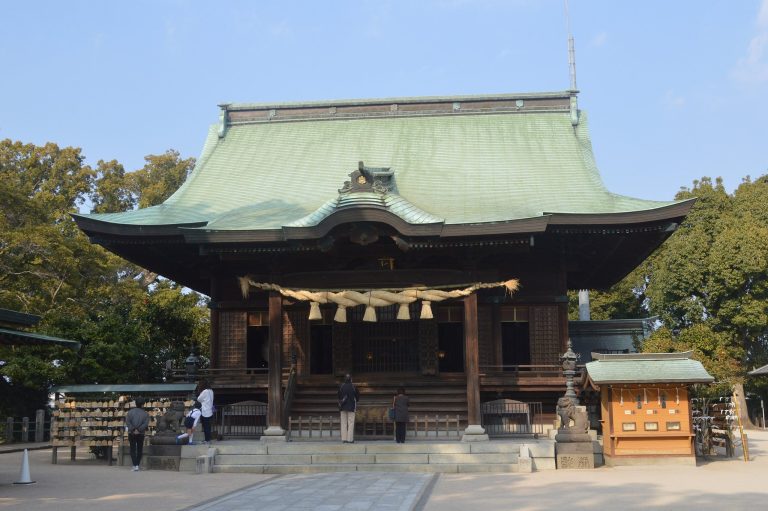
Ayabe Shrine is a Shinto shrine in Japan, traditionally founded in 1205 at the foot of Ayabe Castle by Ayabe Shirodayu Michitoshi. Shinto is Japan’s indigenous religious tradition, and the shrine became a guardian of eastern Hizen, a historical province in northwestern Kyushu. It is also known as Ayabe Hachimangu and Ayabe Hachiman Shrine.
Foundation and Hachiman Worship
Michitoshi served as the land steward of the Ayabe estate. After joining Minamoto no Yoritomo’s 1189 campaign against Fujiwara no Yasuhira in the Oshu War, he prayed for victory at Tsurugaoka Hachimangu in Kamakura. Following the successful campaign, he invited a divided spirit of Tsurugaoka Hachiman to a new shrine at Ayabe. He appointed his younger brother, Kase Shintaro Michimune, as chief priest and donated 100 cho of shrine estate.
Ayabe Shrine became the guardian Hachiman shrine of the Ayabe Estate, which belonged to the Mirokuji estate of Usa Hachimangu. A Hachiman shrine venerates Hachiman, a widely worshipped deity associated with warfare and protection. At Ayabe, Hachiman is identified with Emperor Ojin, Empress Jingu, and Takeuchi no Sukune. The shrine’s other enshrined deities include the Sumiyoshi deities, Kagu-tsuchi, two wind deities, and Ryushin Shamon.
Medieval and Early Modern Administration
During the Muromachi period, the Shibukawa clan, a branch of the Ashikaga family, used Ayabe Castle as the base of the Kyushu Tandai and the Hizen provincial constable’s office. The Kyushu Tandai was the medieval military and administrative office representing the central warrior government in Kyushu. A provincial constable exercised military and administrative authority over a province. Several castle remains associated with the Shibukawa clan are identified around the shrine.
In 1598, Nabeshima Naoshige provided ritual funds and made Ayabe Shrine the principal shrine of Ayabe District. This administrative area of the Saga domain corresponded approximately to present-day Kamimine and Nakabaru. The shrine was formerly classified as a village shrine.
Wind Worship and Divination
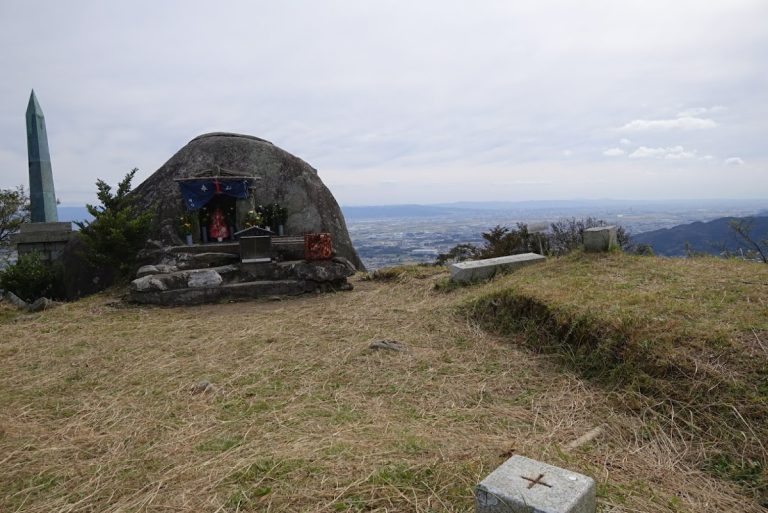
The shrine’s wind-divination tradition is said to predate its foundation. In 951, severe typhoons and rain brought disease and famine to Ayabe. Ryushin Shamon, a monk living among the religious communities of Mount Sefuri, vowed to recite 10,000 copies of the Lotus Sutra in 50 days. He entered Mount Kusenbu, also called Mount Ishitani, where wind-deity worship was practiced, and completed 9,000 recitations before villagers found him dead after the 50-day vow.
In recognition of Ryushin’s virtue, villagers enshrined him with the two wind deities and began raising a sacred flag on the mountain summit while praying for good harvests. The flag was later transferred to the shrine’s sacred ginkgo tree, where it became an indicator used for weather prediction. This practice is associated with the claim that Ayabe Shrine is Japan’s oldest meteorological observatory. In 2017, the flag-raising and flag-lowering observances were designated a Saga Prefectural Important Intangible Folk Cultural Property. Such a property is a protected traditional ritual, performance, or custom rather than a physical building or movable object.
The flag is raised every year on July 15 and lowered on the day after the autumnal equinox. Five days after the raising, the chief priest predicts typhoon activity and agricultural conditions. When the flag is lowered, its degree of winding is examined to assess the prediction and divine the fortune of the coming year.
Legends, Festivals, and Local Tradition
Tradition connects Ryushin’s death with the origin of the shrine’s wind worship. A related legend tells that, near the end of his intended recitation period, a red-eyed white snake and a beautiful woman appeared each night to tempt him. His concern for the villagers allegedly changed into a desire to await the woman. The woman is identified as Kodai, the ninth of the Ten Rakshasi Women, while the white snake is regarded as a messenger of the wind deity.
The autumn festival includes a Processional Folk Performance resembling a daimyo procession. Every four years, a pilgrimage festival takes the sacred object down to the lower shrine, with a portable shrine joining the procession at the rear.
Ayabe botamochi is traditionally linked to Michitoshi’s return from the Oshu War. He is said to have distributed celebratory rice cakes to his soldiers, establishing the specialty’s association with the shrine. The food was once sold only between the July flag-raising and the September flag-lowering ceremonies, but it is now available throughout the year. More than ten shops sold it before the Second World War; five reopened afterward, and year-round sales began after one shop moved from the shrine approach to Prefectural Route 31. Although called botamochi, it uses fully pounded mochi rather than rice retaining individual grains, making it closer in form to ankoro mochi.
Remains
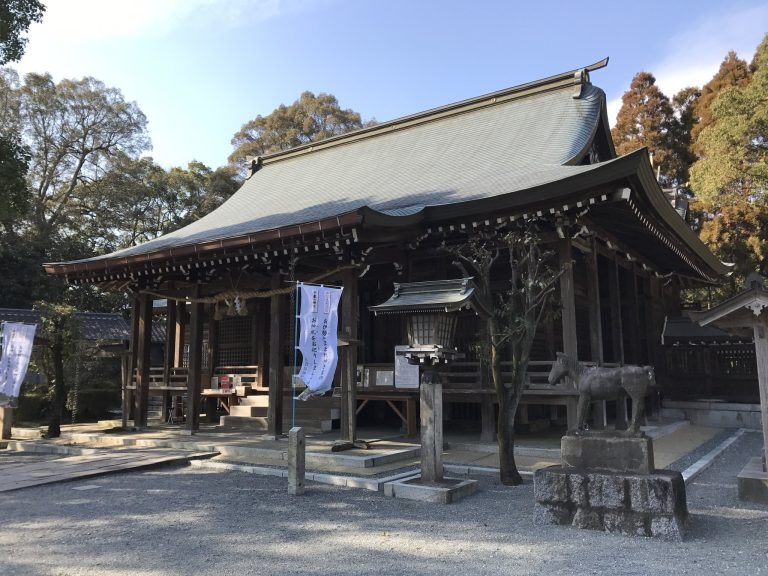
Ayabe Shrine stands at the foot of the former Ayabe Castle. The shrine grounds are physically connected with a landscape containing remains of several castles associated with the Shibukawa clan. Within the shrine setting, the sacred ginkgo tree, the annual flag, and a 1701 torii preserve the material features most closely linked to the wind-divination tradition.
Sacred Ginkgo and Divine Flag
The sacred ginkgo supports the annual divine flag. On July 15, three sacred-flag bearers wearing traditional loincloth attire attach the flag to an 18-meter green bamboo pole and raise it on the tree to a height of 30 meters. Woven from hemp, the flag measures one shaku in width and one shaku two sun in length. It bears an inscription translated as “Seal of protection from prayers to the wind deity.” During the flag-lowering ceremony, the flag is removed from the ginkgo and examined for its winding and other physical characteristics. The tree has also been selected for Saga Prefecture’s “100 Famous Trees of Saga” list.
Torii and Inscribed Evidence
A torii erected in 1701 preserves an inscription describing the flag-divination practice. The inscription states that a wrapped flag conveys the condition of the wind, while an opened flag indicates the abundant harvest granted by the deity. It also specifies that the flag should be raised high at one shaku two sun. The torii therefore preserves a written explanation of how the shrine’s physical flag was interpreted as part of its ritual system.
Processional Equipment
The autumn Processional Folk Performance includes a matchlock unit, spear bearers, and box carriers. It also features a long spear called a haguma, approximately four meters long and fitted with a hairy tuft at its tip. Drums and gongs accompany the participants as they advance while calling “Yoiya-sa.” During the four-year pilgrimage festival, a portable shrine is added at the rear of the procession.