Namura Shrine: A Shinto Regional Shrine in Japan

Site at a Glance
- Rating
- 3.6
- Popularity
- Very Low
- Country
- Japan
- Primary era
- Medieval
- Eras represented
- Medieval
- Civilizations
- Ashikaga shogunate
- Site type
- Religious
- Remains
- Sanctuary
On this page8 sections
History
Namura Shrine is a Shinto shrine in Japan, located in Ryūō, Shiga Prefecture. Shinto is Japan’s indigenous religious tradition, centered on reverence for kami, sacred beings or forces associated with deities, ancestors, places, and natural phenomena. Namura serves as a regional general shrine for parishioners from 33 nearby villages, although its precise foundation date remains uncertain.
Origins and Imperial Recognition
Shrine tradition places the origin of Namura at the time of the semi-legendary Emperor Suinin, when an ancestor connected with the development of the local settlement was worshipped. The original sanctuary stood at the Higashi Namura Kofun cluster, a group of burial mounds dating from around the sixth century AD. The Kofun period was the era of large Japanese burial mounds, conventionally dated from about the third to the seventh century AD.
Namura appears in the Engishiki, a tenth-century compilation of court procedures and regulations that includes a register of officially listed shrines. Compiled in 927, the register lists a shrine in Ōmi Province as Nagasun Shrine. Namura is also associated with that entry, although its identification as the same historical shrine is disputed.
On March 28, 969, the divine spirit of Kunisatsuchi-no-Mikoto was enshrined in a newly constructed sanctuary on the shrine grounds. Kunisatsuchi-no-Mikoto is a kami enshrined in the West Main Sanctuary. This new building became the Nishi-Honden, or West Main Sanctuary, while the original sanctuary became the Higashi-Honden, or East Main Sanctuary.
In 1017, the shrine began supplying pine seedlings for kadomatsu, New Year’s decorations made with pine and other plants, at the Imperial Palace. Emperor Go-Ichijō later granted it the name Namura Shrine. Imperial recognition continued in 1536, when Emperor Go-Nara awarded the shrine the Senior First Court Rank. Imperial envoys Nakamikado Munefuji and Yamashina Tokitsugu presented the rank certificate on April 19, and an imperial plaque bearing the designation “Senior First-Rank Namura Great Deity” followed on May 9.
Medieval Patronage and Shrine Institutions
During the Tenshō era, from 1573 to 1593, Oda Nobunaga donated one set of horse tack and seven swords to Namura Shrine. Nobunaga was a prominent sixteenth-century military and political leader whose patronage forms part of the shrine’s medieval history.
The principal deities of the Nishi-Honden are Namura-hiko-no-kami, Namura-hime-no-kami, and Kunisatsuchi-no-Mikoto. The Higashi-Honden enshrines Ōkuninushi-no-Mikoto, Kotoshironushi-no-Kami, and Susanoo-no-Mikoto. These paired sanctuaries preserve the shrine’s division between the older eastern foundation and the sanctuary established in 969.
Namura was designated a village shrine in 1881 and was promoted to prefectural-shrine status in 1920. Its religious life continues through annual observances involving the surrounding communities. The Namura Festival takes place on April 20. Nine miyaza groups, traditional village organizations responsible for participation in shrine rites, conduct a sacred-horse procession. After the dedicatory rites, ten horses and three portable shrines proceed to a temporary sacred lodging.
The May 5 Sekku Festival celebrates children’s growth through a children’s portable-shrine procession and a mounted archery performance. Ten horses run along the approach in the traditional ceremonial form. The 33-year Grand Festival was once held annually on September 5 with parishioners from all 33 villages. Beginning in 1599, it became an observance held once every 33 years; the celebration in 2014 was counted as its fourteenth occurrence.
Remains
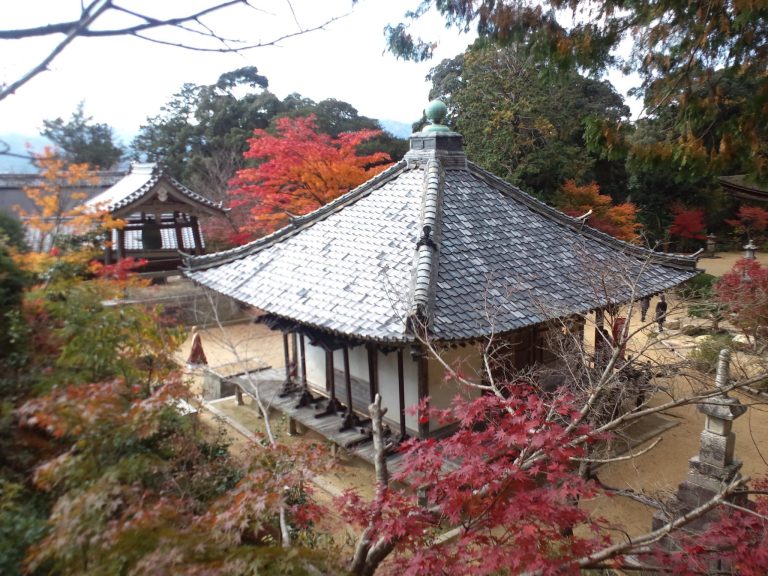
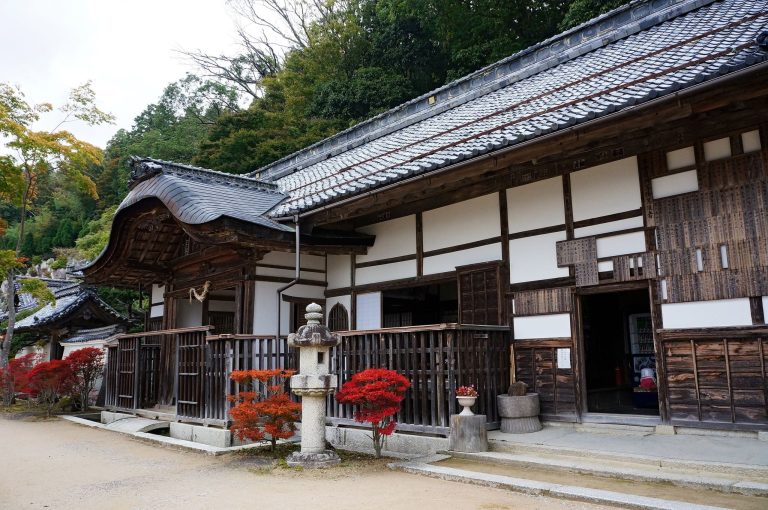
Namura Shrine’s principal physical remains are organized around two main sanctuaries on the grounds of the Higashi Namura Kofun cluster. Both buildings use nagare-zukuri, a shrine architectural style marked by a steeply sloping roof extended over the front entrance. The Nishi-Honden is a three-bay building and the Higashi-Honden is a one-bay building. Their different sizes and positions reflect the two-stage development of the shrine’s sacred center.
Main Sanctuaries
Nishi-Honden
The Nishi-Honden is the sanctuary constructed for the enshrinement of Kunisatsuchi-no-Mikoto on March 28, 969. It is a three-bay building in nagare-zukuri style and is designated a National Treasure. Its role as the West Main Sanctuary remains tied to the later foundation established within the existing shrine grounds.
Higashi-Honden
The Higashi-Honden is the original main sanctuary, standing at the Higashi Namura Kofun cluster among burial mounds dating from around the sixth century AD. It is a one-bay building in the same roof style as the Nishi-Honden and is designated an Important Cultural Property. Together, the sanctuary and the burial-mound setting preserve the physical location associated with Namura’s earliest shrine tradition.
Historic Shrine Buildings
The wider complex contains numerous structures dating from the Muromachi period or earlier. The Muromachi period lasted approximately from 1336 to 1573 and was associated with the Ashikaga shogunate, as well as major developments in religious and architectural culture. Among Namura’s surviving historic structures are buildings designated as National Treasures or Important Cultural Properties, extending the architectural record beyond the two principal sanctuaries.