Zegrze Fortress: A Russian Stronghold Guarding the Narew Crossing
Site at a Glance
- Rating
- 4.8
- Popularity
- Low
- Country
- Poland
- Primary era
- Modern
- Eras represented
- Modern
- Civilizations
- Russian
- Site type
- Military
- Remains
- Fort
On this page9 sections
History
Zegrze Fortress is a Russian-built defensive complex in Zegrze, Poland, on the north bank of the Narew River. Constructed between 1892 and 1895, it guarded a river crossing north of Warsaw, helped defend the Warsaw area from the north, and protected the flank of Modlin Fortress. Zegrze was one of the three principal strongpoints in the Warsaw Fortified Area, a Russian defense system that also included Warsaw and Modlin.
Construction and the Russian defense network
A wooden bridge had crossed the river at Zegrze since the beginning of the nineteenth century. In 1873, Russian Emperor Alexander II ordered defenses for the crossing. Work, initially planned for 1879, was delayed for financial reasons and began in 1892. The resulting fortress was smaller than the complex proposed by Russian military engineer Nestor Bujnicki.
Two more forts, at Dębe and Beniaminów, were built from 1901 and placed under Zegrze’s command. They extended the defensive line northwest toward Modlin and southeast toward Warsaw. Modernization of the forts took place between 1902 and 1907. Following Russia’s defeat in the Russo-Japanese War of 1904–1905, which weakened the empire’s finances, Nicholas II abandoned plans for further major expansion of the Warsaw system despite opposition from his general staff. Zegrze received no further expansion.
War and Polish control
On 6 August 1915, German forces attacked Zegrze during an offensive on the eastern front of the First World War. The Russian garrison withdrew during the night of 6–7 August, destroying the river bridge as it left. German troops from the 21st Landwehr Brigade, a reserve formation, and Brigade Pfeil then occupied the fortress as they prepared to attack Modlin. Both units belonged to Beseler’s Army Group, commanded by General Hans von Beseler.
Poland took control of the fortress after the war. On 28 November 1918, Colonel Olgierd Pożerski became fortress and garrison commander. Archbishop Aleksander Kakowski consecrated the fortress on 21 January 1919 at a ceremony beside one of its forts, which was named Fort Ordon. Zegrze was involved in the 1920 Battle of Warsaw, when Polish forces defended the capital against a Soviet advance, and in Poland’s defense during the German and Soviet invasions of 1939.
Military training and later use
Polish troops remained at Zegrze between the wars. An officers’ training camp for communications troops opened there in 1919 and became the Communications Training Center in 1929. Marshal Edward Rydz-Śmigły inspected the center in May 1937. After the Second World War, military institutions continued to occupy the site. An Officers’ School of Communications opened in 1950 and became a higher officers’ school in 1967, training there for about 30 years. The Military Institute of Communications was also based at Zegrze and contributed to the development of telecommunications. The Communications and Information Training Center continues to train soldiers there. The army ceased using the Large Fortification in 2002.
In the early 2000s, the western and larger fort passed to the National Bank of Poland. Plans to convert it into a currency vault and clearing center, which would have destroyed a substantial part of the historic complex, were abandoned. The bank decided to sell the fort in 2009. In January 2018 it passed to the State Treasury for national-defense purposes and came under the management of the Warsaw Capital Infrastructure Board, an organizational unit of the Ministry of National Defence. The Small Fortification belongs to the military Communications and Information Training Center. The fortress is a legally protected historic complex.
Remains
Layout and defensive works
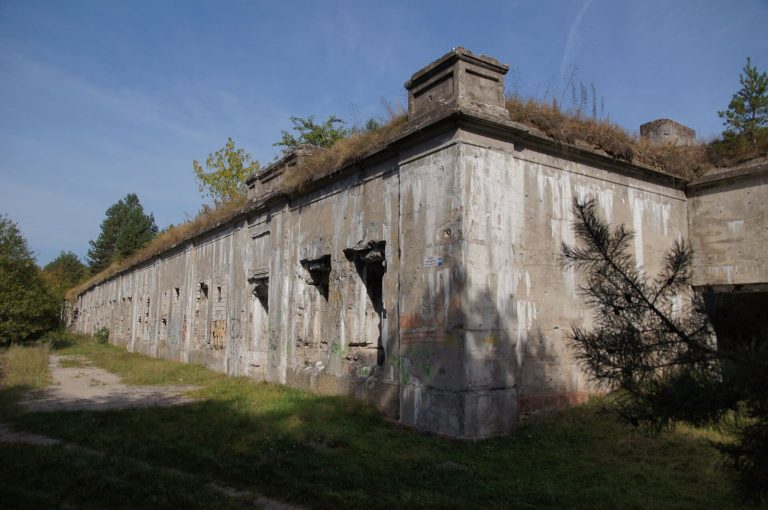
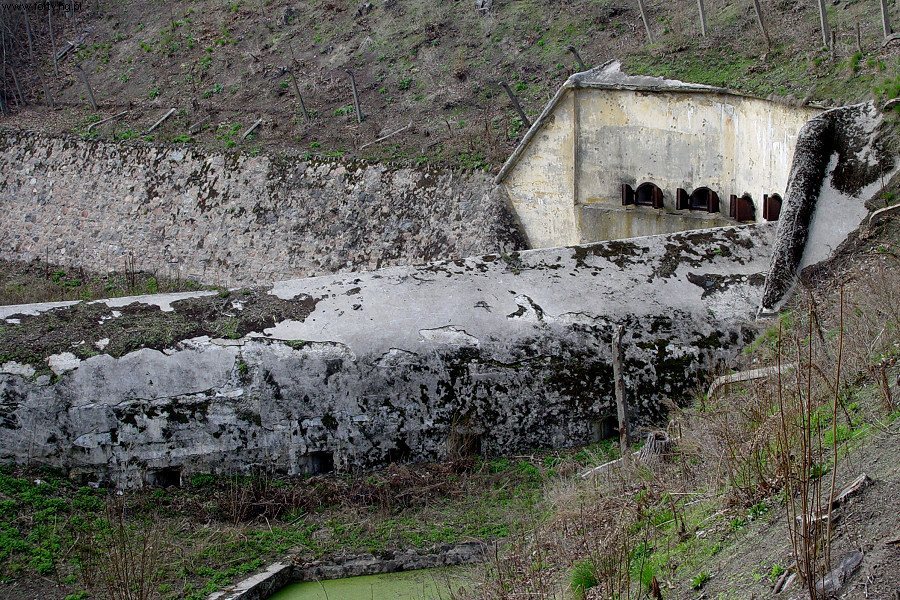
The fortress occupies high ground on the Narew’s north bank, beside the Zegrze Reservoir, created in 1963. Its two principal forts stand about one kilometre apart: the larger Large Fortification, or Fort Ordon, is to the west, and the smaller Small Fortification, or Fort Karlinek, is to the east. A rampart joined them and sheltered a road and a narrow-gauge railway. The layout followed the terrain, with the main defenses facing north and northeast. A bridgehead, meaning a fortified position securing a river crossing, extended about 2.5 kilometres on the right bank. Its defenses combined concrete permanent works with earthworks and steel, including a dry ditch, infantry positions, and a battery with several guns. The wider arrangement included main and flanking works near the Bug–Narew confluence, an infantry defense line, and a rear position on the left bank.
Barracks and service buildings
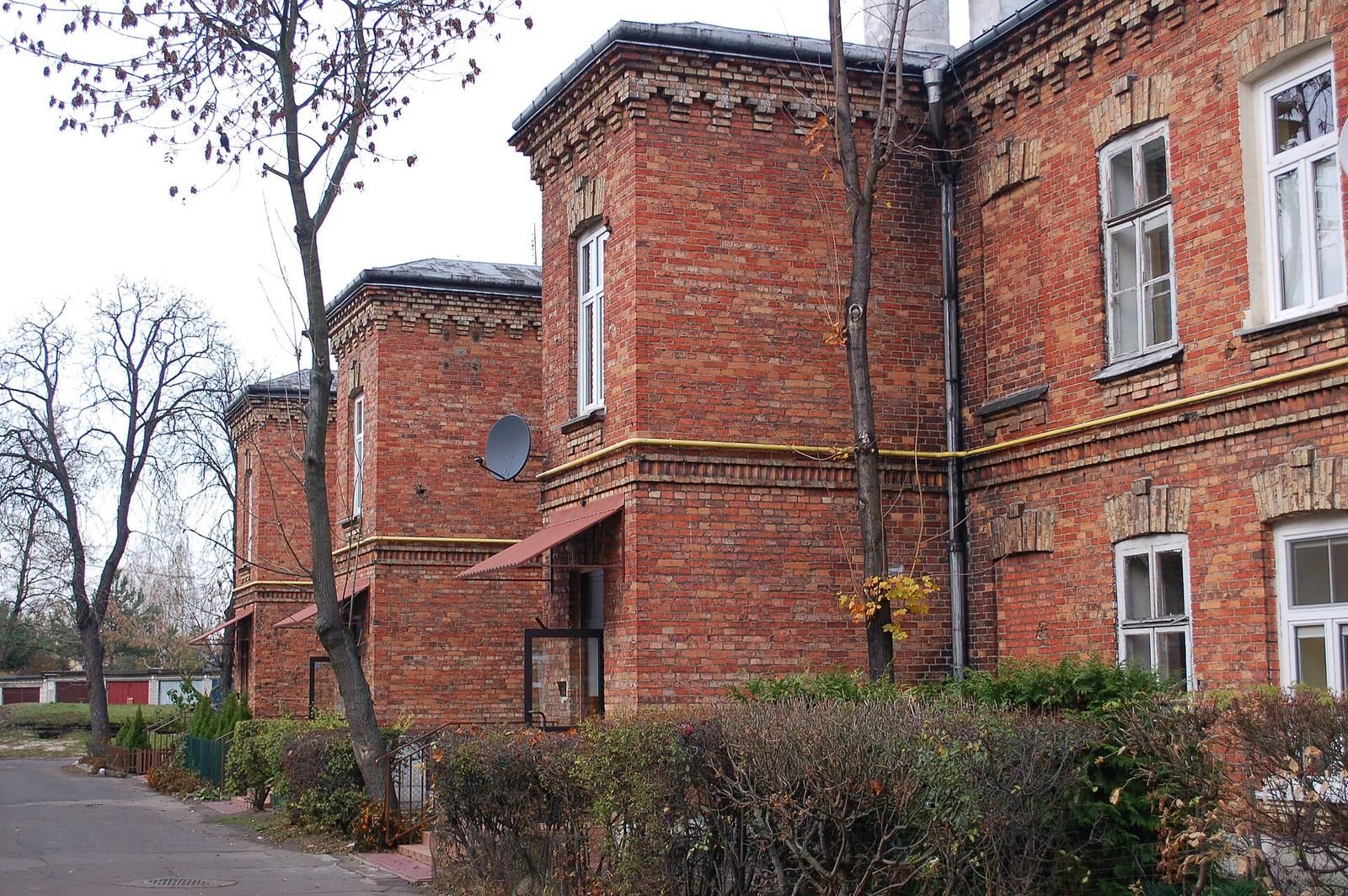
The garrison’s facilities included seven ammunition depots, barracks, administrative buildings, and an officers’ club. Barracks and accommodation complexes stood at Zegrze, Zagroby, Białobrzegi, and Beniaminów. At Zegrze, one barracks was beside the fortress and another south of the river; each consisted of several dozen brick accommodation and administrative buildings. A further barracks complex was built at Białobrzegi, between Zegrze and Beniaminów, in the early twentieth century.
Religious and residential buildings
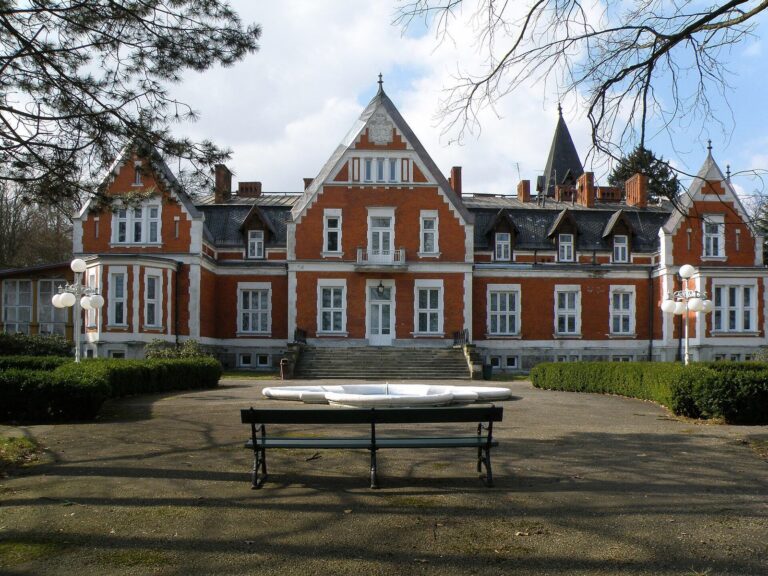
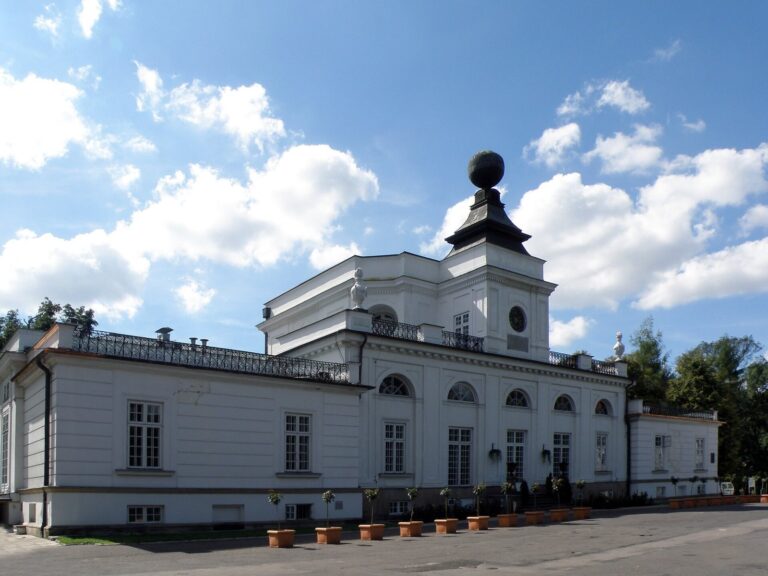
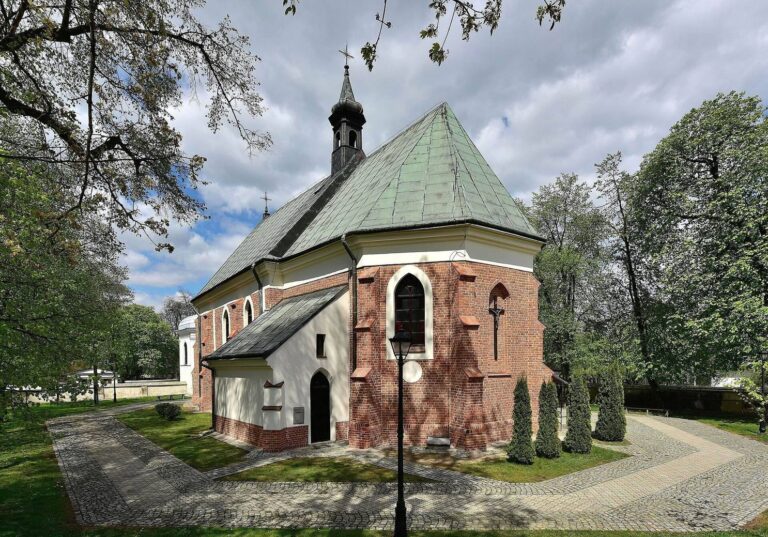
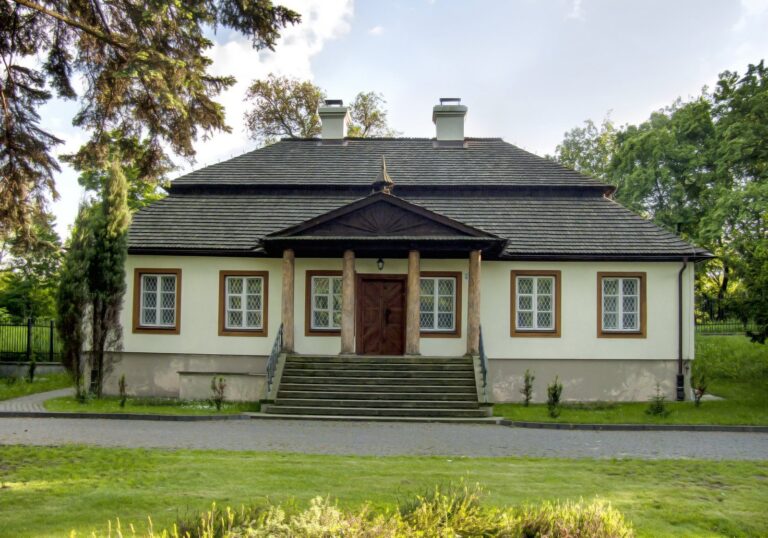
A former Catholic church was adapted for Orthodox worship. The Radziwiłł Palace on the riverbank became a summer residence for Russian fortress commanders. The former officers’ club stands near the rampart on the reservoir’s north side and is well preserved.
Narew bridges
A new wooden bridge was built across the Narew in 1894 under the direction of Polish bridge engineer Mieczysław Marszewski. It carried pedestrians, vehicles, and a narrow-gauge railway that supplied the fortress from southern Zegrze. A guard tower stood at each end, and the towers’ concrete piers survive. In 1897 a stronger steel-truss bridge replaced the wooden one. A new bridge was built in 1926, destroyed by Polish engineers in 1939, and renewed in 1947. It remained in use until a four-lane concrete bridge opened in 2003; the route now carries National Road 61.
Both forts have been described as being in good overall condition. The Large Fortification has nevertheless suffered damage, including the loss of pre-First World War folding barbed-wire defenses, armored doors, and interior fittings.