Deans Court: A Medieval Residence and University Postgraduate House in St Andrews
Site at a Glance
- Rating
- 4.7
- Popularity
- Very Low
- Country
- United Kingdom
- Primary era
- Medieval
- Eras represented
- Medieval, Early Modern
- Civilizations
- Kingdom of Scotland
- Site type
- Domestic
- Remains
- House
On this page15 sections
History
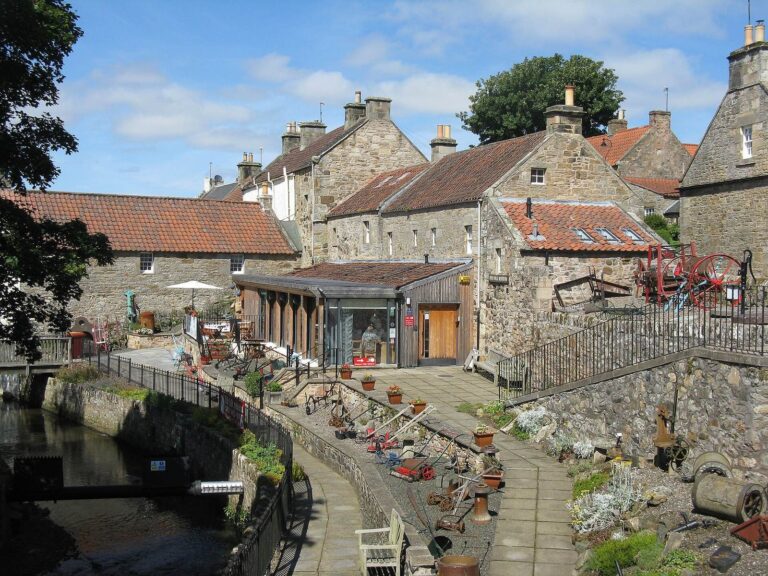
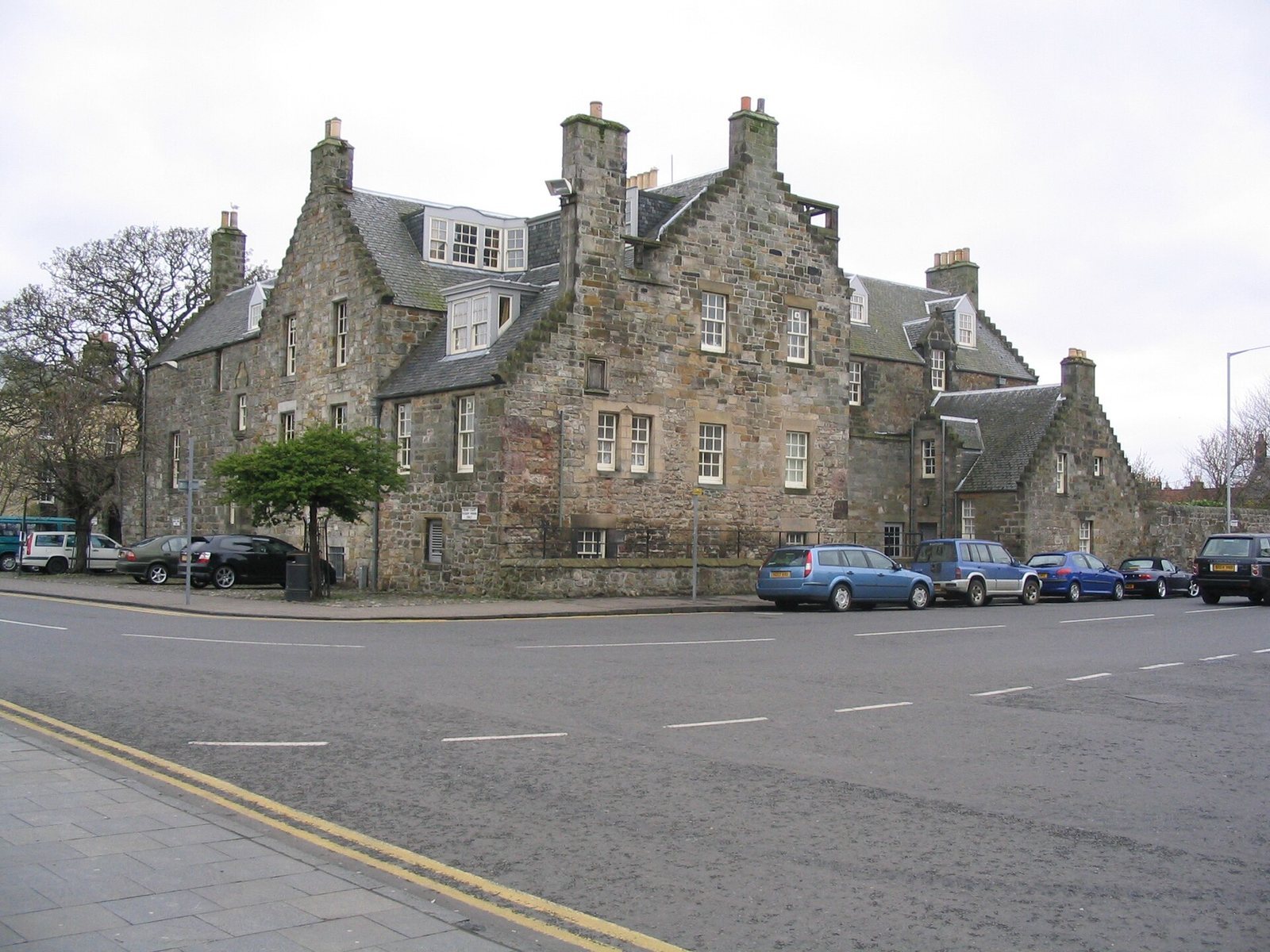
Deans Court is a Scottish vernacular building complex, following traditions shaped by local materials and forms, in St Andrews, Scotland, United Kingdom. Its main building originated in the twelfth century, and the house is regarded as possibly the oldest dwelling in the town. Its vaulted core formed part of an archdeacon’s residence; an archdeacon was a senior church official.
Medieval origins and the Reformation
During the Scottish Reformation, the sixteenth-century shift to Protestantism that involved the seizure of church lands, much of the priory’s property was taken. Deans Court was spared by Sir George Douglas, an elder of the parish church who had helped Mary, Queen of Scots, escape imprisonment at Loch Leven. Around 1585, Douglas remodelled the building, and may have extended it westward.
Seventeenth-century residence
At least part of Deans Court was home to James Gregory, a Scottish astronomer and mathematician, while he was Professor of Mathematics at the University of St Andrews from 1668 to 1674.
Victorian and school use
The building was altered in 1876 and became the home of the Stirling family. It later served as an annexe of St Leonards School. In 1930, Sir James Irvine, principal of the University of St Andrews, acquired it for the University.
University residence
The University undertook extensive renovations over the following two decades, and Deans Court reopened as a postgraduate residence in 1951. A further renovation took place in 1975. It continues in this role, accommodating about 54 students.
Since 1976, five academically accomplished students from Emory University have received a year of graduate study at St Andrews through the Bobby Jones Fellowship and Scholarships programme. Deans Court has long housed them during their stay. The programme honours Robert T. Jones Jr., an internationally renowned golfer and Emory alumnus.
Remains
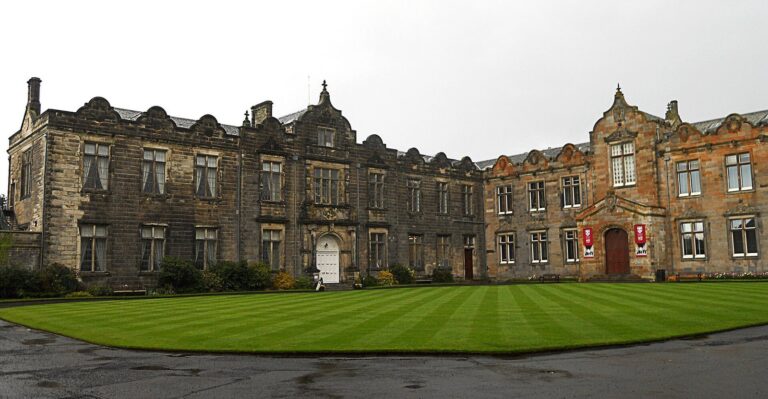
Deans Court comprises a main building, houses on North and South Streets, a courtyard, and gardens. The complex stands at the eastern end of St Andrews, where North Street and South Street converge. Its courtyard entrance opens toward the ruined cathedral, and stone from the cathedral was reused in the buildings.
Main building
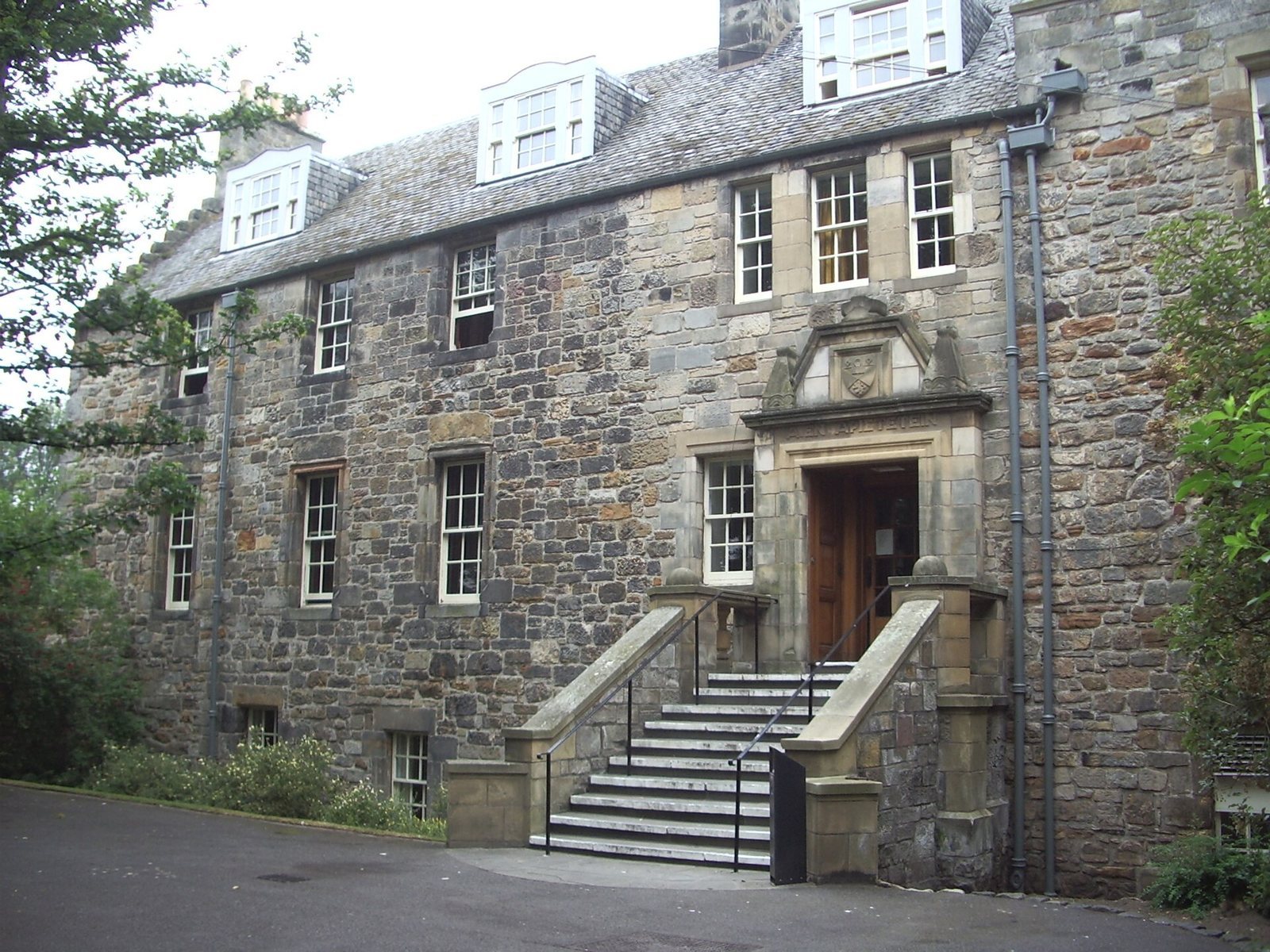
The main building contains 21 rooms, including bedrooms and bathrooms, as well as four student kitchens, a common room, two libraries, and the house manager’s office. Its surviving vaulted core now serves as the dining room.
Courtyard and entrances
Courtyard gate
A round-arched pedestrian gate forms the courtyard entrance. It dates to Douglas’s remodelling around 1585, and his coat of arms remains above it, badly weathered.
Carved arms and inscription
The Stirling family’s arms appear above the archway to the inner garden. Above the main doorway are the University of St Andrews arms and its motto, Ever to Excel. The stone above the dining-hall doorway carries the beginning of the Latin blessing Sit Nomen Domini Benedictum, meaning Blessed be the name of the Lord. A small plaque bearing the arms of James Haldenstone, prior from 1418 to 1443, has been moved from its original position. A prior was the head or senior officer of a religious house.
Courtyard stone
A stone in the courtyard may be a slab from a Bronze Age cist, a stone-built burial container, though its identification is uncertain. It has been there since at least 1854; its earlier origin is unknown.
Residential annexes
North Street houses
The North Street annexe consists of the houses at 3 and 11 North Street. They contain six and eight rooms respectively, and each has a kitchen and bathrooms.
South Street annexe
The annexe at 3–5 South Street has 20 rooms, bathrooms, and two kitchens. It can be reached from South Street or through the main-building garden.
Gardens
A large garden, reached from the courtyard, and a small vegetable garden form part of the complex.