Yushima Tenmangū: A Shinto Shrine Dedicated to Learning in Tokyo


Site at a Glance
- Rating
- 4.3
- Popularity
- High
- Country
- Japan
- Primary era
- Early Modern
- External website
- Open
- Eras represented
- Medieval, Early Modern
- Civilizations
- Tokugawa
- Site type
- Religious
- Remains
- Sanctuary
On this page8 sections
History
Yushima Tenmangū is a Shinto shrine in Tokyo, Japan, traditionally founded in 458 during the reign of Emperor Yūryaku, with its main sanctuary arranged in the Gongen-zukuri style. The original foundation tradition links the shrine to the worship of Ame-no-Tajikarao-mikoto, a kami associated with physical strength and athletic power.
Early Foundations
In February 1355, during Japan’s Northern and Southern Courts period, an era when rival imperial courts competed for authority, local residents petitioned for Sugawara no Michizane to be enshrined alongside Ame-no-Tajikarao-mikoto. One tradition regards this event as the shrine’s formal foundation. In 1455, the local warlord Ōta Dōkan ordered the shrine to be rebuilt.
Edo Religious and Cultural Life
During the Edo period, the Tokugawa shogunate provided the shrine with patronage and protection. Yushima Tenmangū consequently became a major center of Tenjin worship in Edo, the city now known as Tokyo. Tenjin is the deified Sugawara no Michizane, a Heian-period scholar, poet, and politician who lived from 845 to 903, and is associated with learning and academic success. Scholars and literary figures visited the shrine, while ordinary people were also drawn to it during the Kyōhō period because of prosperous lottery activities connected with Edo’s “three lotteries.”
Before the Meiji-era separation of Buddhism and Shinto, Kan’eiji Temple of Tōeizan served as the shrine’s Buddhist administrative overseer, while the nearby Kiken’in carried out practical duties. The shrine was also associated with Edo-period plum-blossom viewing, a tradition that remains central to its cultural identity.
Modern Institutional History
Under the modern shrine-ranking system, Yushima Tenmangū was designated a village shrine in 1873 and raised to prefectural-shrine status in 1885. The shrine buildings were rebuilt that year. The institution changed its name from Yushima Shrine to Yushima Tenmangū on March 31, 2000, and became a Beppyo Shrine of the Association of Shinto Shrines in 2001. A Beppyo Shrine holds specially listed status within that association.
After the Second World War, the shrine began holding an annual Plum Festival in February and March. Its plum blossoms were also celebrated in the 1942 wartime popular song “White Plum Blossoms of Yushima,” associated with Fukeizu. Sugawara no Michizane’s connection with learning continues to bring students seeking success in entrance examinations and academic study. During examination season, visitors leave many votive tablets at the shrine. The principal annual festival takes place on May 25; Togakushi Shrine holds its festival on October 10, and Sasazuka Inari Shrine holds its festival on the second day of the Horse in the old calendar in March.
Remains
Main Shrine Complex
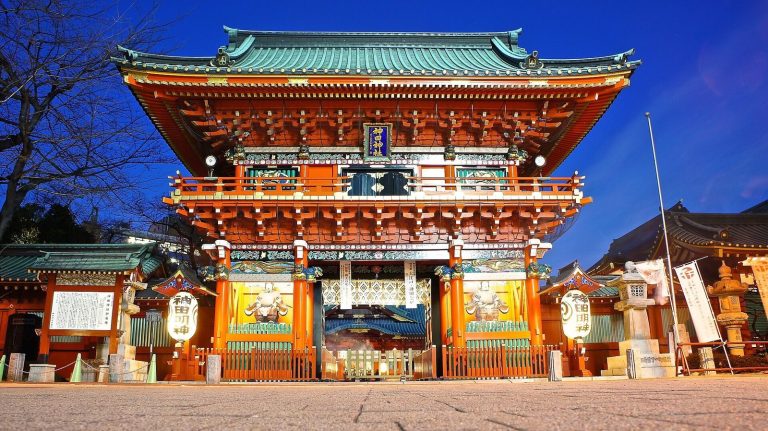
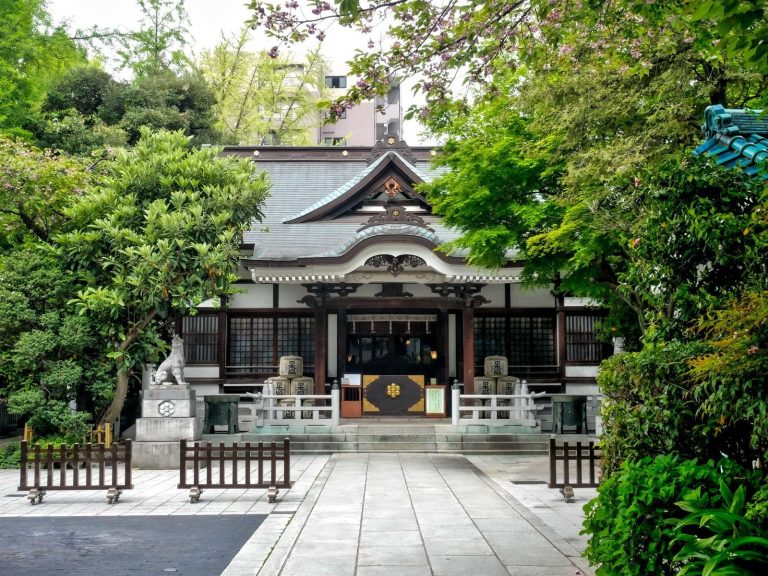
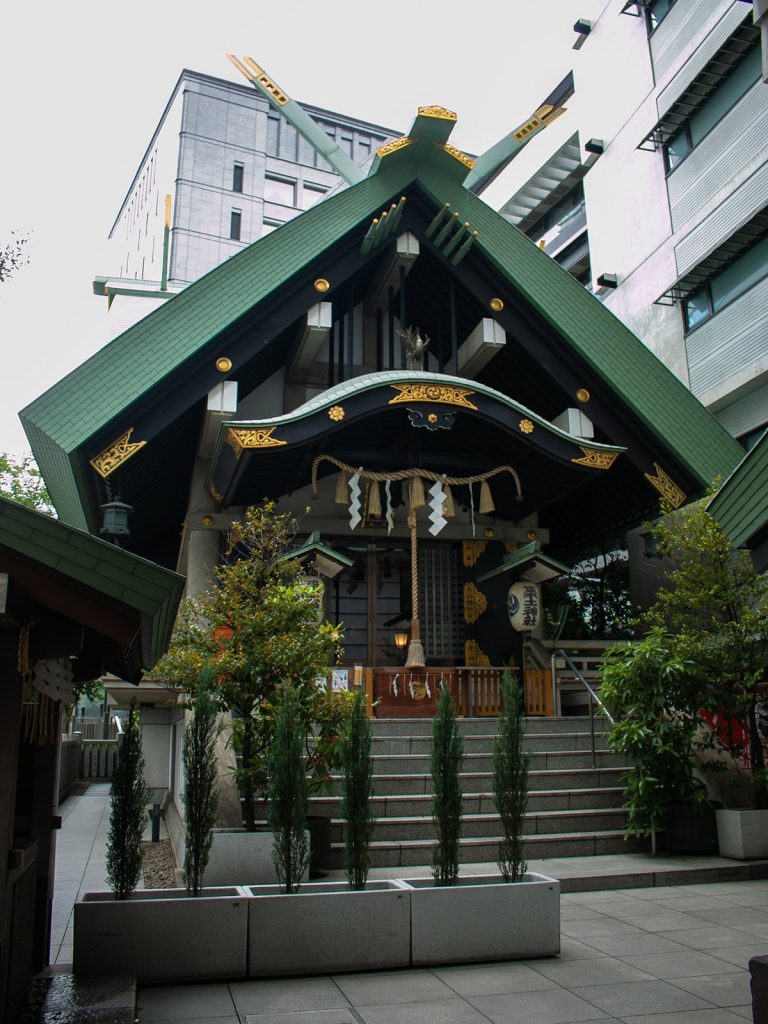
The grounds contain a main sanctuary, a worship hall, a front torii, subsidiary shrines, and a plum garden. The main sanctuary and worship hall are connected in the Gongen-zukuri arrangement, a Shinto design in which the two buildings are joined by an intermediate structure. The shrine buildings were reconstructed in December 1995 after the 1885 buildings had become old and deteriorated. Japanese cypress was used throughout the 1995 reconstruction, which closely followed Shinto architectural traditions.
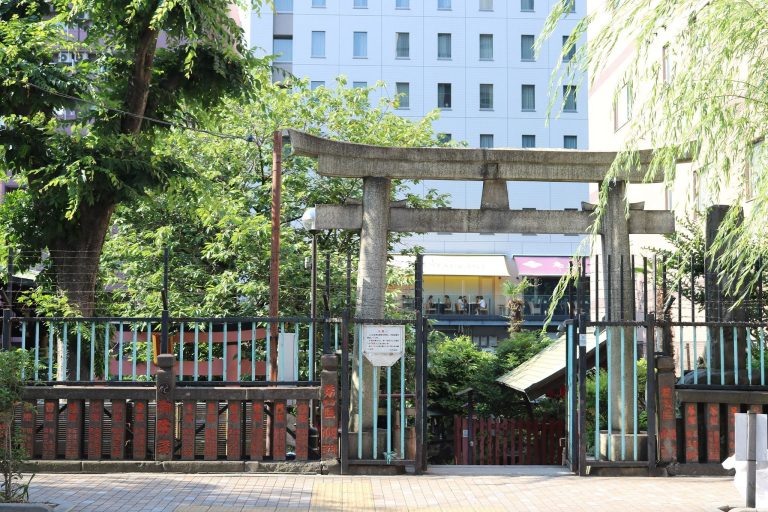
The front torii dates from 1667 and is designated a Tokyo cultural property. It forms part of the surviving approach to the shrine, while the worship hall remains among the principal buildings within the grounds.
Subsidiary Shrines
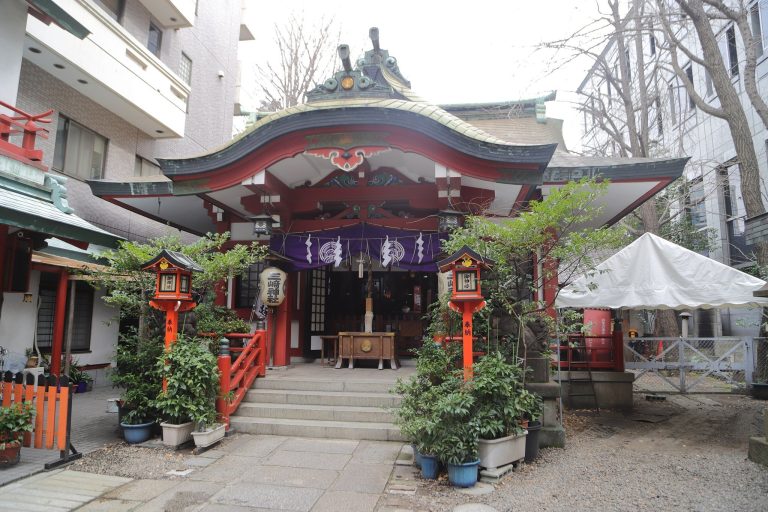
Togakushi Shrine stands within the grounds and enshrines Ame-no-Tajikarao-mikoto. It is regarded as a local tutelary shrine associated with the site before Sugawara no Michizane was enshrined there. The grounds also contain Sasazuka Inari Shrine, which is dedicated to Ukanomitama-no-kami.
Plum Garden and Folk Feature
The plum garden held around 200 trees in 2024, mostly varieties with white flowers. Many were planted immediately after the Second World War and have aged, with the number of trees and the amount of blossom declining over time. A regeneration project has replanted trees and replaced soil while reshaping the plum area as a more garden-like landscape.
The grounds also contain a matchmaking stone classified as a tangible folk cultural property, adding a locally recognized folk feature to the shrine’s architectural and garden setting.