Tsukudo Shrine: A Shinto Shrine Dedicated to Martial Protection in Tokyo


Site at a Glance
- Rating
- 4
- Popularity
- Low
- Country
- Japan
- Primary era
- Modern
- External website
- Open
- Eras represented
- Modern
- Civilizations
- Japanese
- Site type
- Religious
- Remains
- Sanctuary
On this page7 sections
History
Tsukudo Shrine is a Shinto shrine in Japan, located in Tokyo’s Chiyoda City. It was traditionally founded in June 940 after the head of the warrior Taira no Masakado was enshrined and a mound was built for it in Tsukudo Village, then known as Kamihirakawa Village, near the present-day Masakadozuka area of Otemachi. Originally called Tsukudo Myojin, the shrine became an important center of devotion to Masakado, a tenth-century warrior whose rebellion in eastern Japan later shaped traditions that regarded him as both a protective spirit and a figure of martial strength.
Masakado’s Cult and Early Relocations
During the Edo period, tradition held that Masakado’s head, including its skull and hair, was enshrined at Tsukudo Shrine. The shrine was therefore associated particularly closely with his veneration among the institutions connected with him. A local tradition later preserved by a parishioner family maintained that its ancestors descended from people who secretly recovered Masakado’s head after it had been publicly displayed in Kyoto during the Heian period and returned it to the region.
During the Muromachi period, the shrine was moved by Ota Dokan to the Tayasu area on what is now the upper part of Kudan Hill. It consequently became known also as Tayasu Myojin. It was sometimes included among the Three Shrines of Edo, together with Hie Shrine and Kanda Myojin, although the membership of this grouping was not consistent.
Relocation and Religious Reorganization
In 1616, the expansion of Edo Castle required another move. Tsukudo Shrine was transferred to land beside Tsukudo Hachiman Shrine in what is now Tsukudo Hachiman-cho, Shinjuku, where it again became known as Tsukudo Myojin. It remained there for more than three centuries.
In 1874, the shrine was renamed Tsukudo Shrine. Amatsuhikohono Ninigi no Mikoto, a Shinto kami traditionally described as the grandson of the sun deity Amaterasu and an ancestor of the Japanese imperial line, became its principal deity. Taira no Masakado was placed in the secondary position as a co-enshrined deity, meaning a deity worshipped within the same shrine institution, under the direction of the Ministry of Religious Affairs. Sugawara no Michizane, the Heian-period scholar and statesman later worshipped as Tenjin, was also enshrined in this role.
Destruction, Rebuilding, and Community Role
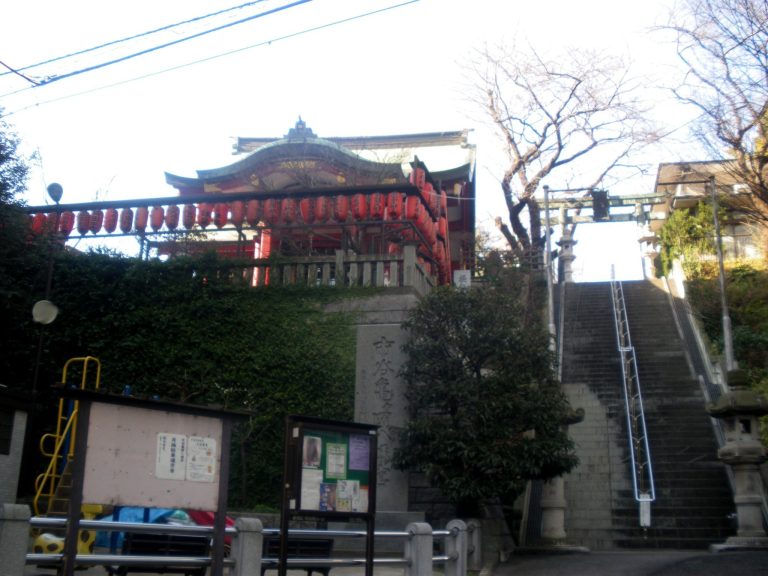
Tsukudo Shrine was completely destroyed in the Tokyo air raids of 1945. In 1954, it moved to the grounds of Yotsugi Inari Shrine on the slope of present-day Kudan Nakazaka. An office building was constructed on the grounds in 1994, when a new reinforced-concrete shrine building was also erected.
The shrine’s connection with Masakado continues through its association with martial valor and enduring military success. It is also the ujigami shrine of the Nippon Budokan in Kitanomaru Park. An ujigami is the tutelary deity of a locality or community, and the shrine associated with that deity serves the area’s traditional parishioners. Tsukudo Shrine’s traditional parish includes Kudan-kita 1–2-chome, Kudan-minami 1–2-chome, Iidabashi, Fujimi, Kitanomaru Park, and Hitotsubashi 1-chome in Chiyoda, as well as Ichigaya Funagawara-cho in Shinjuku. The Shinjuku area forms an enclave because a branch shrine is located there.
The annual festival takes place on September 15, preceded by a week of events known as the Tsukudo Festival. In milestone years, the celebration may include a portable-shrine procession. During the 2006 festival, such a procession entered the grounds of Edo Castle for the first time in 147 years, since the Kanda Myojin procession of 1859. The victory amulet distributed each New Year is particularly well known.
Remains
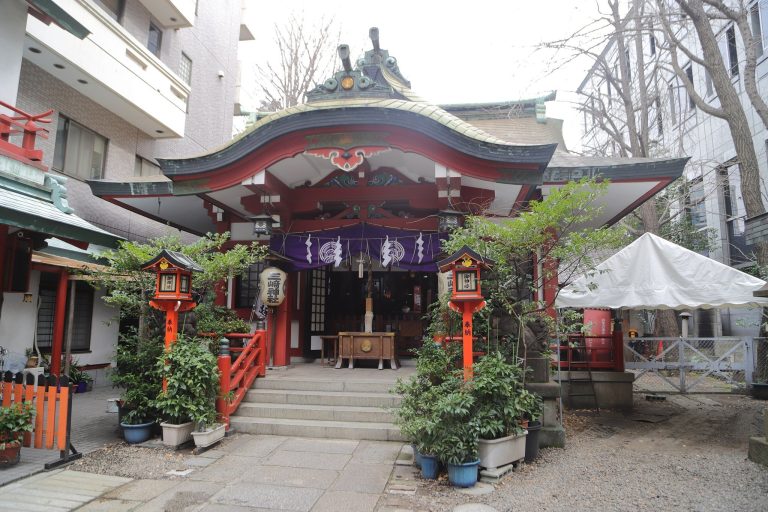
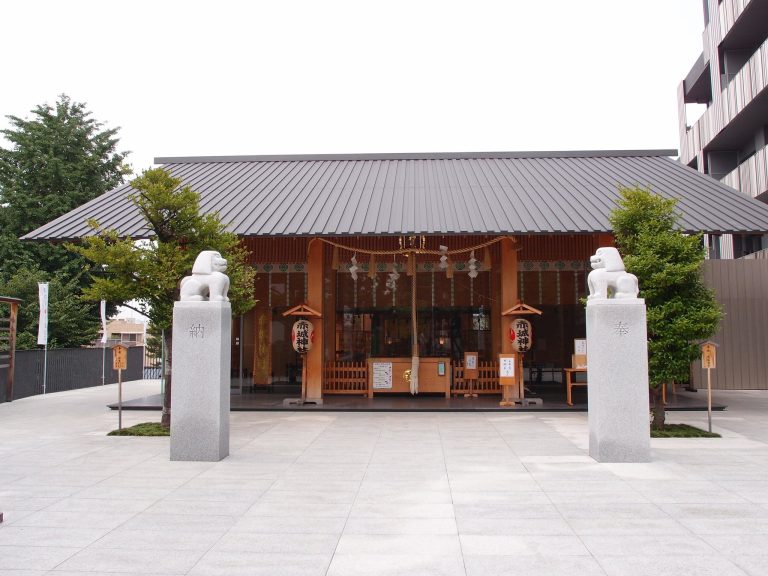
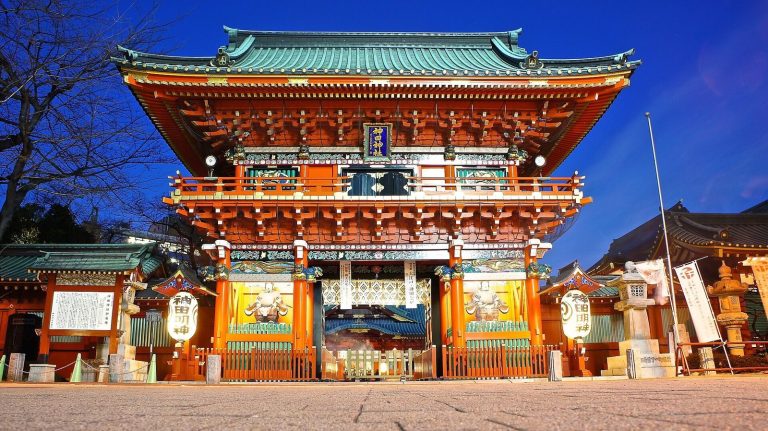
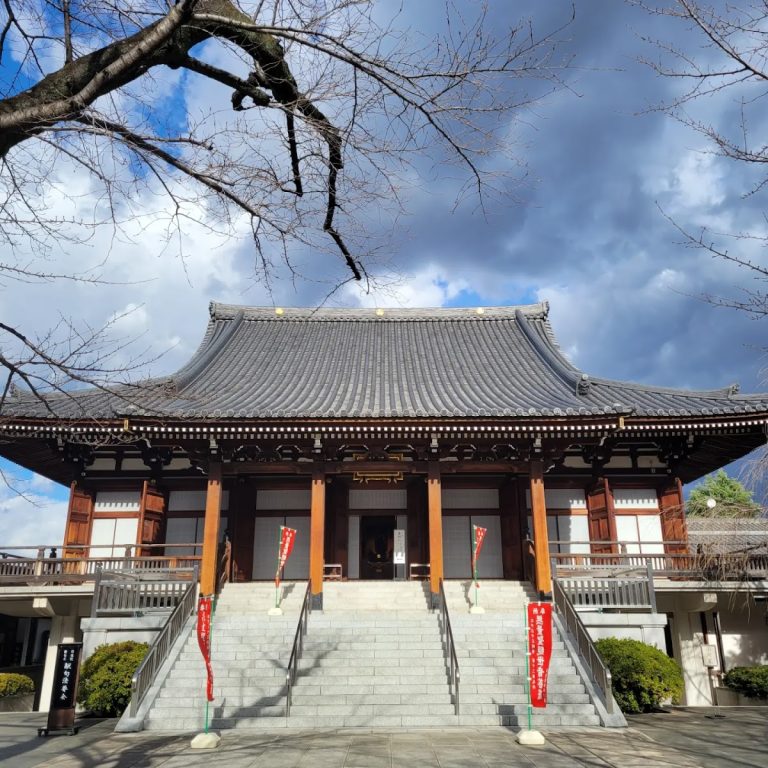
Tsukudo Shrine now stands in Kudan on the grounds of Yotsugi Inari Shrine. Its present shrine building is a reinforced-concrete structure completed in 1994. The worship hall and votive tablets display both the tomoe motif and a linked-horse crest associated with Taira no Masakado. The linked-horse design reproduces a carving from a shrine rainwater barrel dated 1820 and was registered as a Tsukudo Shrine trademark in 2011.
Former Sacred Treasures
Before the 1945 air raids, the shrine’s sacred treasures reportedly included a container said to hold Masakado’s head, a portrait showing him in formal court dress, and a wooden seated statue depicting him in the same attire. The objects were destroyed with the shrine buildings, while photographs preserve images of them. The former head container was a medieval vessel made by bending wood. Its lid and side bore ink inscriptions identifying “Edo” and Kamihirakawa Village, suggesting that it had been prepared to contain a sacred treasure, although its exact original purpose remains uncertain.
Branch Shrine and Horigane Well Tradition
The present branch shrine in Ichigaya Funagawara-cho stands near the entrance from Sotobori Avenue toward the Institut français de Tokyo. A tradition connected with this branch identifies its location with the former site of Horigane Well, which was associated with a beautiful woman from antiquity and mentioned in a historical account of the well.