Misaki-Inari Shrine: A Historic Shrine of Travel and Purification in Tokyo


Site at a Glance
- Rating
- 4.1
- Popularity
- Low
- Country
- Japan
- Primary era
- Early Modern
- External website
- Open
- Eras represented
- Early Modern
- Civilizations
- Tokugawa
- Site type
- Religious
- Remains
- Sanctuary
On this page8 sections
History
Misaki-Inari Shrine is a Shinto shrine in Tokyo, Japan, whose origins are traditionally placed before the Kenkyu period (1190–1199), although its exact foundation date is unknown. It was originally worshipped as the guardian shrine of Misaki Village in Toshima District, Musashi Province, near the foot of Kandayama, in the area of present-day Surugadai and Hongo 1-chome. The shrine belongs to the Inari tradition, which is associated with rice, food, agriculture, prosperity, and fox messengers.
Medieval origins
Traditions place the shrine’s establishment either around the Ninan period (1166–1168) or during the Kenkyu period. Its presence in Hongo is documented by the middle of the Muromachi period. While the Hojo clan controlled Edo Castle, Hojo Ujitsuna is traditionally said to have revered the shrine, donated several thousand units of land in 1524, and arranged for shrine buildings to be constructed in 1538.
Relocation and Edo-period worship
After Tokugawa Ieyasu entered Edo in 1590 and began developing the city, Kandayama was cut down and land reclamation followed. The shrine was moved to the area now known as Korakuen. During the rule of the second shogun, Tokugawa Hidetada, the Kanda River was rerouted. Part of the shrine grounds became a canal, prompting another move toward the southeast.
Tokugawa Iemitsu, the third shogun, revered Misaki-Inari Shrine. Daimyo, powerful feudal lords under Japan’s shogunal governments, traveled there before proceeding to the shogun’s castle. Those participating in the alternate-attendance system, which required many daimyo to maintain residences in Edo and travel periodically between Edo and their domains, were expected to worship and purify themselves at the shrine. This practice gave it the name “Purification Inari.”
A shrine tradition links the site to the improvement of the Kanda River in 1659. Harada Kai, a Date family retainer involved in the works, is said to have dedicated a renowned sword while praying for their success. The name Misakicho was adopted in 1872 and is thought to derive from the shrine. It is associated with a cape, reflecting the tradition that the area was once near the sea and that the shrine stood on such a headland. The shrine was classified as a village shrine in November of that year.
Modern relocations and rebuilding
Misaki-Inari Shrine stood on a bank along the south side of the Kanda River and appeared in Edo Meisho Zue, a guide to notable places in Edo. It moved to its present site in 1905 when the Kobu Railway, whose line was being extended toward Manseibashi, reached the area.
The Great Kanto Earthquake and the Pacific War in the Showa period caused the shrine buildings to burn, with the honden surviving the fires. The present shrine buildings were reconstructed in 1963. The shrine’s traditions also connect it with safe travel. Shirase Nobu is said to have carried one of its amulets when he departed on his Antarctic expedition, while Shigenobu Okuma’s wife reportedly prayed for the expedition members’ safety and gave each a floss-silk vest containing a Misaki-Inari amulet. The shrine continues to provide a sand amulet associated with protection during travel.
The principal deities are Ukanomitama no Kami, Susanoo no Kami, Oichihime no Kami, and Omononushi no Kami. Ukanomitama and Oichihime are associated with food and agriculture, Susanoo with storms, the sea, and purification, and Omononushi with the sacred power of Mount Miwa and the protection of communities. The annual festival takes place on May 9. Every other year, when the main Kanda Festival is not held, a grand festival includes a combined procession of portable shrines from the parish associations and the main shrine portable shrine’s procession through the nine parish neighborhoods before returning to the shrine.
Remains
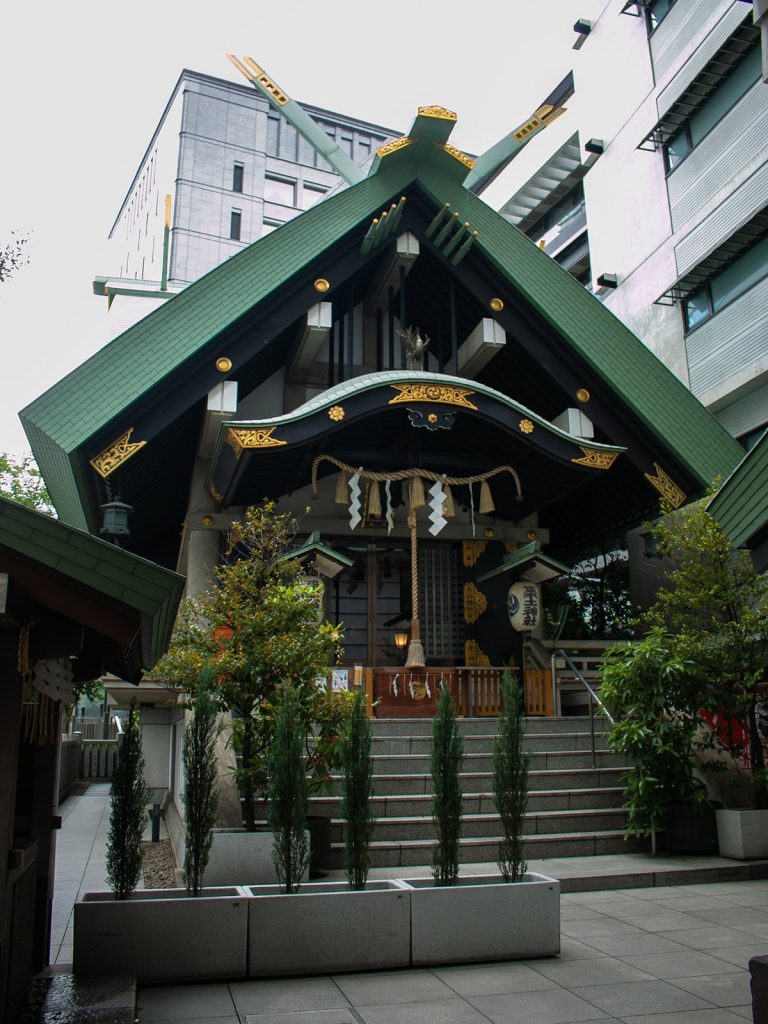
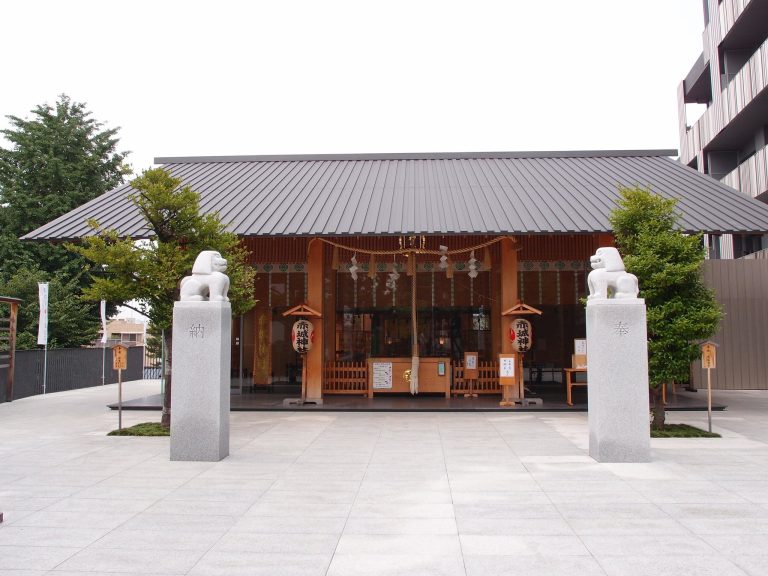
Misaki-Inari Shrine now occupies its site at 2-9-12 Kanda-Misakicho in Chiyoda Ward. The complex includes the principal sanctuary and a worship hall. The surviving arrangement reflects the shrine’s post-1905 location and the rebuilding carried out after the destruction of the earlier buildings.
Shrine buildings
Principal sanctuary and worship hall
The present honden, the principal sanctuary where the deities are enshrined, and the haiden, the worship hall used by visitors, date from the 1963 reconstruction. The honden is the surviving building from the fires associated with the Great Kanto Earthquake and the Pacific War, while the other shrine buildings were rebuilt afterward.
Water basin
A late-Edo-period water basin remains at the shrine. Worshippers used it to purify their hands and mouths. One basin was dedicated by two merchants from Kanda. In 2014, the surviving basin was designated a Chiyoda Ward cultural property.