Yanagimori Shrine: An Inari and Tanuki Shrine in Tokyo


Site at a Glance
- Rating
- 4.2
- Popularity
- Low
- Country
- Japan
- Primary era
- Early Modern
- External website
- Open
- Eras represented
- Early Modern, Modern
- Civilizations
- Japanese, Tokugawa
- Site type
- Religious
- Remains
- Sanctuary
On this page13 sections
History
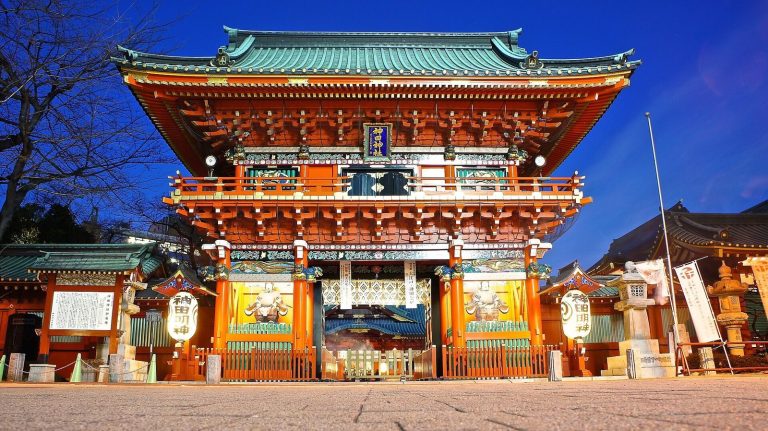
Yanagimori Shrine is a Shinto shrine in Japan, located in Kanda-Sudacho, Chiyoda City, Tokyo, near the Kanda River and Akihabara. Founded in 1458, it was established by Ota Dokan as a branch of Kyoto’s Fushimi Inari Shrine and formed part of the religious landscape associated with Edo. Shinto is Japan’s indigenous religious tradition, centered on reverence for kami, sacred beings or forces connected with nature, ancestors, places, and cultural traditions.
Foundation and Edo Castle
Ota Dokan, a fifteenth-century samurai and military leader associated with the construction of Edo Castle, placed the shrine northeast of the castle. This direction was traditionally linked with harmful influences, so the shrine was intended to provide protection. Dokan also planted willow trees at the site, giving Yanagimori Shrine its name, which means “willow grove shrine.” Together with Sugimori Shrine and Karasumori Shrine, it is traditionally associated with the Edo Three Mori shrines.
The shrine was originally dedicated to Inari, a major Shinto kami associated with rice, food, agriculture, prosperity, and commerce. Foxes are traditionally regarded as Inari’s messengers. In 1659, embankment work connected with Edo Castle led to the shrine’s relocation across the river to its present site, and the willow trees were moved with it.
The Fukuju Shrine and the tanuki tradition
From the end of the nineteenth century, Yanagimori Shrine also became associated with tanuki, Japanese raccoon dogs represented in folklore as supernatural beings linked with transformation, prosperity, and conviviality. This association followed the transfer and merger of Fukuju Shrine. Keishoin, the mother of Tokugawa Tsunayoshi, is said to have established Fukuju Shrine within Edo Castle during the seventeenth century. It later moved to the Kuramae area east of Akihabara before being transferred to Yanagimori Shrine in 1868.
The shrine is consequently known by the nickname O-Tanuki-sama. Its annual festival is held around May 15, while a tanuki festival takes place on October 2.
Destruction, rebuilding, and recognition
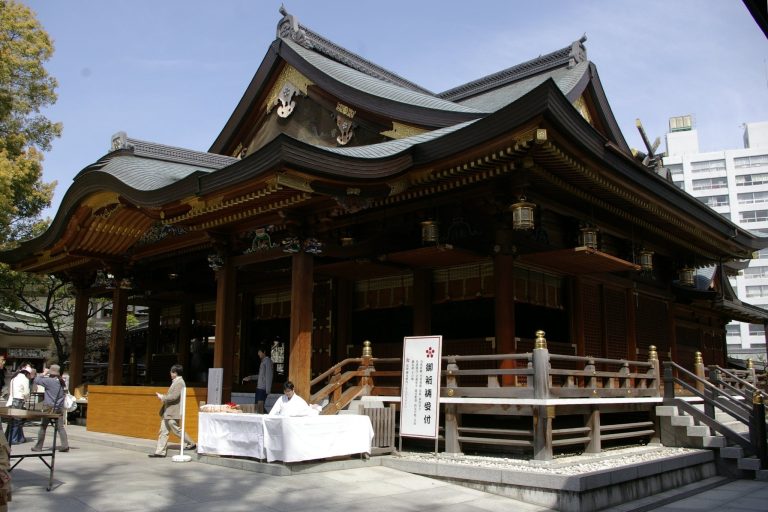
The Great Kanto Earthquake of September 1923 caused a fire that destroyed the shrine buildings, including the worship buildings from the Genroku period. Reconstruction was completed in 1930. Air raids during the Second World War caused minor damage, although part of the shrine survived. Repairs were completed in 1954, the year of a 500th-anniversary commemorative festival and the completion of a kagura hall, a building for ritual music and dance offered to Shinto deities.
Two arson attacks in 1984 partially burned the kagura hall, worship hall, main sanctuary, and other buildings. Repairs were completed in spring 1986. Chiyoda Ward has designated the shrine as a tangible folk-cultural property because its strength stones preserve evidence of the lives and recreational practices of young people in Edo and Tokyo.
Remains
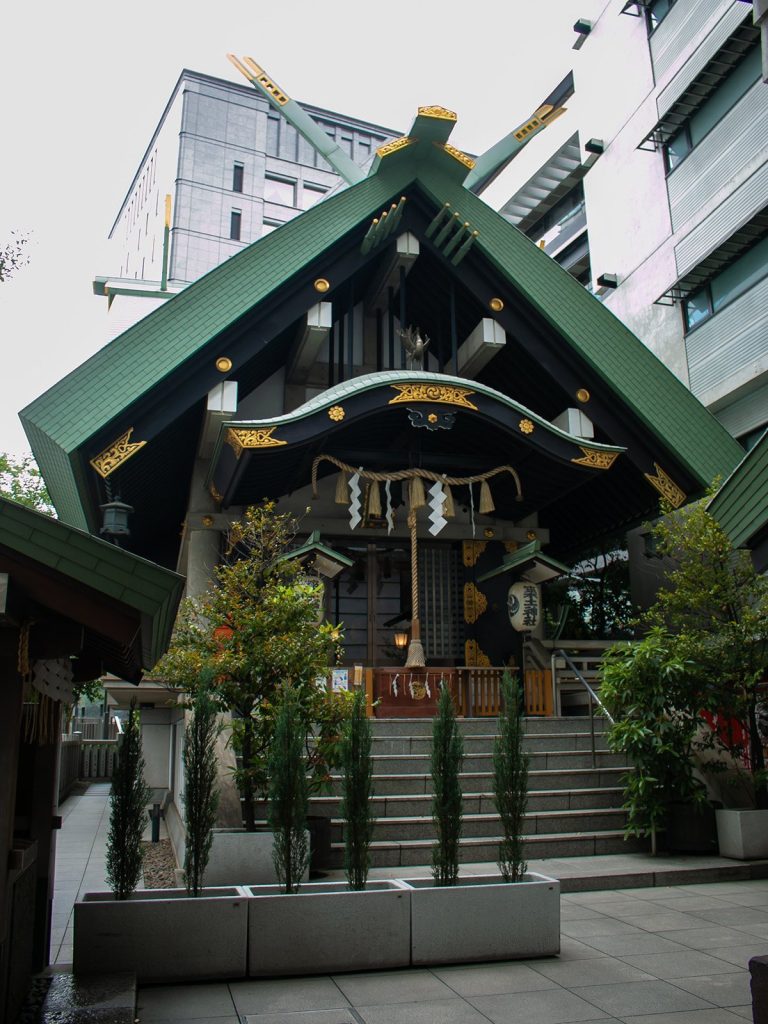
The precinct is organized around the main shrine and several subsidiary shrines, with religious monuments, strength-testing stones, and traces of a former Mount Fuji mound distributed within the grounds. The principal sanctuary is the Yanagimori Shrine itself, dedicated to Inari, while the associated buildings extend the range of deities honored at the site.
Main shrine and subsidiary shrines
Yanagimori Shrine
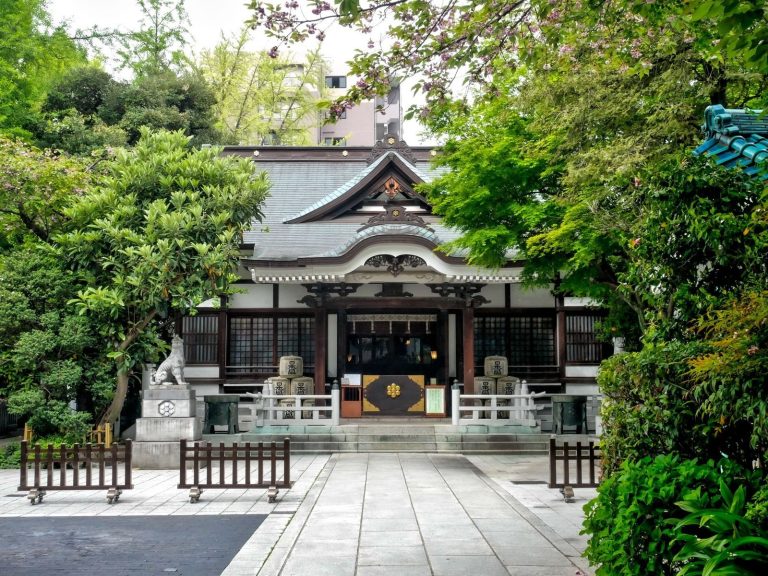
Two stone foxes stand at the entrance to the main shrine. The fox on the right holds a ball and is said to represent the spirit, while the fox on the left holds a cub and symbolizes children. Their presence reflects the shrine’s original Inari cult, in which foxes serve as messengers.
Fukuju Shrine
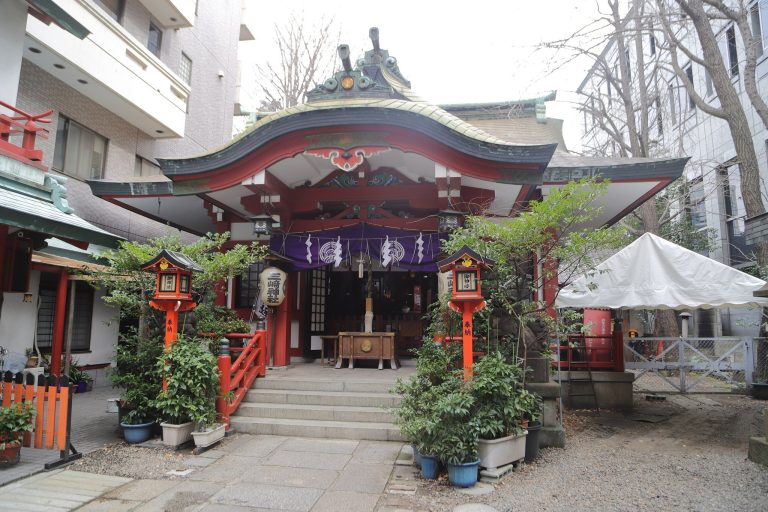
Fukuju Shrine is associated with tanuki and forms the physical focus of the shrine’s O-Tanuki-sama identity. Tanuki statues here have large bellies and exaggeratedly large testicles, reflecting the distinctive folkloric imagery connected with prosperity and fertility. The precinct also contains the Kotohira Shrine, dedicated to a deity regarded as a protector of people undertaking sea journeys.
Other subsidiary shrines
Additional buildings and sacred places within the precinct include Sai Shrine, Suijin-Itsukushima Shrine, Enoshima Shrine, Akiba Shrine, Myotoku Inari Shrine, and Fujinomiya Sengen Shrine. Their associated deities connect the site with fertility, food, rice, fire, Mount Fuji, water, and the sea.
Stones, monuments, and planted features
Chikara-ishi
Thirteen red-inscribed chikara-ishi, or “strength stones,” survive in the precinct. These rounded or oval stones vary in weight and were used by young people for tests of strength. Such stones were traditional communal objects, and the inscriptions preserve associations with their users and local practices.
Fujiko memorials and Fujizuka traces
Memorial stones connected with the Fujiko cult stand within the shrine grounds. Fuji-ko were devotional groups whose members used a Fujizuka, a small artificial mound representing Mount Fuji, as a local substitute for pilgrimage to the mountain. A Fujizuka once stood just inside the entrance at a corner of the grounds. The mound itself no longer survives, but piled igneous rocks and monuments remain as its traces.
Gyoiko cherry
A Gyoiko cherry, a rare cherry variety, grows on the shrine grounds. It was planted during the 1970s and forms part of the living landscape of the precinct.