Shiofune Kannon Temple: A Shingon Buddhist Temple in Japan


Site at a Glance
- Rating
- 4.3
- Popularity
- Medium
- Country
- Japan
- Primary era
- Medieval
- External website
- Open
- Eras represented
- Medieval
- Civilizations
- Ashikaga shogunate
- Site type
- Religious
- Remains
- Monastery
On this page12 sections
History
Shiofune Kannon Temple is a Shingon Buddhist temple in Ome, Tokyo, Japan, whose principal surviving buildings date from the late Muromachi period, the later era of the Ashikaga shogunate, approximately 1467–1572. It is a Special Head Temple of the Daigo School, a branch of Shingon Buddhism historically associated with Daigoji in Kyoto. The temple’s principal image is an Eleven-Faced, Thousand-Armed, Thousand-Eyed Kannon, a form of the Buddhist bodhisattva of compassion and answered prayers.
Foundation traditions
Temple tradition places the foundation of Shiofune Kannon Temple in the Taika era, approximately 645–650. Yao Bikuni, a legendary Buddhist-associated woman traditionally said to have lived for many centuries, is credited with establishing the temple and enshrining a purple-gold image of Senju Kannon. Senju Kannon is Kannon represented with many arms, while the eleven faces express different aspects of compassionate response. This account remains a foundation tradition rather than a firmly documented historical fact.
The temple’s name is traditionally linked to Gyoki’s visit during the Tenpyo era, approximately 729–749. Gyoki was a prominent Nara-period Buddhist monk known for religious activity and public works. The small hills surrounding the temple were thought to form the shape of a boat, leading him to associate the site with the “Boat of the Great Vow,” an expression of the Buddha’s vow to save living beings.
Growth and patronage
During the Jogan era, approximately 859–877, Annen is traditionally said to have established twelve monastic residences at the temple. Annen was a major Heian-period scholar and practitioner of esoteric Buddhism. The temple is consequently remembered as having reached considerable prosperity during this phase.
In the Kamakura period, Shiofune Kannon Temple received the protection of the Kaneko clan, which was associated with the lineage of the Musashi Seven Parties. During the Muromachi period, the Mita clan supported the temple through its devotion and regional power in the Ome and Okutama areas. These successive relationships helped sustain the temple as an important religious institution in the surrounding region.
Pilgrimage and cultural status
Shiofune Kannon Temple belongs to three pilgrimage circuits: it is the seventy-second site of the Kanto Eighty-Eight Sacred Places, the thirteenth Tokyo site in the Hundred Flower Temples of Eastern Japan, and the fifty-ninth site of the Okutama New Shikoku Eighty-Eight Sacred Places. Its pilgrimage verse invokes Kannon as a guide who carries worshippers in the boat of the Great Vow, continuing the traditional interpretation of the surrounding hills and the temple’s name.
The main hall, Amida Hall, Nio Gate, the Buddhist image cabinet in the main hall, the wooden standing Senju Kannon, and the wooden statues of the Twenty-Eight Attendants are Important Cultural Properties of Japan. The three buildings and the cabinet received designation under the former National Treasure Preservation Law in 1946 and became Important Cultural Properties under the 1950 Cultural Properties Protection Law. The two wooden standing Kongorikishi guardian statues at the Nio Gate became Tokyo Tangible Cultural Properties in 1960. Other municipal cultural properties include Yakushi Hall, several Buddhist images, a bronze bell, a blue-stone memorial tablet, and the Daihannya Sutra, with designations dating from 1964 to 2005.
The temple’s cultural identity also includes a spring azalea festival associated especially with May. Local people traditionally visit for New Year worship, linking seasonal observance with the temple’s continuing religious life.
Remains
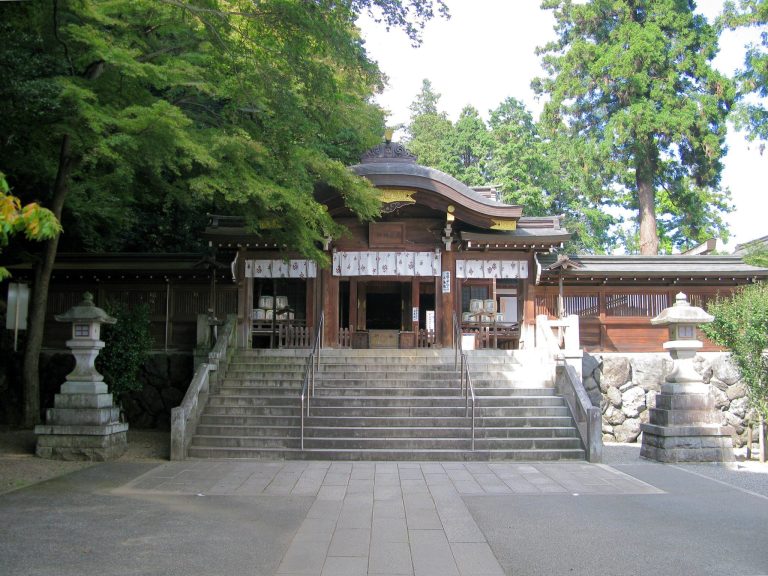
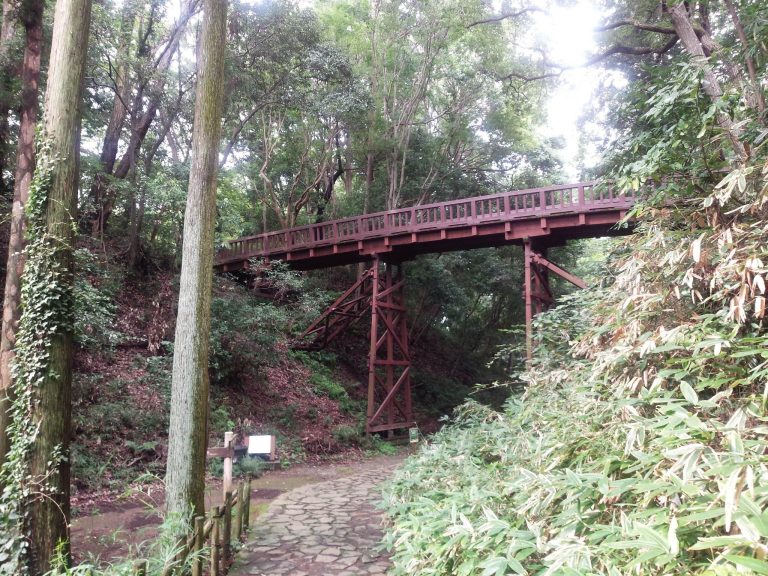
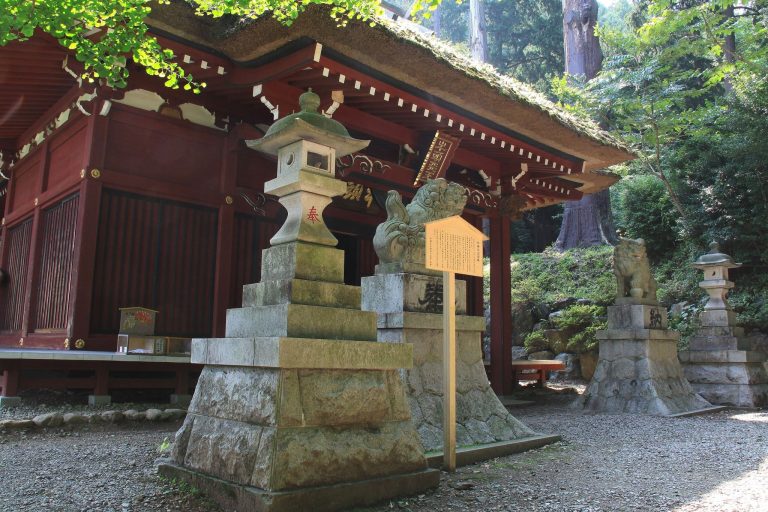
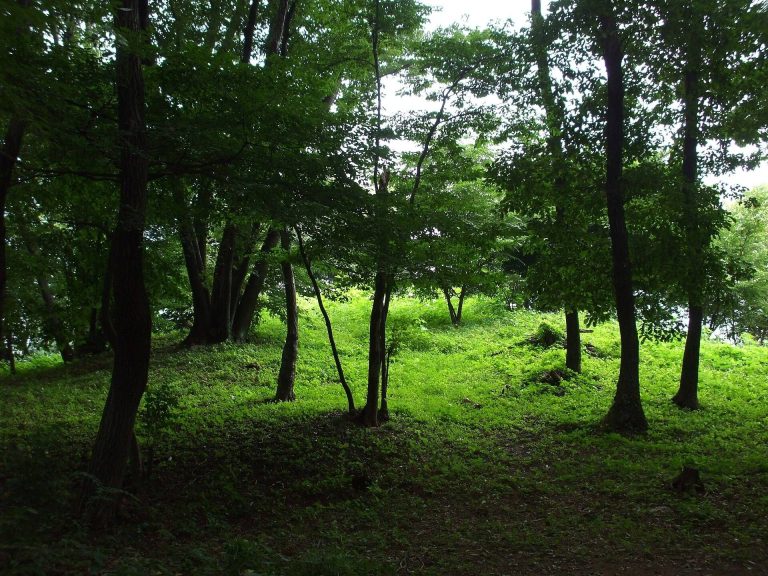
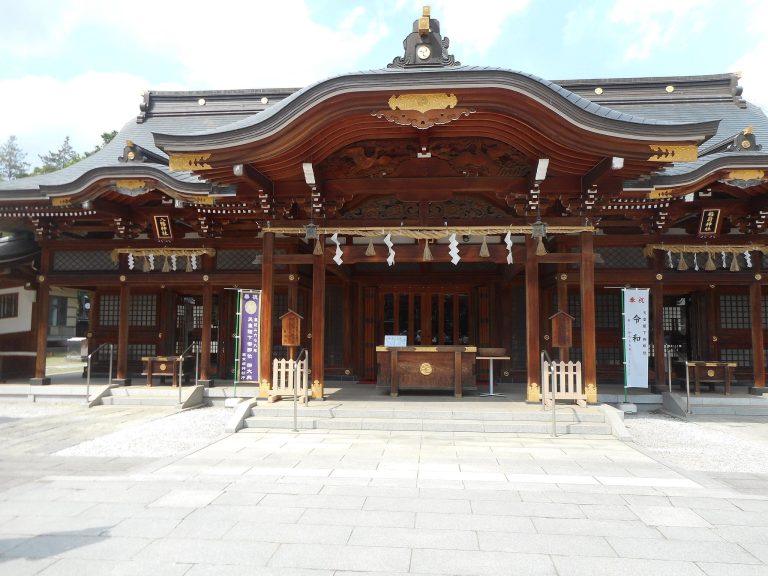
The temple grounds lie within small hills whose form is traditionally compared with a boat. The principal buildings date from the late Muromachi period and use distinct timber structures with hipped or gabled roofs. Azalea plantings occupy the grounds, while the Yakushi Hall and two large cedar trees add other established elements to the temple landscape.
Late Muromachi temple buildings
Main hall
The main hall dates from the late Muromachi period, approximately 1467–1572. It is a single-story structure measuring five bays by five bays, meaning that its frame is divided into five structural intervals in each direction. A hipped roof slopes on all four sides and is covered with thatch. The Buddhist image cabinet containing the principal image forms part of the building.
Nio Gate
The Nio Gate also dates from the late Muromachi period. It is a three-bay, single-entrance gate supported by eight posts and covered by a gabled thatched roof. The gate is associated with the two Kongorikishi, wooden standing guardian figures that protect the temple entrance and are designated Tokyo Tangible Cultural Properties.
Amida Hall
Amida Hall was built during the late Muromachi period. The single-story building measures four bays by three bays and has its entrance in the gable end. Its roof is covered with copper sheeting shaped to resemble thatch. A central two-bay-by-one-bay core is enclosed by an outer aisle or veranda, creating the building’s surrounding plan.
Grounds and Buddhist images
Azaleas and cedars
Azalea plantings are a prominent feature of the grounds and are especially associated with their flowering in May. The site also contains two large cedar trees known as the Kannonji Great Cedars, or the “Married Cedars.” They are designated a Tokyo Natural Monument. The Yakushi Hall is another surviving building within the grounds and is listed among Ome’s municipal cultural properties.
Buddhist images
The principal image is the Eleven-Faced, Thousand-Armed, Thousand-Eyed Kannon. The associated sculptural group includes the Twenty-Eight Attendants and the Kongorikishi guardians at the Nio Gate. The wooden standing Senju Kannon and the wooden statues of the Twenty-Eight Attendants are Important Cultural Properties of Japan, while the two Kongorikishi statues hold Tokyo Tangible Cultural Property designation.