Torikoe Shrine: A Historic Shinto Shrine in Tokyo


Site at a Glance
- Rating
- 4.2
- Popularity
- Medium
- Country
- Japan
- Primary era
- Unclassified
- External website
- Open
- Eras represented
- Unclassified
- Civilizations
- Unclassified
- Site type
- Religious
- Remains
- Sanctuary
On this page8 sections
History
Torikoe Shrine is a Shinto shrine in Taito City, Tokyo, Japan, traditionally associated with the legendary imperial prince Yamato Takeru and said to have originated during the reign of Emperor Keiko. Yamato Takeru is regarded in early Japanese mythology as a son of Emperor Keiko and a heroic imperial figure. According to tradition, he identified the site as a suitable sacred precinct and worshipped two imperial ancestral deities there.
Origins and the Shiratori tradition
In 651, when the area was known as Shiratori Village, local residents are said to have formally enshrined the deity as Shiratori Myojin and called the shrine Shiratori Shrine. The shrine’s connection with the name Torikoe later developed during the Former Nine Years’ War, an eleventh-century conflict in northeastern Japan in which Minamoto no Yoriyoshi and Minamoto no Yoshiie led imperial forces against the Abe clan.
Minamoto no Yoriyoshi and his son reportedly crossed the area during that conflict. A white bird is said to have shown them a shallow place where they could cross the Sumida River. They attributed their success to the protection of Shiratori Myojin and bestowed the title Torikoe Daimyojin on the shrine.
Transformation under the Edo shogunate
By the Edo period, three shrines occupied the area and together held an estate of approximately 20,000 tsubo, a traditional Japanese measure of land area. In 1620, the Edo shogunate, the military government that ruled Japan from 1603 to 1868, confiscated the estate to create the Asakusa Storehouses along the Sumida River. The storehouses held rice collected from lands under shogunal control, while Torikoe Mountain was reduced to provide earth for reclamation.
Himegaike Pond, north of the shrine, was also filled with earth from Torikoe Mountain and converted into land for official uses, including residences for daimyo, the powerful feudal lords of the period. Atsuta Shrine was moved to Imado and Dairoku-ten Sakaki Shrine to Morita-cho, now part of Kuramae. The shrine that remained became the present Torikoe Shrine.
Deities and later history
Yamato Takeru is the shrine’s principal deity. Ame-no-Koyane-no-Mikoto, a Shinto deity traditionally regarded as an ancestor of the Fujiwara clan and associated with court ritual, was later enshrined with him. The Fujiwara clan, a powerful aristocratic family at the imperial court, held the office of governor of Musashi Province during the reign of Emperor Ninmyo and worshipped Ame-no-Koyane-no-Mikoto as its ancestral deity.
Tōshōgū-kō, identified with Tokugawa Ieyasu, was later transferred to Torikoe Shrine after Matsudaira Shrine near present-day Kuramae burned down in the Great Kanto Earthquake. Tōshōgū is a title used for shrines and worship associated with Ieyasu, the founder of the Tokugawa shogunate.
Parish traditions and the Torikoe Festival
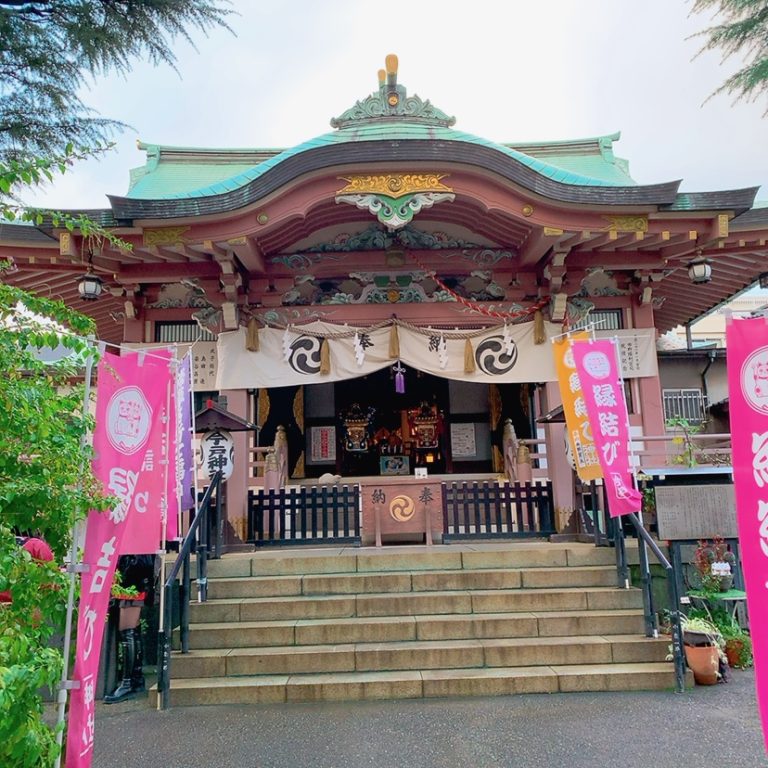
The annual Torikoe Festival takes place in June and centers on the procession of the shrine’s large main mikoshi, a portable Shinto shrine used to carry a deity ceremonially during a festival. Parishioners carry it through the surrounding neighborhoods each year. The mikoshi is regarded as one of the largest and heaviest parish-procession mikoshi in Tokyo.
The parish district known as Komagata, or Shinzaru, is separated from the other 22 parish associations and contains two parish households. Its detached status resulted from the relocation of residents of Saruyacho, east of the shrine, after the Edo shogunate appropriated that area as a firebreak. The procession of the Senkan mikoshi to Shinzaru was halted in 1958 after a police request prompted by postwar traffic dangers, and a revival was scheduled for 2022.
According to the parishioner and theater critic Tsuruo Ando, the chief priest died by ritual suicide within the shrine grounds in August 1945 after Japan’s defeat in the Pacific War. He reportedly felt responsible because the shrine had sent departing soldiers to war.
A joint procession in Kisarazu in 1997 commemorated the opening of the Tokyo Bay Aqua-Line. It brought together Torikoe Shrine’s main mikoshi, the Ninomiya mikoshi of Tomioka Hachimangu in Fukagawa, and the mikoshi of Yatsurugi Hachimangu in Kisarazu. Together, they were presented as the “three great mikoshi of the Kanto region.” From 2019 onward, the annual festival was reduced in scale because of the COVID-19 pandemic. The traditional mikoshi procession resumed in 2023 for the first time in four years.
Remains
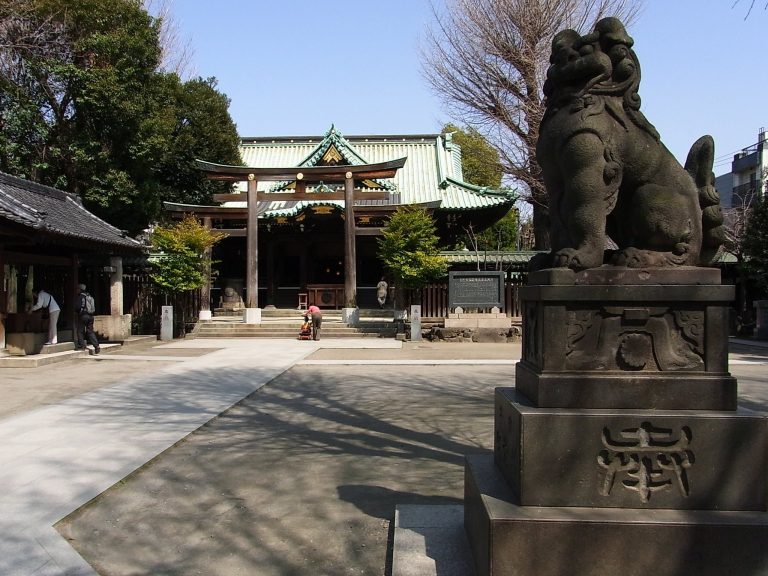
Torikoe Shrine occupies ground associated with the former Torikoe Mountain, which was reduced during the Edo-period reclamation works for the Asakusa Storehouses. The former shrine estate extended over approximately 20,000 tsubo, while Himegaike Pond lay to the north and the storehouses stood along the Sumida River. The surviving shrine precinct therefore preserves a religious site whose historical setting was reshaped by the shogunate’s riverfront construction and land reclamation.
The Senkan mikoshi
The shrine’s principal processional object is the original Senkan mikoshi. Its base measures 4 shaku 3 sun, traditional Japanese length units in which one shaku is divided into ten sun. The mikoshi has a large body and relatively short, thick carrying poles, a combination that makes it particularly heavy for the bearers. Since the beginning of the Showa period, it has been described as Tokyo’s heaviest mikoshi and is also considered one of the largest of its kind in the city.
Processional equipment and deities
During the main procession, Sarutahiko leads the way in the form of a tengu, a supernatural Japanese figure often represented with avian or mountain-associated characteristics. A group of tekomai performers and children carrying five-colored flags accompany the procession. Lanterns are attached around the mikoshi for its nighttime return, while tall lanterns surround it during the entrance procession. This lantern-lit appearance has given the mikoshi the alternate name “Ghost Mikoshi.”
The shrine’s sacred presence is expressed through the deities jointly enshrined there: Yamato Takeru, Ame-no-Koyane-no-Mikoto, and Tōshōgū-kō. Their associations connect the site’s physical precinct and ritual processions with imperial mythology, Fujiwara ancestral worship, and the religious tradition surrounding Tokugawa Ieyasu.