Yatsushiro Shrine: A Historic Myoken Shrine in Japan


Site at a Glance
- Rating
- 4.3
- Popularity
- Low
- Country
- Japan
- Primary era
- Medieval
- External website
- Open
- Eras represented
- Medieval
- Civilizations
- Kamakura shogunate
- Site type
- Religious
- Remains
- Sanctuary
On this page8 sections
History
Yatsushiro Shrine is a historic Shinto shrine in Yatsushiro, Japan, whose three-part sacred complex traces its origins to the late eighth century and the medieval period. Also known as Myoken Shrine or Myoken-san, it is regarded as one of Japan’s three principal Myoken shrines. Myoken is a religious tradition associated with the North Star and the Big Dipper that historically combined Buddhist and Shinto practices.
Three shrines and medieval foundations
The upper shrine was founded in 795 at the summit of Mount Yokotake, according to the Record of Myoken Shrine, compiled in 1730. A middle shrine was built in 1160. The lower shrine followed in 1186 through the devotional patronage of Emperor Go-Toba, who reigned from 1183 to 1198, and Oe no Takafusa, whose title combined a high Buddhist clerical rank with a court rank. The lower shrine later became the main institutional center of the three.
Until 1870, the institution was called Myoken Shrine. It operated as a combined Shinto-Buddhist temple-shrine and was widely venerated as the ichinomiya, or first-ranking shrine, of the Yatsushiro, Shimomashiki, and Ashikita districts.
Meiji reorganization
The government’s separation of Shinto and Buddhism in the Meiji period required religious institutions to distinguish shrines from Buddhist temples and led to the removal or destruction of many Buddhist associations at shrines. In this reorganization, the enshrined deities were designated as Ame-no-Minakanushi-no-Kami, associated with the central position of the cosmos, and Kuninotokotachi-no-Mikoto, an early deity connected in Japanese mythology with the formation of the land. The name changed to Yatsushiro Shrine, and the institution was classified as a prefectural shrine.
Festival traditions and patronage
The earliest surviving reference to the Myoken Festival dates to 1515, under Sagara rule. At that time, a sacred procession traveled between the lower and middle shrines. The observance was interrupted during the Azuchi-Momoyama period, the late sixteenth-century era of political reunification in Japan, and was later revived under the rule of the Kato family.
When Hosokawa Sansai, also known as Hosokawa Tadaoki, entered Yatsushiro in 1632, he donated a portable shrine and other festival equipment. Protection of Myoken Shrine then continued under the Matsui lords, members of a samurai ruling house. The principal annual festival is held on November 22 and 23. Its main procession was designated a nationally important intangible folk cultural property in 2011 and registered in 2016 as part of UNESCO’s “Yama, Hoko, and Yatai” float festivals.
During the descent procession, the portable shrine, or mikoshi, carries the deity symbolically to Shioya Hachiman Shrine, where it remains overnight at a temporary sacred lodging place. The next day, the ascent procession returns to Yatsushiro Shrine with priests, shrine-associated Buddhist clergy, guns, sacred horses, umbrella-shaped floats, a lion modeled on the Nagasaki Kunchi tradition, and Kida, a tortoise-snake figure associated with the Myoken legend and the Black Tortoise. In East Asian cosmology, the Black Tortoise is a northern guardian represented as a tortoise entwined with a snake.
The annual Himuro Festival takes place from May 31 to June 1. Tradition connects its origin with Hosokawa Tadaoki, lord of Yatsushiro Castle, who is said to have offered snow kept in an ice chamber on Mount Mimuro after praying at the shrine for release from illness.
Reifu tradition and recent damage
Reifu Shrine, a subsidiary of Yatsushiro Shrine, is regarded as the principal shrine of the Chintaku Reifu deity, a protective tradition associated with safeguarding the home and averting calamity. During the reign of Empress Suiko, a third prince of King Seongmyeong of Baekje is said to have introduced Japan’s first Reifu deity to Yatsushiro. It was enshrined at Shirakiyama Jinguji, a Buddhist temple attached to and serving a Shinto shrine before the formal separation of the two religions. The shrine declined during the anti-Buddhist destruction of the Meiji period and was revived during the Taisho period.
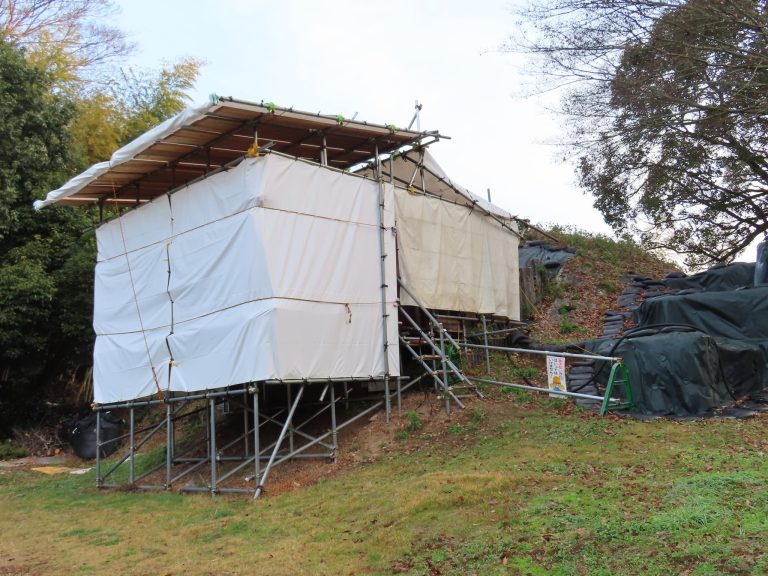
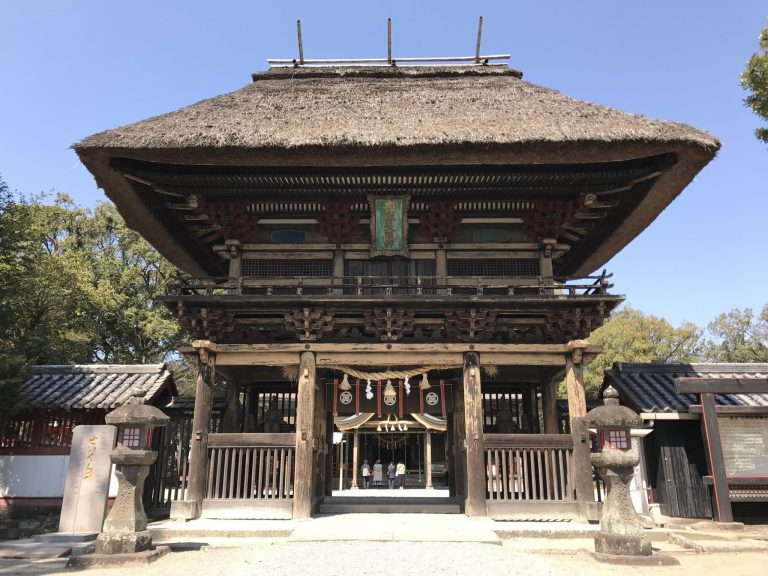
An earthquake in Kumamoto in 2026 caused the shrine’s two-story gate to collapse and produced cracks in part of the main shrine.
Remains
The site is organized as a three-part shrine complex extending from the upper shrine at the summit of Mount Yokotake through the middle shrine to the lower shrine, which now serves as the main shrine. The three components date to 795, 1160, and 1186 respectively, preserving the institutional structure through which Yatsushiro’s Myoken tradition developed.
Festival objects and offerings
The Yatsushiro Myoken Festival procession retains a portable shrine, sacred horses, firearms, kasaboko floats with umbrella-like upper structures, a lion figure, and Kida, the tortoise-snake figure identified with the Black Tortoise. These objects and figures have accompanied the procession in forms that have changed little since the late Edo period, which lasted from 1603 to 1868.
The Himuro Festival includes yukimochi, rice-flour cakes kneaded with water and steamed to imitate lumps of snow. They are offered at the shrine and eaten by worshippers.
Reifu Shrine
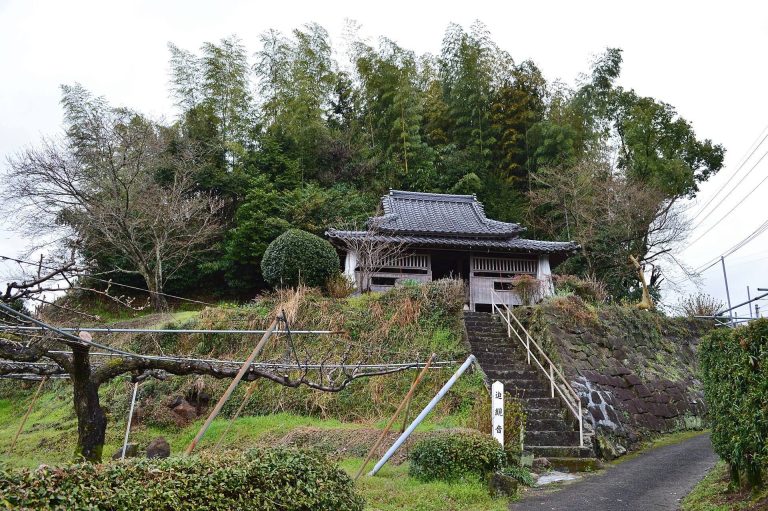
Reifu Shrine stands approximately 200 meters east of the main shrine. Its enshrined beings are the North Star and the Reifu revered star, linking this subsidiary sanctuary to the celestial and protective dimensions of the wider Myoken tradition.