Idera Kofun: A Decorated Kofun Burial Mound in Kumamoto, Japan
Site at a Glance
- Rating
- 3.4
- Popularity
- Very Low
- Country
- Japan
- Primary era
- Classical
- External website
- Open
- Eras represented
- Classical, Medieval
- Civilizations
- Yamato
- Site type
- Burial
- Remains
- Burial Mound
On this page8 sections
History
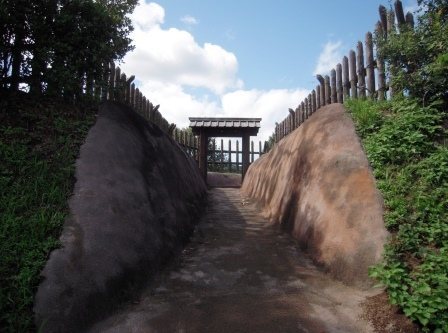
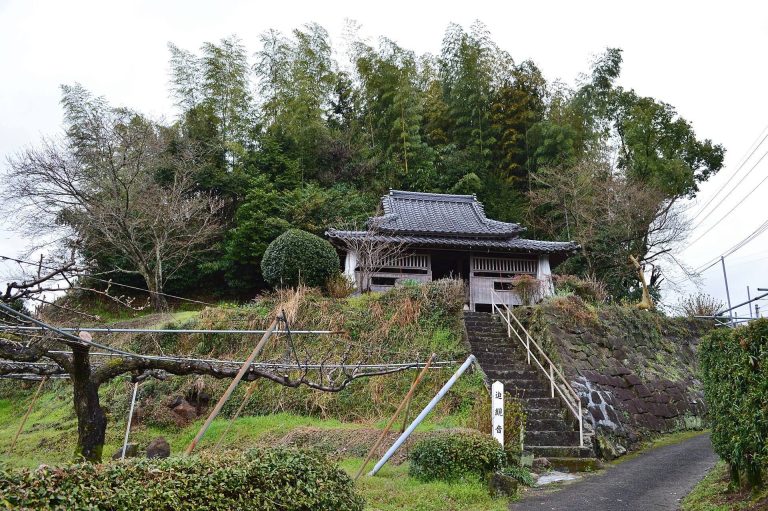
Idera Kofun is a decorated Japanese burial mound in Itera, Kumamoto, Japan, probably built from the latter part of the fifth century to the beginning of the sixth century during the middle-to-late Kofun period. A kofun is a burial mound built for an elite or otherwise high-status person, and Idera Kofun is known especially for the painted designs on its stone burial chamber. The identity of the person buried there is unknown.
Construction and early history
The tomb was built on a hill in central Kumamoto, southeast of Kumamoto city. Its burial facility used a single chamber entered horizontally from the side of the mound. This form differs from a chamber reached through an opening made vertically from above. The chamber was constructed from welded tuff, a volcanic rock formed when hot ash and other material fused together, obtained from Mount Aso.
The interior originally had a central passage with burial compartments arranged on both sides and at the rear in a U-shaped plan, according to historical records associated with the Arima family. The chamber was later disturbed, leaving it as one undivided space. A compartment near the rear wall reportedly contained a mirror and a straight sword, while human bones were found in the two compartments on the left and right.
Discovery, disturbance, and investigation
The stone chamber came to light in 1857 when the removal of soil caused part of the mound to collapse. The tomb was robbed around 1901 to 1902, and much of the material associated with the burial was lost. An earlier survey in 1916 and 1917, considered alongside investigations of other decorated burial mounds in Kumamoto, established that Idera Kofun carried painted decoration.
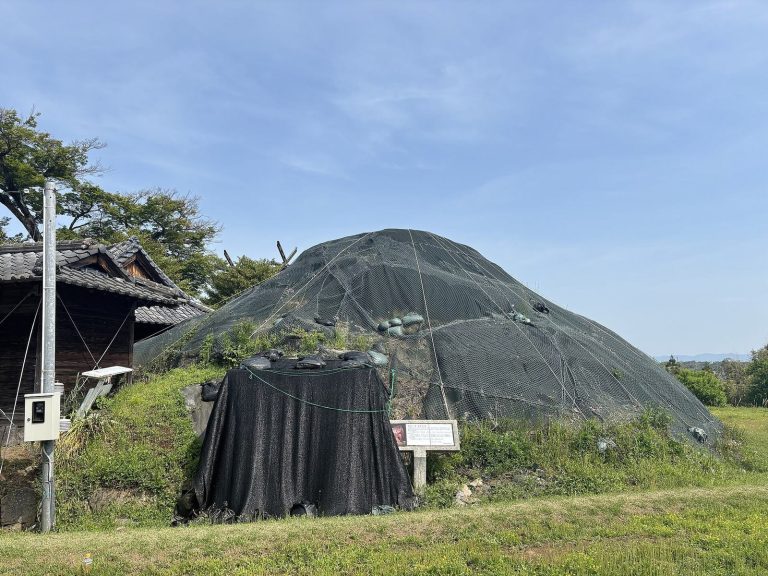
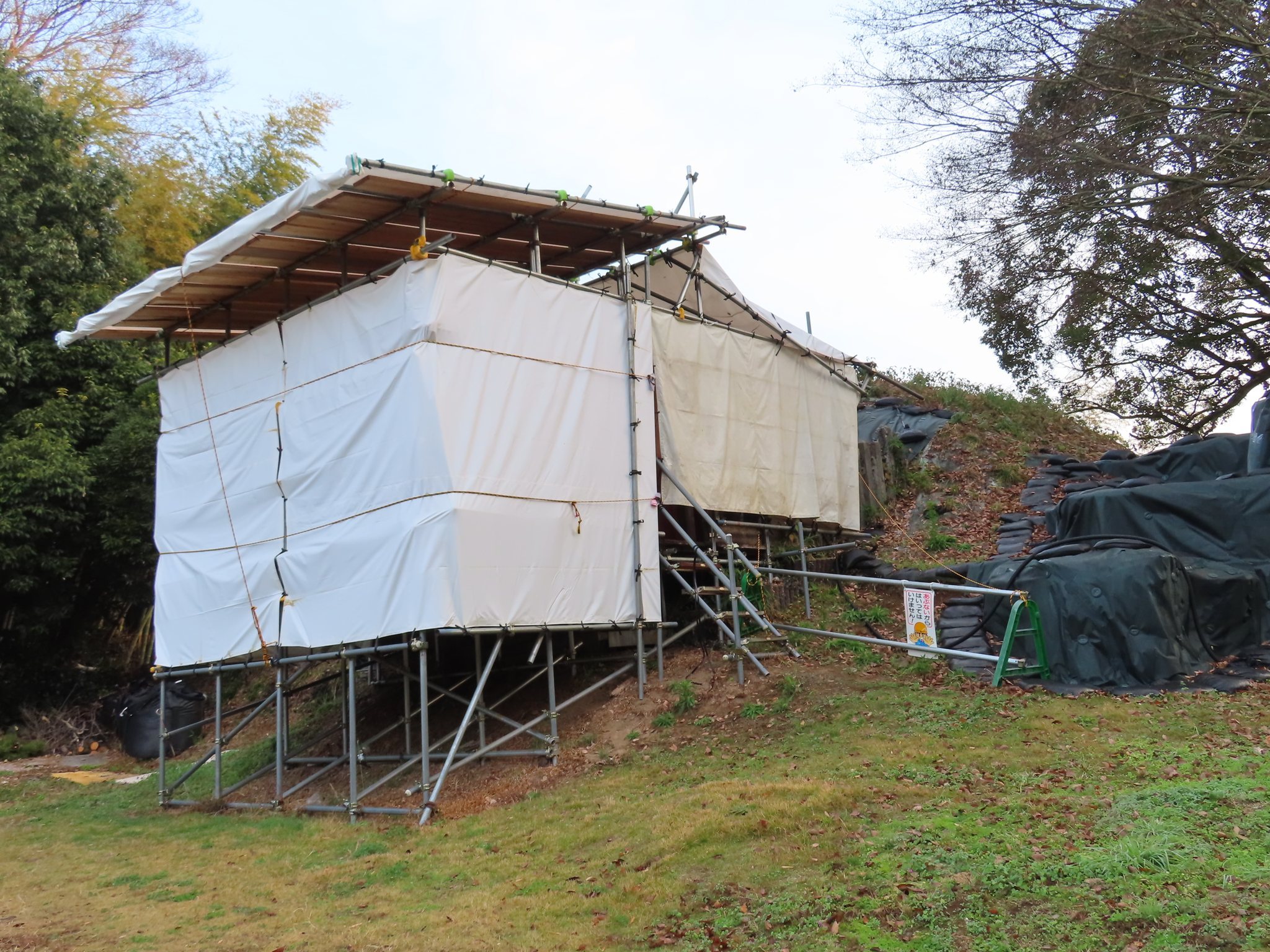
A mound excavation took place in 1982. After the 2016 Kumamoto Earthquake damaged the site, including by producing cracks in the mound, an aerial laser survey was conducted from December 2016 into January 2017. Further investigations from 2017 to 2019 confirmed the extent of the tumulus, and their results were reported in 2021. These studies supported the interpretation that the mound is round rather than keyhole-shaped, an earlier proposal.
Protection and surviving associations
Idera Kofun was designated a National Historic Site of Japan on March 3, 1921. The protected area was expanded on October 13, 2017. Replicas of the burial chamber are exhibited at the Kumamoto Prefectural Museum of Art and the Kumamoto Prefectural Decorative Kofun Museum. Four iron straight swords attributed to the tomb are held by the Kumamoto City Museum.
Remains
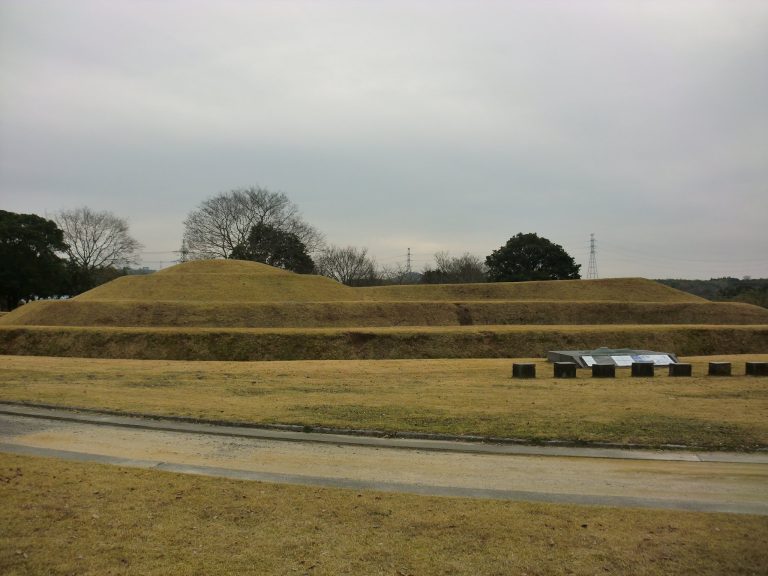
Idera Kofun consists of a substantially levelled round mound and a painted, single-chamber stone burial facility. The mound stands on a hill and measures approximately 14 metres in diameter and 6.5 metres in height, although levelling has made its original form difficult to determine. Recent investigations favor a round plan. The exterior was not thought to have been covered with fukiishi, stones laid over a mound to protect and reinforce its earthen surface, despite earlier interpretations that proposed such a covering.
The mound and burial chamber
The chamber is built of welded tuff from Mount Aso and opens toward the south-southwest through a horizontal entrance. The main chamber measures 2.94 metres in length, 2.47 metres in width, and 3.08 metres in height. Its entrance passage is 1.08 metres long and 0.56 metres wide. Disturbance has altered the interior into a single space, while the former U-shaped arrangement of burial compartments is preserved in the Arima family records.
Painted decoration
Painted designs appear at the entrance to the passage, within the passage itself, and on the stone barrier. The principal motif is a geometric straight-arc pattern formed from intersecting straight lines and curves. Circular, ladder-shaped, and key-shaped patterns are combined selectively in different areas. Red, white, blue, and green paint make up the surviving color scheme. Together, these features identify the chamber as a decorated kofun, a burial mound whose chamber or related stone surfaces bear painted or carved designs.
Burial objects and nearby shrine
Much of the burial equipment was lost during the early-twentieth-century robbery. Four iron straight swords are the surviving objects transmitted as finds from Idera Kofun, and they are preserved at the Kumamoto City Museum. Ukishima Kumanoimasu Shrine, also called Ukishima Shrine, lies north of the mound. It is a Shinto place of worship known for its spring water.