Kengun Shrine: A Historic Shinto Shrine in Kumamoto, Japan


Site at a Glance
- Rating
- 4.4
- Popularity
- Medium
- Country
- Japan
- Primary era
- Classical
- External website
- Open
- Eras represented
- Classical
- Civilizations
- Yamato
- Site type
- Religious
- Remains
- Sanctuary
On this page11 sections
History
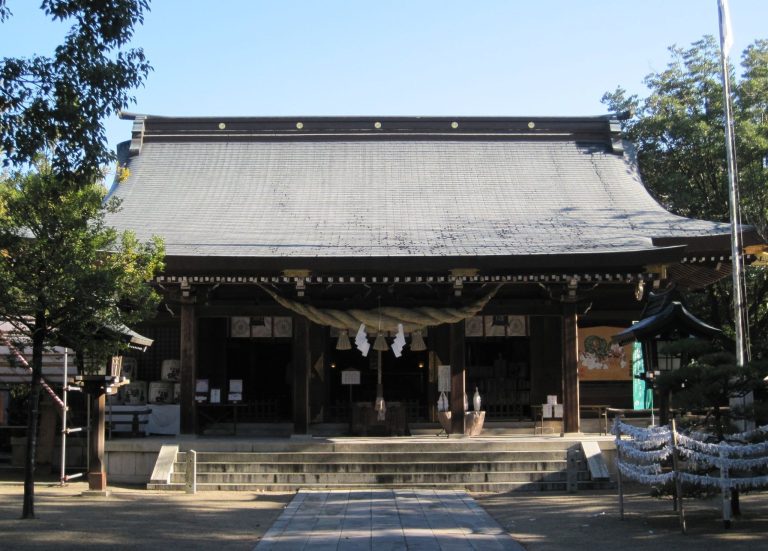
Kengun Shrine is a Shinto shrine in Kumamoto City, Japan, traditionally founded in AD 558 during the nineteenth year of Emperor Kinmei’s reign. Its main sanctuary follows the Nagare-zukuri style, whose gabled roof extends forward to shelter the entrance. Regarded as the oldest traditional Shinto shrine in Kumamoto City, it is one of the four shrines associated with Aso Shrine, alongside Aso Shrine, Kohsa Shrine, and Kohnoura Shrine.
Foundation traditions
One foundation tradition says that the chief priest of Aso Shrine established Kengun Shrine by transferring a deity from Aso. This transfer followed bunrei, a Shinto practice in which the spiritual presence of a kami, or sacred being, is divided or transferred so it can be enshrined elsewhere while remaining connected with its original shrine. The new shrine was named Kengun because it was intended to defend the surrounding area against enemies, and it later became a branch shrine of Aso Shrine.
Another version identifies the founder as the governor of Higo Province. Heavy snow prevented him from reaching Aso Shrine, and a three-year-old boy instructed him to establish a shrine at the site. A separate legend relates that Emperor Keiko ordered Takeogumino-mikoto, a legendary kami associated with the ancient Higo region, to defeat enemies around Mount Choraina, also called Chorainasan. Takeogumino-mikoto was then enshrined at Kengun Shrine. The mountain’s precise identification remains uncertain.
Names, territory, and sacred lineages
The shrine was formerly called Takemiya Shrine, or Takemiya in Kengun Village, and was also known as the Twelve Shrines Great Daimyojin. It served as the tutelary shrine of Kengun Estate, a broad area extending around the present-day Red Cross Hospital, Komine, Shingai, and Lake Ezu. The shrine later became a branch of Aso Shrine and one of the Aso Four Shrines.
Kengun Okami is the principal deity, identified with Takeogumino-mikoto, while twelve other kami are also enshrined. The shrine’s Kokuzou Shrine preserves an alternative interpretation of the original deity as Takeogumi, regarded as the ancestor of the Hino Kuni ruling lineage. Historical traditions connect Takeogumi with the granting of the title Hino Kimi during Emperor Keiko’s reign and with appointment as the hereditary provincial governor of the ancient Fire land during Emperor Sujin’s reign. Such a provincial official, known as a kuni no miyatsuko, combined administrative and ritual responsibilities.
Modern shrine history
In 1873, Kengun Shrine was classified as a former gōsha, a designated village-level shrine within the modern shrine-ranking system. From the twentieth century, the reading of Takemiya changed to Kengun. The surrounding locality likewise changed from Kengun Village in Takuma District to Kengun Town in Kumamoto City.
The shrine was drawn into the violence of the Satsuma Rebellion, an armed revolt against the Meiji government led by former samurai from Satsuma Domain in 1877. On February 22 of that year, about 1,400 samurai in the Kengun Shrine area joined the rebel forces, formed a Kumamoto company, and fought against Kumamoto Castle. The kami of the burned Kato Shrine and Fujisaki Hachimangu were temporarily relocated to Kengun Shrine during the rebellion.
Religious practices connected with the shrine include Higo Kagura, a local form of Shinto theatrical dance. At Amemiya Shrine, ceremonies seek rainfall. At Miwa Shrine, worshippers pray against smallpox and for cures, while Hiyoshi Shrine is associated with prayers for protection from fire. Kokuzou Shrine was moved because of tramway-road construction, and Hiyoshi Shrine and Tensha Shrine were relocated because of urban-planning legislation. The shrine precinct and its long approach are municipal cultural properties, while Higo Kagura has prefectural cultural-property status.
Remains
Main sanctuary and approach
Main sanctuary
The main sanctuary is built in the Nagare-zukuri style, a Shinto architectural form with a gabled roof whose front slope projects outward to create a covered entrance. This roof form gives the central building its defining architectural character within the shrine precinct.
Hatchou-baba
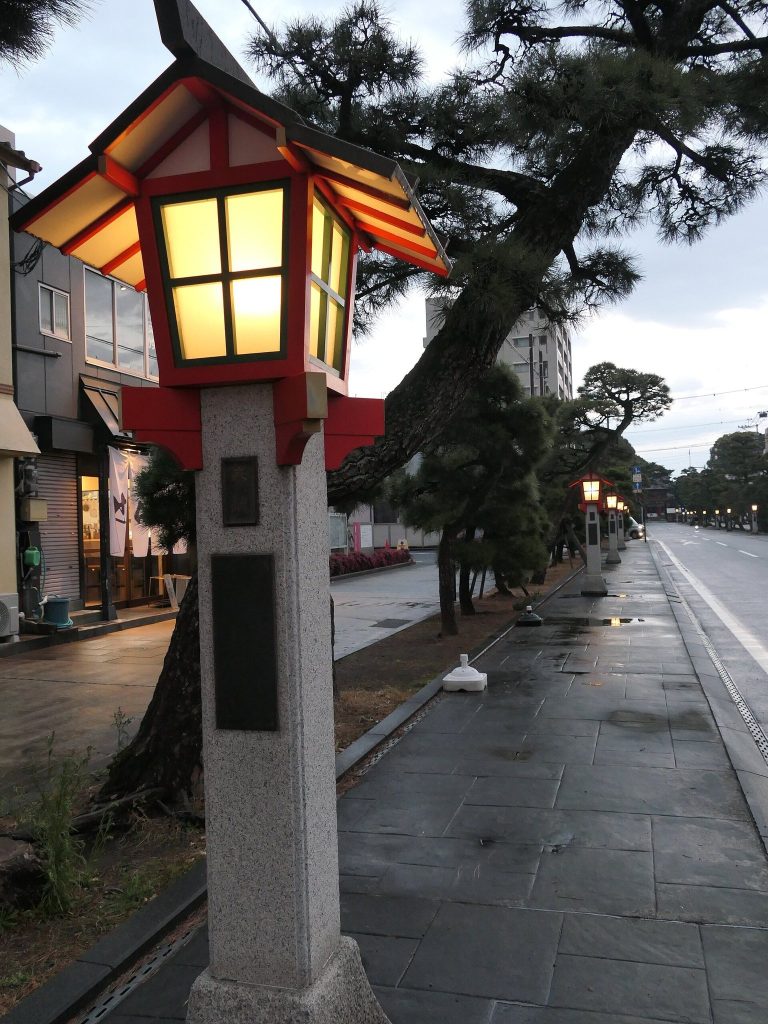
Hatchou-baba forms an approximately 800-meter approach to the shrine. A torii, the gateway marking the entrance to a Shinto sacred precinct, stands at its beginning. The route is described as a road lined with cryptomeria and used for horseback riding. Together with the shrine precinct, the approach is recognized as a cultural property at the municipal level.
Subsidiary shrines and ritual features
Subsidiary shrines
The precinct includes Amemiya Shrine, Miwa Shrine, Kokuzou Shrine, Hiyoshi Shrine, and Tensha Shrine. Amemiya Shrine enshrines Amemiya Okami. Miwa Shrine enshrines Omononushi Okami and other deities, while Tensha Shrine houses Tensha Okami. Their presence extends the precinct’s religious functions across several shrines associated with particular forms of worship.
Miwa Shrine stone
Miwa Shrine contains a stone marked by depressions resembling smallpox scars. Worshippers touch these marks as part of a practice intended to bring improvement or benefit, linking a physical feature of the precinct with prayers for protection from, and recovery from, smallpox.