Ōno-no-Iwa Kofun: A Keyhole-Shaped Burial Mound in Japan
Site at a Glance
- Rating
- 3.9
- Popularity
- Very Low
- Country
- Japan
- Primary era
- Medieval
- Eras represented
- Medieval
- Civilizations
- Yamato
- Site type
- Burial
- Remains
- Burial Mound
On this page9 sections
History
Ōno-no-Iwa Kofun is a large Japanese burial mound in Kumamoto Prefecture, built during the mid-to-late sixth century in the late Kofun period, the era of monumental burial mounds in Japan. It stands on the Onohara Plateau in Ōno, an area containing many ancient mounds, including the Nozu Kofun Cluster to the south. Its form and excavated pottery place it among the major elite tombs of its time.
The Hi-no-kimi Burial
The tomb is interpreted as the burial place of a leading member of the Hi-no-kimi, or Hino-kimi, lineage. The name refers to a chiefly family associated with the ancient Higo region, and the attribution remains an interpretation rather than a certainty. During the sixth century, Ōno-no-Iwa Kofun was the second-largest mound in Kyushu, after Iwatoyama Kofun in Yame, Fukuoka Prefecture, whose mound measures 138 metres. It is now recognized as the largest kofun in Kumamoto Prefecture.
Later Knowledge and Investigation
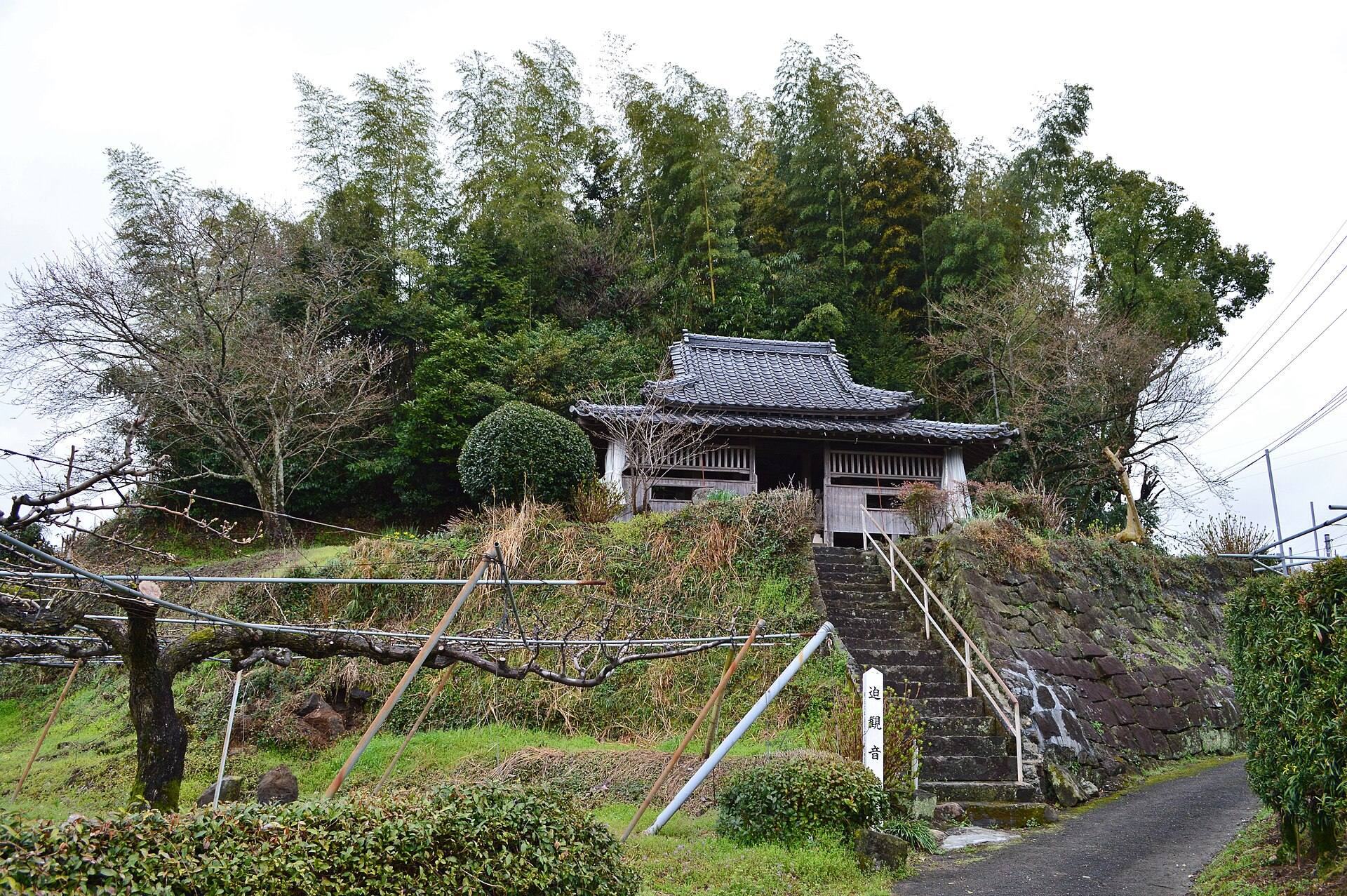
The mound was known by the Muromachi period. An inscription dated 1497 states that Amida Nyorai, the Japanese Buddhist form of Amitabha Buddha associated with salvation through rebirth in the Western Pure Land, was enshrined inside the passageway.
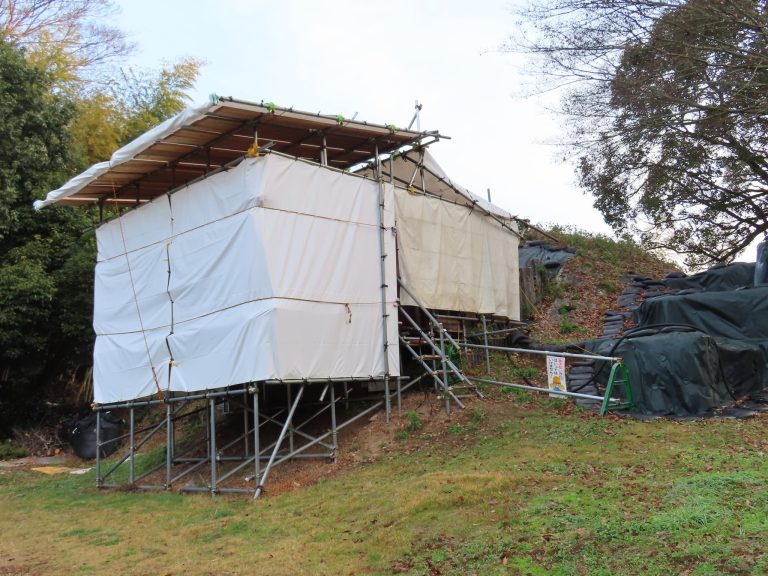
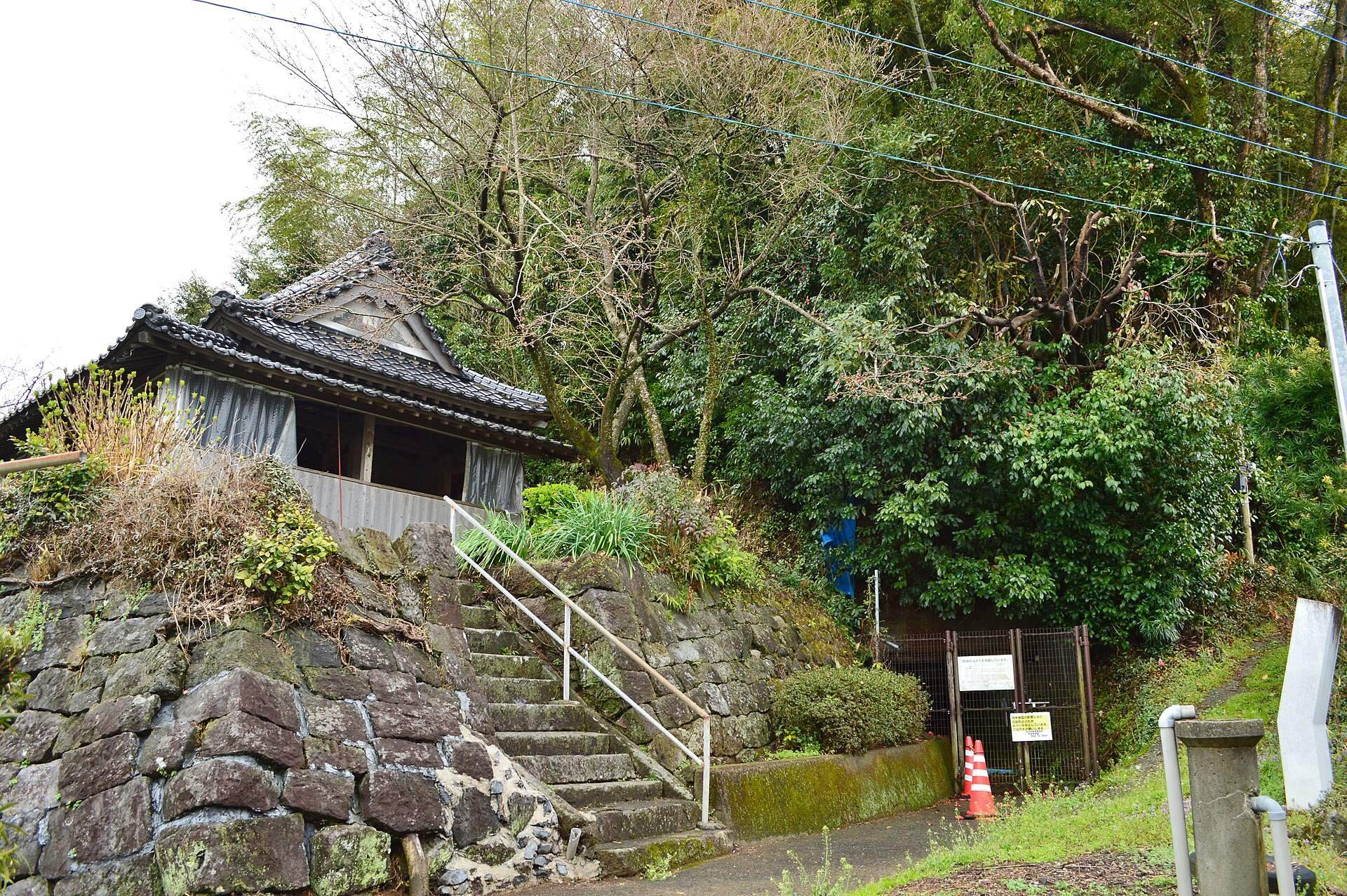
Survey and archaeological investigations carried out during fiscal years 2003 to 2008 established that the monument was a keyhole-shaped mound rather than the circular mound it had previously been thought to be. The mound precinct became a Kumamoto Prefectural Historic Site in 1985 and a National Historic Site of Japan in 2013. The 2016 Kumamoto Earthquake caused some of the burial chamber’s stonework to collapse or become dislodged.
Remains
Mound and Moat
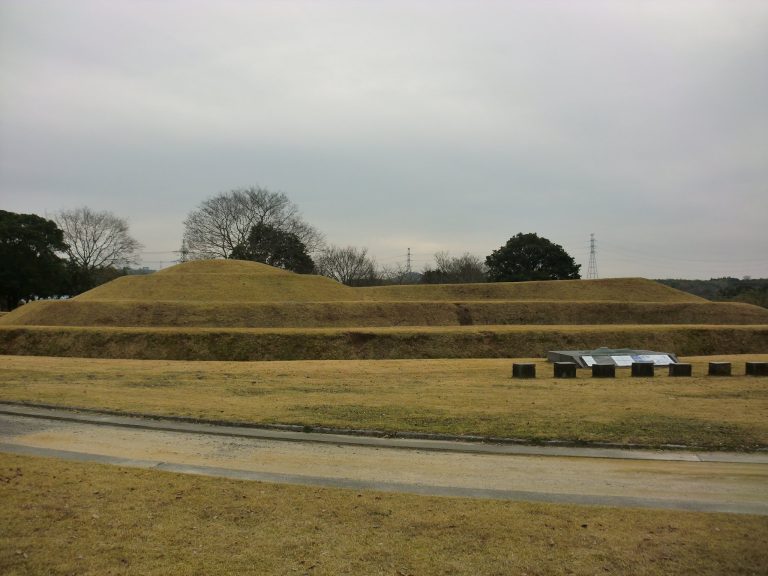
Ōno-no-Iwa Kofun is a 122.8-metre-long keyhole-shaped mound, known in Japanese as a zenpō-kōen-fun. This form combines a rounded rear section with a squarer front section. Its distinctive kenbishi type has an especially projecting front end, which faces south. The mound was built in two stages.
A shield-shaped moat surrounds the mound except along the front of the projecting section. Beside the rounded rear part, the moat is approximately 12 metres wide. Along the front, a row of earth pits takes its place. Sue ware and Silla-style ceramic vessels were excavated from these pits. Sue ware was a high-fired Japanese ceramic tradition of the Kofun period, while Silla-style pottery reflects the ceramic tradition of Silla, an ancient Korean kingdom. The arrangement of pits may have been connected with ritual activity.
Stone Burial Chamber
Chamber Structure
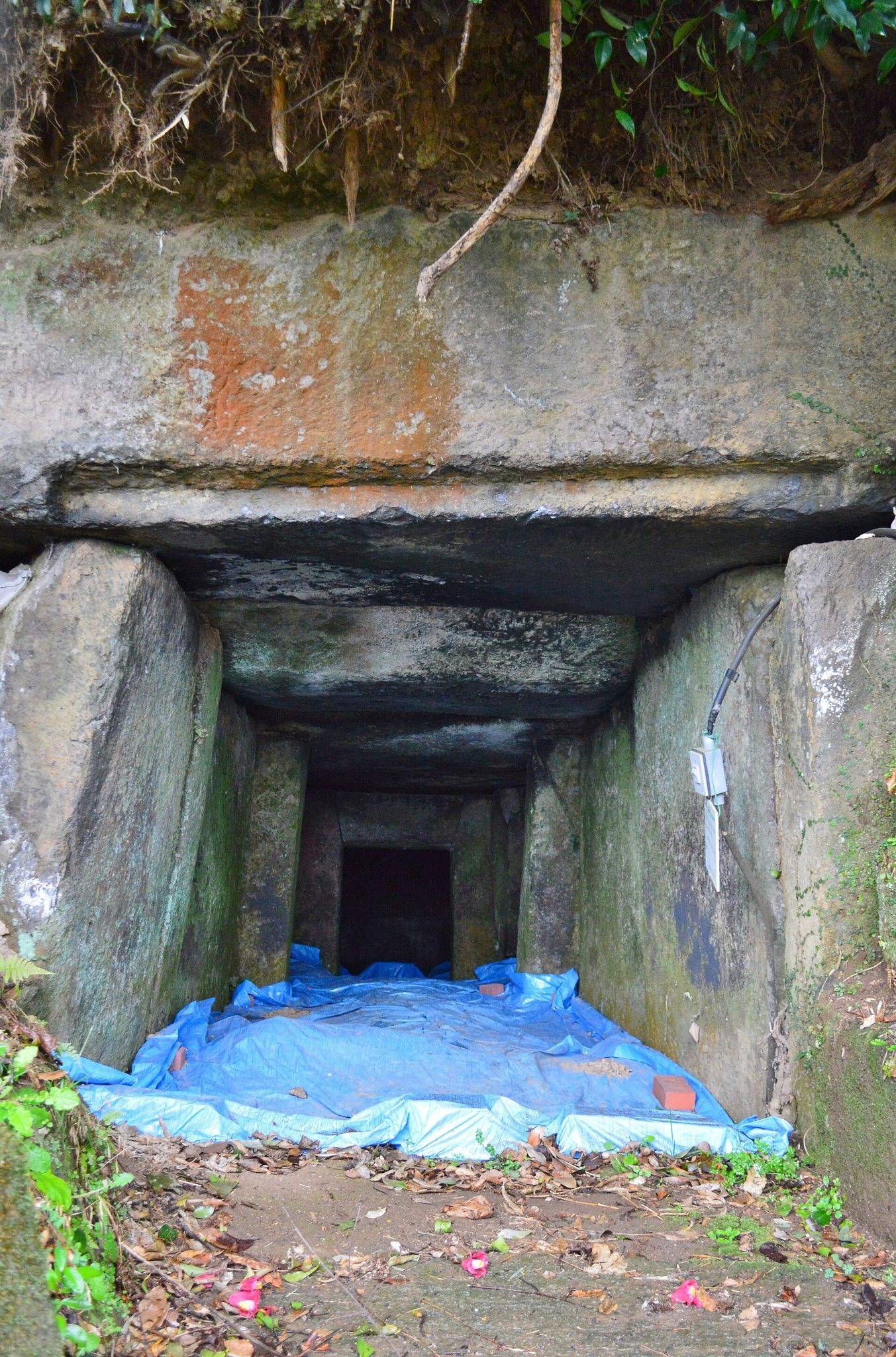
The burial facility is a double-sleeved, multi-compartment horizontal-entry stone chamber. It is entered from the side rather than from above, and extensions project on both sides of the entrance. The chamber opens toward the southwest, in the direction of the junction between the mound’s front and rear sections. Builders used cut blocks of Aso welded tuff, a hard volcanic rock formed from eruption material associated with Mount Aso and fused while still hot.
The chamber measures 12.4 metres overall. Its main chamber is 5.2 metres long, 2.9 to 3.1 metres wide, and 6.5 metres high. The antechamber is approximately 1.8 metres long and 2.1 metres wide, with a height of about 1.9 to 2 metres. The passageway is approximately 3.5 metres long, 1.8 to 2 metres wide, and about 2.1 metres high. Blocks exceeding two metres square form parts of the structure, and traces of red pigment remain on some stone surfaces. The chamber is the largest of its type in Kumamoto Prefecture and among the largest in Kyushu, with an overall scale comparable to Miyajidake Kofun in Fukutsu, Fukuoka Prefecture. Its main-chamber height is considered the largest in Japan.
Sarcophagus and Mortuary Beds
At the rear of the main chamber is a hollowed-out, house-shaped sarcophagus made from tuff. It measures 2.40 metres long, 1.30 metres wide, and 0.87 metres high. A stone shelf 1.9 metres wide is set above it. Near the entrance to the main chamber are two tuff mortuary beds, placed one on each side. The interior of the burial chamber has not been excavated, so the grave goods associated with the burial remain unknown.
Excavated Objects
Material recovered from the mound includes Sue ware and Silla-style ceramic vessels from the earth pits beside the moat. A hat-shaped stone ornament was also found in the mound. These objects accompany the chamber, mound, and surrounding features in the archaeological remains of the monument.