Yata-dera Temple: A Jizo Buddhist Temple in Nara, Japan


Site at a Glance
- Rating
- 4.2
- Popularity
- Medium
- Country
- Japan
- Primary era
- Unclassified
- External website
- Open
- Eras represented
- Unclassified
- Civilizations
- Unclassified
- Site type
- Religious
- Remains
- Monastery
On this page13 sections
History
Yata-dera Temple is a Koyasan Shingon Buddhist temple in Japan, located in Yamatokoriyama, Nara Prefecture. Its traditional foundation date is 676, in the late seventh century, when Prince Oama, later Emperor Temmu, commissioned the priest Chitsu to establish a temple after his accession. Koyasan Shingon Buddhism is a Japanese tradition centered on esoteric teachings associated with the monk Kukai and Mount Koya.
Foundation and early worship
Temple tradition connects the foundation with Prince Oama’s prayer on Mount Yata during the Jinshin War, a succession conflict traditionally dated to 672. After gaining the throne, he is said to have ordered the establishment of the temple. The original complex was traditionally described as having seven halls and 48 monastic residences, with Eleven-faced Kannon and Kisshoten among its enshrined figures. Kannon is the Buddhist bodhisattva of compassion, while Kisshoten is associated with good fortune, beauty, prosperity, and auspiciousness.
The temple’s religious focus changed during the Konin era, approximately 810 to 824, when Manmai Shonin installed an image of Jizo Bosatsu. Jizo, a Buddhist bodhisattva, is especially associated in East Asian devotion with protecting beings and caring for the dead and travelers. Another tradition attributes the installation to Ono no Takamura. The growing importance of this devotion gave Yata-dera its enduring identity as “Yata’s Jizo.”
Later development and religious associations
Warfare and other disturbances destroyed many of the temple’s monastic residences. The present institution is represented collectively by the North Monks’ Quarters, Daimonbo, Nembutsuin, and South Monks’ Quarters. Daimonbo has also long been connected with the Yōshin Goryū school of flower arrangement and has undertaken research in that tradition.
The name Yata-dera derives from Yata no Sato, a place-name used since the Manyo period. The temple belongs to the Yamatō Thirteen Buddhas pilgrimage, the northern Yamato Eighty-eight Sacred Places pilgrimage, and the Yamato Jizo Ten Blessings pilgrimage. It is also known as the “Hydrangea Temple.” A Jizo ceremony takes place on 23 and 24 August.
Yata-dera and its principal religious works hold recognized cultural-property status. The main hall and bronze bell are designated cultural properties by Nara Prefecture, while several Buddhist sculptures and paintings have national Important Cultural Property status. The temple is distinct from a related Yata-dera in Kyoto, which tradition regards as an early Nara-period branch of the Nara institution; the two temples now belong to different denominations.
Remains
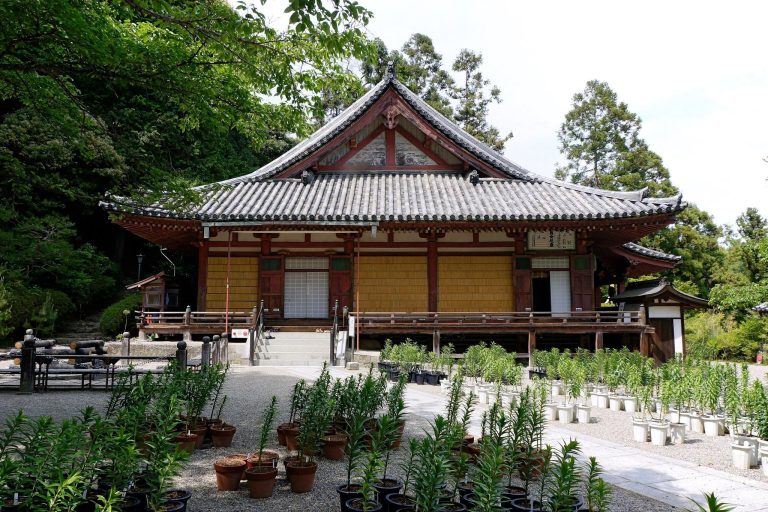
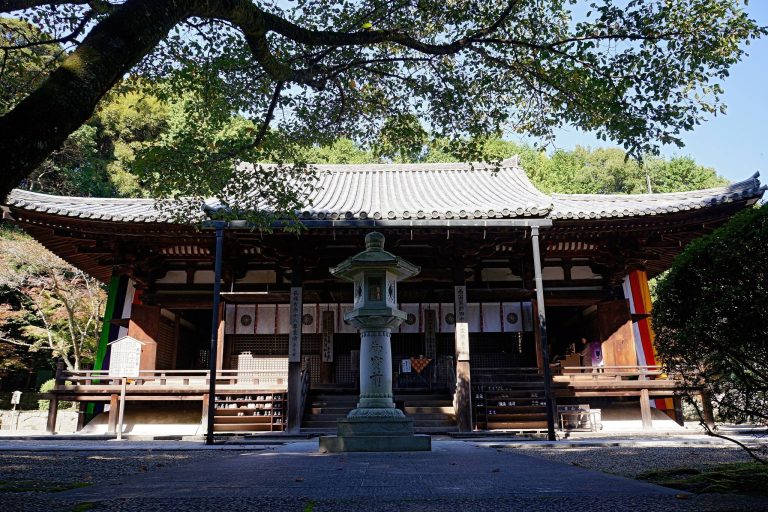
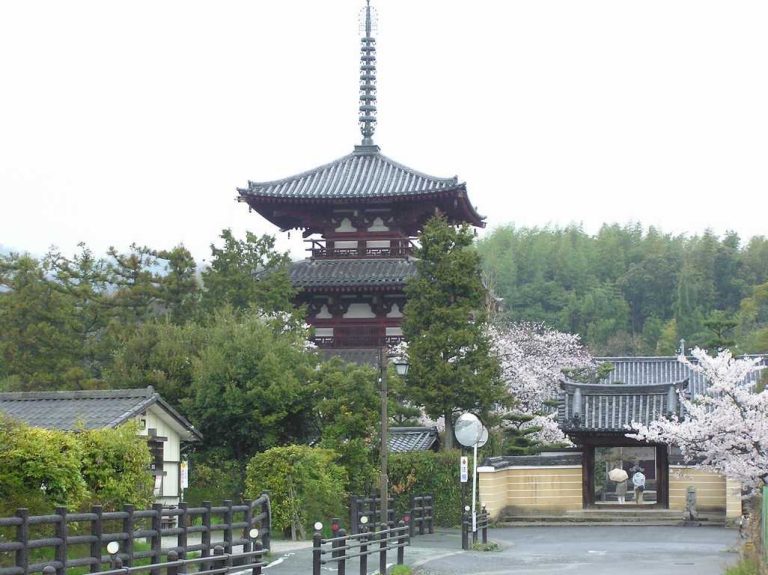
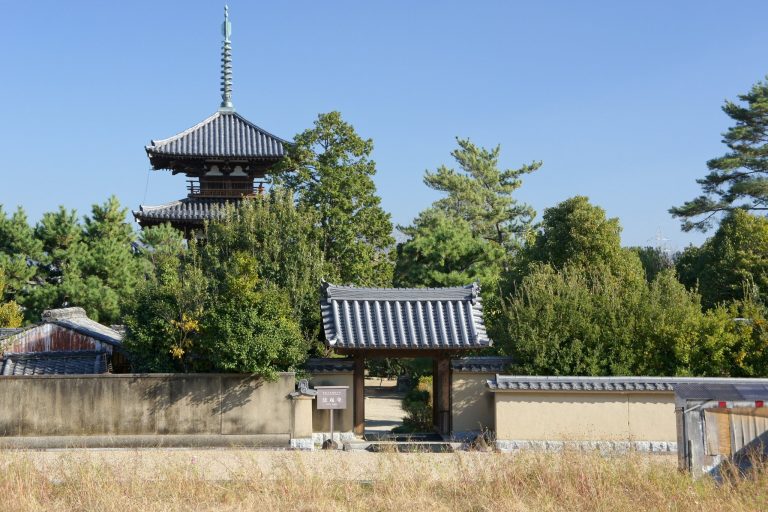
The present precinct on Mount Yata is organized around four institutional components: the North Monks’ Quarters, Daimonbo, Nembutsuin, and South Monks’ Quarters. The North and South Monks’ Quarters, Daimonbo, and Nembutsuin are each classified as quasi-special head temples, an intermediate rank within a Buddhist administrative hierarchy. The complex includes the main hall, a Kasuga Shrine main hall, Shōtendō, Buddhist images, an illustrated temple-origin narrative, a bronze bell, and extensive hydrangea plantings.
Monks’ quarters and Daimonbo
North Monks’ Quarters
The North Monks’ Quarters enshrines Fudo Myoo as its principal image. Fudo Myoo is an esoteric Buddhist wisdom king commonly represented as a wrathful protector. The quarters are also associated with a wooden seated image of Kokuzo Bosatsu, a Buddhist figure represented in the temple’s recognized collection.
Daimonbo and Shōtendō
Daimonbo contains Shōtendō, a hall positioned to the left of its main gate. Also called Yata Shōten, the hall is traditionally said to have received its enshrined deity through the invitation of the eminent monk Jiun during the Horeki era of the middle Edo period. Shōten is associated with blessings and prosperity.
South Monks’ Quarters
The South Monks’ Quarters is associated with a wooden standing image of Bishamonten, a Buddhist guardian deity linked with protection and warlike power. Together with the North Monks’ Quarters and Daimonbo, it forms part of the present institutional body that represents the temple after the loss of many earlier residences.
Halls and principal images
Main hall and Kasuga Shrine
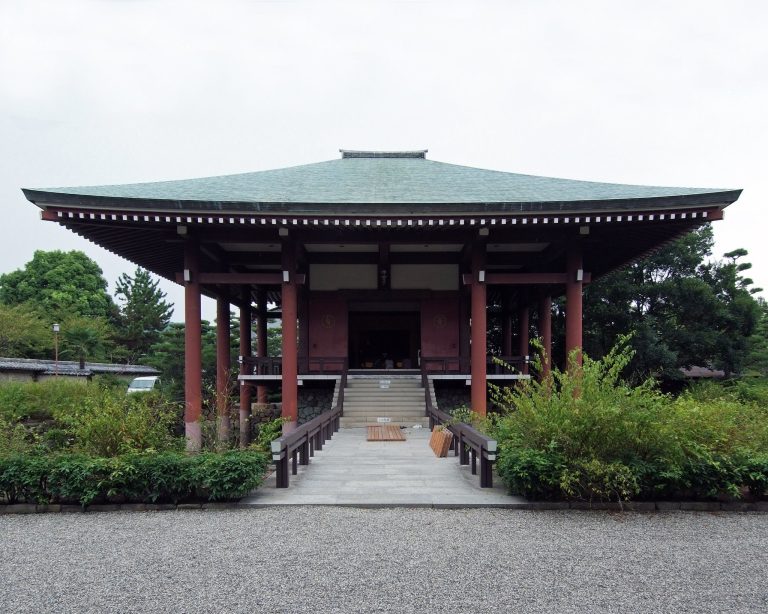
The main hall is designated as a tangible cultural property by Nara Prefecture. A main hall belonging to Kasuga Shrine within the precincts is also an Important Cultural Property. These buildings form part of the temple’s recognized architectural heritage.
Jizo images
The principal image is a wooden standing Jizo Bosatsu designated as an Important Cultural Property. Its right hand forms a gesture resembling Amida Buddha’s welcoming gesture, a feature associated with the “Yata-style Jizo.” The cultural-property inventory also includes a second wooden standing Jizo image.
Other Buddhist images
Other Buddhist works include a wooden seated Amida Buddha, a wooden standing Eleven-faced Kannon, a wooden standing Bishamonten, a wooden Enma King, and a wooden seated Shiroku image. The Enma King and Shiroku images are housed at the Nara National Museum. Eleven-faced Kannon represents a manifestation of the compassion bodhisattva with multiple faces around the principal head.
Texts, bell, and plantings
The temple is associated with the illustrated silk painting Yata Jizo Engi, an engi, or narrative of a temple’s or deity’s origins and traditions. The work preserves the Jizo tradition in visual and written form. A bronze temple bell is also among the site’s recognized cultural properties.
Approximately 10,000 hydrangea plants representing about 60 varieties are planted within the precincts. These plantings account for the temple’s name “Hydrangea Temple” and form part of its present physical character.