Matsuo-dera Temple: A Mountain Temple for Prayers Against Misfortune


Site at a Glance
- Rating
- 4.3
- Popularity
- Low
- Country
- Japan
- Primary era
- Medieval
- External website
- Open
- Eras represented
- Classical, Medieval
- Civilizations
- Ashikaga shogunate
- Site type
- Religious
- Remains
- Sanctuary
On this page7 sections
History
Matsuo-dera Temple is a mountain temple in Japan, located in Yamatokoriyama, Nara Prefecture. It belongs to the Daigo branch of Shingon Buddhism and holds the status of a special head temple. Traditionally founded in 718, during Japan’s Nara period, it is known as Japan’s oldest temple for prayers against misfortune.
Foundation and early history
The temple’s foundation is traditionally attributed to Prince Toneri, a son of Emperor Tenmu. In 718, when he was 42, Prince Toneri is said to have prayed for protection from the misfortune associated with an unlucky age and for the completion of the Nihon Shoki, an early eighth-century chronicle of Japan’s myths and history. Matsuo-dera’s principal image, Thousand-Armed, Thousand-Eyed Kannon, is revered as a Buddhist bodhisattva who wards off misfortune.
Early activity at the mountain is also associated with the Nara period, which lasted from 710 to 794. The Shoku Nihongi, an imperial chronicle covering Japanese history from the late seventh to the late eighth century, mentions a 101-year-old monk named Sonkyo of Matsuo-yamadera in a passage dated 782. Roof tiles and traces of buildings from the Nara period have also been found near the summit of Mount Matsuo, within the precinct of Matsuo-yama Shrine.
Medieval affiliations and rebuilding
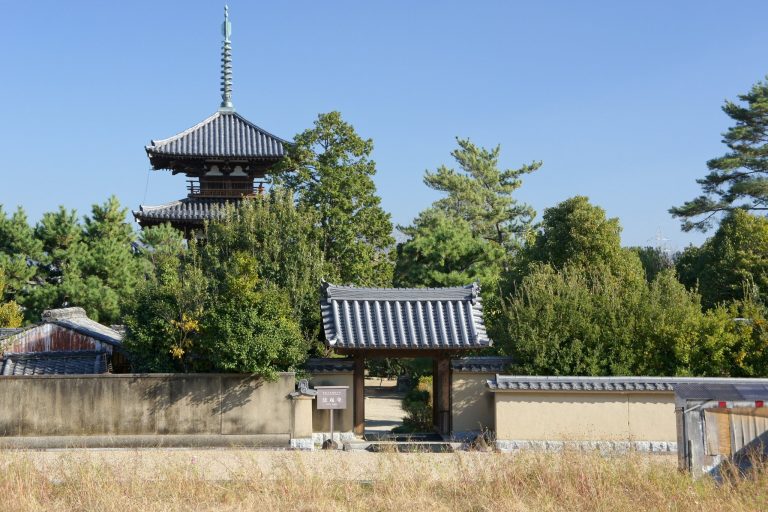
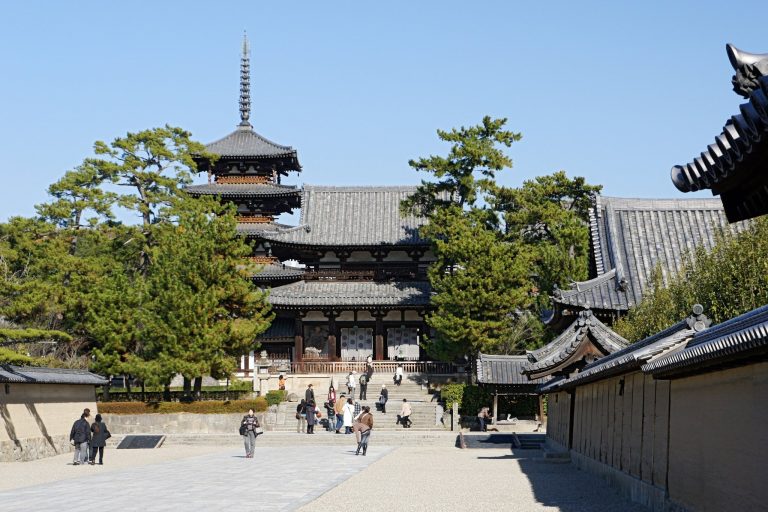
During the medieval period, Matsuo-dera came under the authority of Ichijo-in, an institutional subcomplex of Kofuku-ji. It was also described as a branch temple of Horyu-ji. A pilgrimage route led from behind Horyu-ji’s Western Precinct toward Mount Matsuo, linking the temple with the wider religious landscape of the area.
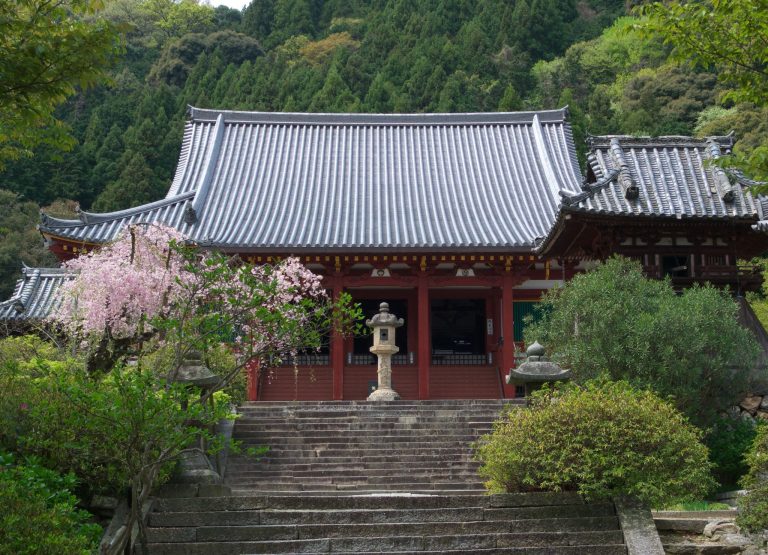
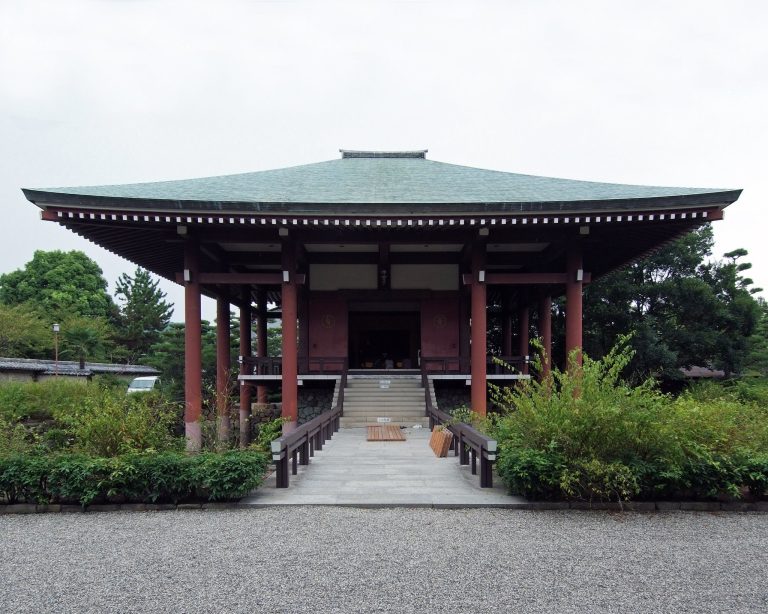
The earlier main hall burned in 1277. The present hall was rebuilt in 1337, during the Kamakura period’s aftermath and the beginning of the Muromachi period. During dismantling repairs in 1953, fragments of a burned Buddhist statue were discovered in the roof space. They are considered possible remains of the former principal image worshipped before the fire.
Shugendo and later devotion
From the Muromachi period onward, Matsuo-dera flourished as a center of the Tozan branch of Shugendo, a mountain-ascetic religious tradition combining Buddhist, Shinto, and other practices. Its mountain practitioners, known as yamabushi, followed the branch’s organization, which was centered on shodai sendatsu, the highest yamabushi rank in the Tozan tradition. Many old documents concerning this organization are preserved at the temple.
In the Edo period, Emperor Go-Mizunoo presented Matsuo-dera with a statue of Nyoirin Kannon that had been kept as his personal Buddhist image. Nyoirin Kannon is a form of the bodhisattva Kannon associated with compassion, the wish-granting jewel, and the wheel of Buddhist teaching. The temple is also connected with the Yamato Northern Eighty-Eight Sacred Sites pilgrimage as site 54 and with sacred places associated with En no Gyoja, the traditionally revered seventh-century ascetic regarded as a founder of Shugendo.
The temple is known by the mountain names Matsuo-yama and Fudaraku-san, as well as by the names Matsuo-yamadera, Matsuno-dera, and Matsuno-san. Festivals held on the first day of the Horse in February and March draw many worshippers. A rose garden has also made the temple locally known as a place for viewing roses.
Remains
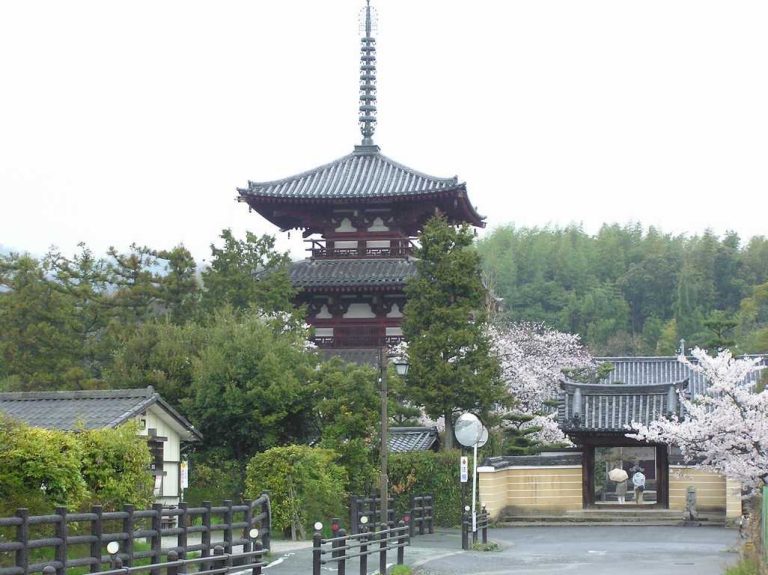
Matsuo-dera occupies a mountainside position partway up Mount Matsuo near the southern end of the Yata Hills. The surviving complex includes the main hall, halls containing Buddhist images, a rose garden, and a spring. Archaeological traces near the mountain summit extend the physical setting of the temple and its associated religious sites into the Nara period.
Main hall and Buddhist images
The main hall is the principal surviving religious building at Matsuo-dera. Rebuilt in 1337 after the earlier hall was destroyed by fire in 1277, it is designated an Important Cultural Property. The hall enshrines the temple’s wooden standing Thousand-Armed Kannon, made during the Kamakura period. This concealed image is worshipped as the Misfortune-Averting Kannon and is opened for viewing only on November 3 each year.
The Seven Lucky Gods Hall contains a wooden standing Great Black Deity from the Kamakura period, enshrined with the Seven Lucky Gods, a group associated with prosperity and worldly good fortune. Its severe expression reflects the character of Mahakala, a wrathful Indian Buddhist deity, rather than the later benevolent form of Daikokuten. The image is regarded as one of Japan’s three celebrated images of Daikokuten. A wooden standing Eleven-Headed Kannon from the late Heian period is deposited with the Nara National Museum.
Mountain shrine remains and grounds
The precinct includes a rose garden and a spring. Near the summit of Mount Matsuo, the precinct of Matsuo-yama Shrine has yielded Nara-period roof tiles and traces of buildings. These remains provide physical evidence of activity on the mountain during the same broad period associated with the temple’s traditional foundation.