Xth Pavilion of the Warsaw Citadel: Political Prison and Museum


Site at a Glance
- Rating
- 4.5
- Popularity
- Medium
- Country
- Poland
- Primary era
- Unclassified
- External website
- Open
- Eras represented
- Unclassified
- Civilizations
- Unclassified
- Site type
- Civic
On this page9 sections
History
The Xth Pavilion of the Warsaw Citadel is a Neoclassical prison and museum complex in Poland, constructed under Russian rule in 1828 as part of a barracks expansion program. Its original purpose was to store military uniforms, but after the November Uprising, a Polish insurrection against Russian rule that began in 1830, the building was adapted for imprisonment. It became a central place of investigation and detention for people accused of politically motivated crimes.
From Barracks Storehouse to Investigative Prison
The Warsaw Citadel was built after the suppression of the November Uprising on the orders of Tsar Nicholas I. Beginning on 5 July 1833, the Xth Pavilion was converted for prison use. From 1834, it housed the Investigative Commission attached to the Commander-in-Chief of the Active Army and the head of the Kingdom of Poland. Congress Poland, the semi-autonomous Kingdom of Poland under Russian control, had political institutions and criminal investigations increasingly subordinated to Russian authority. The commission therefore became the central investigative and law-enforcement body for politically motivated crimes in the territory.
Until 1918, approximately 40,000 prisoners passed through the pavilion. They included members of clandestine independence organizations, participants in the January Uprising, a Polish revolt against the Russian Empire that began in 1863, members of the Knights of the Holy Cross, Polish workers’ activists, participants in patriotic demonstrations, and activists involved in the 1905–1907 Russian Revolution in Poland. Thousands were tortured and deported to Siberia or sent to penal labor, while hundreds were executed in the citadel or on adjoining land.
Political Prisoners and the Struggle for Independence
The prisoners included Romuald Traugutt, Józef Piłsudski, Roman Dmowski, Apollo Korzeniowski, Gustaw Ehrenberg, Piotr Ściegienny, Stefan Okrzeja, Jarosław Dąbrowski, Felix Dzerzhinsky, Rosa Luxemburg, Władysław Jabłonowski, Jan Rosół, Adolf Hennel, Janusz Meissner, Ludwik Waryński, Alexander Prystor, Jan Kwapiński, Stefania Przedęcka, and Józef Ciszewski. Eligiusz Niewiadomski, who later assassinated Polish President Gabriel Narutowicz, was also imprisoned there.
Józef Piłsudski was arrested at the pavilion on 18 April 1900. He was then 32 and a leading member of the Polish Socialist Party, or PPS, a movement that combined Polish independence activism with socialist ideas. His arrest followed the printing of Robotnik, the party’s illegal newspaper. Piłsudski later escaped while being taken to a hospital after pretending to be ill in prison.
Romuald Traugutt was among the members of the clandestine National Government imprisoned at the citadel. This body served as the insurgents’ hidden governing authority during the January Uprising. In August 2015, busts of Traugutt, Rafał Krajewski, Józef Toczyski, Roman Żuliński, and Jan Jeziorański were unveiled in front of the pavilion. The five men had been condemned to death by the Russian authorities.
War, Destruction, and Museum Use
During the German occupation of Warsaw from 1915 to 1918, the pavilion served military purposes while retaining its prison function. After Poland regained independence on 11 November 1918, the citadel was transferred to the Polish Army. The pavilion was first used as a storehouse and later as accommodation for garrison troops.
A powder-magazine explosion in the Warsaw Citadel on 13 October 1923 destroyed the pavilion building. After the Second World War, the pavilion and its immediate surroundings were separated from the military grounds. The site opened to visitors on 22 January 1963 during commemorations of the centenary of the January Uprising.
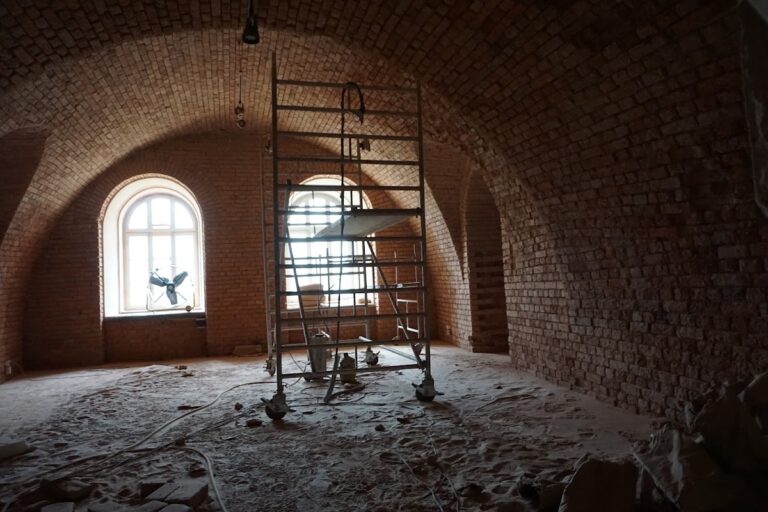
The building now contains a branch of Warsaw’s Independence Museum devoted to the national-liberation struggle under Russian rule and a martyr museum. Its permanent exhibitions address the pavilion’s political prisoners, Józef Piłsudski, and Poles deported to Siberia between 1940 and 1956. A major renovation completed in 2015 renewed the facade and added multimedia installations to the exhibitions.
Remains
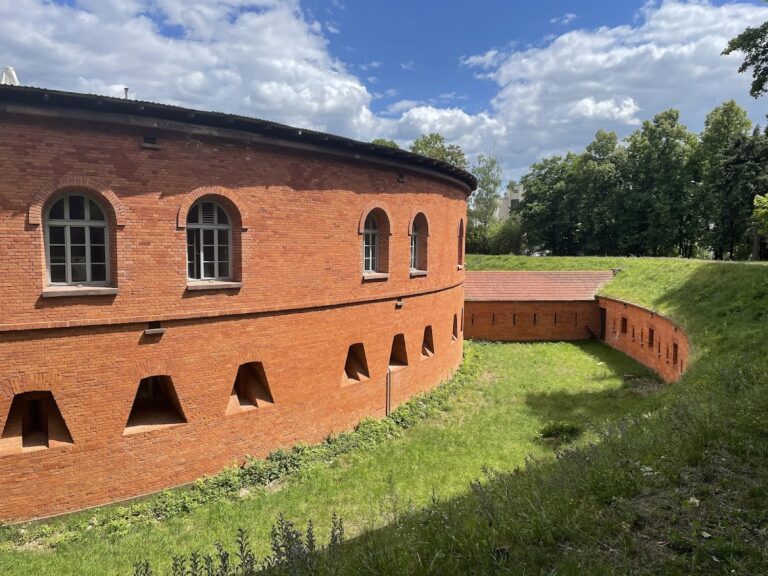
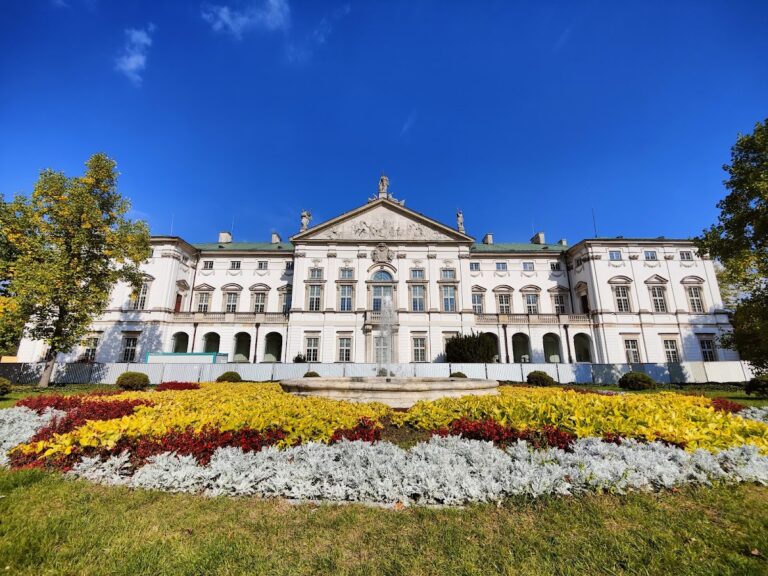
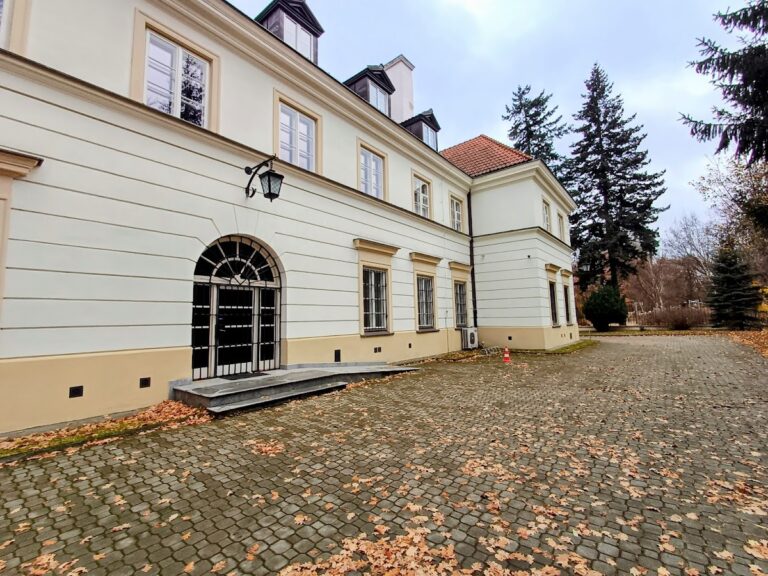
The surviving complex is a three-winged Neoclassical building in the northeastern corner of the Warsaw Citadel, between Trojak Street and Czujna Street. Neoclassical architecture uses the forms and proportions associated with ancient Greek and Roman buildings, often with symmetrical planning and restrained ornament. The preserved prison spaces, former yards, execution landscape, and exhibition rooms together present the building as both a physical remnant of Russian penal administration and a museum of Polish political repression.
Prison Buildings and Grounds
Cells and Investigative Commission Rooms
The prison section contains authentically furnished cells and the former prisoners’ yard. The complex also preserves an area associated with the Russian military investigative commission, including its former hearing room. Relics from the building’s prison period survive in the eastern wing, where they form part of the material evidence for the pavilion’s use as a detention and investigation center.
Execution Route and Symbolic Cemetery
The outdoor exhibition incorporates the former prison yard and the route leading toward the execution site. It extends to the slopes descending toward the Vistula, where condemned prisoners were executed, and includes a symbolic cemetery for those who died there. These outdoor spaces connect the prison interior with the surrounding grounds used for punishment and commemoration.
Exhibition Collections
The Piłsudski exhibition displays documents and photographs from his imprisonment and presents the route associated with his escape toward the hospital. The museum also shows paintings by Aleksander Sochaczewski, who was imprisoned in the pavilion and deported to Siberia. The Siberian-exile exhibition contains approximately 1,400 objects from the Independence Museum’s Siberian Collection, including photographs, paintings, letters, clothing, and patriotic or religious objects. Siberian exile involved the forced deportation of prisoners to settlements, penal-labor sites, and prisons in Siberia, an experience remembered in Polish as that of the Sybiraks.
Nearby sites