Walled Town of Vidoški: A Historic Fortress in Stolac, Bosnia and Herzegovina
Visitor Information
Google Rating: 4.6
Popularity: Low
Country: Bosnia and Herzegovina
Civilization: Modern
Site type: Military
Remains: Citadel
History
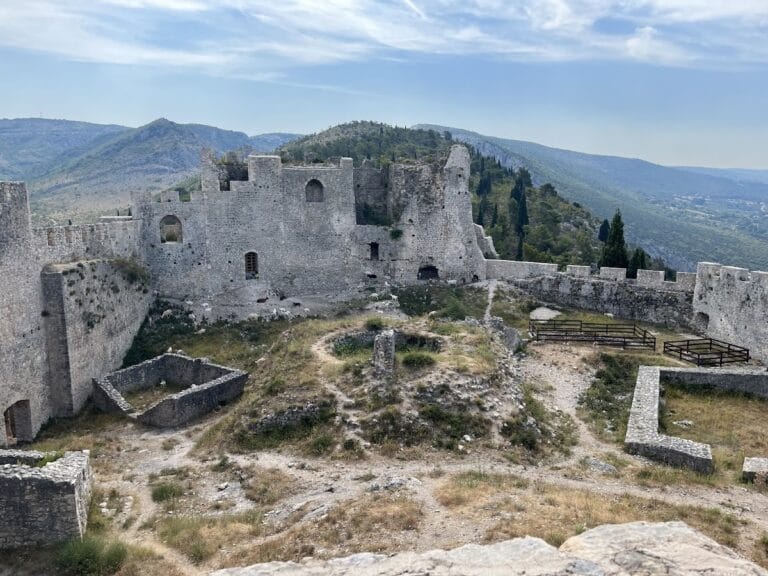
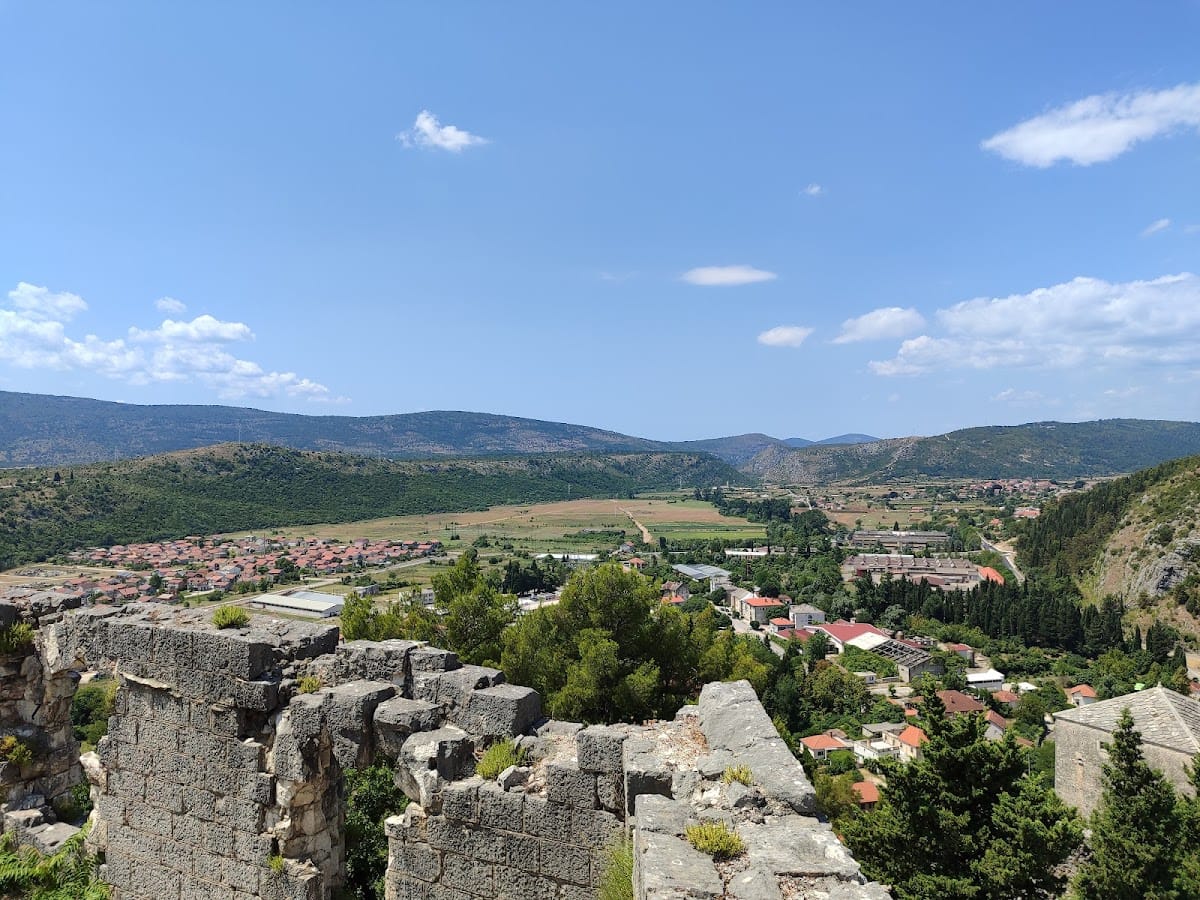
The Walled town of Vidoški is a historic fortress situated above the town of Stolac in Bosnia and Herzegovina. It was originally constructed by regional medieval builders, serving as a defensive stronghold in the area.
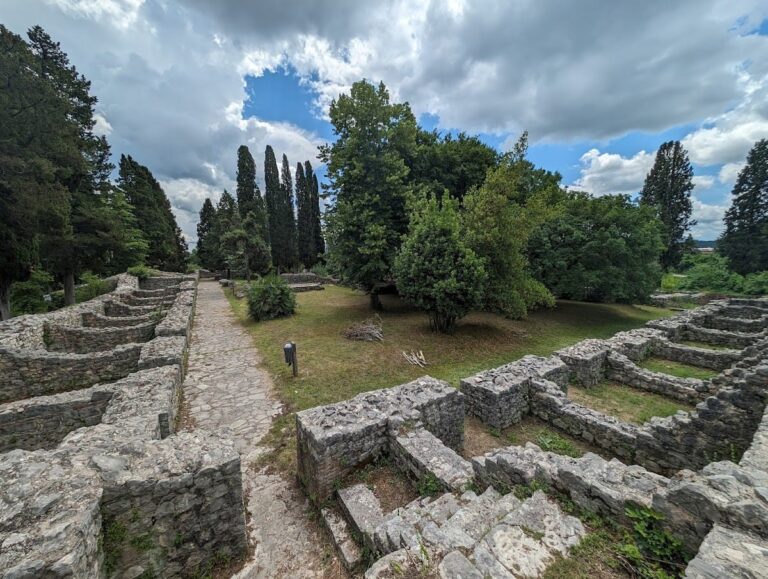
The site and its surroundings have long been inhabited, with the area near Stolac, including Vidovo polje, recognized as an urban settlement since ancient times. Although once thought to be the location of the Roman municipium called Diluntum, further research suggests a different nearby municipium hosted an early bishopric known as Sarsenterensis, established in 533 AD. This highlights the region’s significance during late antiquity and early medieval periods.
The fortress itself appears in historical documents from the mid-15th century. In 1444, King Alfonso V of Aragon and Naples recorded it as held by Duke Stjepan Vukčić Kosača, an influential noble within the Kingdom of Bosnia. Subsequent mentions come from Frederick III, Holy Roman Emperor (referred to as the “Roman King”) in 1448, and again Alfonso V in 1454, indicating the fortress’s consistent importance within the Kosača domain during this consolidation period.
Between 1465 and 1469, the fortress was captured by the Ottoman Empire. It was incorporated into the Herzegovina Sanjak, becoming part of the Ottoman administrative and military system. Centuries later, in 1878, Austro-Hungarian forces occupied the site, initiating new phases of military and administrative use under their rule.
Archaeological investigations undertaken in 1976 did not uncover medieval remains, likely due to extensive overlay by Austro-Hungarian fortifications erected in the late 19th century. During the Austro-Hungarian era, the fortress fulfilled several state roles including district administration, military command, hospital services, and security functions such as the gendarmerie and customs offices. The establishment of modern infrastructure included postal and telegraph communications, water supply, and telephone lines by 1912.
Recognized for its cultural and historical significance, the fortress site was declared a national cultural monument of Bosnia and Herzegovina in 2003. Since 2015, the area has hosted the annual medieval-themed fair known as Stolačka tarča, celebrating the region’s heritage.
Remains
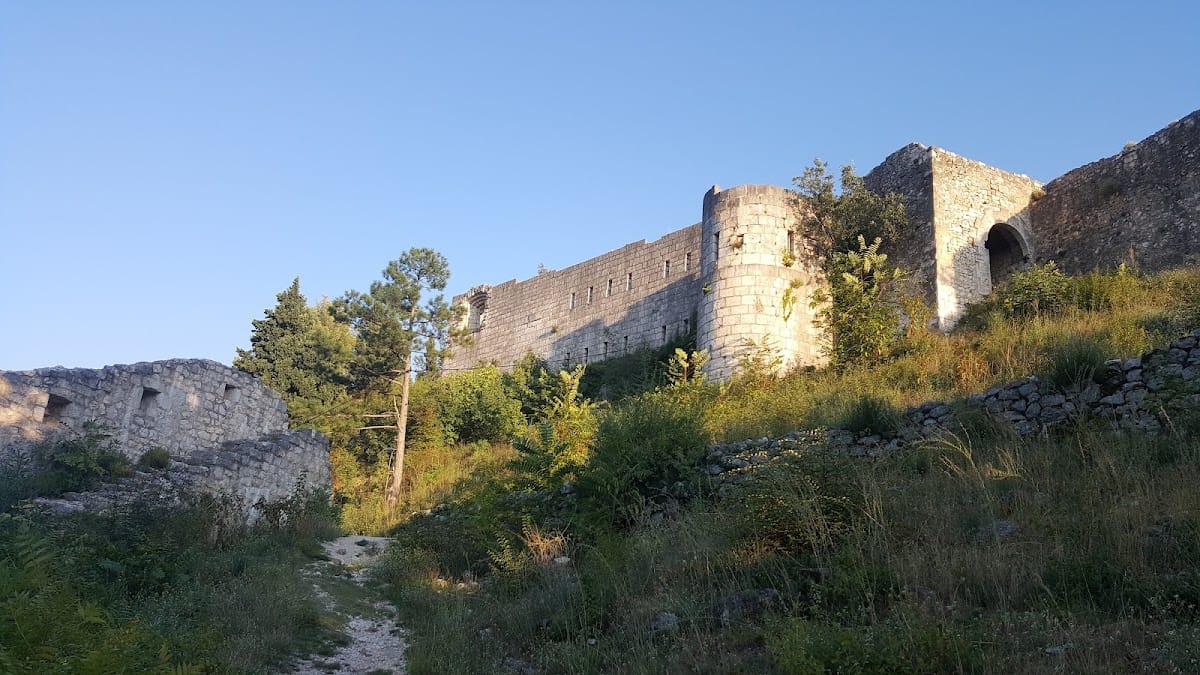
The Walled town of Vidoški extends over approximately 20,500 square meters, making it one of the largest medieval fortifications in Bosnia and Herzegovina. Constructed in multiple stages, the complex is encompassed by a series of stone towers and thick walls averaging two meters in thickness. These fortifications are primarily built from local gray limestone, known as sivac, shaped into hewn blocks. A total of thirteen towers form part of the defensive network, which was considered the most secure fortress in Herzegovina during the 1600s.
The fortress is organized into three principal sections, each with distinct characteristics. The lower town, situated on the northwest, occupies about 8,481 square meters and is enclosed on three sides by walls and towers. Its main entrance stands on the northeastern curtain wall, which measures nearly 45 meters long, with a guardroom positioned above the gate. This area features the ruins of the Veli-dedina mosque, a structure totaling 113 square meters. The mosque, which fell out of use after 1906, has a water cistern located beneath its floor. Noteworthy elements include remnants of an octagonal stone minaret and a directional niche called a mihrab, found on the southern wall. The mosque’s walls are about one meter thick, constructed from the same local stone.
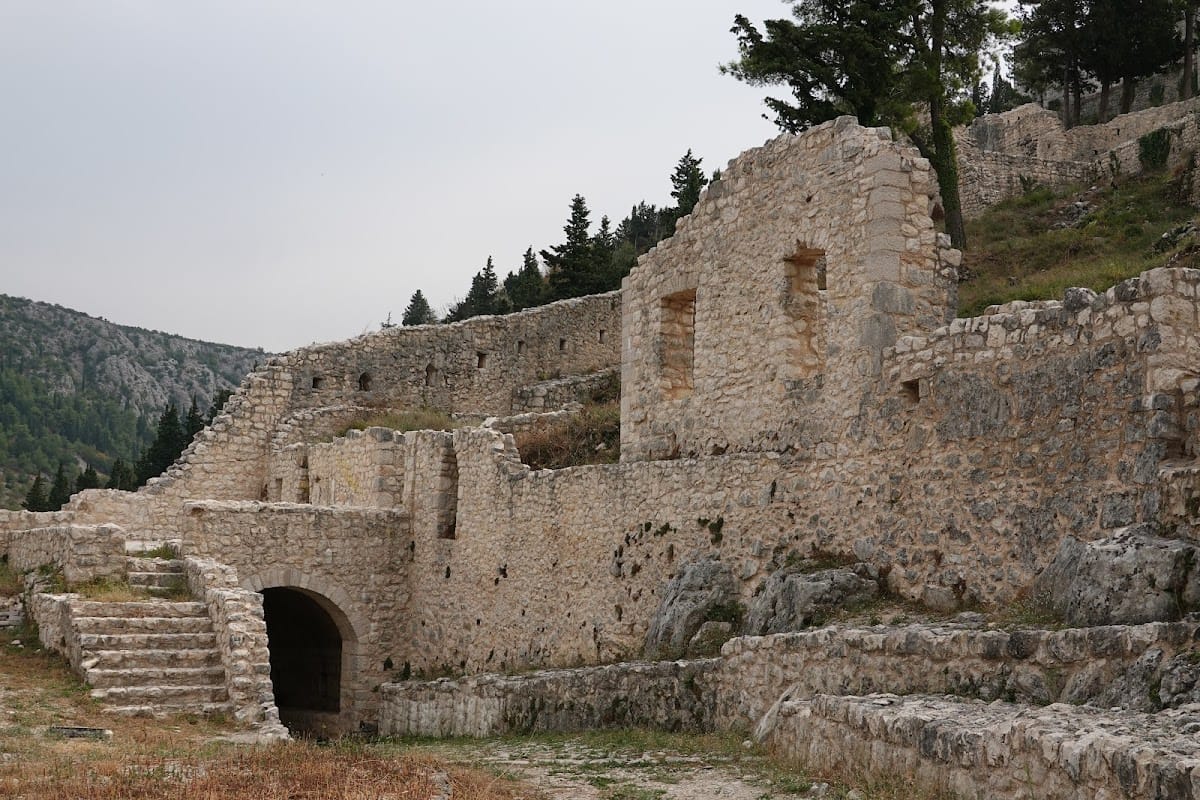
Above the lower town lies the middle town, covering around 2,005 square meters and built largely from white limestone quarried on the island of Brač. This section contained military buildings designed for the fortress’s defense, including fortified walls and three water cisterns used to store rainwater. It also housed an ammunition storage area. While some walls have suffered considerable damage over time, the entrance here has been restored, preserving a glimpse of medieval military architecture.
Further uphill and to the east is the upper town, slightly elevated relative to the middle town and covering approximately 8,579 square meters. This area includes five towers linked by defensive walls. One of the towers was specifically used as a depot for explosives and ammunition and was destroyed twice due to lightning strikes. The defensive walls in this section vary in length, some extending over 100 meters, and are punctuated by rows of gunports for firearms defense.
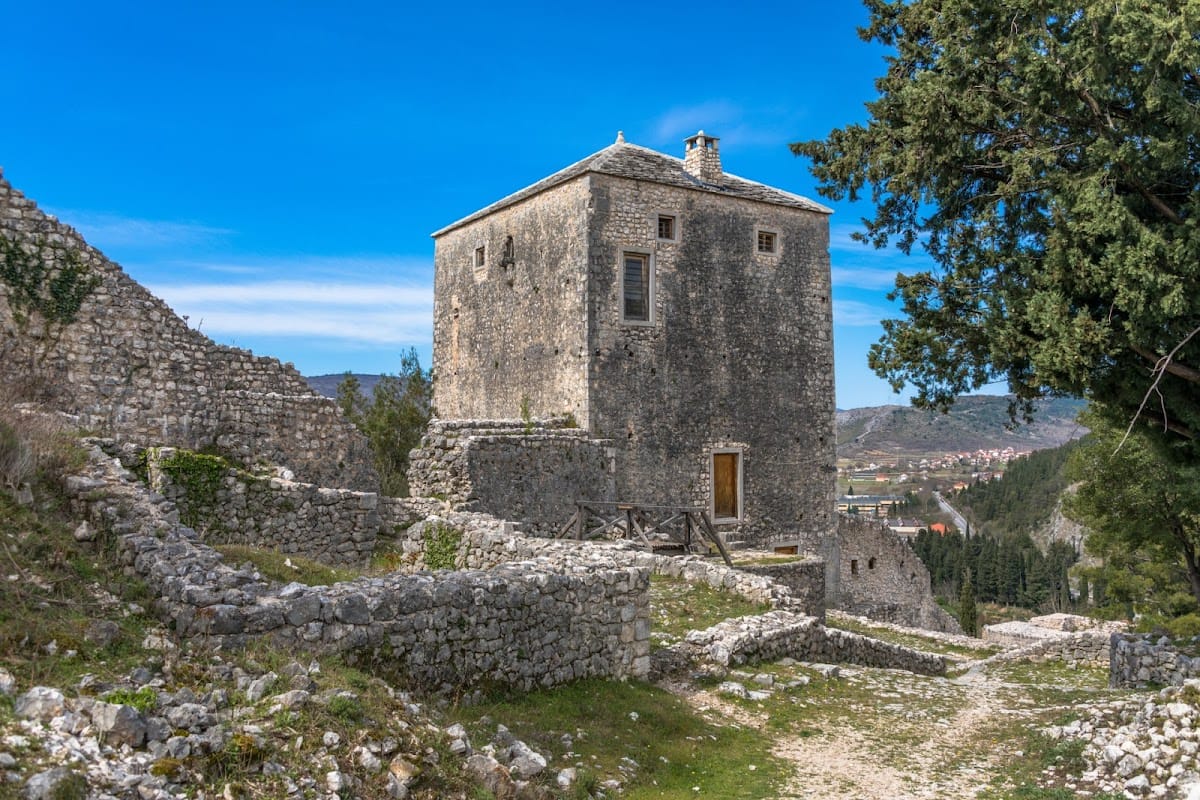
The towers themselves differ in size, with areas ranging from about 65 to 232 square meters. Among them, the sixth tower in the lower town remains the best preserved, whereas others exhibit various degrees of ruin and deterioration.
During Austro-Hungarian rule, additional fortifications known as “Stari grad Stolac” were constructed between 1888 and 1889. This newer fortification occupies the high ground above the medieval complex, displaying a polygonal layout that includes two pentagonal artillery platforms equipped with 90-millimeter guns. Defensive features such as three flank caponiers—fortified structures protecting the walls—and machicolations (openings in the walls used for defense) on some windows were incorporated. The fort provided quarters for troops, storage for equipment and horses, and included a newly built access road aiding logistical movement. Among these additions, one flank caponier remains well preserved today.
Throughout the complex, a network of water cisterns—ten in total—are distributed strategically to support long sieges or daily needs. These cisterns are found near the entrances, between towers, and within the different sectors of the fortress.
Besides military and defensive functions, the site contained various buildings serving residential, religious, and economic purposes. Granaries and infrastructure for water supply demonstrate the planning required for sustaining a garrisoned population over time. Some parts of the fortress complex remain in ruins, while others, including portions of the Austro-Hungarian structures, are still intact, reflecting the layered history of this important fortified town.