Vladimirets: A Medieval Border Fortress in Russia
Site at a Glance
- Popularity
- Very Low
- Country
- Russia
- Primary era
- Medieval
- Eras represented
- Medieval
- Civilizations
- Pskov Republic
- Site type
- Military
- Remains
- Fort
On this page6 sections
History
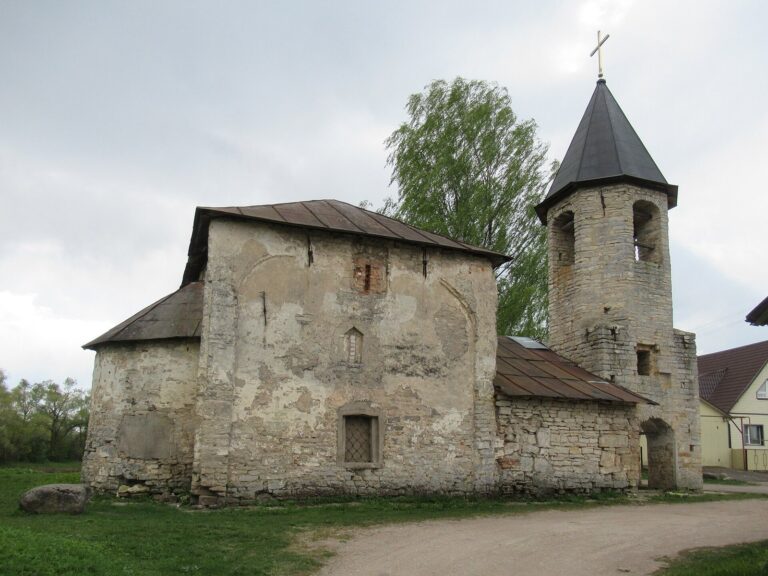
Vladimirets is a medieval hillfort in Russia, founded in 1462 during the Moscow-Novgorod wars, conflicts over political control in northwestern Russia. Built when Pskov sided with Moscow, the fortress strengthened the border with Novgorod and guarded the only stretch where impassable marshes did not divide the two lands. A Church of St Nicholas was erected at the same time.
Conquest and decline
After Moscow conquered Novgorod in 1478, Vladimirets lost its military purpose and gradually declined. From the sixteenth century onward, land registers listed neither households nor house plots within the fortifications.
The fortress was last mentioned in written records on 18 July 1484. A chronicle recounts that a maiden appeared in the fortified settlement. An all-night vigil followed in the Church of St Nicholas, and a candle in a resident’s home in the posad, the settlement outside a fortified town, was said to have lit by itself.
Archaeological study and protection
In 1880, Ivan Godovikov published the first archaeological description of Vladimirets. Investigations followed in 1911, 1958, 1974, and 1985. On 20 February 1995, a decree by Russian President Boris Yeltsin recognized the hillfort as an archaeological monument and placed it under state protection as a federal-level cultural heritage site.
Remains
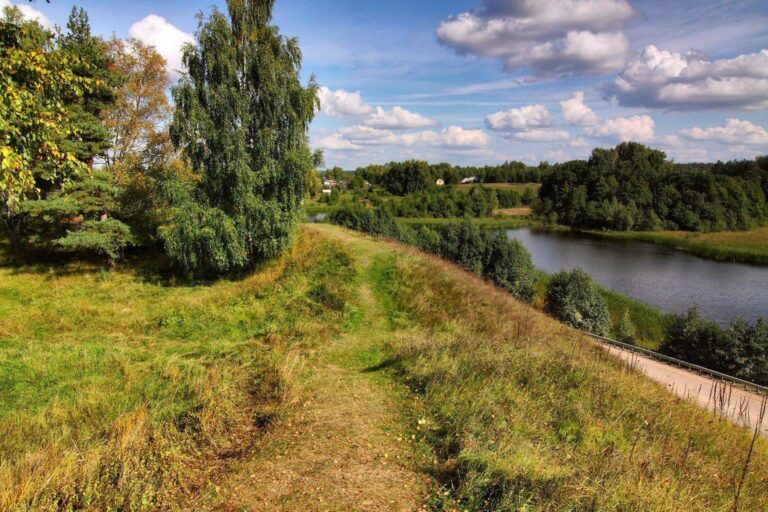
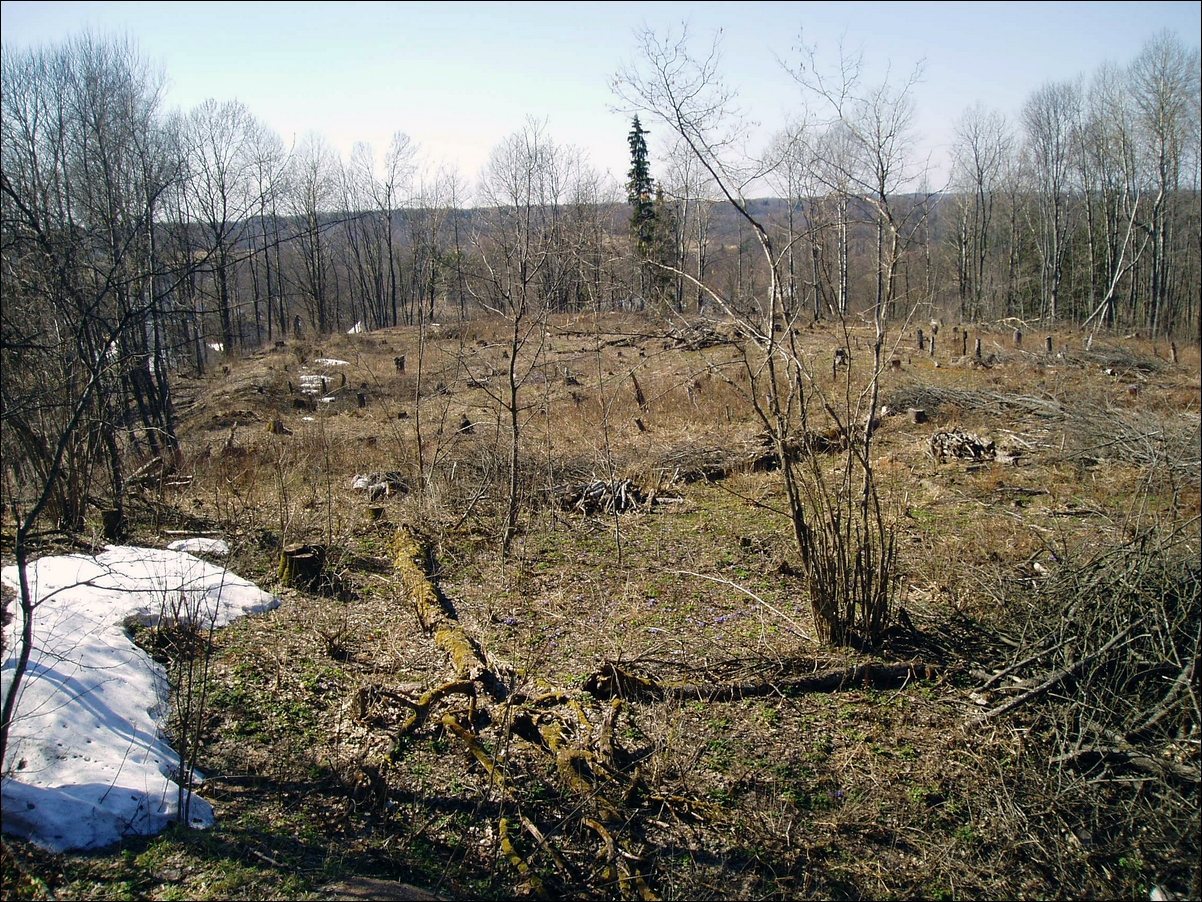
The archaeological remains occupy Volodchina Hill, at the western edge of the village of Vladimirets and the Sudoma Upland. The hill is encircled by the Listvenka River, and the former fortress stood on the right bank of the Cheryokha. Its defenses were arranged around a raised platform.
Fortress platform and defenses
The hill rises 33 m above the land to its south, east, and north, and 13 m above the ground to the west. The fortress platform was an elongated trapezoid close to a rectangle, measuring 120 by 65 m. Its entrance was on the western side, with approaches along the northern and southern slopes. An earthen rampart, 2–4 m high, enclosed the platform. Rounded projections at the southeastern and northwestern corners were probably intended for towers. About halfway along the southern rampart, a stone-lined secret passage with stone steps led to a well.
Church of St Nicholas
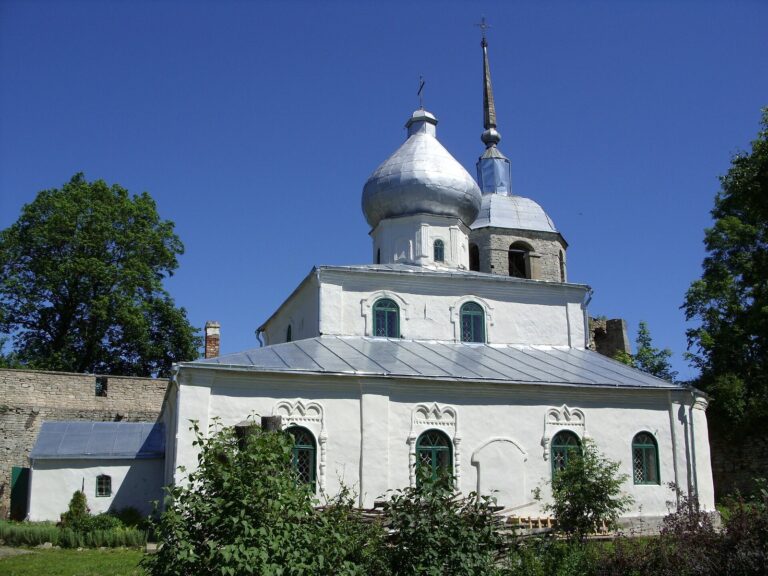
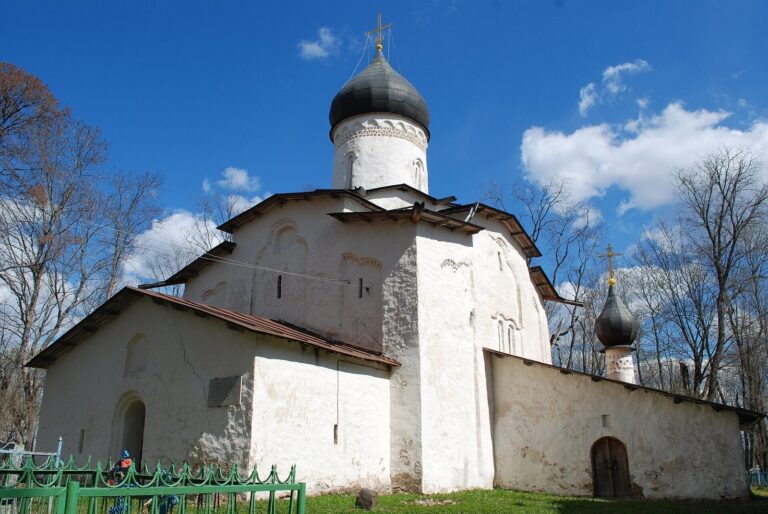
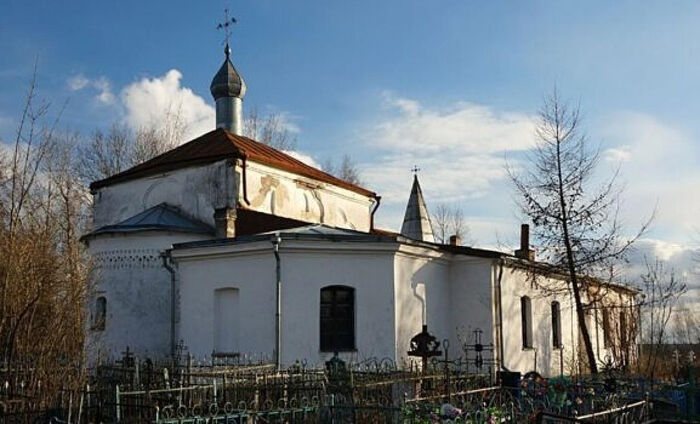
A new Church of St Nicholas was built in 1793 at the southwestern foot of the hill. Stone from the fortress was reused in its construction, including the facing and steps of the passage to the well.