Fortifications in Pskov: The Roundabout City Defensive Line
Site at a Glance
- Rating
- 4.8
- Popularity
- Low
- Country
- Russia
- Primary era
- Medieval
- External website
- Open
- Eras represented
- Medieval, Early Modern, Modern
- Civilizations
- Pskov Republic, Russian
- Site type
- Military
- Remains
- Wall
On this page12 sections
History
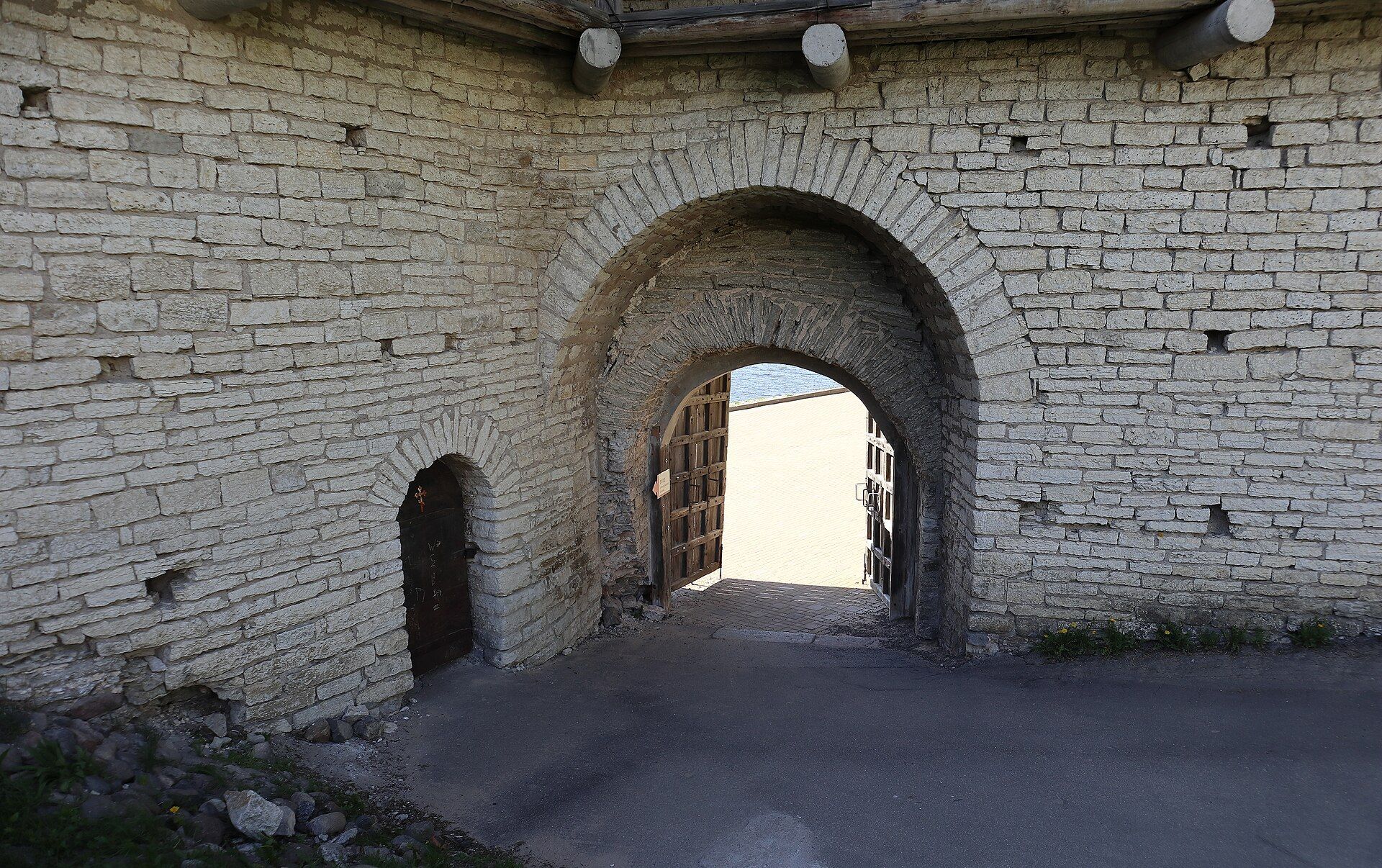
Fortifications in Pskov, Russia, formed the fifth and final expansion of the city’s medieval fortress, extending the protected area south and southeast beyond the Middle City. Construction of this defensive line began with wooden fortifications in 1465 and continued in stone, while its tower system developed through the middle of the sixteenth century. The completed works protected Pskov’s contemporary center and its extension across the Pskova River. The Roundabout City is regarded as an exceptional example of medieval Russian defensive architecture.
Expansion of the Fortress
The expanded district initially had another local name. The designation “Roundabout City” became established after its fortifications were completed in the early sixteenth century. Its walls and towers formed part of a wider defensive system more than 9 km long, which included 39 combat towers and 48 entrance gates. The Roundabout City section itself extended for more than 3 km.
Sieges and Later Protection
The walls and towers endured repeated sieges and assaults. During the Polish siege of 1581–1582, the principal operations focused on the Pokrovskaya and neighboring Svinuzskaya, also called Svinorskaya, fortifications. Swedish forces attacked in 1615, and royal forces blockaded Pskov in 1650.
On 30 August 1960, the Roundabout City fortifications were recognized as a monument of architecture of republican significance and placed under state protection. They are now a federally significant cultural-heritage property of Russia.
Remains
Layout and Walls
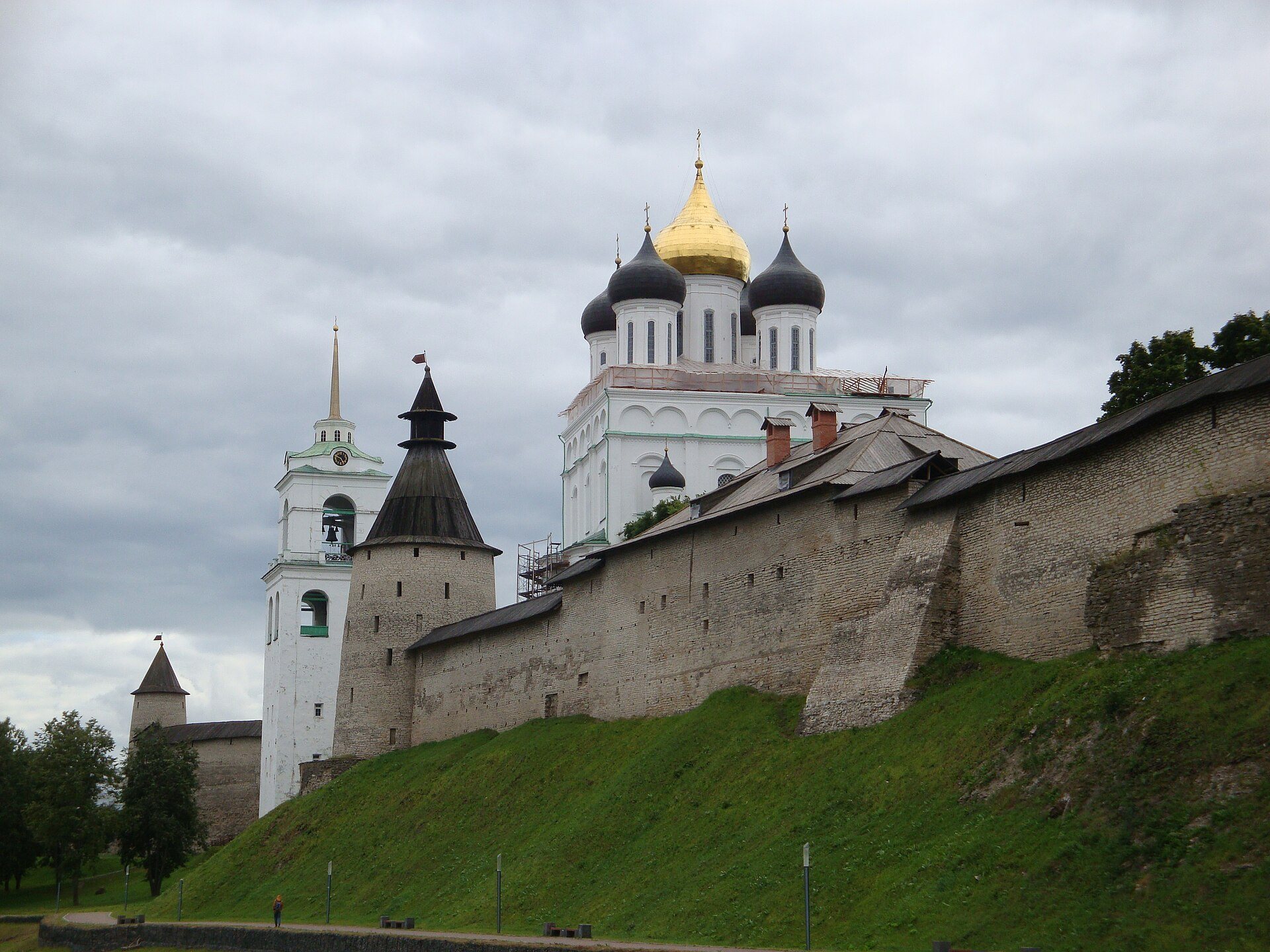
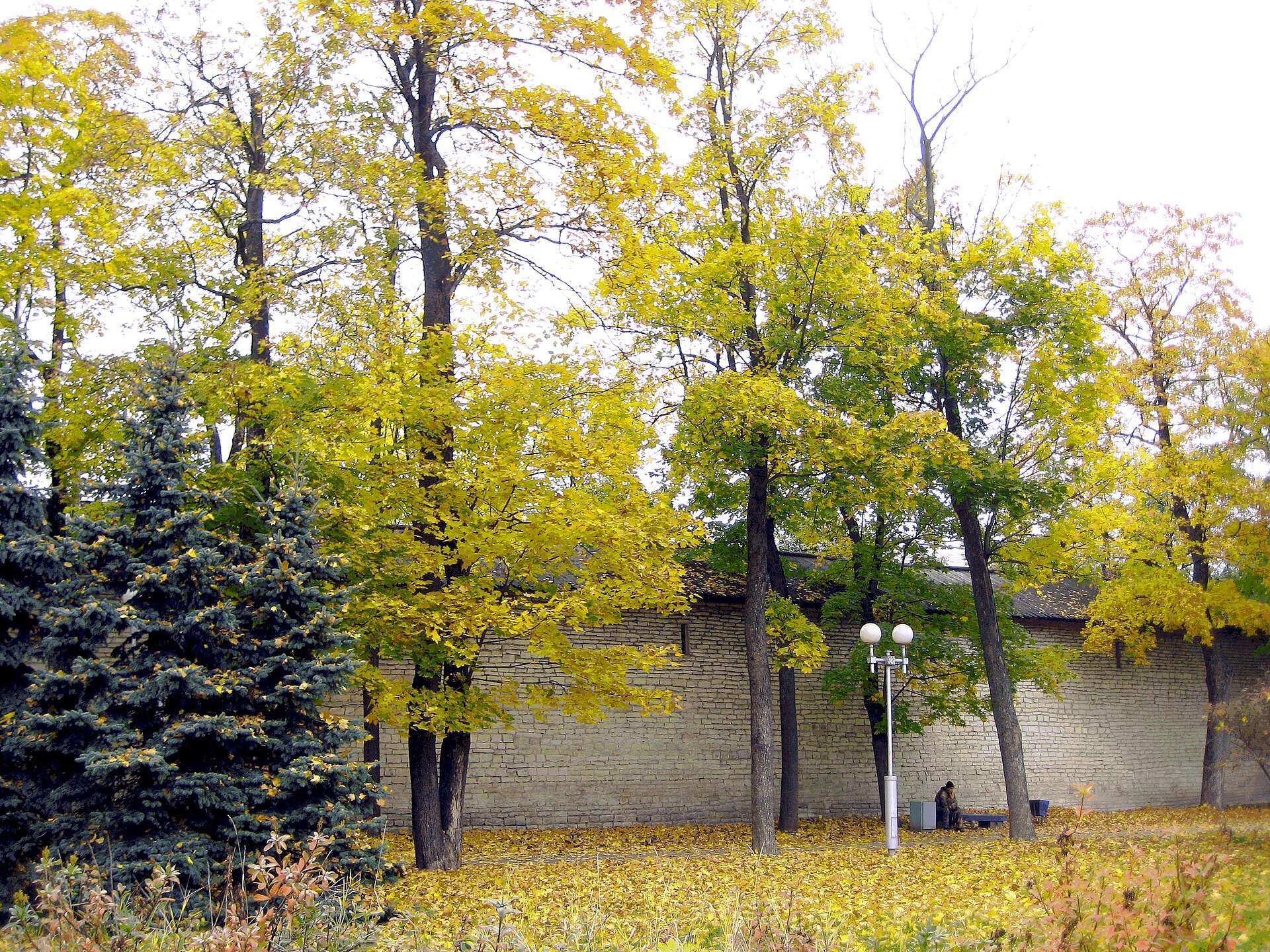
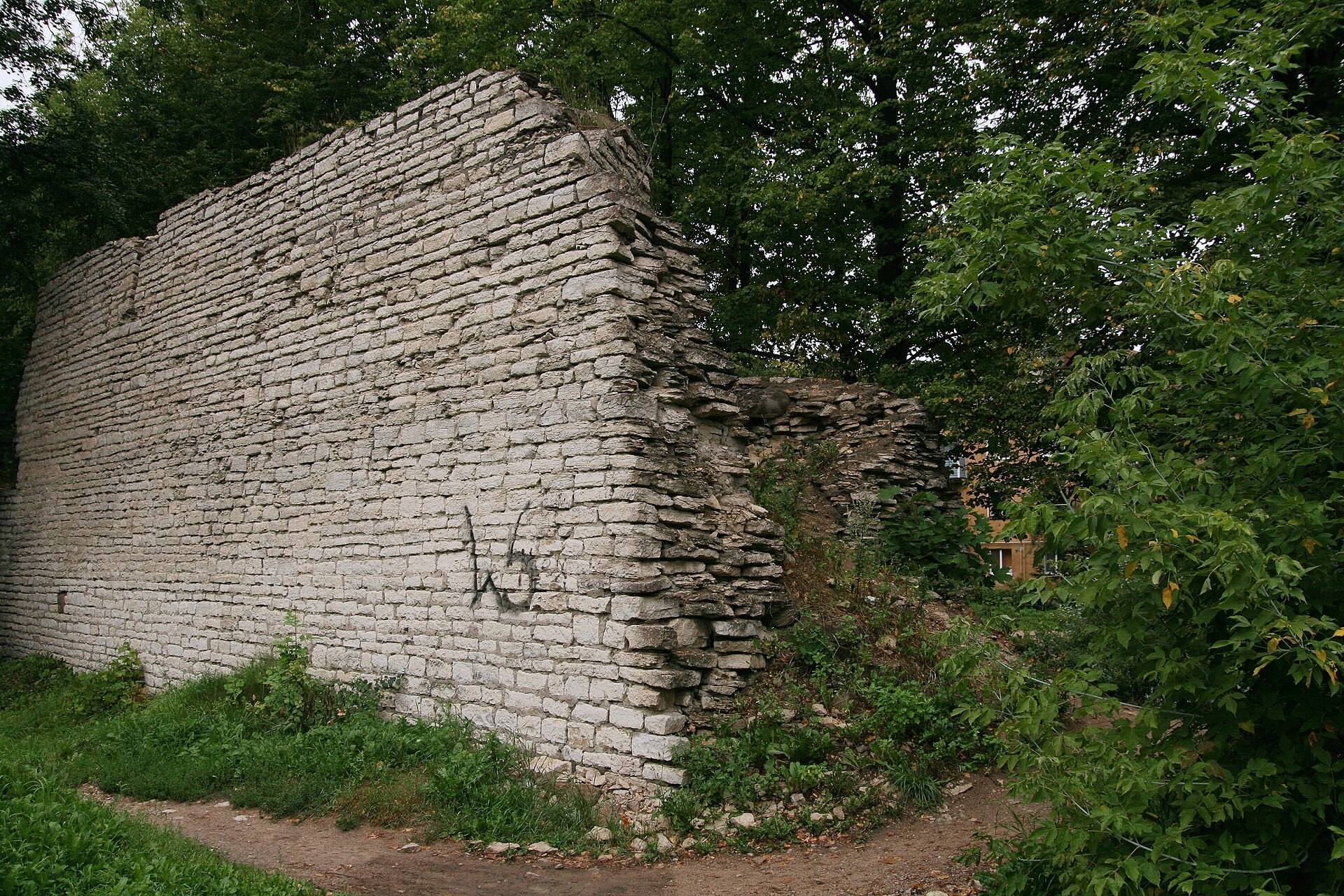
The Roundabout City occupied the southern and southeastern extension of Pskov’s historic center. Its walls were approximately 3 km long and generally 4–5 m thick, incorporating 21 towers whose heights reached up to 52 m. Most of the stone walls survive in varying states of ruin.
On the north, the fortifications joined the wall of the Middle City, an earlier fortified zone built between 1375 and 1400. That wall ran from the Mstislavskaya Tower beside the Velikaya River along present-day Pushkin Street, then curved northeast toward the Pskova River, approximately west of present-day Krasnykh Partizan Street and opposite the Church of the Epiphany in the district across the river.
On the west, the wall followed the Velikaya River southward for more than 1 km from the Mstislavskaya Tower to the Pokrovskaya Tower. Along the south and southeast, it followed present-day Sverdlov Street from the Pokrovskaya Tower to the Gremyachaya Tower in the district across the Pskova, incorporating the Upper Grates, or fortified water gates, across the river.
Modern streets pass through parts of the former defensive line. These breaks occur at Kalinina Street near the former Svinuzskaya Tower, Soviet Street at the former Great Gates and Great Tower, Oktyabrsky Prospekt at the former Sergiev Gates, and Karl Marx Street at former Novgorod Street. Wall sections along the Pskova River bank and parts of the line beside the Velikaya River have also been altered, including areas associated with the former Nikolskaya and Georgievskaya towers.
Northern Towers and Passages
Surviving Towers
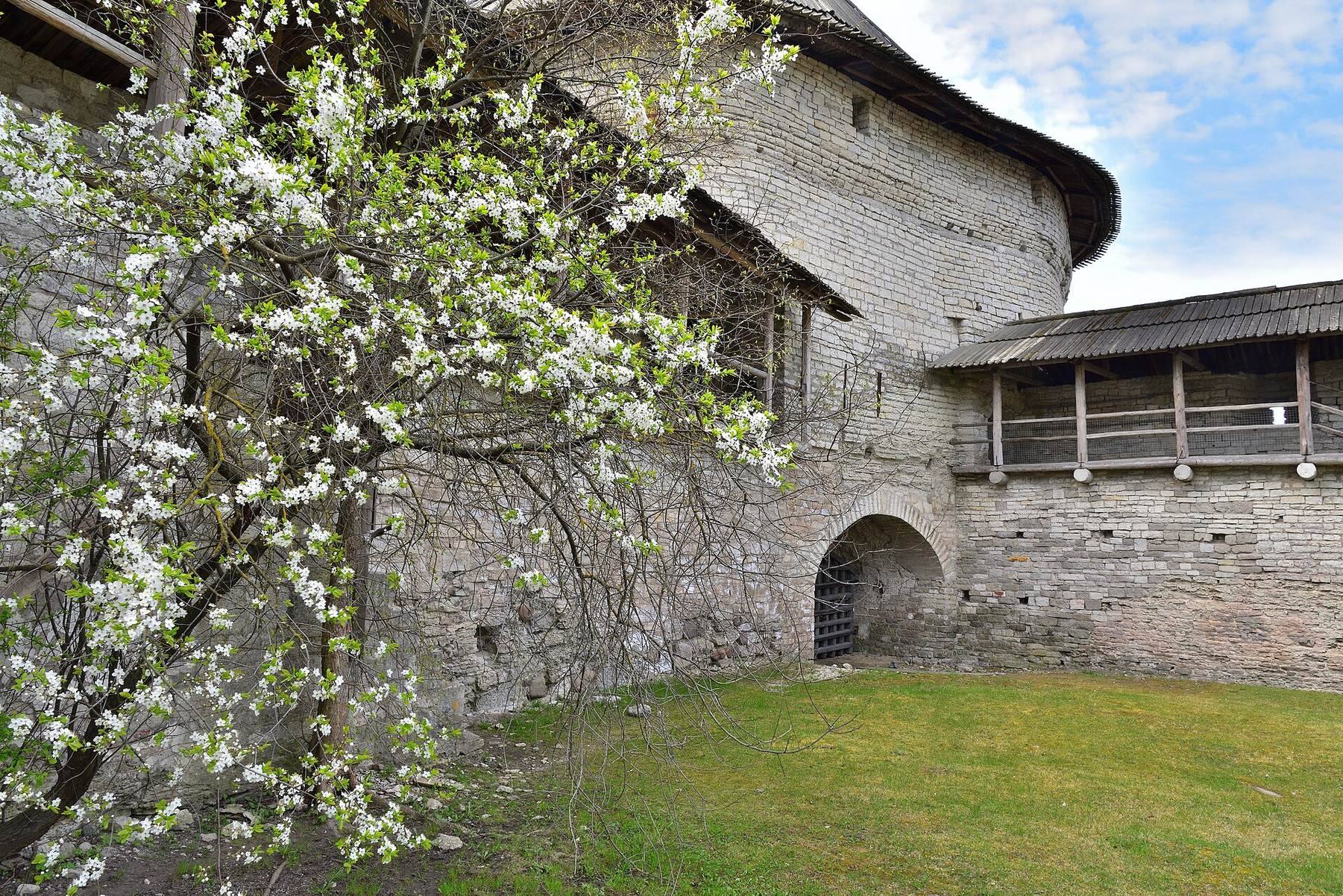
The High Tower, also known as the Resurrection Tower, survives in restored and good condition. The corner Varlaamovskaya Tower has likewise been restored and is in good condition. The Volkovskaya Tower survives in ruined form, as does the Blind Tower. The Gremyachaya Tower, also called the Kozmodemyanskaya Tower, remains part of the northern line.
Passages and Former Defenses
The Varlaamovskaya Passage survives as a ruin, while the Zagryazhsky Passage is severely ruined. The northern defenses also included the Bykovskaya, Ilyinskaya, Obrazskaya, and Toloknyanka towers, the Obrazsky Passage, and the Gremyachie Gates. Their former positions belonged to the sequence of structures that connected the surviving towers and wall sections.
Southern Towers and River Defenses
River and Gate Towers
The Mikhailovskaya Tower with gates stands beside the Pskova River and dates from the beginning of the sixteenth century. Near former Novgorod Street, now Karl Marx Street, the Petrovskaya Tower with gates dates from the middle of the sixteenth century. The faceted Nikolskaya Tower stood at the Upper Grates on the bank of the Pskova opposite the Gremyachaya Tower in the district across the river.
The Upper Grates were water gates crossing the Pskova River. They were analogous to the Lower Grates at the river’s mouth near the Krom, Pskov’s central fortress, commonly known in English as the Pskov Kremlin.
Pokrovskaya and Former Southern Fortifications
The Pokrovskaya Tower, dating from the late fifteenth or early sixteenth century, survives along the southern line. The former Sergiev Gates stood at Sergiev Street and its continuation toward Kokhanovsky Boulevard. The Sokolya Tower, the Great Tower and Great Gates, the Svinuzskaya or Svinorskaya Tower, and the Georgievskaya or Egoryevskaya Tower belonged to the same southern defensive system. The Great Tower and Great Gates were built in stone in 1469 at former Great, or Velikolukskaya, Street, now Soviet Street. The Svinuzskaya Tower stood beside former Uspenskaya Street, now Kalinina Street.
Bastion and Mound Remains
A hill beside the Pokrovskaya Tower preserves the remains of the Pokrovsky bastion, a projecting defensive work dating from 1701. Another surviving mound marks the former Svinuzskaya or Svinorskaya Tower.