Visegrád Castle: A Medieval Fortress Above the Danube in Hungary
Visitor Information
Google Rating: 4.6
Popularity: High
Official Website: parkerdo.hu
Country: Hungary
Civilization: Medieval European
Site type: Military
Remains: Castle
History
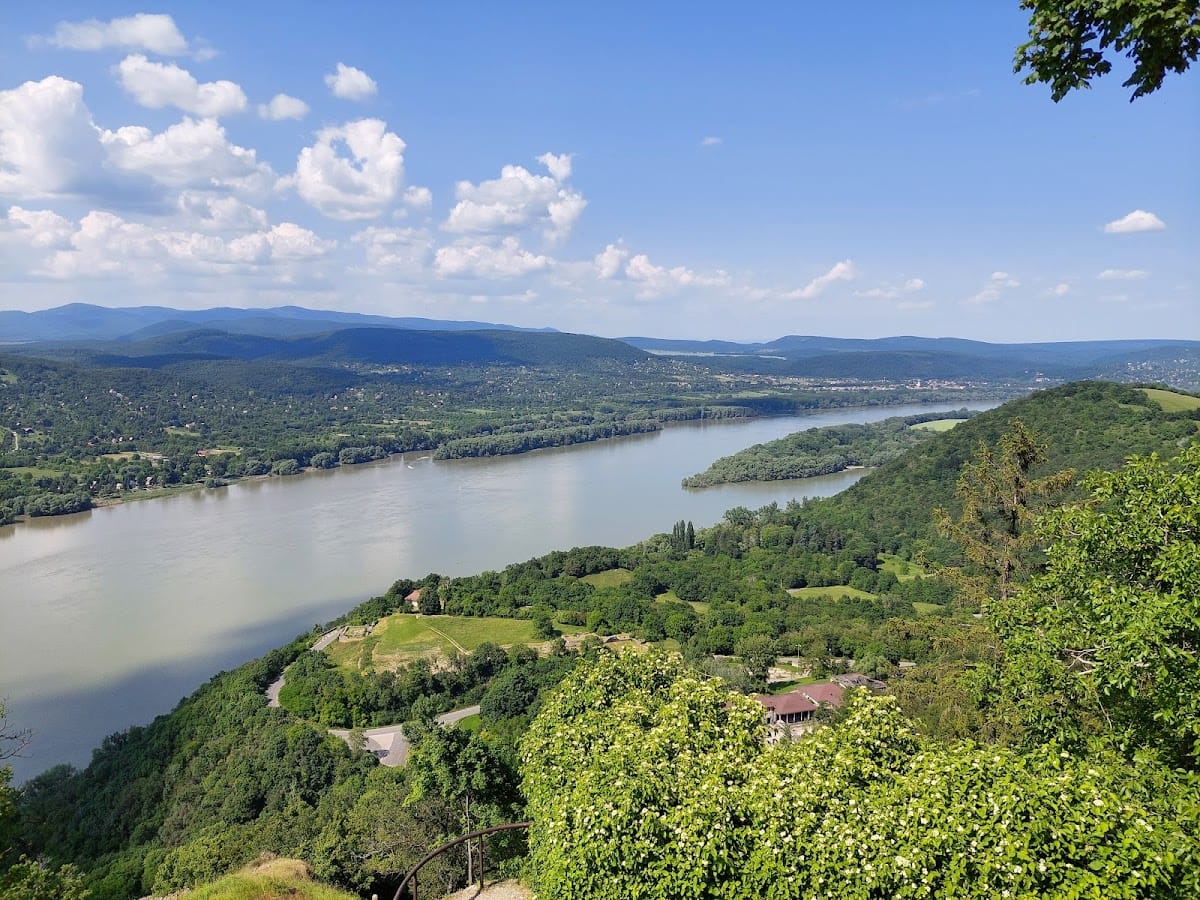
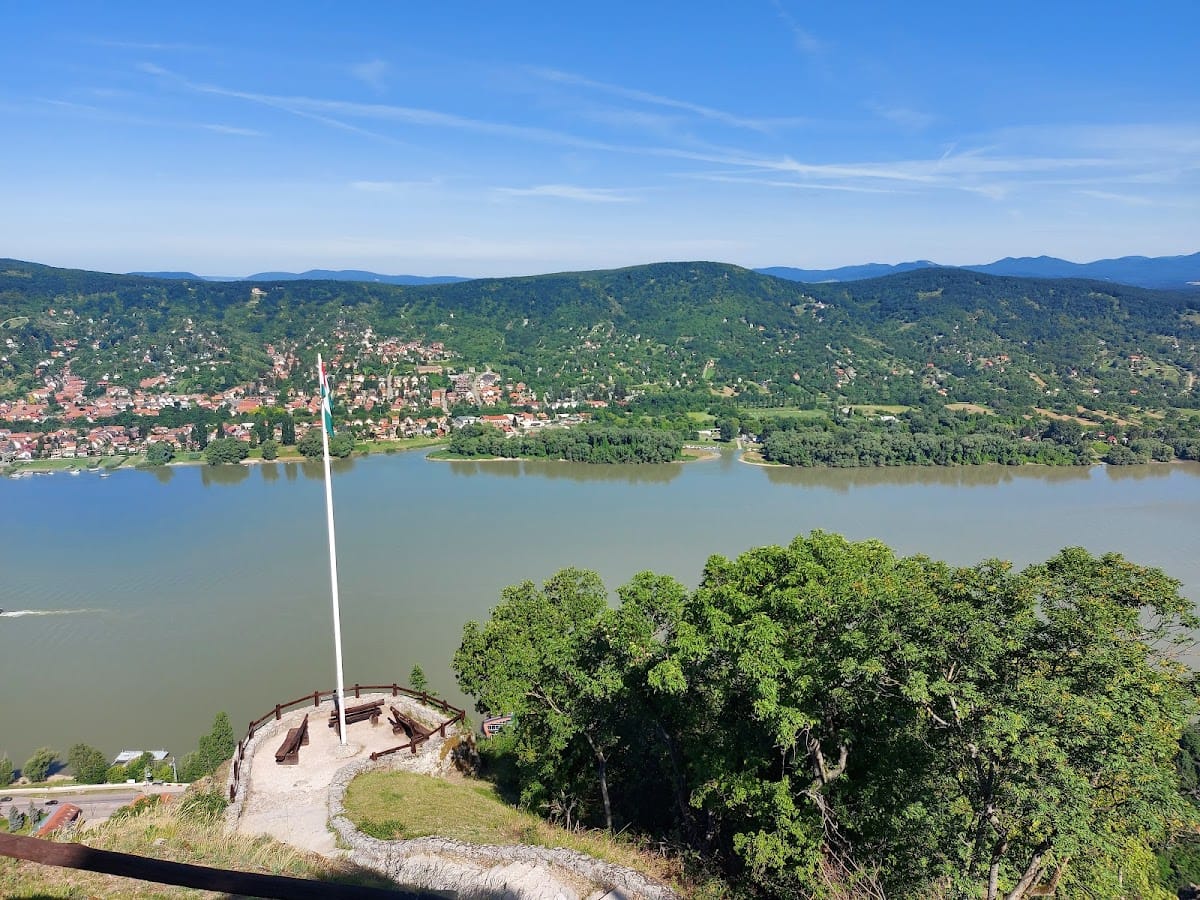
Visegrád Castle is situated above the Danube bend in the town of Visegrád, Hungary. The castle complex was established by the medieval Kingdom of Hungary and played a notable role in the region’s political and military history.
The earliest fortifications on the site were destroyed during the Mongol invasion of 1241–1242, which devastated many parts of Hungary. Following this period, King Béla IV undertook extensive reconstruction efforts. He built a hexagonal residential tower with thick walls on the rocky summit, later called the Salamon Tower, as part of a broader defensive strategy. On lower ground near the Danube River, Béla IV also constructed a fortified section called the Lower Castle. The two parts were linked by a defensive wall stretching across the steep hillside, continuing down to a separate Water Castle directly adjacent to the riverbank. Interestingly, Queen Maria, Béla IV’s wife, contributed to the fortification of the high summit by selling her personal jewelry to fund the construction, highlighting the importance placed on securing the site.
During the early 14th century civil wars, the castle saw military occupation by the forces of Matthew Csák, a powerful noble who controlled much of northern Hungary. The castle was retaken by King Charles I of Anjou after a siege, marking a return to royal control. Charles initiated the construction of a more comfortable palace residence near the Danube, reducing the original stone fortress to a primarily military function as a garrison.
Later, under the rule of King Sigismund of Luxembourg in the 15th century, the upper castle’s pentagonal tower served as a secure storage site for the Holy Crown of Hungary, the nation’s coronation crown. This period is marked by an event in 1440 when Ilona Kottaner, acting on instructions from the widowed Queen Elizabeth, orchestrated the theft of the crown from the castle.
After the Ottoman Empire conquered Buda in the 16th century, Visegrád Castle became a contested military site, enduring numerous sieges. The first major assault in 1544 inflicted considerable damage on the Salamon Tower. Throughout the following century and a half, the castle frequently changed hands amid ongoing conflict and gradually fell into disrepair. The final significant destruction occurred during a siege in 1685 when Ottoman forces withdrew to concentrate on defending the strategically critical Buda Castle.
Following the end of its military relevance, the castle experienced neglect. Natural weathering combined with human removal of stones accelerated its decline. The remains of the royal palace near the Danube were demolished in the 18th century, and for a time the site faded from wider historical memory. Though some archaeological investigations took place earlier, a systematic restoration program was only initiated in the 1960s, with renewed renovations ongoing since 2017 as part of Hungary’s National Castle Program.
Remains
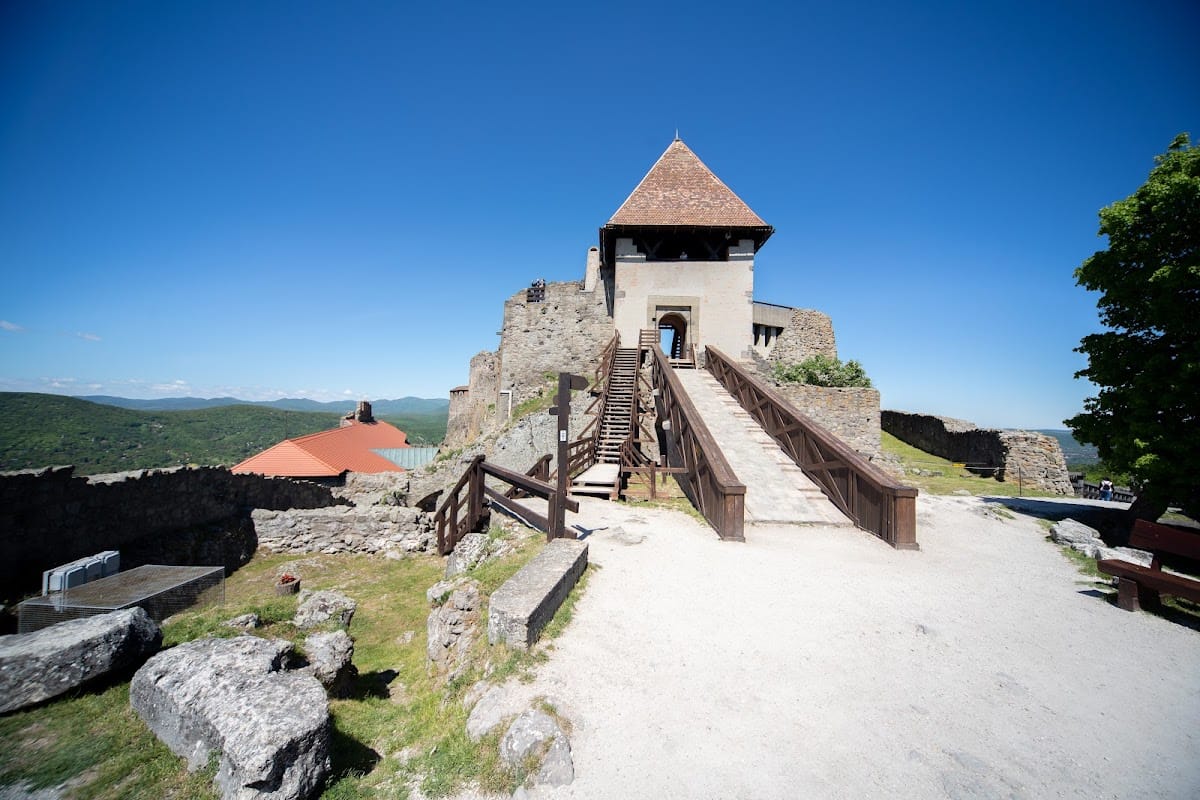
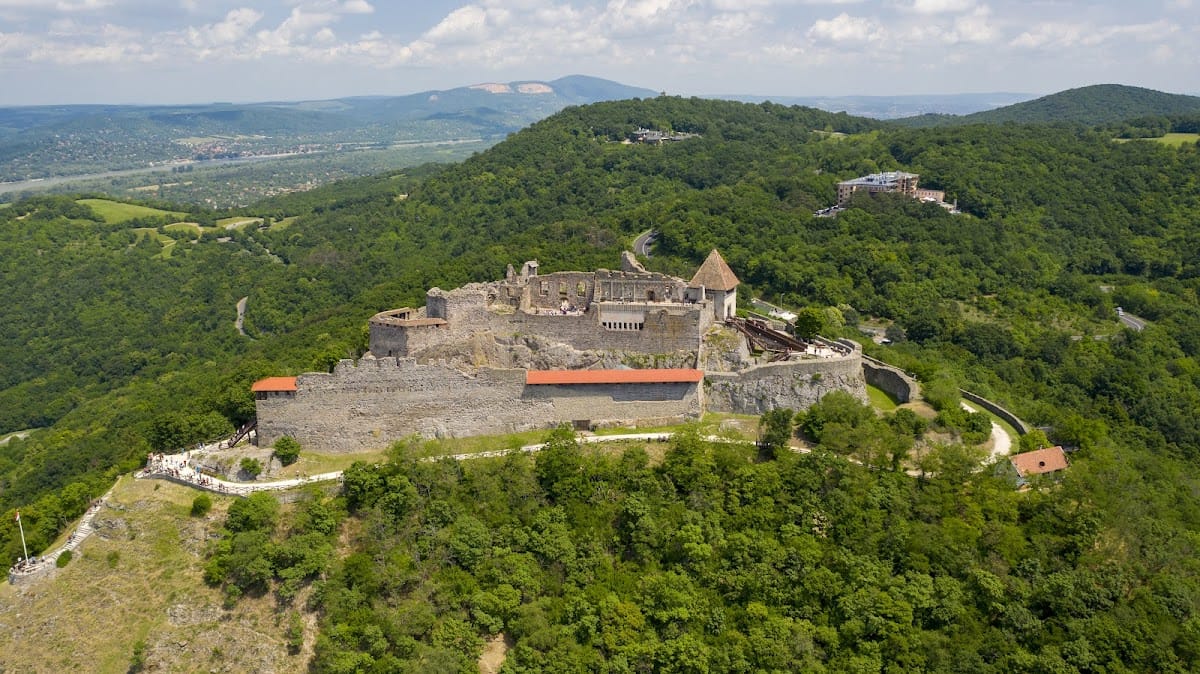
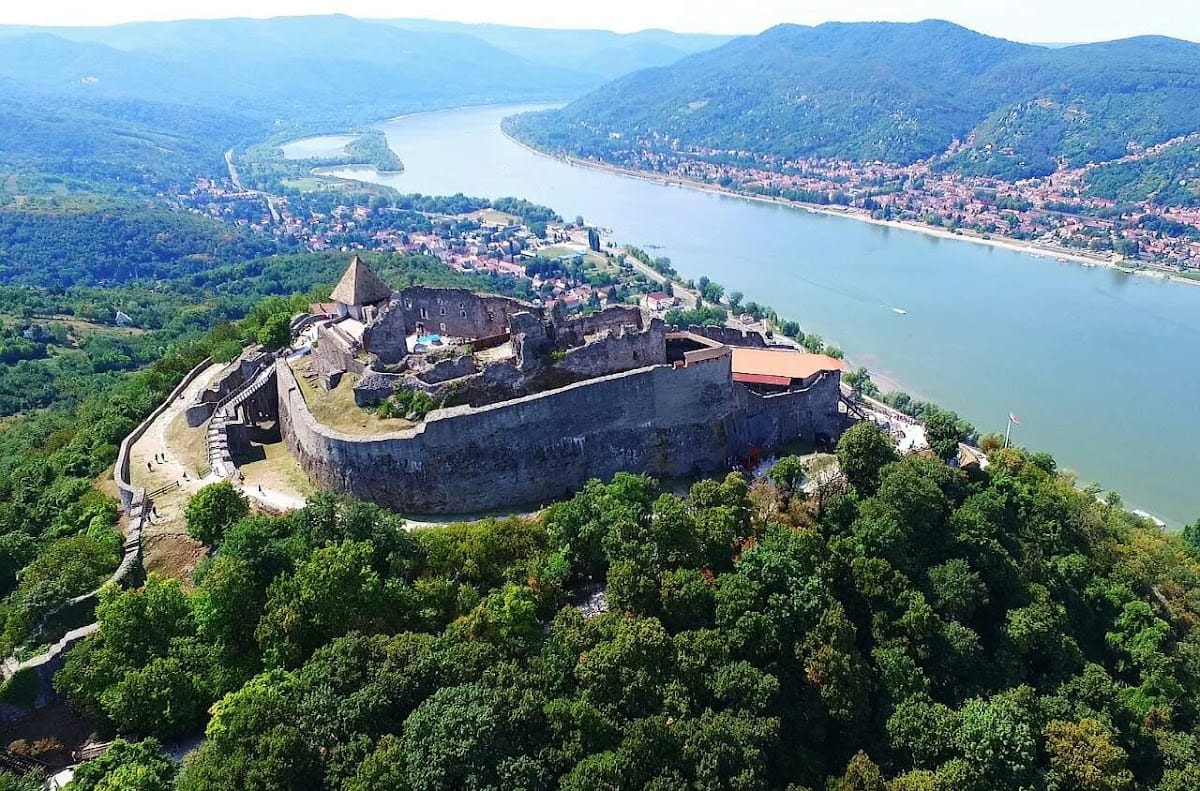
Visegrád Castle consists of two main sections: the Lower Castle situated near the Danube and the Upper Castle, or Citadel, positioned on a high rocky ridge. The two parts are connected by a defensive wall that extends along the steep hillside and continues down to a third element, the Water Castle, located close to the riverbank. The castle’s strategic positioning controlled passage along the Danube gorge.
Among the surviving structures, the Salamon Tower stands out as a prominent feature. Built shortly after the Mongol invasion by King Béla IV, this six-sided residential tower is characterized by its thick defensive walls designed for protection. Despite suffering damage during the 16th century sieges, the tower remains partially preserved today.
The Upper Castle contains a pentagonal tower historically important for housing the Holy Crown of Hungary during the reign of Sigismund of Luxembourg. This tower remains an identifiable ruin and plays a role in interpretations of the castle’s history and function.
Near the river, the remnants of the royal palace built under King Charles I survive only as ruins following its demolition in the 18th century. While the original palace once offered a more comfortable dwelling separate from the fortress, its physical traces today reflect centuries of decay.
Within the Upper Castle, several exhibitions have been established to illustrate the site’s history, including displays on the castle’s evolution, a model showing its fortress system, and a replica of the Holy Crown with information about its guarding. There are also exhibitions dedicated to traditional activities such as hunting, fishing, and farming, reflecting the broader cultural heritage of the region.
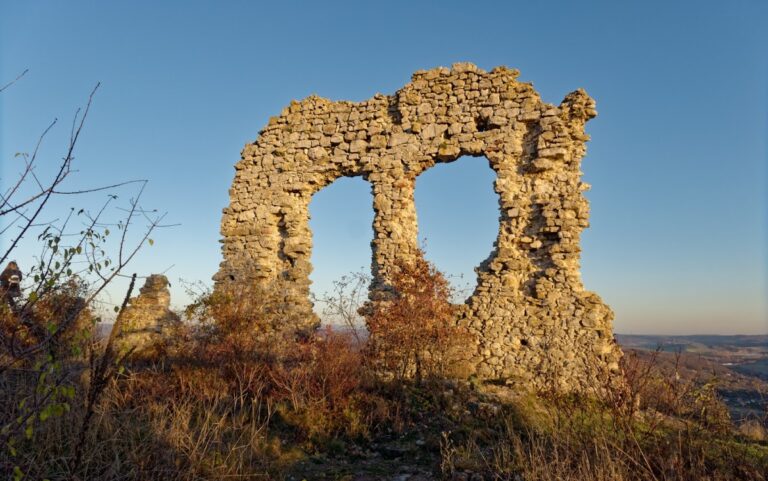
Overall, the castle ruins, including the Salamon Tower and the enclosing defensive walls, still stand on the rocky heights above the Danube. Restoration and conservation work, especially since the mid-20th century and intensifying after 2017, have helped stabilize and reveal these medieval remains. Paths connecting the castle sections allow access to the site and its historical features, preserving its legacy as an important medieval stronghold in Hungary.
Nearby sites