Visconti Castle in Fagnano Olona: A Medieval Fortress and Later Residence
Site at a Glance
- Popularity
- Medium
- Country
- Italy
- Primary era
- Early Modern
- Eras represented
- Medieval, Early Modern
- Civilizations
- Duchy of Milan, Habsburg, Habsburg Spain, Holy Roman Empire, Spanish
- Site type
- Domestic
- Remains
- Castle
On this page10 sections
History
Visconti Castle in Fagnano Olona, Italy, is a medieval and Baroque fortress above the Olona River, where its position guarded a valley route between Switzerland and Milanese territory. Its earliest nucleus may date to Roman times. The castle formed part of a chain of fortifications along the river, including those at Castelseprio and Castiglione Olona, and served as an outer defense for Castelseprio.
Early fortress and Visconti control
The castle is securely known by 1257, when it belonged to the Visconti. That year, Martino della Torre, Milan’s Captain of the People, a leading civic office, led an unsuccessful siege against it. The Torriani, also known as the Della Torre family, were political rivals of the Visconti, and the castle was drawn into their conflict.
After the Seprio territory came under Visconti rule, a family branch held the castle. Its fief, a grant of land or rights under a feudal arrangement, was later divided. Giovanni Visconti di Gasparo’s descendants became the lords of Fagnano, who were entrusted with the castle; their line ended in 1514. The descendants of Giovanni’s brother Azzo formed the Visconti of Jerago and lived at Fagnano’s Castellazzo, a separate residence.
Fifteenth-century grants
In the fifteenth century, the castle belonged first to Gaspare Visconti, a counselor to Duke Filippo Maria Visconti, and then to Gaspare’s son, Filippo Maria. In 1451, Francesco Sforza entrusted the castle to Filippo Maria, Count of Albizzate. Galeazzo Maria Sforza confirmed the grant in 1470 and visited the castle, including during a hunt in 1474.
Sixteenth-century military and residential change
During the sixteenth century, fighting in the Gallarate area involved ducal, Spanish, and French troops. The castle’s strategic military role ended during this period. In 1551, the Habsburg emperor Charles V granted Vitaliano Visconti Borromeo the title of Count of Fagnano.
In 1585, renovation work was attributed to Gaspare Visconti, Archbishop of Milan. He regularly spent summers at the castle and took refuge there during the epidemic of 1587–88. In the second half of the century, a wing facing the town was added, giving the complex a more residential character.
Later expansion and municipal use
Two wings were added to the south in the seventeenth century, doubling the complex’s size. By 1674, the castle was held jointly by the Visconti of Fontaneto and the Visconti Borromeo.
The castle is now owned by the municipality and houses Fagnano Olona’s municipal offices.
Remains
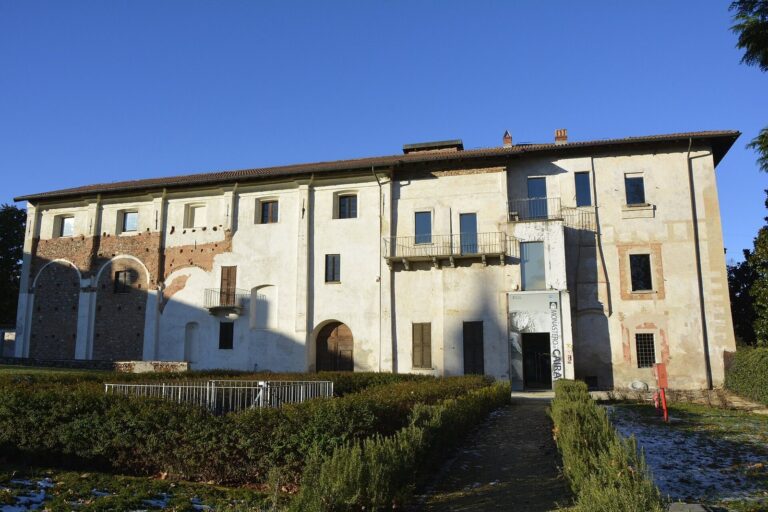
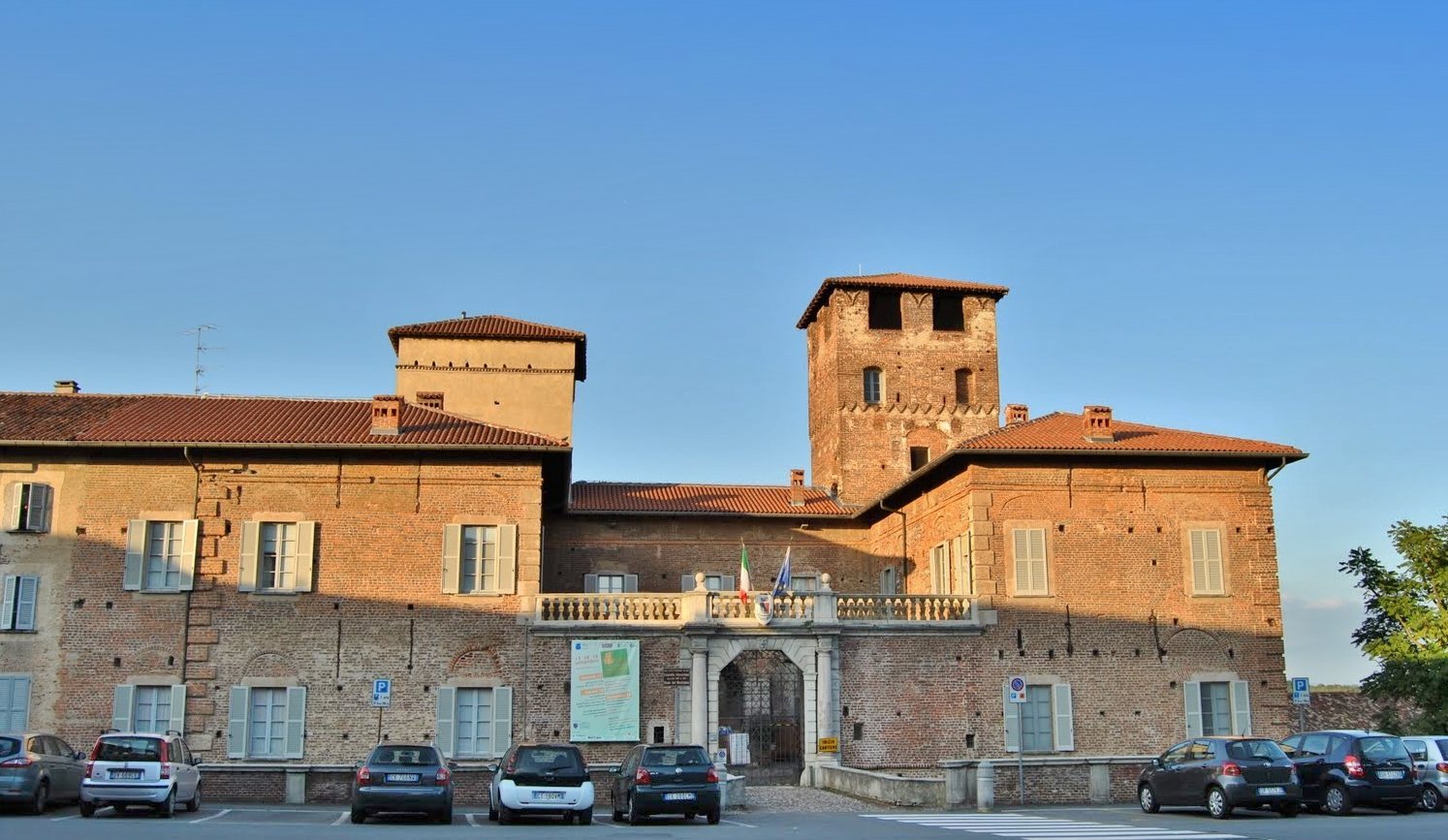
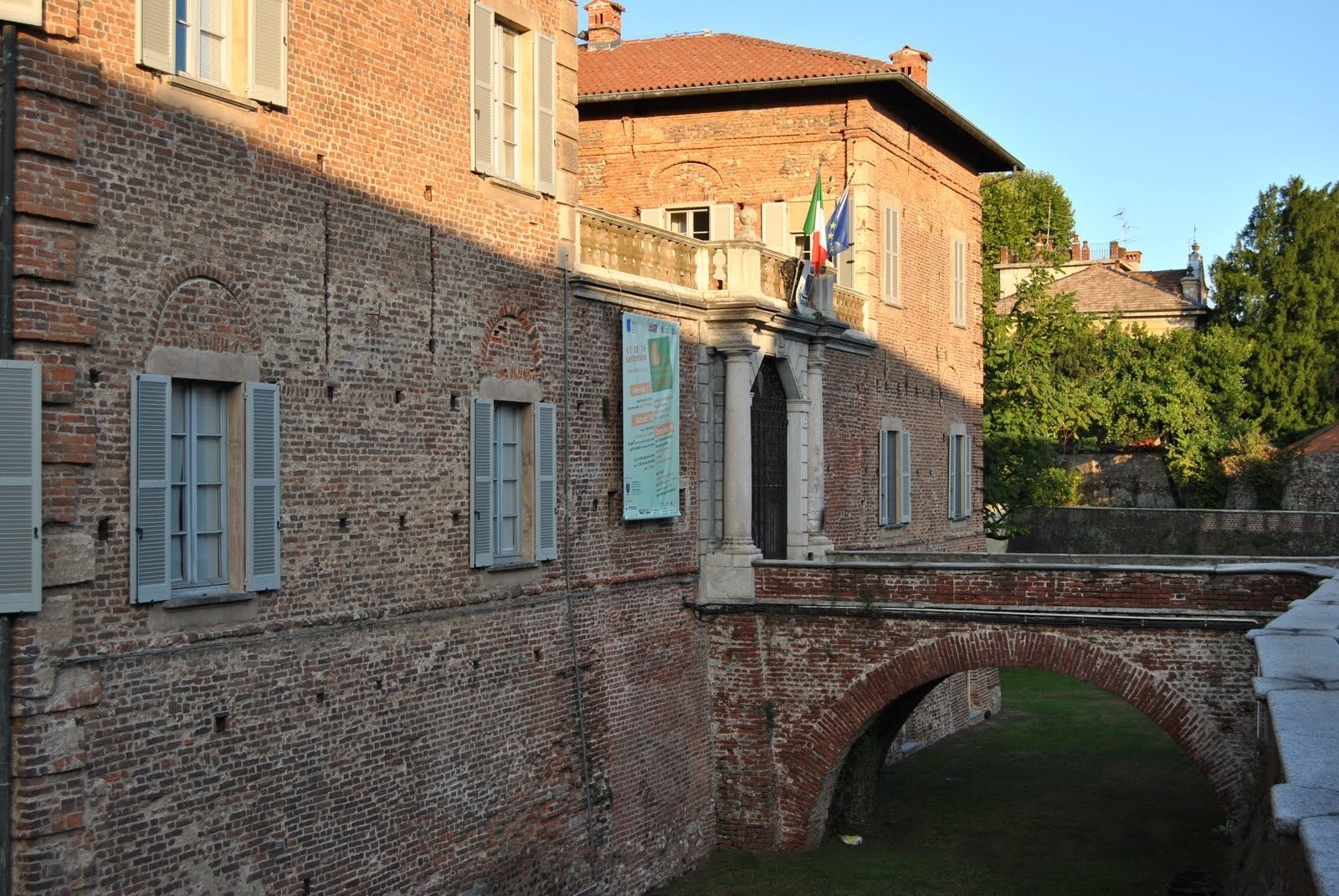
Built of brick, the castle combines medieval and Baroque forms. It stands on a steep slope between the town center and the Olona River, at the edge of the valley.
Building arrangement
Moat and entrance
A moat surrounds the castle and separates it from Fagnano’s earliest houses, in the area of present-day Piazza Cavour. A bridge crosses the moat to the main entrance.
Core, courtyards, and wings
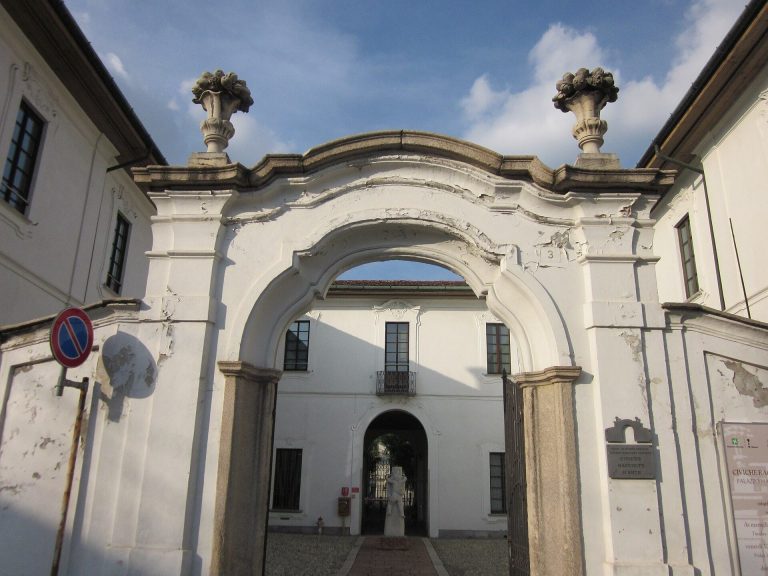
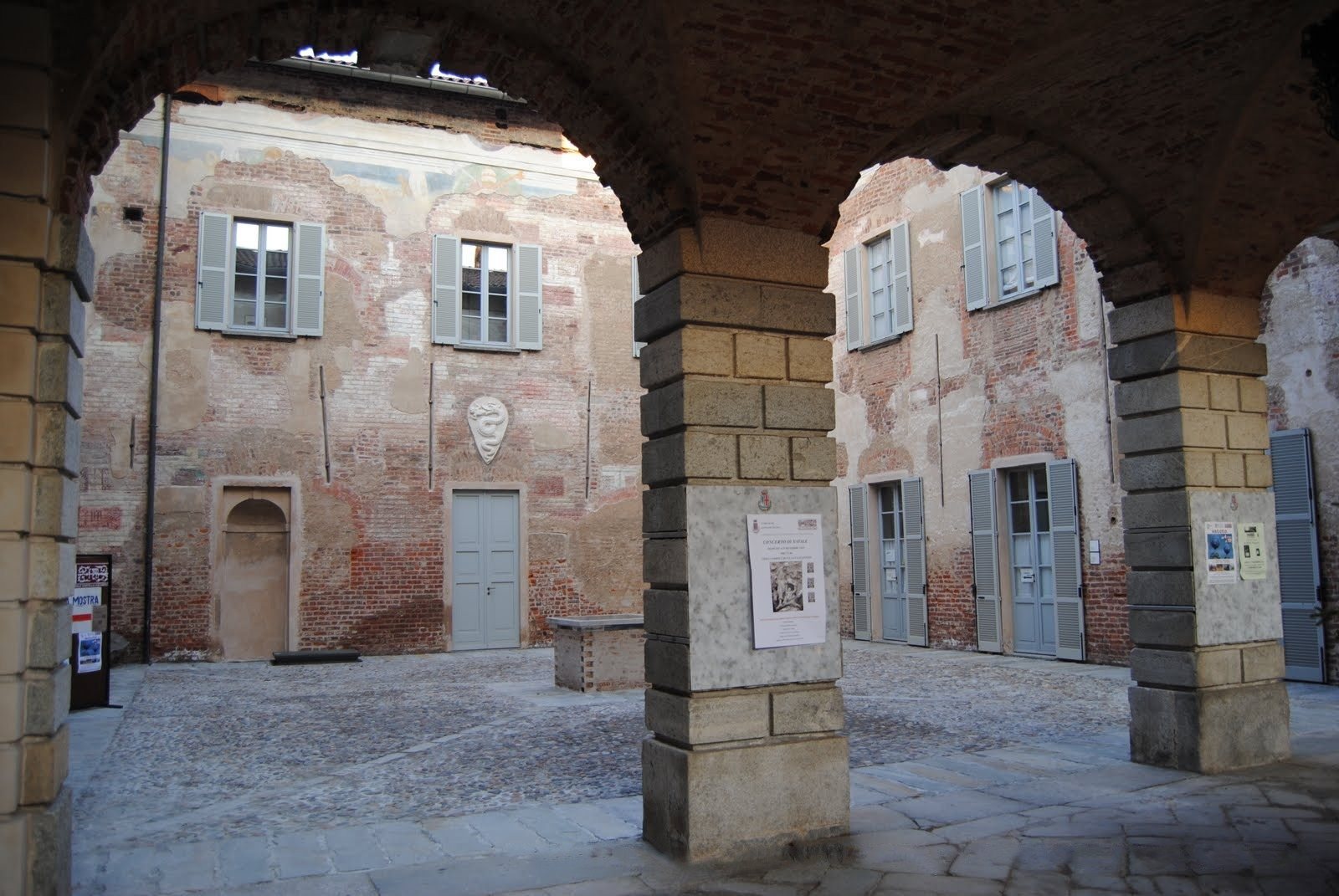
The older core consists of four building ranges arranged around a courtyard, together with two towers. The towers are probably associated with Filippo Maria, Count of Albizzate. The wing facing the town stands before the original courtyard and forms a second courtyard, reached through the newer entrance. Two additional wings extend south from the complex.
Decorative features
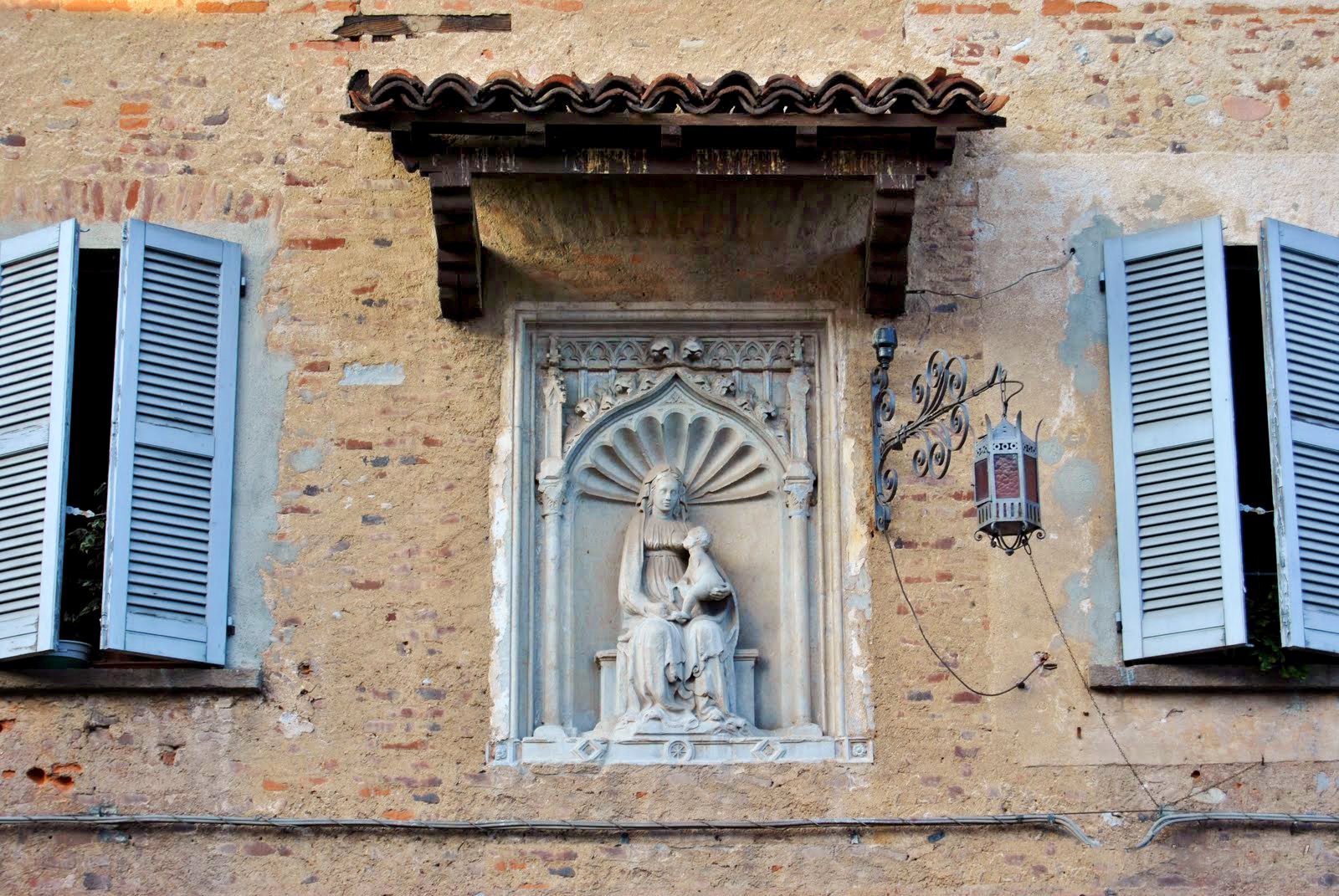
A Visconti coat of arms bearing the initials F and M, for Filippo Maria, is visible in the older courtyard. On the left side of the façade, a relief shows Our Lady of the Milk, a traditional image of the Virgin Mary nursing the infant Jesus. The castle is restored and in good condition.