Vetzberg Castle: A Medieval Hilltop Castle Ruin in Germany
Site at a Glance
- Rating
- 4.3
- Popularity
- Low
- Country
- Germany
- Primary era
- Medieval
- Eras represented
- Medieval
- Civilizations
- Holy Roman Empire
- Site type
- Military
- Remains
- Castle
On this page10 sections
History
Vetzberg Castle is a hilltop medieval castle ruin in Germany, probably built during the first half of the twelfth century. It stands in the village of Vetzberg, now part of the municipality of Biebertal in the Gießen district of Hesse, and was first documented in 1150.
A secondary castle of the Counts of Gleiberg
In 1226, the castle was recorded as Vogtisberg, a name from which Vetzberg developed. The name indicates that it served as a second castle of the Counts of Gleiberg, a medieval noble house associated with Gleiberg and the surrounding region of Hesse. Officials known as vogts occupied the site and carried out administrative, judicial, or protective duties on behalf of a superior lord.
From the middle of the thirteenth century, the castle was enlarged through the construction of a lower castle. A 1226 reference to Conradus de Deyrenbach, also known as Konrad von Dernbach, connects Vetzberg with the Dernbach Ganerbschaft. This was a form of joint possession in which several co-heirs held rights in the same castle or estate. The association became especially influential during the fourteenth and fifteenth centuries.
The Dernbach association and the castle’s decline
Members of the Dernbach family used the names von Dernbach and von Vetzberg, or Voitsperg, sometimes alongside additional bynames. Their possessions included Vetzberg Castle and the small motte castle of Alt-Dernbach near Herbornseelbach. After the Dernbach Feud, the branch that had been required to sell Alt-Dernbach to the Counts of Nassau built Neu-Dernbach at Dernbach before 1350. The new castle became the residence of the von und zu Dernbach family.
Inheritance divisions eventually created as many as 34 co-heirs with rights in Vetzberg. Some used the castle as a base for extensive brigandage, leading to repeated sieges and destructions. Frankfurt’s city commander carried out the last recorded destruction in 1463.
The Eternal Peace of 1495, an imperial measure intended to end private feuding and enforce public peace within the Holy Roman Empire, brought the conditions that had enabled this activity to an end. The last Vetzberg co-heirs subsequently abandoned the increasingly insignificant castle. In 1765, the four remaining co-heirs sold their rights and possessions to the Princes of Nassau-Weilburg. By then, the castle had become strategically and militarily obsolete, and it gradually decayed.
Preservation and historical memory
The Vetzberg Association was founded in 1965 to help preserve the ruins in cooperation with the municipality of Biebertal. The municipality has owned the castle since 1970. In 2016, loosened stones in the masonry of the main tower required the installation of netting and tension straps. Renovation was completed in 2022, restoring access to the tower.
Vetzberg Castle also entered the historical record through an artistic depiction. During the 1830s, the Hessian painter Carl Engel von der Rabenau created a watercolor over pencil showing the ruins near Gießen with vegetation, a wall, and a city view. Measuring 33.4 by 23.5 centimetres, the work has belonged to the Historical Museum Frankfurt since 1920.
Remains
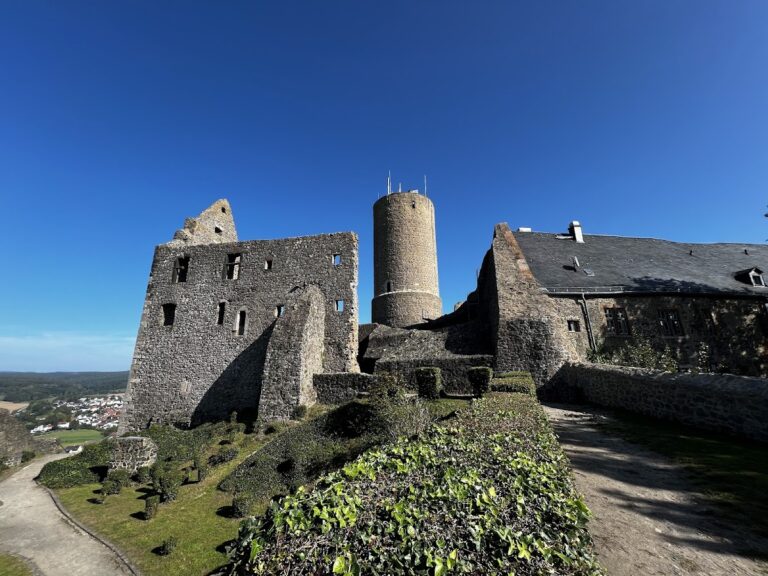
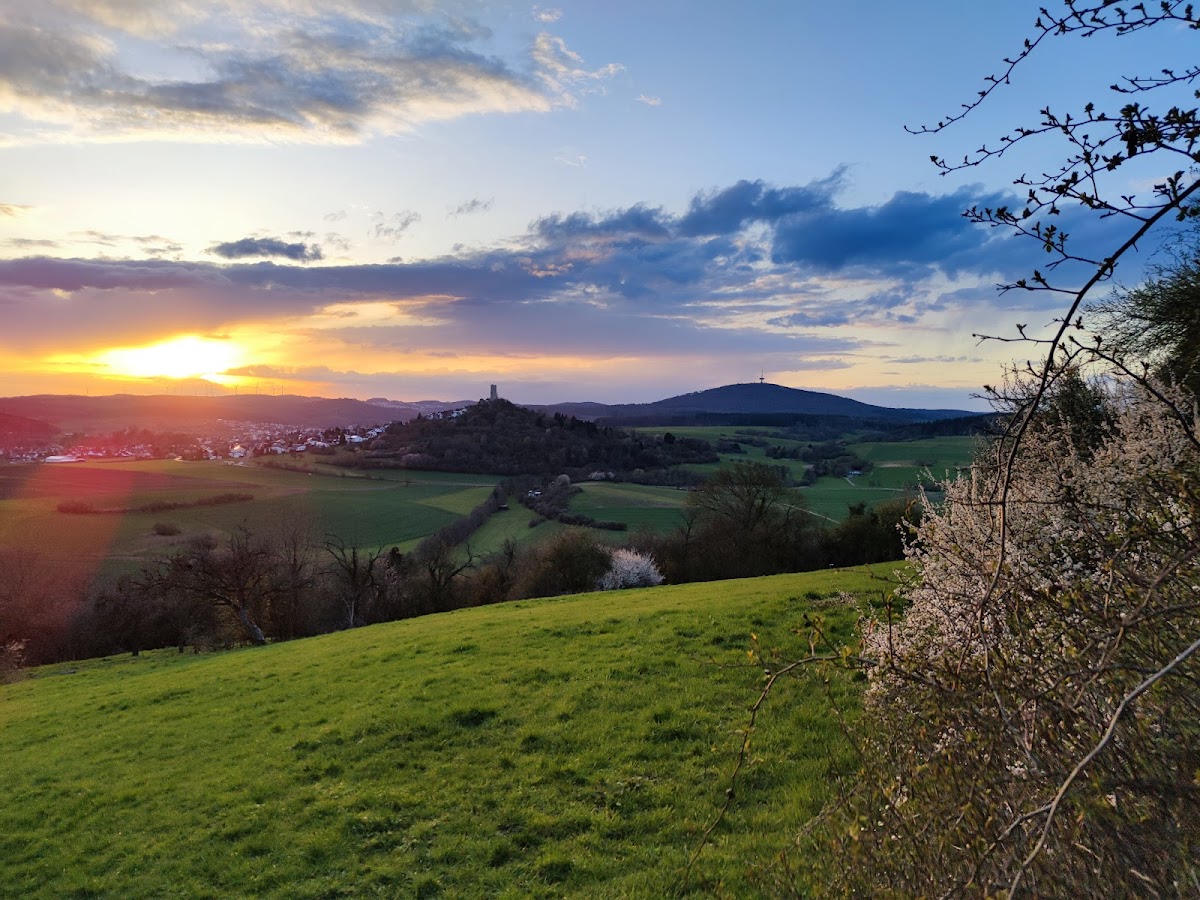
The ruined summit castle occupies the 310-metre-high Vetzberg, about 1.5 kilometres northwest of Gleiberg Castle in a straight line. Its surviving layout includes the 22.7-metre-high main fortified tower, the gable wall of the principal residential building, sections of the enclosing walls, and remnants of the lower castle.
Summit buildings and fortifications
Main fortified tower
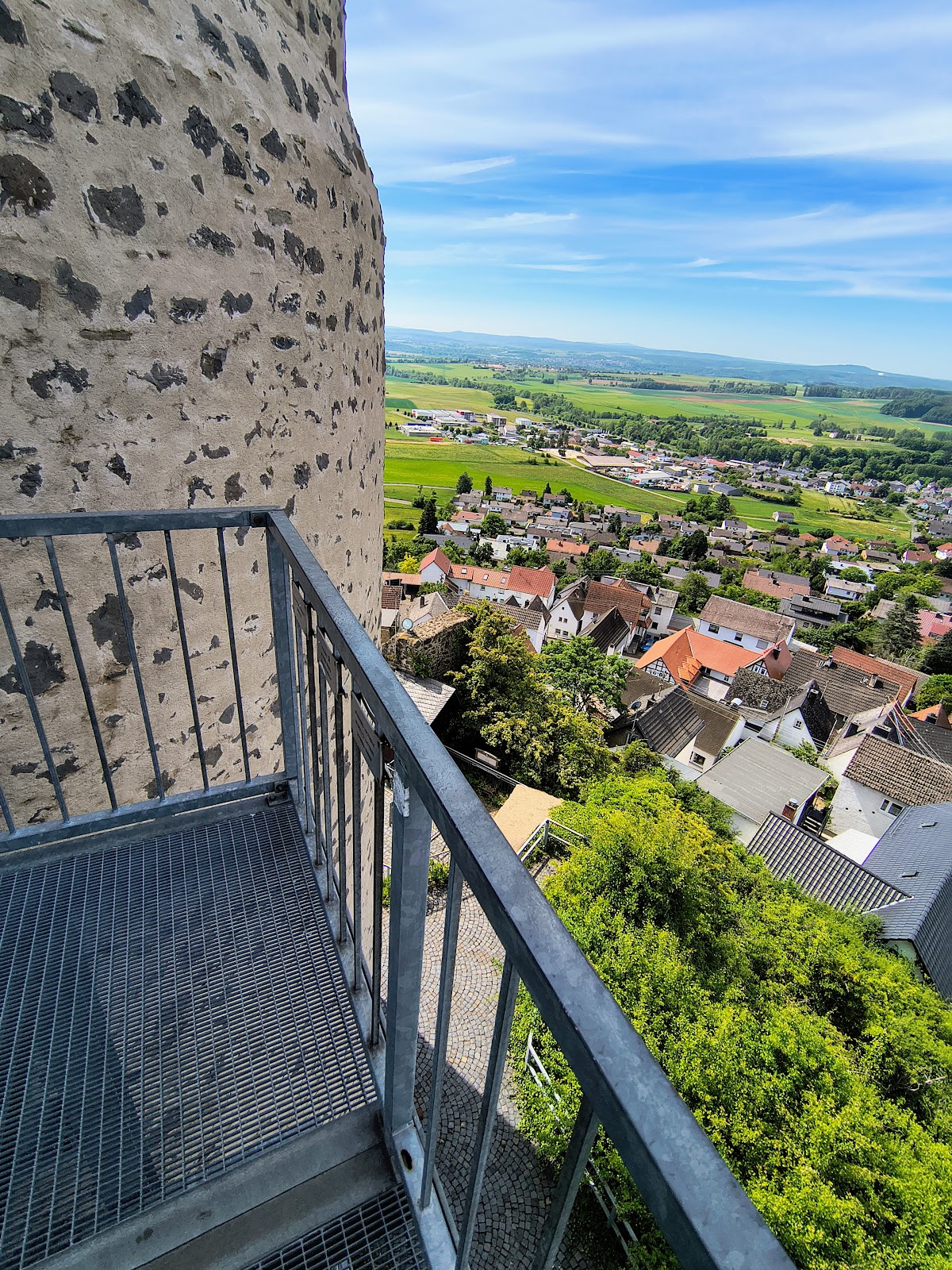
The Bergfried, the principal fortified tower used for defence and refuge, rises 22.7 metres above the summit. It contains three stories covered by domed vaults. Its original high entrances were placed in the middle story, at heights of 8.6 and 12.8 metres. The entrance used today was installed in 1935.
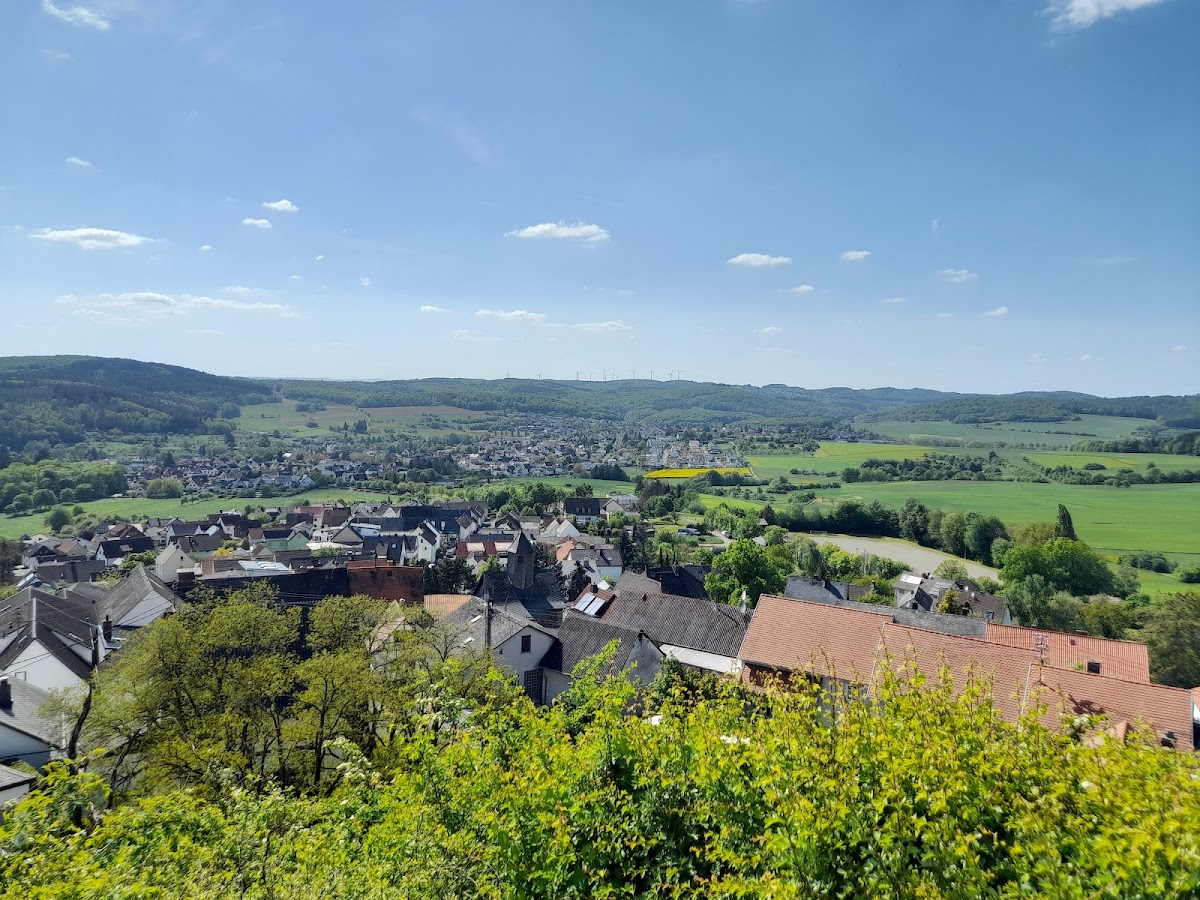
In 2000, the Vetzberg Association installed a steel staircase between the Palas, the castle’s principal residential or representative building, and the Bergfried. The staircase reaches a high entrance on the tower’s north side and continues to a small viewing platform overlooking the village of Vetzberg. A small balcony on the tower’s southeast side faces toward Gießen, while a second platform at about 21.5 metres is reached by steep stairs and prior arrangement.
Residential building and enclosing walls
The Palas survives mainly as a gable wall. Sections of the ring walls, which enclosed the castle summit, remain alongside it and help define the fortified area. Together with the tower, these fragments form the principal surviving structures of the upper castle.
Lower castle
Remnants of the lower castle survive below the summit fortress. This part of the complex was added during the expansion that began in the middle of the thirteenth century, extending the castle beyond its earlier core.
Condition and repair
The surviving structures remain in a ruined state. In 2016, stones had loosened from the tower masonry, and the Bergfried was secured with netting and tension straps. The renovation completed in 2022 restored the tower’s usable condition while preserving the surviving castle fabric.