Underground Basilica of Porta Maggiore: A First-Century Roman Basilica
Site at a Glance
- Popularity
- Medium
- Country
- Italy
- Primary era
- Classical
- Eras represented
- Classical, Modern
- Civilizations
- Italian, Roman
- Site type
- Religious
- Remains
- Basilica
On this page9 sections
History
The Underground Basilica of Porta Maggiore is an underground Roman basilica beneath Via Prenestina in Rome, Italy, generally dated to the middle of the first century CE. Considered the oldest pagan basilica in the West, it is also regarded as a precursor in form to Christian basilicas, which appeared centuries later.
Construction and use
The building is usually placed within the reign of either Tiberius or Claudius. Its construction has been linked to the Roman Statilius family, but the proposed builder is uncertain. One possibility is Titus Statilius Taurus, an associate of Augustus who served as consul in 11 CE. Another is his great-grandson. Agrippina the Younger accused the younger Taurus of practicing magic; he protested his innocence and died by suicide in 53 CE.
The basilica is believed to have served as a meeting place for Neopythagoreans, followers of a mystical philosophical tradition drawing on Pythagoras and Plato and emphasizing asceticism. It is described as the only historical site associated with that movement. Its exact purpose is not known. A place of Neopythagorean worship is considered the likeliest explanation, though a tomb or funerary basilica, a water-associated sanctuary, and a decorative summer retreat have also been proposed.
The building was abandoned less than fifty years after it was constructed. It came to light by accident on 23 April 1917, when a collapse during railway construction near Porta Maggiore exposed the underground chamber. The resulting subsidence disrupted both the railway works and the street-level tram line serving the Via Prenestina area.
Discovery and conservation
A reinforced-concrete enclosure was built in 1951 to reduce damage from tram vibrations and water infiltration, and was later used as a small museum. It did not prevent all deterioration, and an external parasite damaged the stucco. The basilica subsequently underwent restoration. Air purifiers address radon, while temperature and humidity are kept within a narrow range. The site is recognized as Italian national heritage.
Remains
Plan and construction
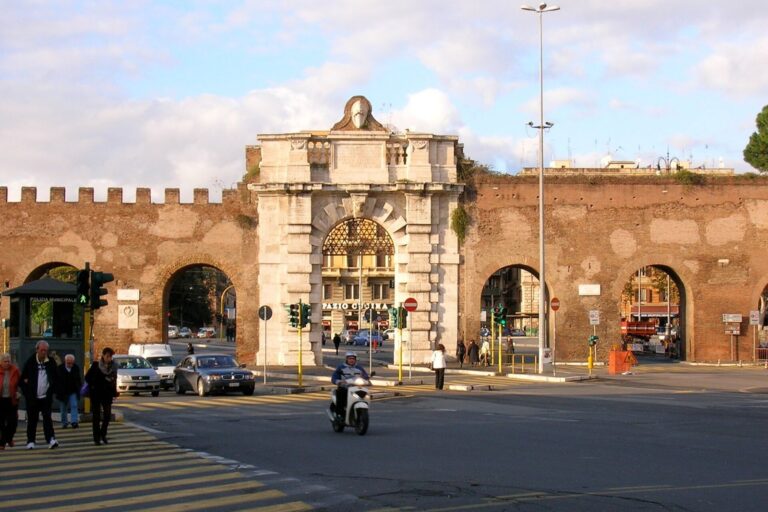
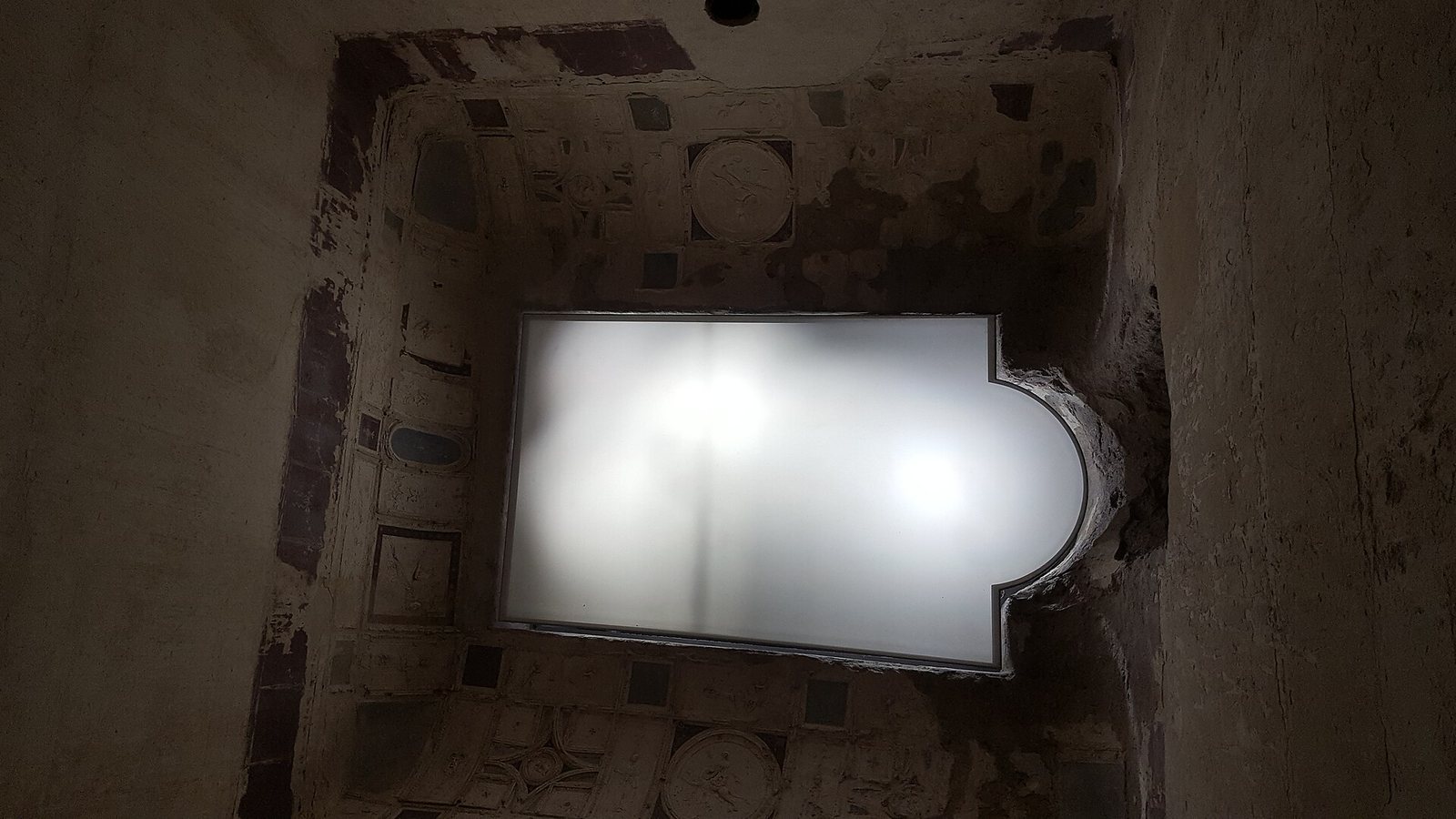
Built underground just west of Porta Maggiore, the basilica consists of a small entrance vestibule and a larger rectangular hall. Its original approach descended from Via Prenestina through the vestibule; the stairway now leading to it is modern. The vestibule measures 3.62 by 3.50 metres, and an opening in its ceiling provides the building’s only natural light.
The main hall measures 12 by 9 metres, with its floor about seven metres below street level. Its basilical plan, a long central hall flanked by side aisles, is formed by two rows of three large rectangular rock pillars. Each pillar measures 1.15 by 0.95 metres and supports arches that divide the hall into three vaulted aisles. The central aisle is wider and ends in a rounded apse. The pillars were formed in excavated underground spaces using an aggregate of cement fragments. After the material hardened, an opening at the vault’s crown allowed the soil to be removed.
Stucco reliefs
Vestibule and entrance partition
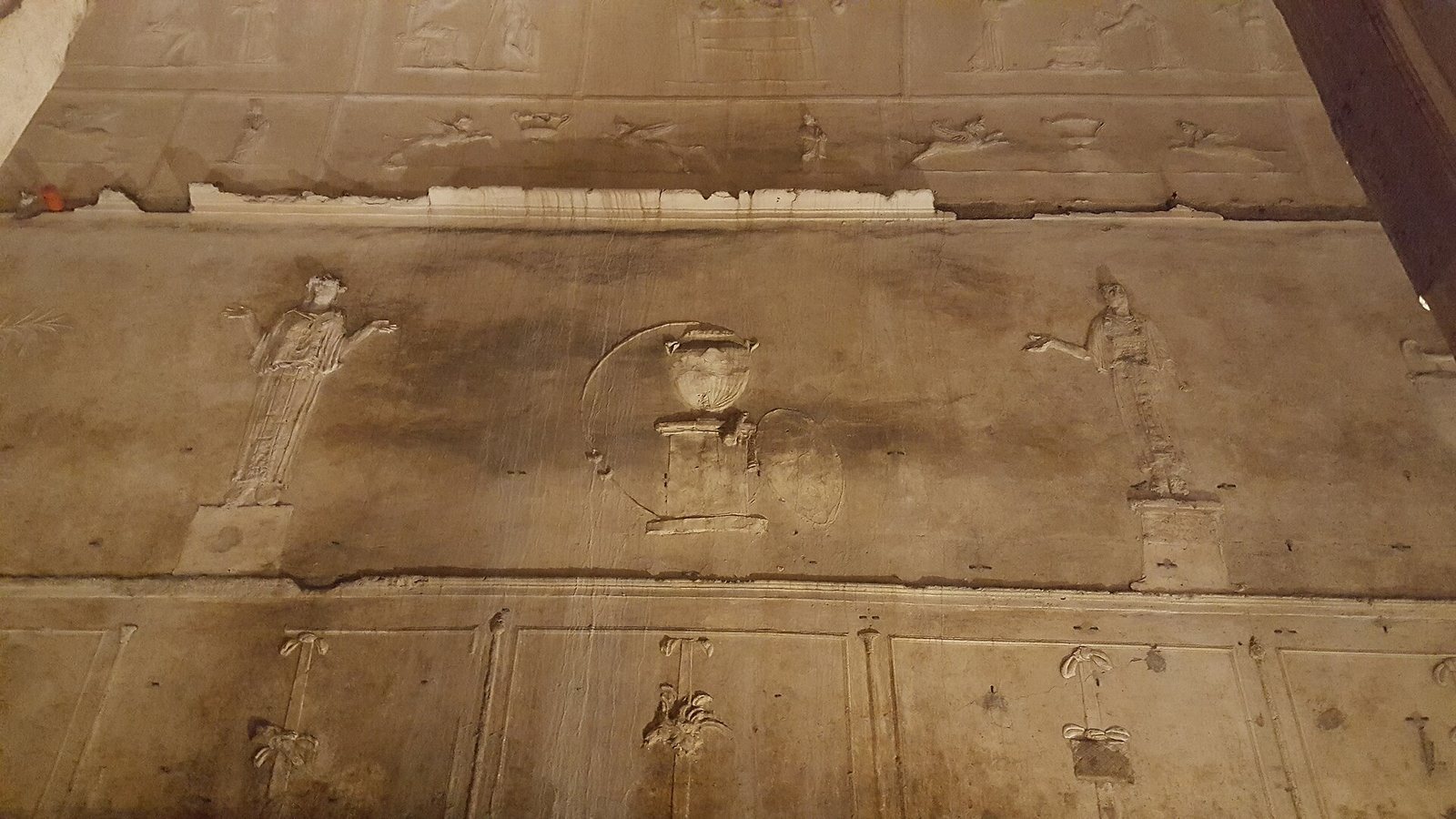
White stucco, a fine plaster used for molded decoration, covers the walls and vaults of both rooms. In the vestibule, relief panels survive on three sides against colored backgrounds. Their subjects include a winged Victory, and Maenads, women taking part in ecstatic Greek religious rites, riding panthers and carrying ritual staffs. The lower sections include trees and columns; other scenes show Cupids, winged figures associated with love, riding goat-drawn chariots or pouring water, a symbol of eternal life. On the partition between the vestibule and hall, a large head of Oceanus appears between two sea deities.
Main hall
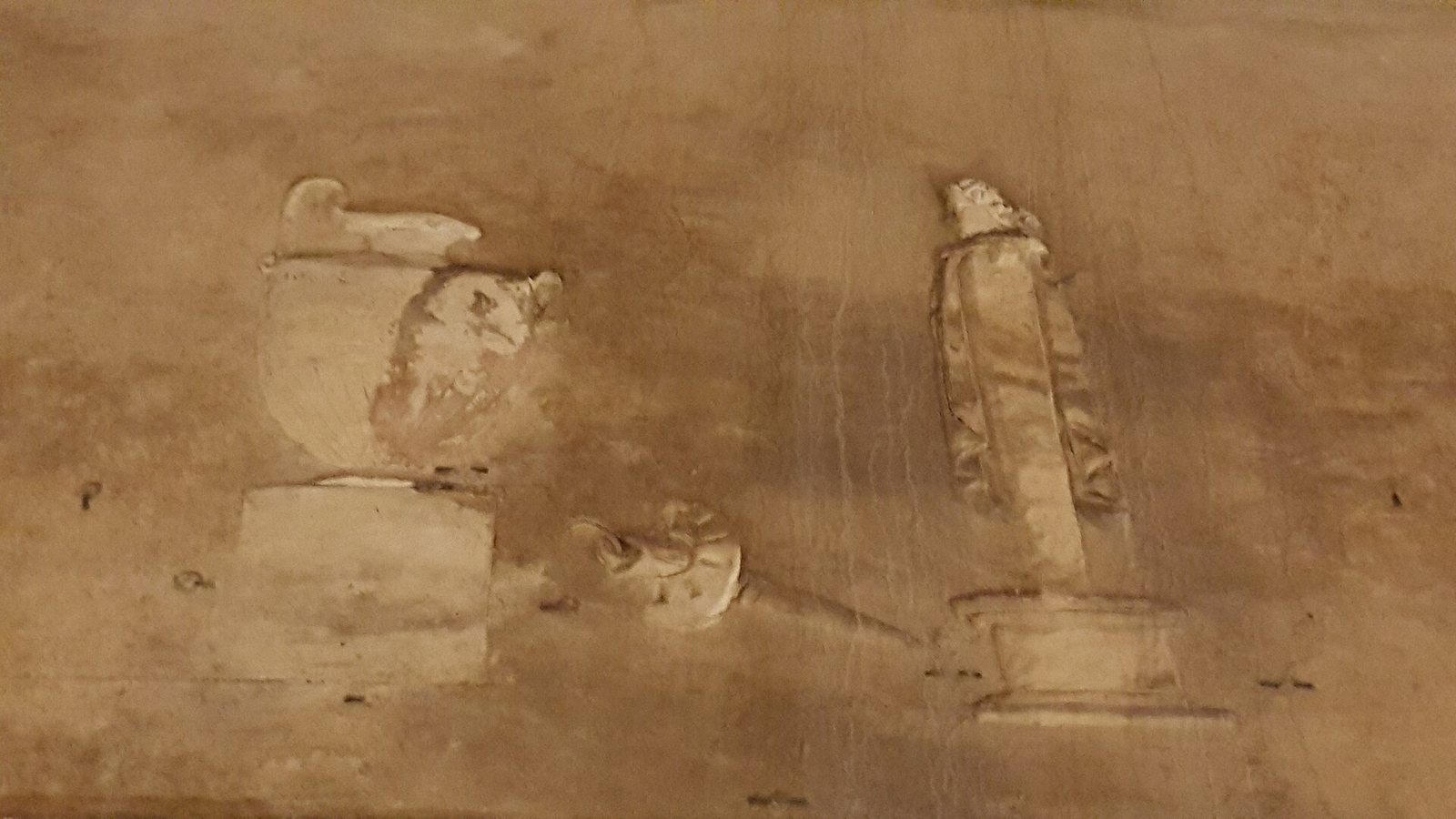
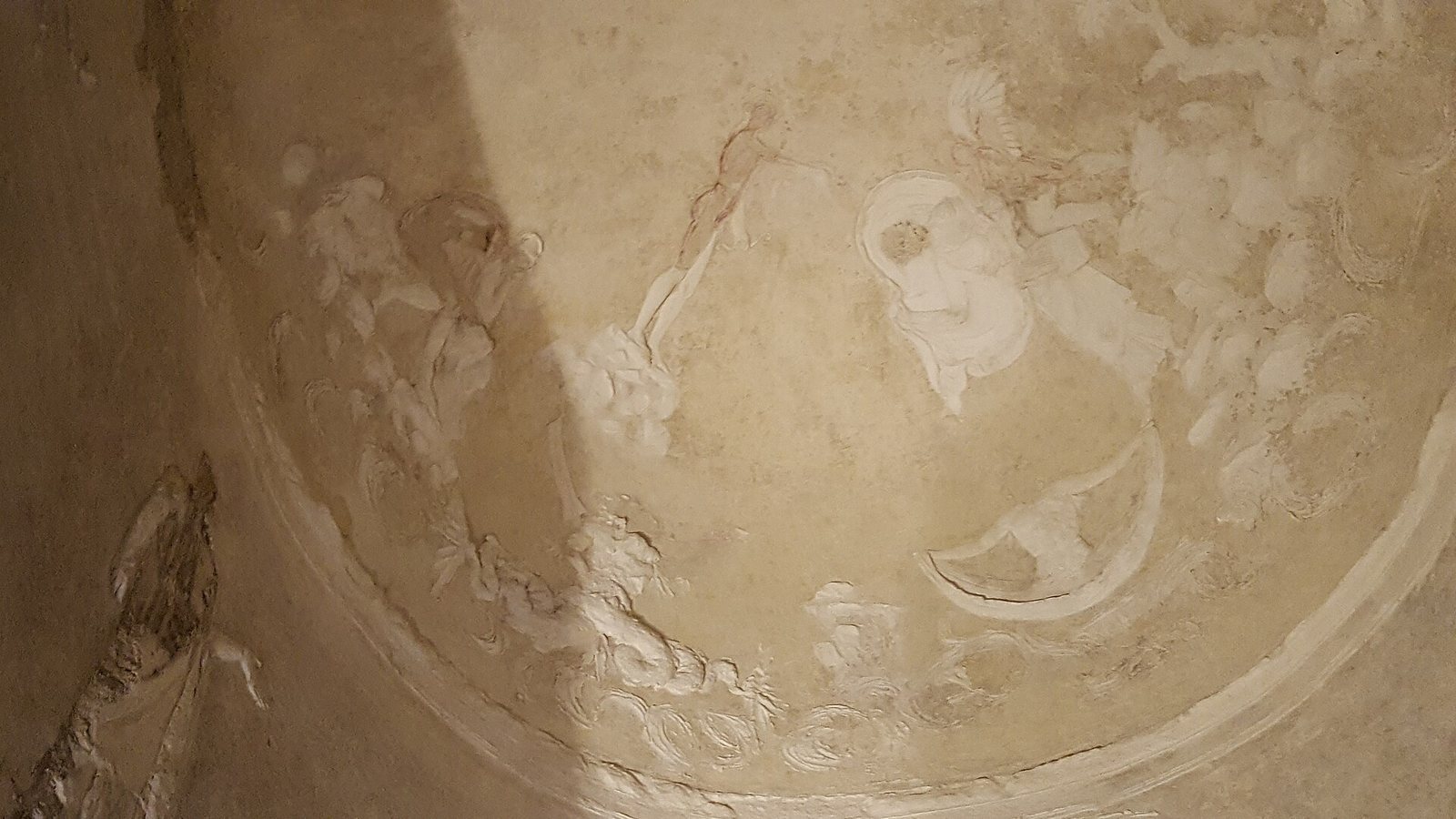
The main vault includes a large scene of Zeus carrying off Ganymede, surrounded by figures of Attis, palm-leaf ornaments, and Cupids. Other reliefs depict Medea offering a potion to the dragon guarding the Golden Fleece so Jason can take it, Hercules and Hesione, Victories with candelabra, a Medusa head, and a teacher with pupils. Countryside scenes, magicians, and the twin heroes Castor and Pollux with the daughters of Leucippus also appear. Further subjects include playing children, figures being led to the underworld, a wedding rite, worship objects, animals, and a pygmy returning from a hunt. Centaurs, griffins, satyrs, Achilles, Orpheus, and Paris are among the other mythological figures represented.
Apse
In the apse, a winged Victory offers a wreath to a praying figure. Its reliefs also show Apollo standing on a rock with his bow, a sorrowful man, and Triton carrying an oar and conch. A scene in the domed end has been interpreted as Sappho’s death, though the identification is disputed. The stucco decoration remains exceptionally well preserved, a condition attributed to the basilica’s brief period of use.