Ujarma Fortress: A Royal Residence and Fortress-Town in Georgia
Site at a Glance
- Country
- Georgia
- Primary era
- Classical
- Eras represented
- Classical, Medieval
- Civilizations
- Unclassified
- Site type
- Military
- Remains
- Fortified Town
On this page12 sections
History
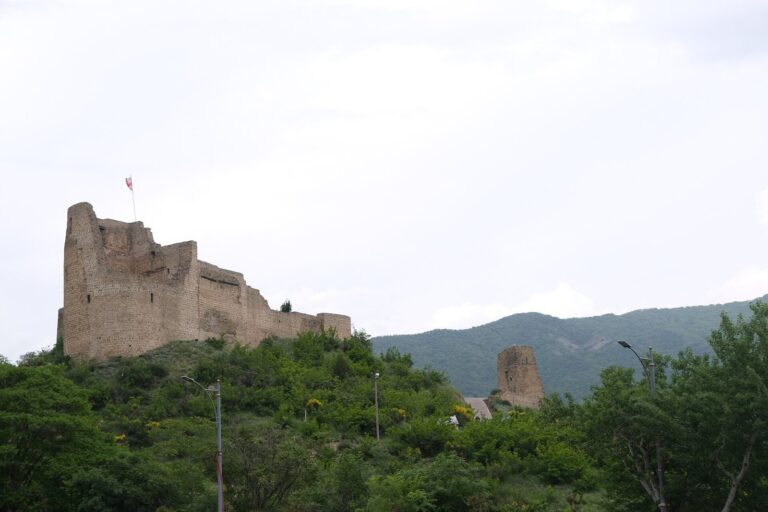
Ujarma Fortress is a fortress-town in Georgia, on a high hill beside the right bank of the Iori River near Gombori Pass. Its foundation is dated to the turn of the third and fourth centuries and attributed by the medieval Georgian chronicler Leonti Mroweli to Aspacures I, king of Iberia, the ancient kingdom of eastern Georgia. Ujarma later served as a royal residence and played an important role in the kingdom’s history from the fourth through the eighth centuries.
Foundation and Christian traditions
Georgian Christian tradition links the fortress to Saint Nino, whom it credits with bringing Christianity to Iberia. It says that Nino placed the second of three crosses at Ujarma, after placing the first on Mount Tkhoti, and that a church was later built there in her memory. Nino is also said to have stayed at Ujarma and preached to nearby highlanders, possibly the Pshavs of the upper Iori, a Georgian highland people.
Salome of Ujarma may have joined Nino there. Salome was the wife of Rev, son of King Mirian, who then held Ujarma, and she later recorded Nino’s life.
Royal residence
During the periods of Vakhtang Gorgasali, a fifth-century king of Iberia, and Dachi, a king of the following period, Ujarma was enlarged and used as a royal residence. Vakhtang made it one of his residences in the second half of the fifth century. The fortress-town flourished, and Vakhtang died there from severe wounds.
Attacks, restoration, and decline
Arab forces captured and sacked Ujarma in 914, inflicting severe damage. In the tenth century, the Arab conqueror Abul Kassim destroyed the upper fortress. King George III, who ruled Georgia from 1156 to 1184, restored Ujarma in the twelfth century and used it as his treasury.
The town subsequently declined and continued as a small settlement. Mongol rule in Georgia during the thirteenth century, followed by the division of the Kingdom of Georgia into separate kingdoms in the late fifteenth century, further diminished its importance. The fortress was eventually abandoned. On 7 November 2006, it was designated an immovable cultural monument of national significance by decree of the president of Georgia.
Remains
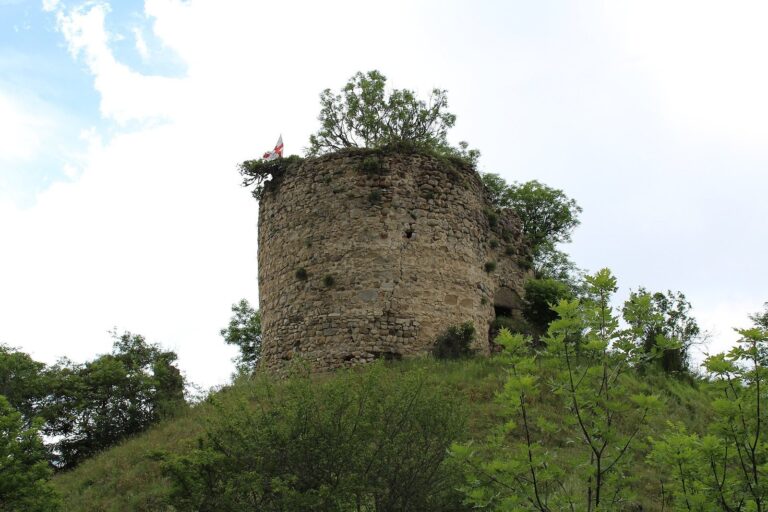
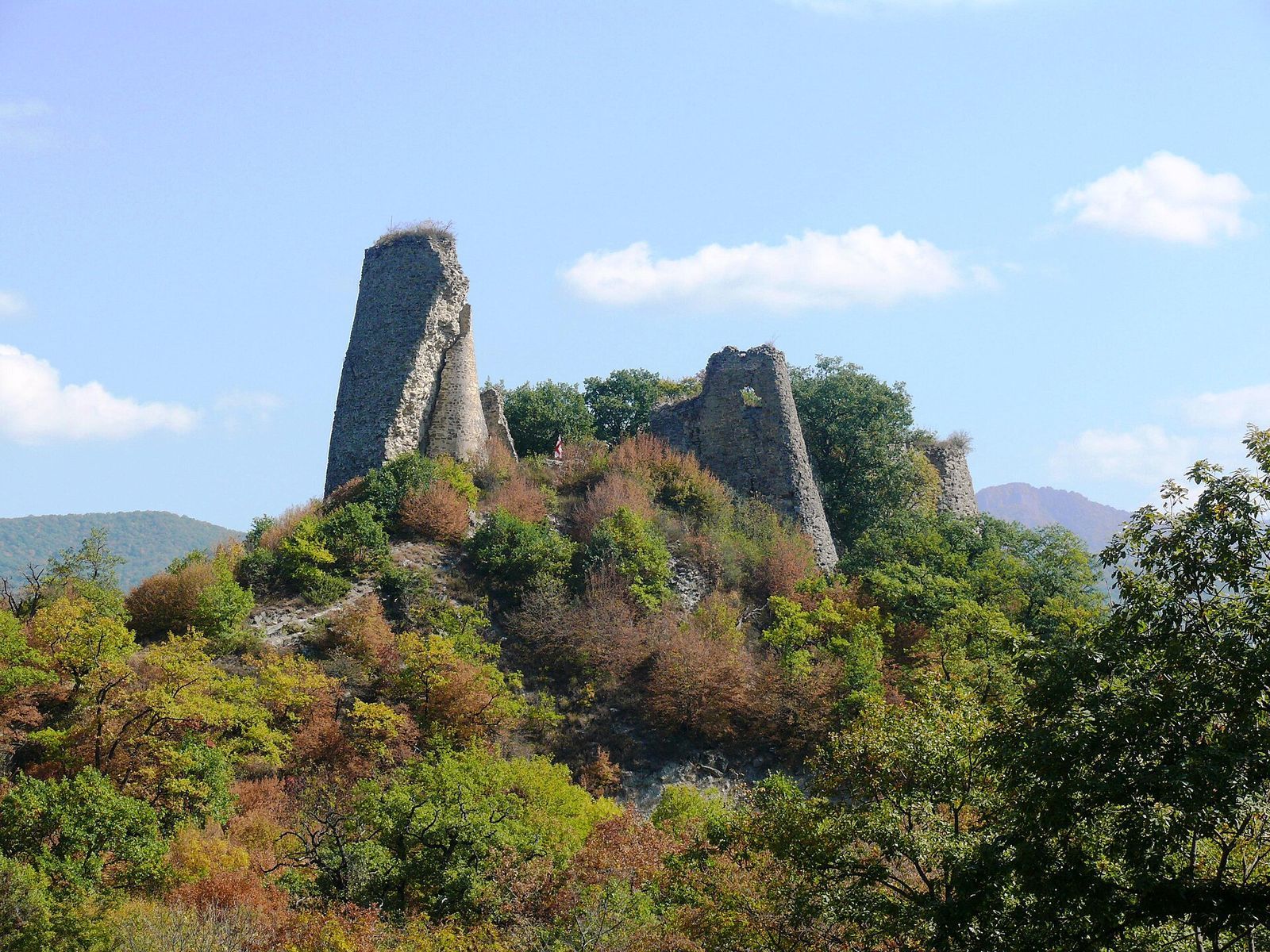
Ujarma’s remains occupy a high hill on the Iori River near Gombori Pass. The fortress-town was arranged in an upper fortress, or citadel (the settlement’s upper fortified enclosure), and a lower city, and guarded a narrow passage along the river. Its surviving features include defensive walls and towers, palace and residential buildings, and churches. Recorded church construction includes large stone slabs, sandstone, and brick.
Citadel and inner buildings
The citadel contained towers and strong walls, along with palaces and churches. Watchtowers also stood within the main fortified area.
Palace and residential buildings
A two-storey royal palace stood in the eastern part of the citadel. Ruins of a two-storey residential building have also been found in its northeastern corner.
Church of Jvarpatiosani
The two-storey Church of Jvarpatiosani, a name referring to the Venerable Cross, is built into the fortress. Its first storey is older than the second, which was added in the tenth or eleventh century. The upper church is a high, single-hall space with windows on its eastern and western sides. Its walls use large stone slabs, and some blocks came from older masonry.
Walls and towers
A fortress wall ran north down a steep, rocky slope to the riverbank. Nine towers stood at regular intervals along it. Troops were housed on the towers’ second and third storeys. Their roofs were flat and enclosed, with solid raised blocks separated by openings around the edges and a passage behind them.
Lower city and riverside remains
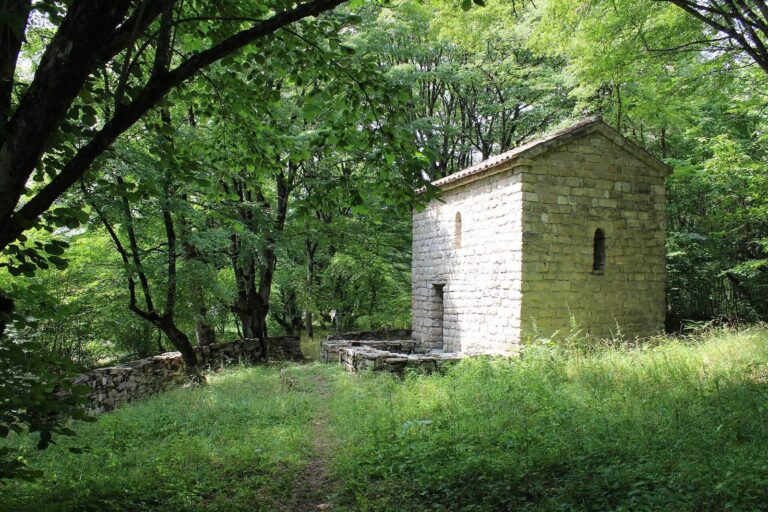
The lower city had several gates, including its main gate on the fortress’s western side. A church also stands by the Iori River.
Riverside church
The riverside church has sandstone and brick walls, with diamond-patterned masonry along its projecting roofline. A newer church is attached on the south side, with an underground chamber beneath it. Traces of an older wall are visible nearby. Remains of a fortress attributed to Aspacures I may have been located in this area.
Excavated objects and graves
Excavations in the fortress-town uncovered glass and bronze bracelets, bronze rings and buttons, ritual wine jars, and a bread oven. Graves found in the area date to the twelfth and thirteenth centuries.