Birthplace of Vuk Karadžić: Memorial House and Cultural Site in Tršić
Site at a Glance
- Country
- Serbia
- Primary era
- Modern
- Eras represented
- Modern
- Civilizations
- Serbian
- Site type
- Civic
- Remains
- Monument
On this page11 sections
History
The Birthplace of Vuk Karadžić is a memorial site in Tršić, Serbia, where the Serbian writer and linguist was born in 1787; its memorial house was completed in 1933. Karadžić became a principal reformer of literary Serbian.
Birth and early history
Karadžić’s family settled in Tršić after leaving Herzegovina to escape Ottoman reprisals. His grandfather, Joksim Bandula, built the family’s original wattle house. Karadžić recorded that the Turks burned his birthplace ten times during the rule of Karađorđe, a Serbian revolutionary leader in the struggle against Ottoman rule.
Commemoration and the memorial house
In 1897, as Karadžić’s remains were transferred from Vienna to Belgrade, local residents Gajo Matić and Kojo Marjanović erected a large oak cross at the original house site to preserve its memory.
An initiative by the Loznica educational society “Karadžić,” the association of people from Podrinje, and the Šabac Public Library led to plans for a memorial house. A committee formed in 1931 to raise funds for the house, a cultural center in Loznica, and a monument to Karadžić in Belgrade. In 1932, it appealed for contributions, and the Ministry of Education required schools throughout Yugoslavia to collect funds for all three projects in 1932 and 1933.
Money for the house was raised quickly, and construction finished in 1933. The house was consecrated on September 17, when the first Vuk Assembly, a cultural gathering named for Karadžić, took place in its courtyard.
Cultural complex
In 1964, student work brigades built an amphitheater for the Vuk Assembly and the Schoolchildren’s Vuk Assembly, marking a century since Karadžić’s death. Tršić acquired a unified appearance as a cultural-historical monument complex in 1987. The memorial house is part of the Vuk Karadžić Cultural Center and is designated in Serbia as both a cultural monument of exceptional importance and a memorial site of exceptional importance.
Remains
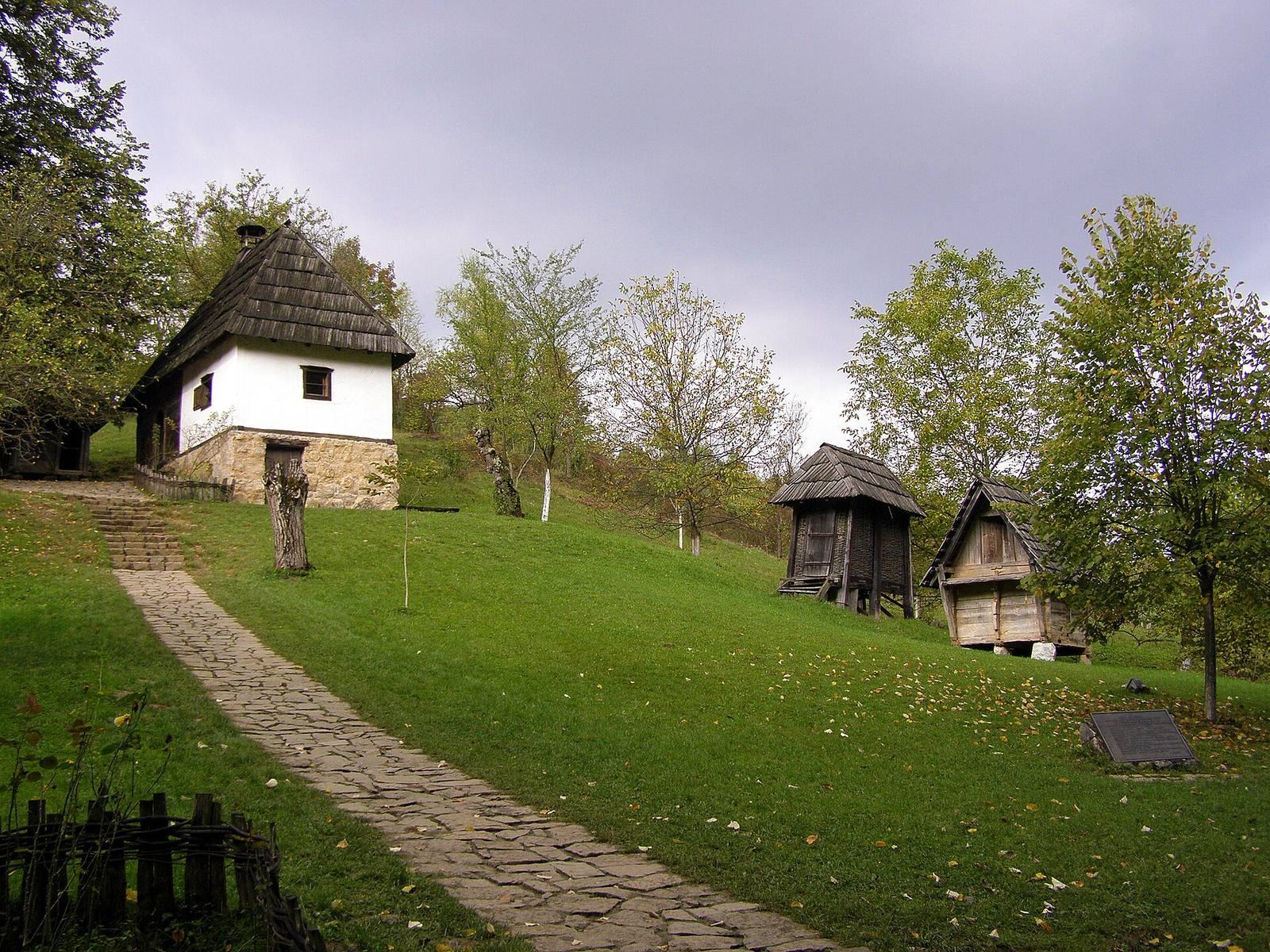
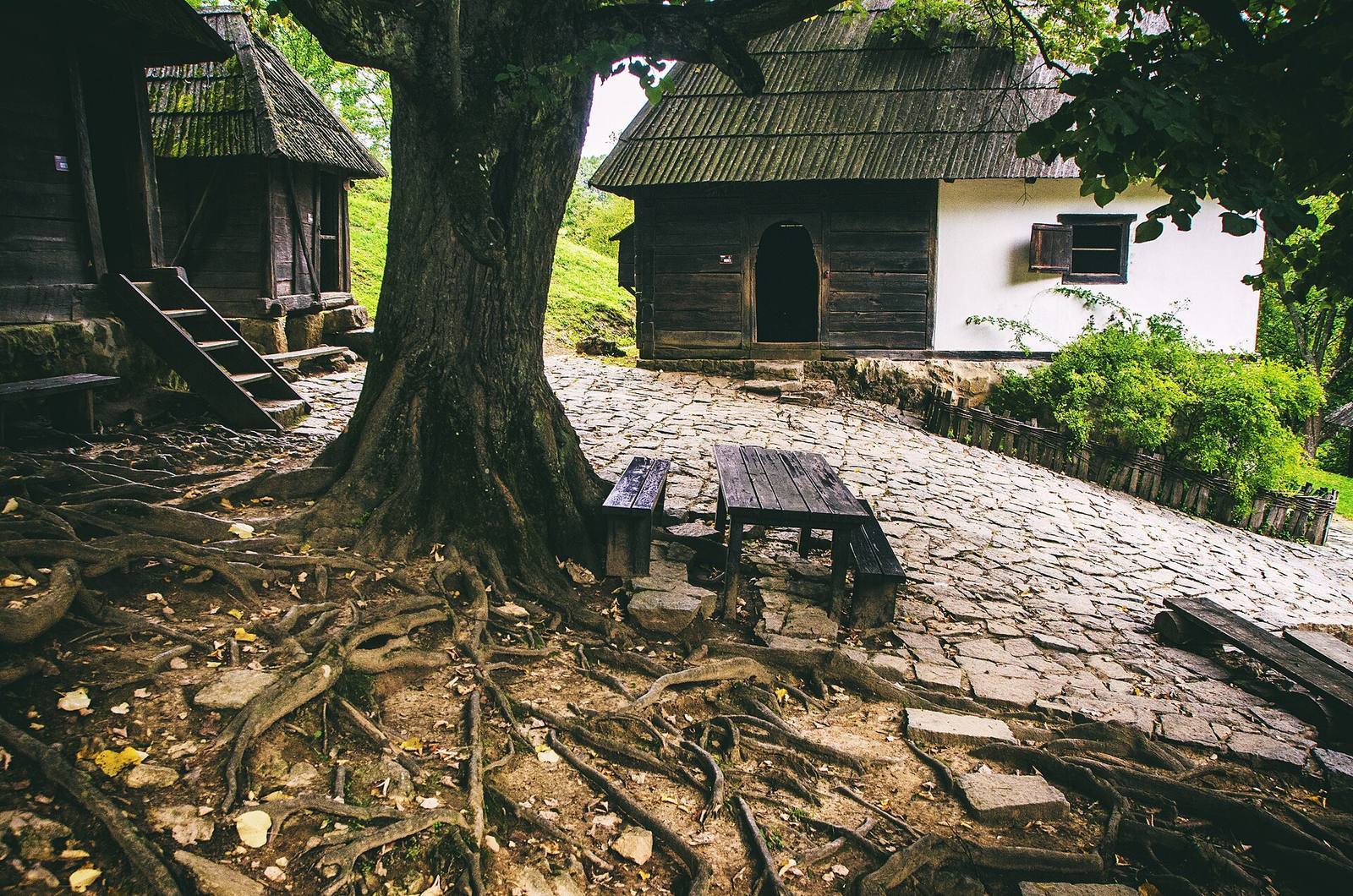
The memorial house and its courtyard form a group of traditional buildings and commemorative features. The house combines timber and masonry construction, while separate courtyard structures reflect domestic and agricultural life in the Tršić region.
Memorial house
Building form
The house stands on the site of Karadžić’s birthplace. Its entrance section is a wooden log structure, joined to a masonry room built above a cellar. This arrangement follows a traditional house form in which the living room sits over a cellar. A steep roof covered with wooden shingles shelters the building.
Interior
An open hearth, furniture, and utensils fill the entrance section, reflecting the character of nineteenth-century homes. The room contains a bed, table, bench, icons, and a portrait of Karadžić dated 1816 and painted by Pavel Đurković. It also holds a gusle, a traditional Serbian bowed string instrument often used to accompany epic songs.
Courtyard buildings and memorial features
Traditional outbuildings
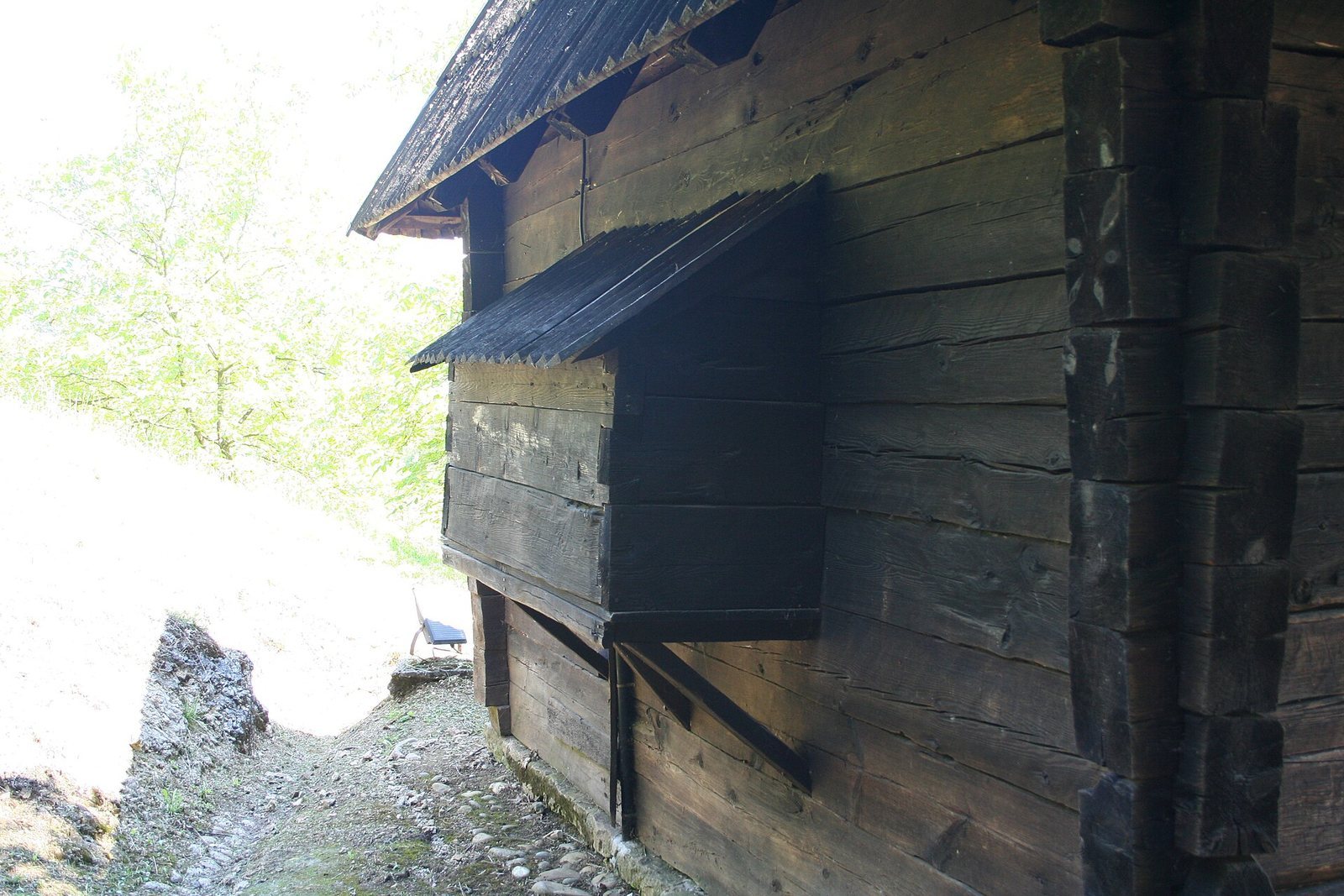
The courtyard contains a vajat, a small detached outbuilding, and a kačara, a traditional brandy-making shed, as well as a grain store and a corn crib. Together with the house’s furnishings, these buildings represent customs and traditions of the Tršić region.
Oak cross and amphitheater
A large oak cross stands at the memorial house. The courtyard amphitheater has a stage used for cultural gatherings.