Uhrovec Castle: A Medieval Fortress in Slovakia
Visitor Information
Google Rating: 4.7
Popularity: Medium
Official Website: www.hraduhrovec.sk
Country: Slovakia
Civilization: Early Modern, Medieval European
Site type: Military
Remains: Castle
History
Uhrovec Castle is situated near the municipality of Hrad in present-day Slovakia. It was originally built by the medieval Hungarian nobility sometime around the mid-13th century, in the aftermath of the devastating Mongol invasions of the 1240s that affected Central Europe.
The castle first enters written records in 1295 under the name Castrum Ugrog. At that time, it was held by Peter, son of Bašo, a noble who served as a local governor (župan) of Trenčín. That year, Peter transferred the castle to Matthew Csák, one of the most powerful magnates in the region, in exchange for lands in Tekov. Documents from 1297 indicate this transfer was made under pressure, suggesting political coercion and the complex power struggles of the era. Following Matthew Csák’s death in 1321, the castle returned to royal hands under King Charles Robert of Hungary.
In the late 14th century, specifically in 1388 or 1389, Emperor Sigismund of Luxembourg awarded the castle to Stibor of Stiboricz, a prominent Hungarian magnate and the governor (Voivode) of Transylvania. This period marked further significance for the castle within the shifting regional balance of power. During the 15th and 16th centuries, ownership changed multiple times. Among the known owners were members of the Pongrác family from the Liptov area, who not only expanded the castle’s defenses but also reportedly used its dungeons for counterfeiting operations.
Around 1540, the castle came into the possession of Peter Szilágyi after being pawned by King Ferdinand I. Upon Peter’s death, the estate was inherited by his widow Brigida. It was during this ownership that the castle underwent Renaissance-style updates, including the construction of a lower castle section with round towers adapted for artillery defense. Following Brigida’s widowhood and subsequent legal disputes over ownership, the castle was officially granted in 1547 to Francis Zay. The Zay family maintained control over the property for several centuries afterward.
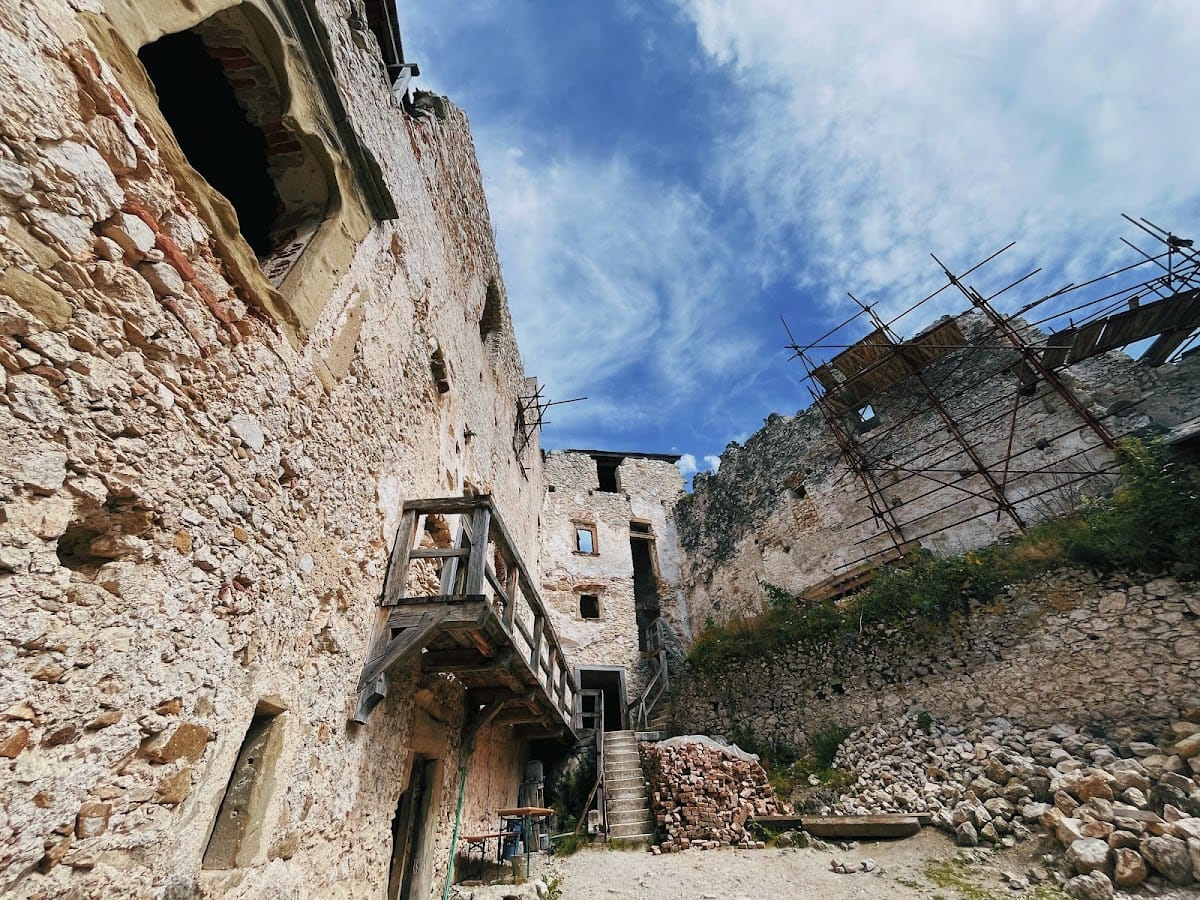
By the early 17th century, the Zay family had relocated to a more comfortable manor house, relegating Uhrovec Castle primarily to guarding and economic activities rather than as a noble residence. Over the 18th century, the castle was gradually deserted and fell into disrepair. A fire in June 1848 caused extensive damage, and the castle was never rebuilt after this event. Its remote mountain location spared it from damage during Ottoman incursions and the kuruc uprisings. More recently, in the 21st century, a foundation has been established to conserve and maintain the castle ruins.
Remains
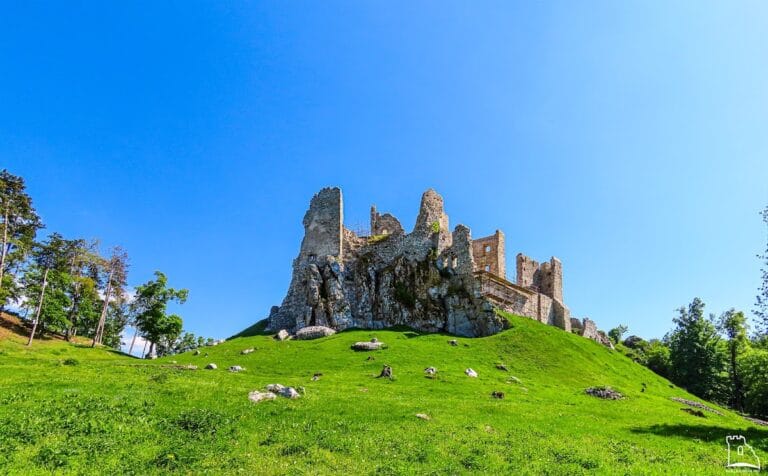
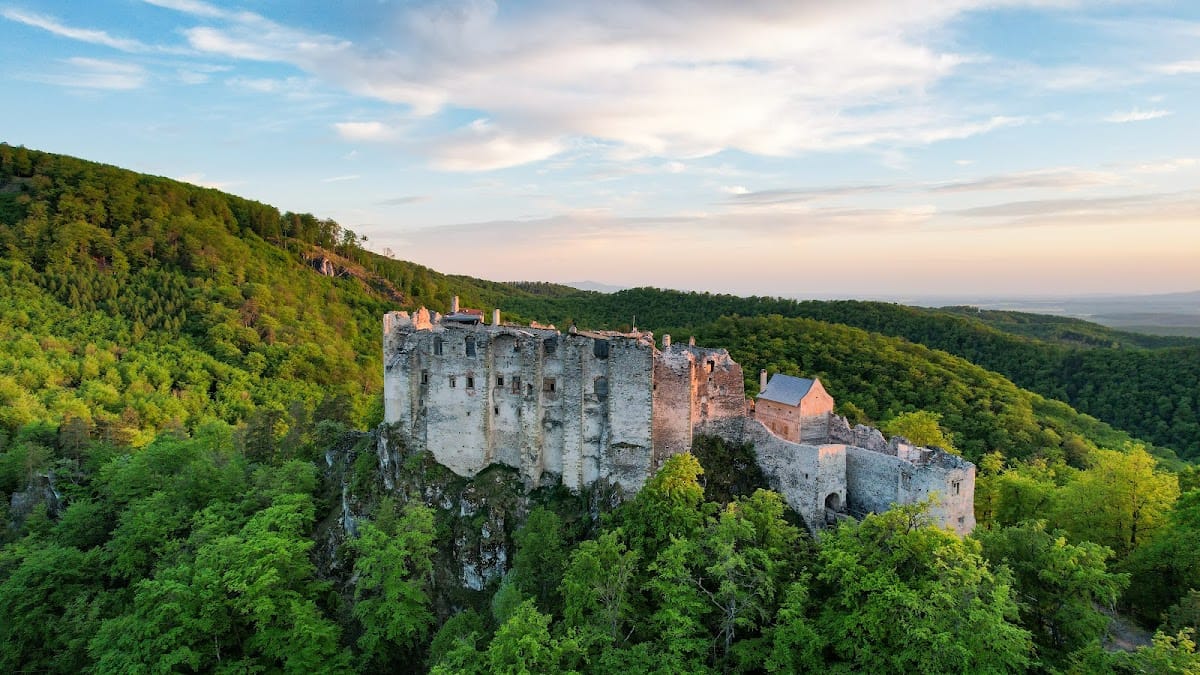
Uhrovec Castle was originally built on a rocky ridge arranged around a triangular courtyard. The earliest constructions date back to the mid-13th century and display Romanesque architectural features. The castle’s initial layout included thick stone walls and defensive fortifications arranged to take advantage of the natural rocky spur. Access to the courtyard was controlled through a gate topped by a tower. Within the castle grounds stood a large palace dominating the complex, with a small attached chapel located at the far end of the rocky outcrop. Despite later changes, much of the original Romanesque defensive wall layout remains visible today.
In the 14th century, additional structures were added by Stibor of Stiboricz, including a Gothic-style palace located on the northwestern side of the courtyard. These additions reflected evolving architectural styles and the castle’s ongoing importance during this period.
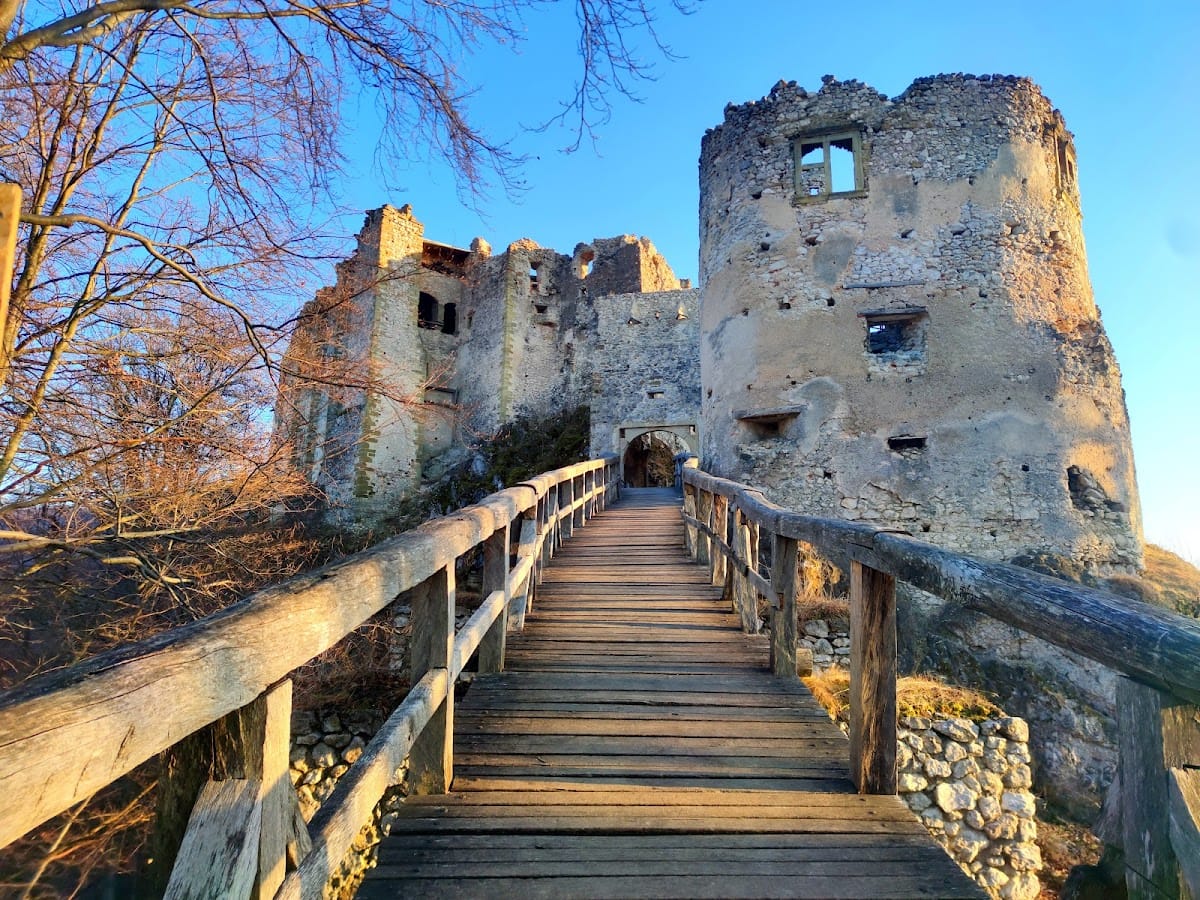
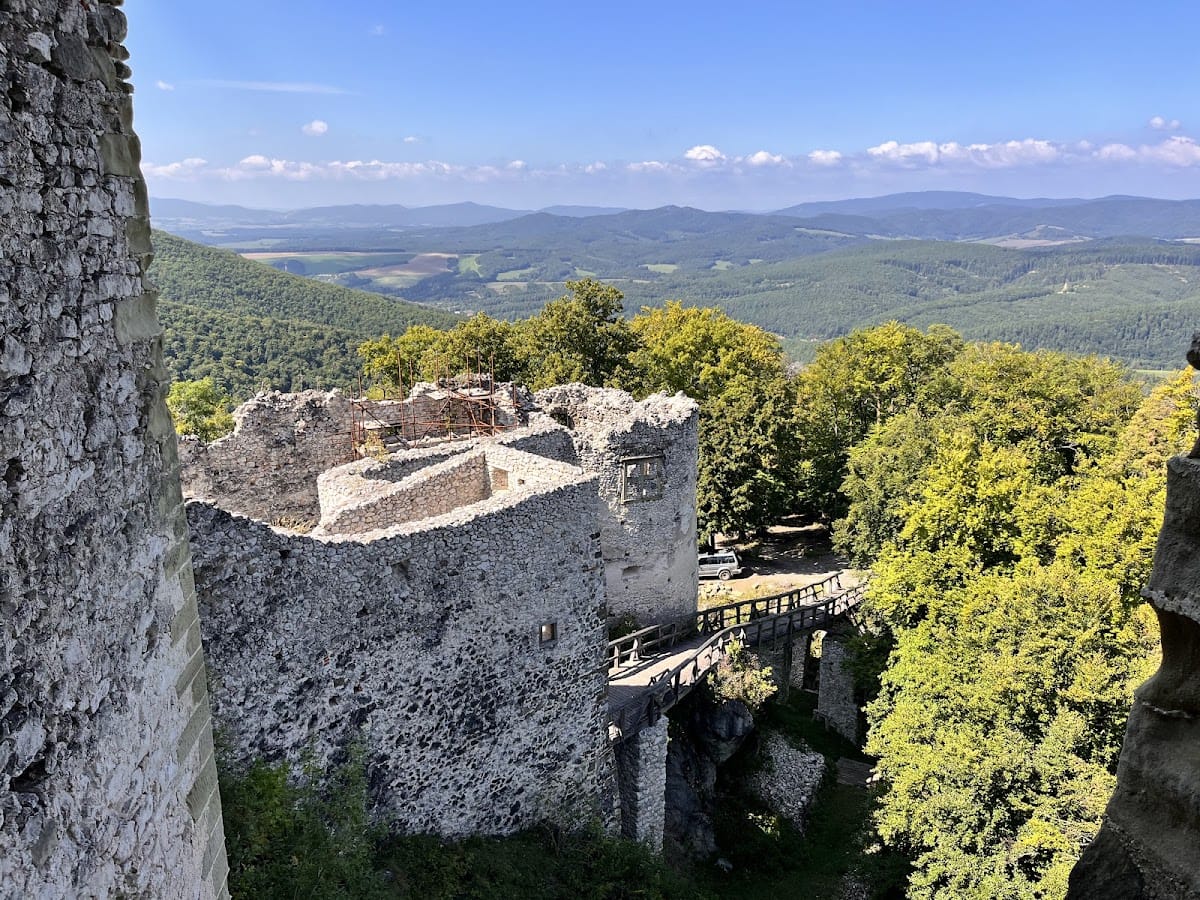
During the 16th century, further expansions were carried out by the Zay family, who built a fortified lower courtyard designed specifically to house artillery defenses. This section featured two round towers capable of mounting firearms, as well as supporting economic buildings. Access to this lower courtyard was gained via a bridge supported by stone pillars that spanned a defensive ditch, enhancing the castle’s overall security.
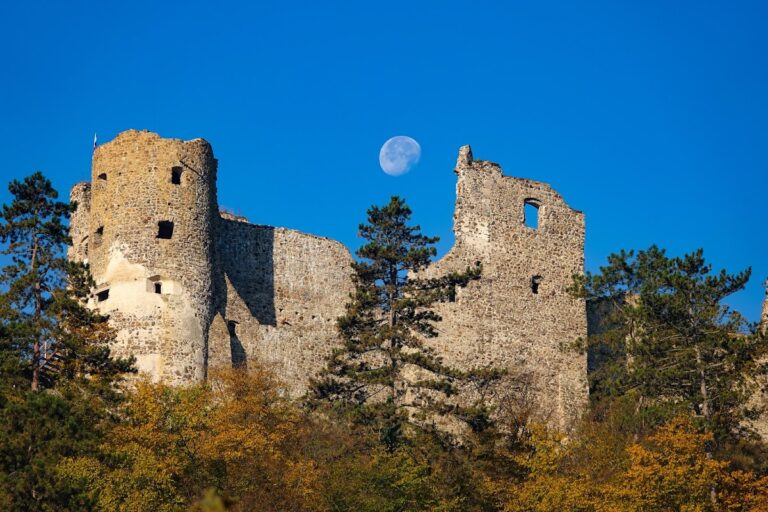
Iconographic sources and early photographs provide insight into the castle’s condition at the turn of the 18th and 19th centuries. Around 1870, photographs show the ruins lacking roofs, floors, and windows, yet drawings from a few decades later still reveal interior details, such as an altar table, the entrance to a crypt, and a polygonal Renaissance pulpit inside the chapel. These features disappeared from the ruins by the mid-20th century.
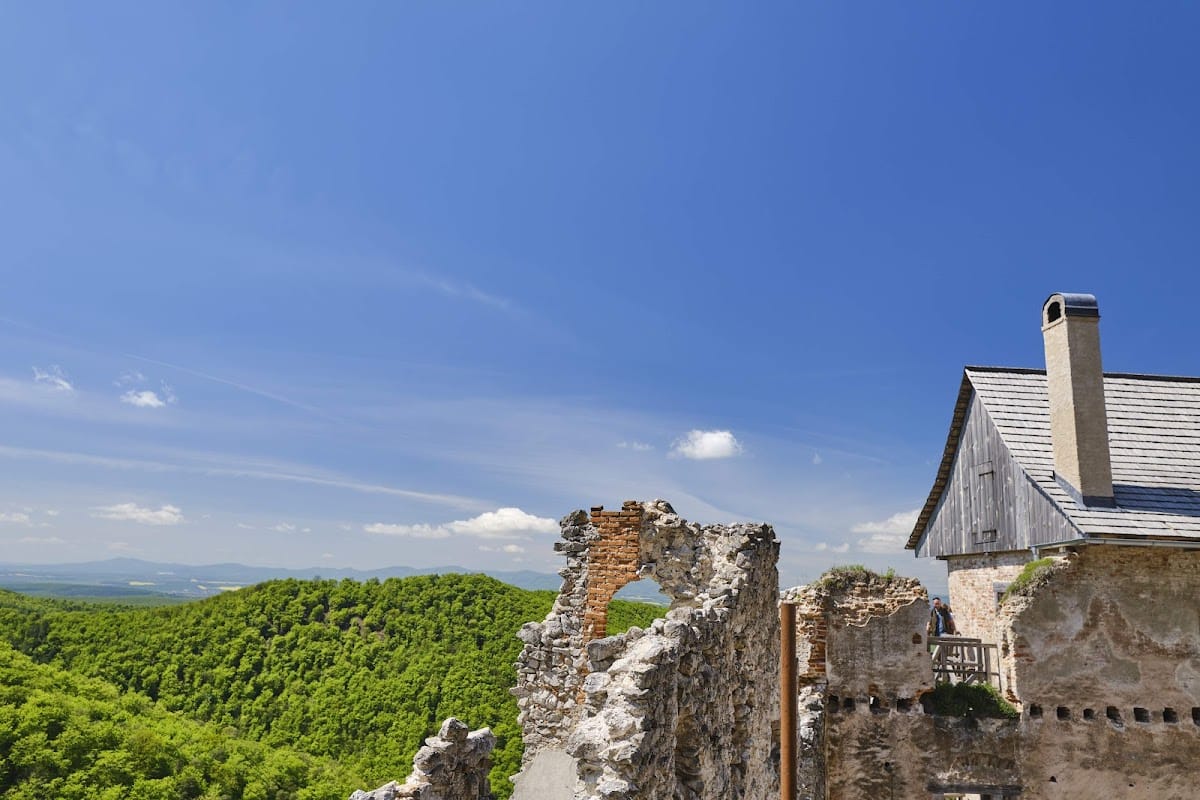
Since the 18th century, the structural remains of Uhrovec Castle have experienced progressive deterioration, with significant portions of walls collapsing due to weathering and erosion, including notable losses recorded as recently as 2004. Today, the ruins are preserved and maintained by a civic association dedicated to their care. The visible remains continue to tell the story of a mountain fortress that served noble families over several centuries, adapting to different styles and defensive needs while standing apart from the main routes and settlements below.