Tokat Castle: A Medieval Citadel in Türkiye


Site at a Glance
- Rating
- 4.2
- Popularity
- Low
- Country
- Turkey
- Primary era
- Medieval
- Eras represented
- Medieval
- Civilizations
- Byzantine
- Site type
- Military
- Remains
- Castle
On this page7 sections
History
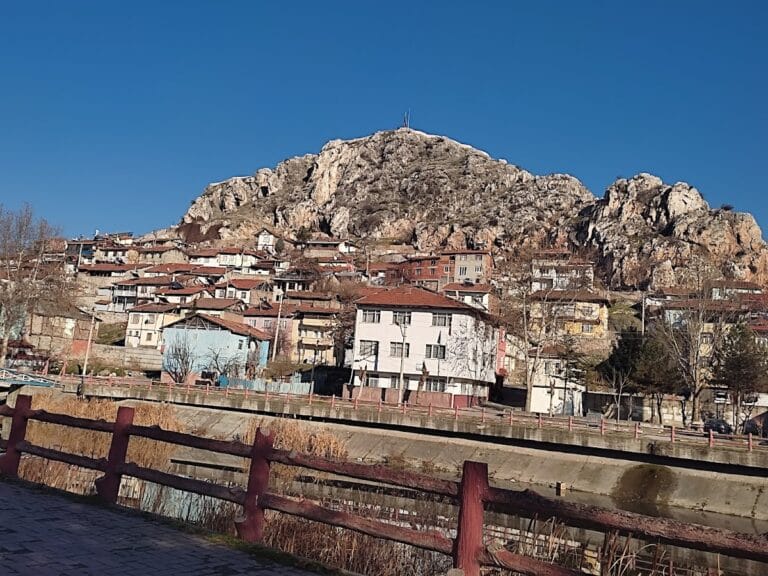
Tokat Castle is a rocky citadel in Tokat, Türkiye, built by an unknown civilization at an uncertain date. Its earliest known evidence dates broadly to the fifth or sixth century, and the fortress later developed through Byzantine, Seljuq, and Ottoman periods. Built for defense on the highest point of the city, it controlled the Kızıliniş Pass and the hill called Gıjgıj, while Tokat’s central district grew around it.
Early settlement and Byzantine rule
The castle has also been associated with the former names Eudoxia and Dokia. The identity of its earliest inhabitants is unknown, but the first recorded settlers were Christian groups who migrated from Comana Pontica, an ancient settlement and religious center in the Pontus region of Anatolia. The fortress remained under the Byzantine Empire, the medieval Roman state centered on Constantinople, until the eleventh century.
Danishmend, Seljuq, and Ottoman periods
Danishmend Gazi, the founder and ruler associated with the Danishmend dynasty, captured Tokat Castle in 1074. It then came under the Great Seljuq Empire, a major Turkic-Muslim power that controlled much of the Middle East and Anatolia in the eleventh and twelfth centuries, before later passing to the Ottoman Empire. Both the Seljuqs and the Ottomans repaired the fortress, which continued to serve primarily as a defensive installation.
The castle also functioned at times as a prison for rebels and government officials. This use gave it the alternative name Çardak-ı Bedevi, meaning “Wild Arbor.” In the early fifteenth century, Vlad III of Wallachia, known in Western tradition as Vlad the Impaler or Dracula, was briefly imprisoned there by the Ottoman sultan Murad II.
Ottoman record and modern preservation
Evliya Çelebi, a seventeenth-century Ottoman traveler and writer, visited the castle in 1656 and described its buildings, defenses, personnel, stores, water system, and prison functions. During the Turkish Republican period, the era of the Republic of Turkey established in 1923, the castle became chiefly a cultural and historical monument rather than an active defensive installation.
Modern restoration has helped preserve Tokat Castle as a historical monument. Restoration work in 2010 investigated claims of secret passages linking the fortress with Turhal Castle and Niksar Castle, but those passages remained unconfirmed.
Remains
Tokat Castle occupies a rocky peak at the highest point of Tokat. Its natural rock formations form part of the defenses, while human-built walls and rooms occupy the bedrock. The surviving remains have a medieval architectural character and include stepped inner and outer curtain walls, defensive towers, bastions, service rooms, foundations, and vaults. The steep sides made a moat unnecessary, since all four approaches were considered too difficult for one.
Walls, towers, and natural defenses
The fortress is described as having a pentagonal plan, 28 towers, and eight bastions, which are projecting defensive structures. Inner and outer curtain walls, the connecting walls of a fortification, were constructed from ashlar, or regularly cut stone, and rubble masonry made from irregular stones. They were stepped onto the underlying rock formations. The northern rocks were incorporated into the defensive design and provide access through a hollow on that side, while Evliya Çelebi’s account placed the gate toward the west. Loopholes, narrow openings used for observation or weapons, formed part of the defenses. The north and south walls suffered heavy damage through earthquakes and neglect, while the naturally formed rocky defenses have resisted natural deterioration more effectively.
Rooms, stores, and water supply
The surviving and recorded interior included numerous rooms, a castle warden’s house, a steward’s quarters, rooms for an imam and a muezzin, military-band quarters, ammunition rooms, grain stores, and a cistern for storing water. Evliya Çelebi also described storage for valuable goods from the lower city and prison accommodation for criminals and murderers. Water channels known as Ceylan Road were reached by a stone staircase of 362 steps descending toward the river. His description also mentioned Ayar Rock on the western side and Yıldırım Han Mosque in connection with the fortress. Other parts of the complex survive as foundation remains and vaults, curved structural ceilings or roofs.