Yağıbasan Medresesi (Tokat): An Early Centrally Domed Islamic School


Site at a Glance
- Rating
- 4.7
- Popularity
- Low
- Country
- Turkey
- Primary era
- Medieval
- External website
- Open
- Eras represented
- Medieval
- Civilizations
- Unclassified
- Site type
- Religious
- Remains
- Madrasa
On this page5 sections
History
Danişmendid foundation
Yağıbasan Medresesi, also called Çukur Medrese, is a 12th-century Islamic educational institution in Tokat, Turkey, built during the rule of the Danişmendid dynasty. Construction began in 1148 and ended in 1157, placing the building in the middle of the 12th century. The Danişmendids were a medieval Turkic dynasty that governed parts of Anatolia before the expansion of the Seljuk Sultanate of Rum.
Nizamettin Yağıbasan, a Danişmendid sultan and grandson of Danişmend Ahmet Gazi, commissioned the medrese. Its plan and structure correspond to those of the Yağıbadan Medrese in Niksar. Together, the two buildings are regarded as among the earliest known madrasas in Anatolia and as the first centrally domed madrasas built in the Islamic world.
Seljuk and Ottoman phases
The medrese was later repaired during the reign of İzzeddin Keykâvus II, a 13th-century ruler of the Seljuk Sultanate of Rum. During the Ottoman period, the building was used to accommodate immigrants. It survives in an altered form rather than in the condition of its original construction.
Remains
Courtyard and structural arrangement
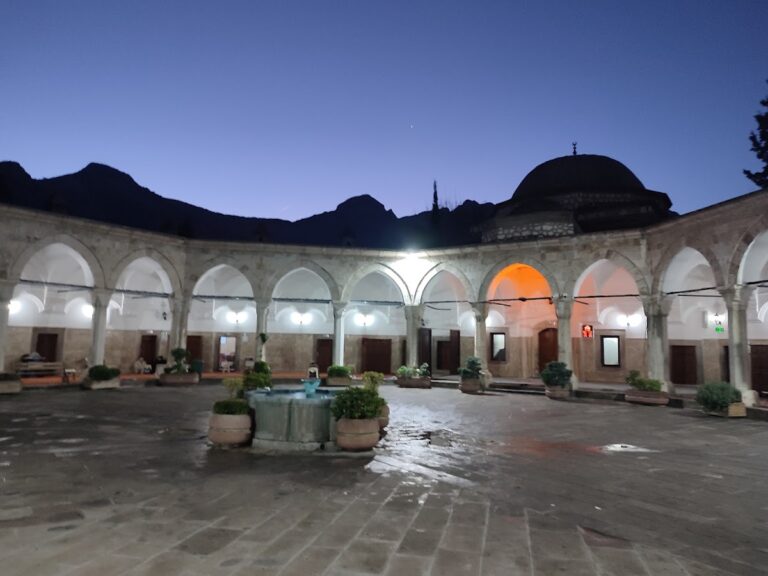
The medrese stands in Sulusokak in Tokat city center, on the south side of Takyeciler Mosque. Its simple construction uses rubble stone and has no ornamentation. Vaulted rooms and iwans, which are roofed halls open on one side, are arranged along two sides of the courtyard.
A central dome covers the courtyard. It measures approximately 14 metres across and contains an opening about 10 metres wide at its center. This arrangement gives the building its centrally domed plan and links its surviving architectural character to the Yağıbadan Medrese in Niksar.