Boyacı Hasan Ağa Mosque: An Ottoman-Era Place of Worship in Zile


Site at a Glance
- Rating
- 4.8
- Popularity
- Very Low
- Country
- Turkey
- Primary era
- Medieval
- External website
- Open
- Eras represented
- Medieval
- Civilizations
- Ottoman
- Site type
- Religious
- Remains
- Mosque
On this page7 sections
History
Boyacı Hasan Ağa Mosque is an Ottoman-era mosque in Zile, Türkiye, built during the reign of Sultan Bayezid II. It forms an architectural unit with a school attached to its southern wall, and its history reflects both its foundation in the late 15th century and a major repair in the 17th century.
Foundation and Attached School
An inscription above the school entrance states that Ali bin Sultan Hoca commissioned the school in 1497. The date places the construction of this part of the complex within Bayezid II’s reign, from 1481 to 1512. The mosque and school were designed as connected elements, with the school joined to the mosque’s southern wall.
Repair and Traditional Name
Boyacı Hasan Ağa carried out a major repair in 1640. After this intervention, the mosque became known as Boyacı Hasan Ağa Mosque, while it is also called Hızır Mosque. This traditional name comes from the belief that anyone who performs the dawn prayer there 40 times will see Hızır, a revered Islamic figure associated with divine guidance and miraculous encounters.
Remains
Prayer Hall and Exterior
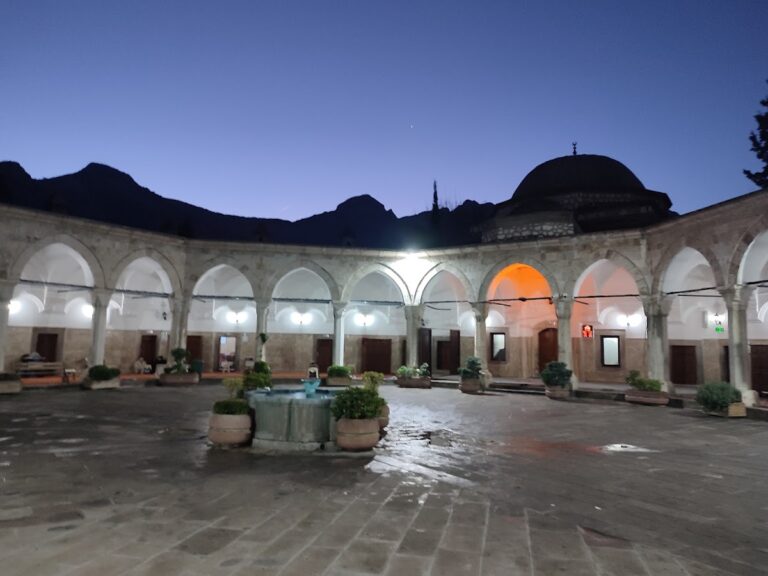
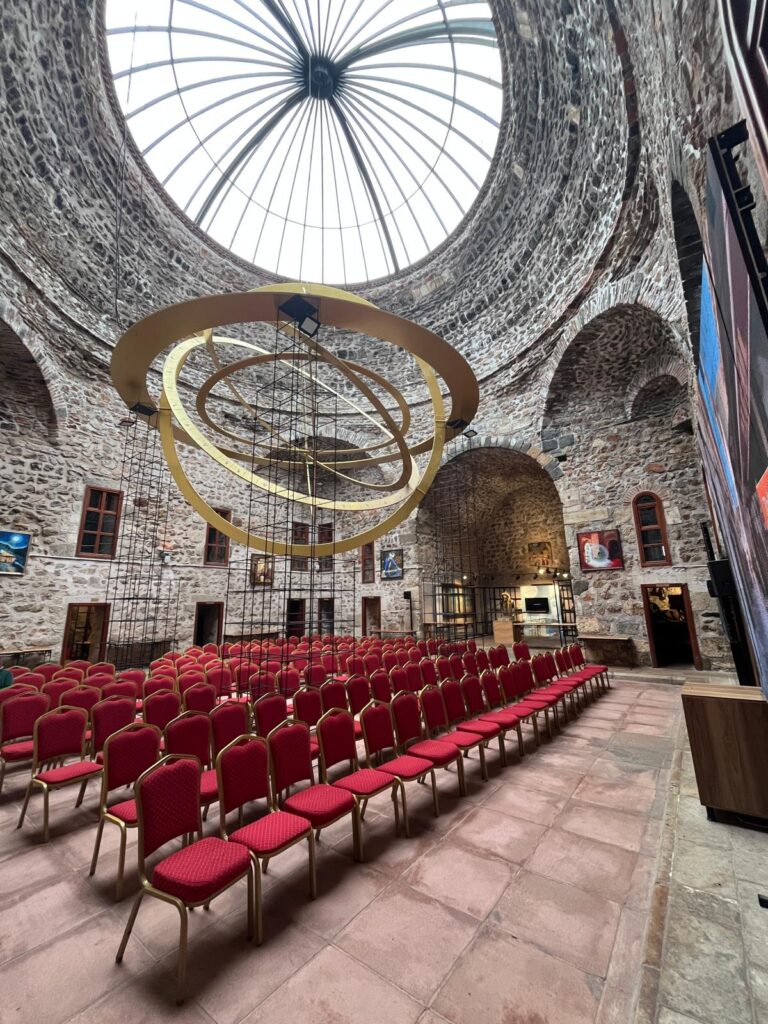
The mosque is a single-domed, single-minaret building constructed from rubble stone and brick. A round-arched doorway stands at the center of the north facade. Above the prayer hall, an octagonal drum supports the dome. The mihrab, the niche indicating the direction of Mecca, projects slightly from the facade and is divided into five sections. The original final-congregation area has not survived in its original form. A later replacement on the north facade is made of concrete and covered by a tiled lean-to roof.
Inside, the wooden minbar, the elevated pulpit used for the sermon, stands west of the mihrab. A preaching platform, a smaller stand for religious instruction, occupies the southeast corner. Both are later additions without distinctive features.
Minaret
The minaret is attached to the mosque’s exterior wall at the northeast corner. Its square base is built of cut stone with brick joints, while the shaft is cylindrical and made of brick. A single balcony forms the upper stage, and the minaret is finished with a lead-covered cap topped by a finial. The original minaret did not survive in its original form.
Dome Decoration
A wooden central boss occupies the exact center of the dome and serves as the mosque’s principal decorative feature. Its outer border carries Quranic verses. Roses and flowers arranged in vases fill the middle and inner borders. The painted decoration is considered to have been added after the mosque was built.