Tregeseal East Stone Circle: A Prehistoric Ritual Monument in Cornwall
Site at a Glance
- Popularity
- Medium
- Country
- United Kingdom
- Primary era
- Bronze Age
- Eras represented
- Stone Age, Bronze Age
- Civilizations
- Unclassified
- Site type
- Religious
- Remains
- Sanctuary
On this page7 sections
History
Prehistoric setting
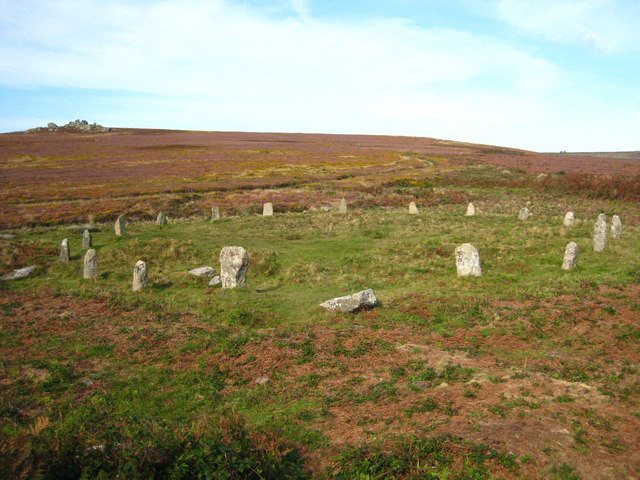
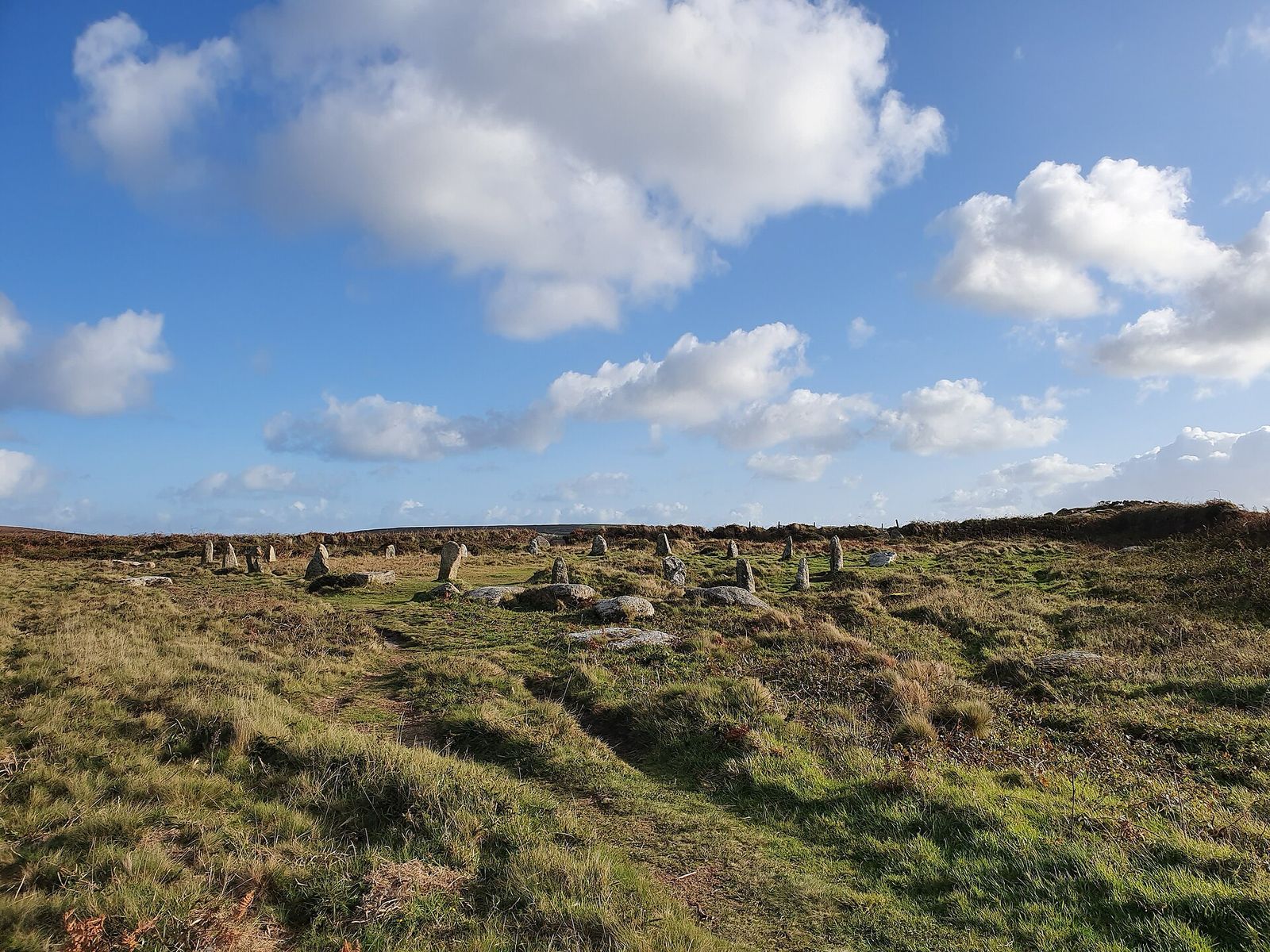
Tregeseal East stone circle is a prehistoric monument near St Just in west Cornwall, United Kingdom. Built around 2000 BC, it dates to the Late Neolithic or Early Bronze Age, successive periods of prehistory. The circle formed part of a wider ritual landscape on the slopes south of Carn Kenidjack. It was the eastern member of a possible east-west group of three circles, although the westernmost feature may instead have been a hut circle, the circular remains of a prehistoric dwelling. The group has been compared with the ritual area around the Merry Maidens, another prehistoric stone circle in Cornwall.
Records and later changes
In 1754, the Cornish antiquarian William Borlase counted 17 upright stones at Tregeseal East. William Cotton illustrated the circle in 1827, when the neighboring features were more clearly visible. In 1872, William Copeland Borlase recorded 15 standing stones and made a plan of their positions. Rebuilding and restoration over the centuries altered the circle’s original arrangement.
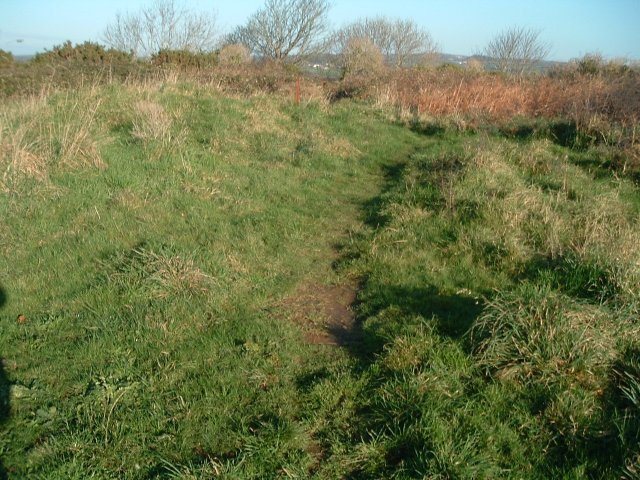
Royal Air Force aerial photographs revealed traces of the westernmost feature in 1947. It was destroyed in 1967 and can now be identified only in aerial imagery.
Remains
The stone-circle group
Tregeseal East
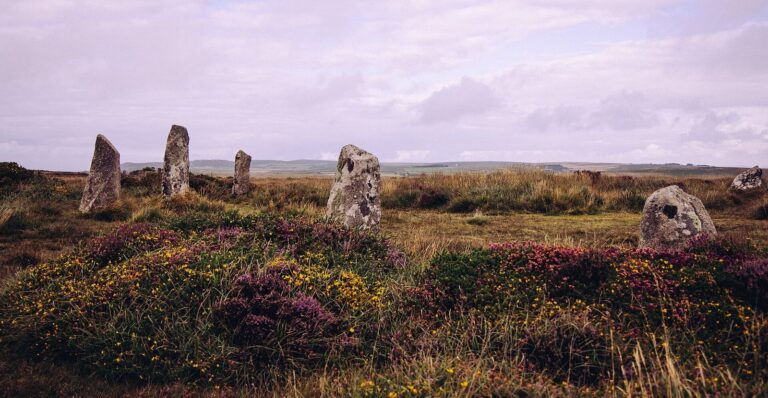
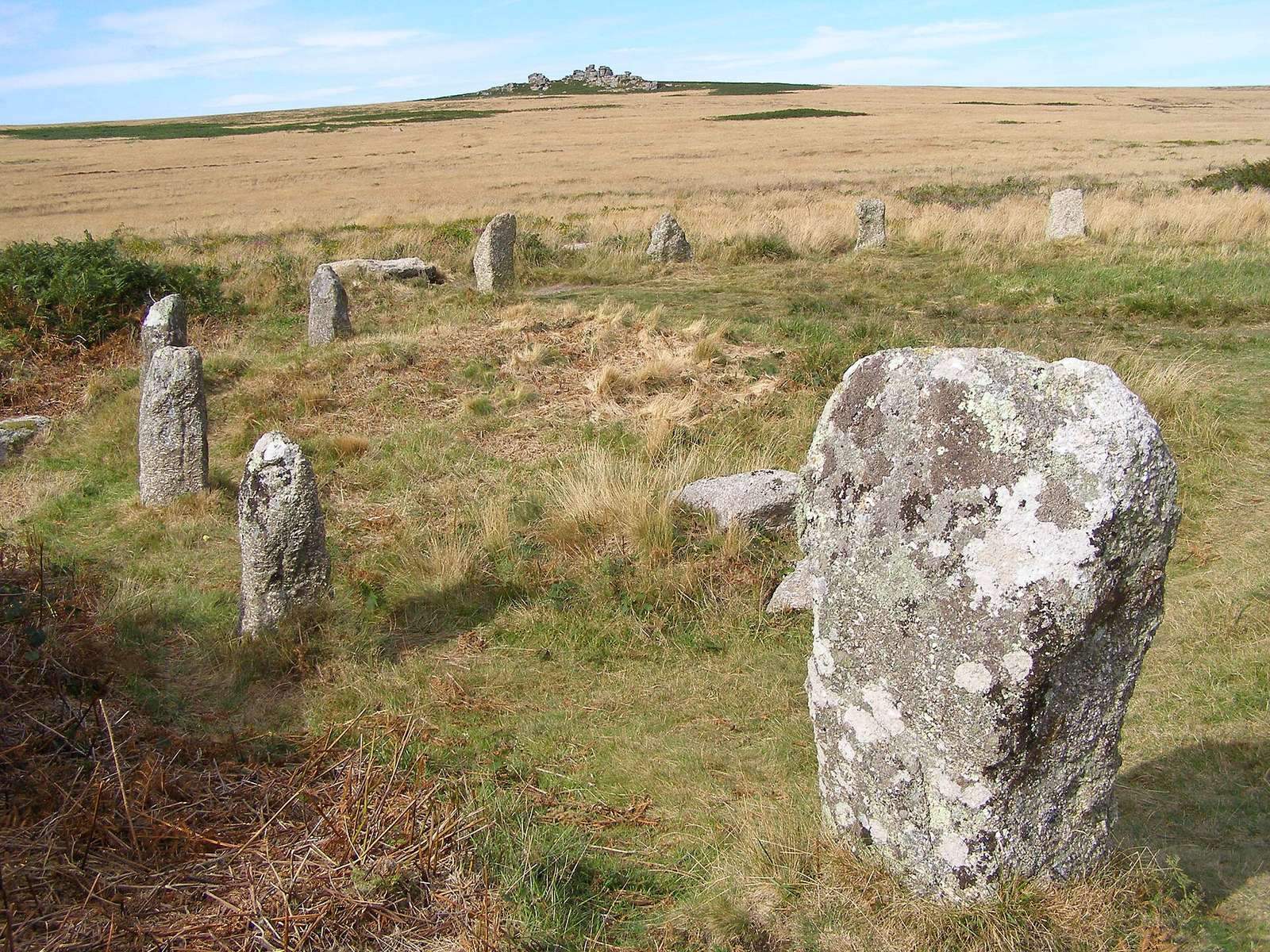
The circle stands on a hillside south of Carn Kenidjack, about 1 km east of the hamlet of Tregeseal. Its 19 granite blocks, each 1 to 1.4 m high, form an approximate circle about 21 m across. Two stones are probably missing; the circle once had 21. It is heavily restored, and only the stones in its eastern half may still occupy their original positions. The Cornish name Meyn an Dons, meaning “Stones of the Dance,” is also rendered in English as the Dancing Stones.
Western features
The middle circle was originally the largest of the three. It contained ten stones in 1885, but only one remains standing. If the westernmost feature was a circle, it was much smaller than the other two. Its traces may belong to a small stone circle or to a prehistoric hut circle.