Tregiffian Burial Chamber: A Prehistoric Entrance Grave in Cornwall
Site at a Glance
- Popularity
- Medium
- Country
- United Kingdom
- Primary era
- Bronze Age
- Eras represented
- Bronze Age
- Civilizations
- Unclassified
- Site type
- Burial
- Remains
- Tomb
On this page7 sections
History
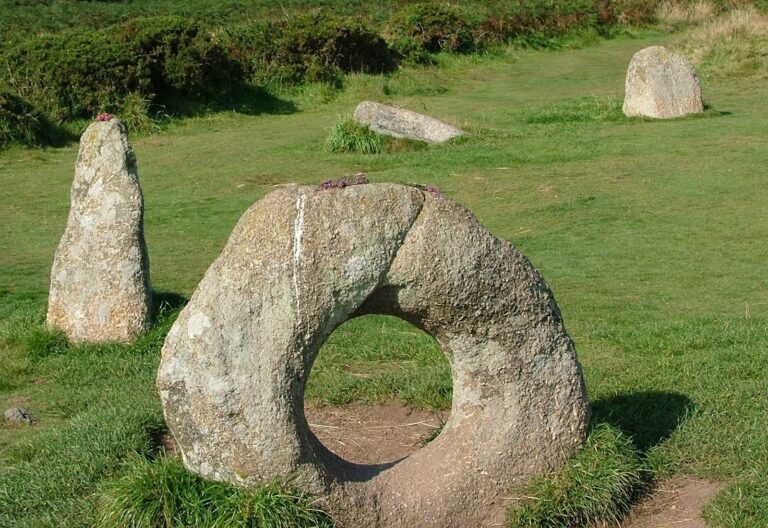
Tregiffian Burial Chamber is a prehistoric tomb near Penzance in Cornwall, United Kingdom. It is an entrance grave, a megalithic tomb reached through a passage into a burial chamber, built around 1900 BC during the late Neolithic or early Bronze Age. This rare tomb type is found chiefly in the Isles of Scilly and the Penwith peninsula. The nearby Merry Maidens stone circle and other ancient sites suggest that Tregiffian may have belonged to a wider sacred precinct.
Construction and Bronze Age use
The tomb was reused and altered during the Bronze Age. Its burials suggest that it may have served as a shared grave for a community over an extended period.
Road building and archaeological study
Construction of the B3315 cut into the monument in 1846. William Copeland Borlase, a Cornish antiquarian and archaeologist, first excavated the tomb in 1871. In 1932, its form was described as a type of megalithic grave chronologically between a dolmen, made from upright stones supporting a capstone, and a cist, a small stone-lined burial chamber. Later interpretations treated passage tombs as a form of dolmen distinguished especially by their entrance. Further archaeological work took place in 1967–68, followed by comprehensive excavations in 1972.
Remains
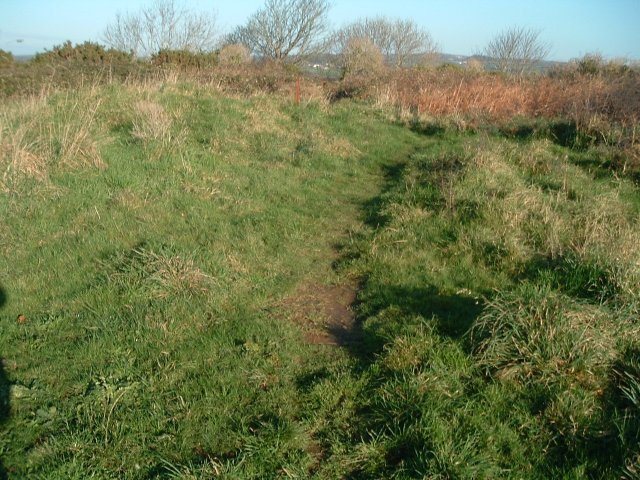
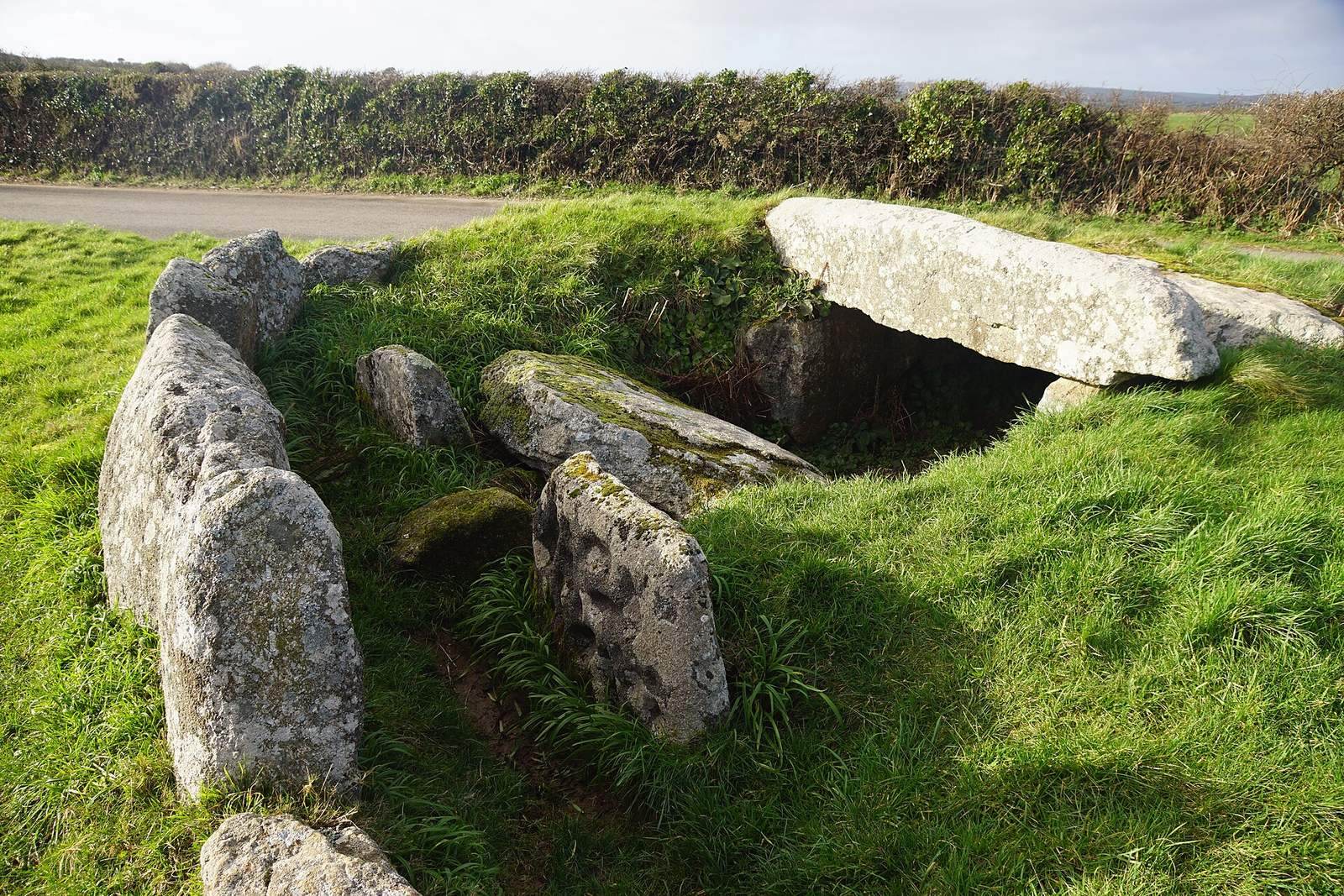
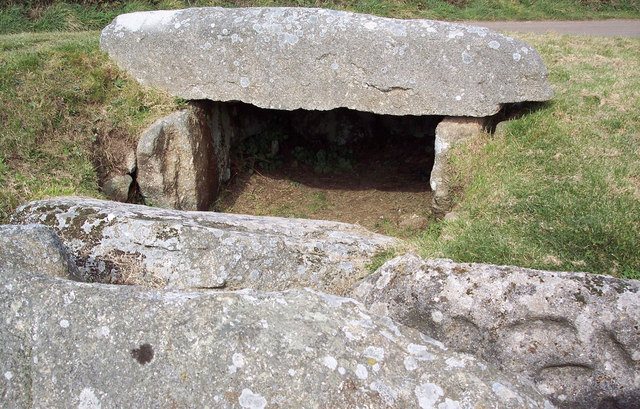
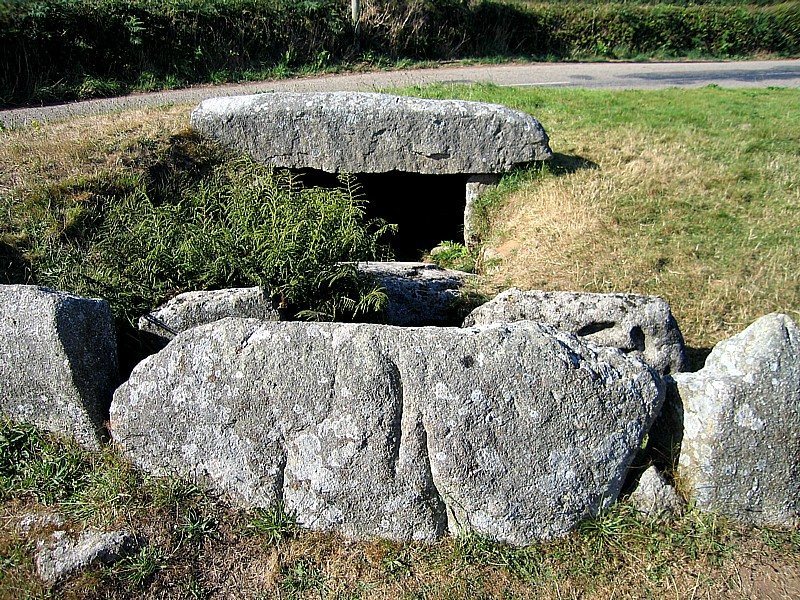
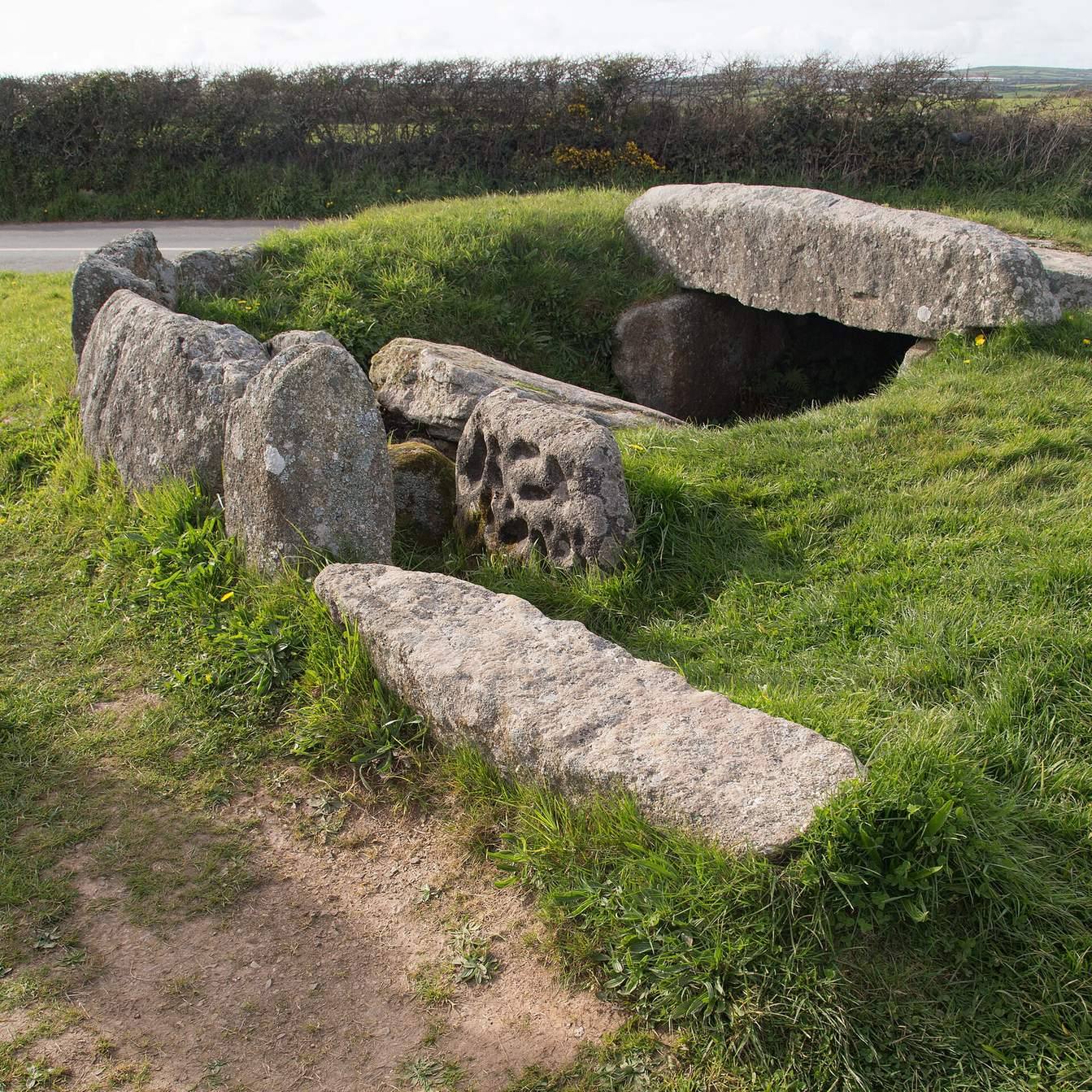
The surviving tomb comprises an earthen mound, a stone-lined passage and a burial chamber, with the entrance exposed. The mound and its stonework are incomplete.
Mound and passage
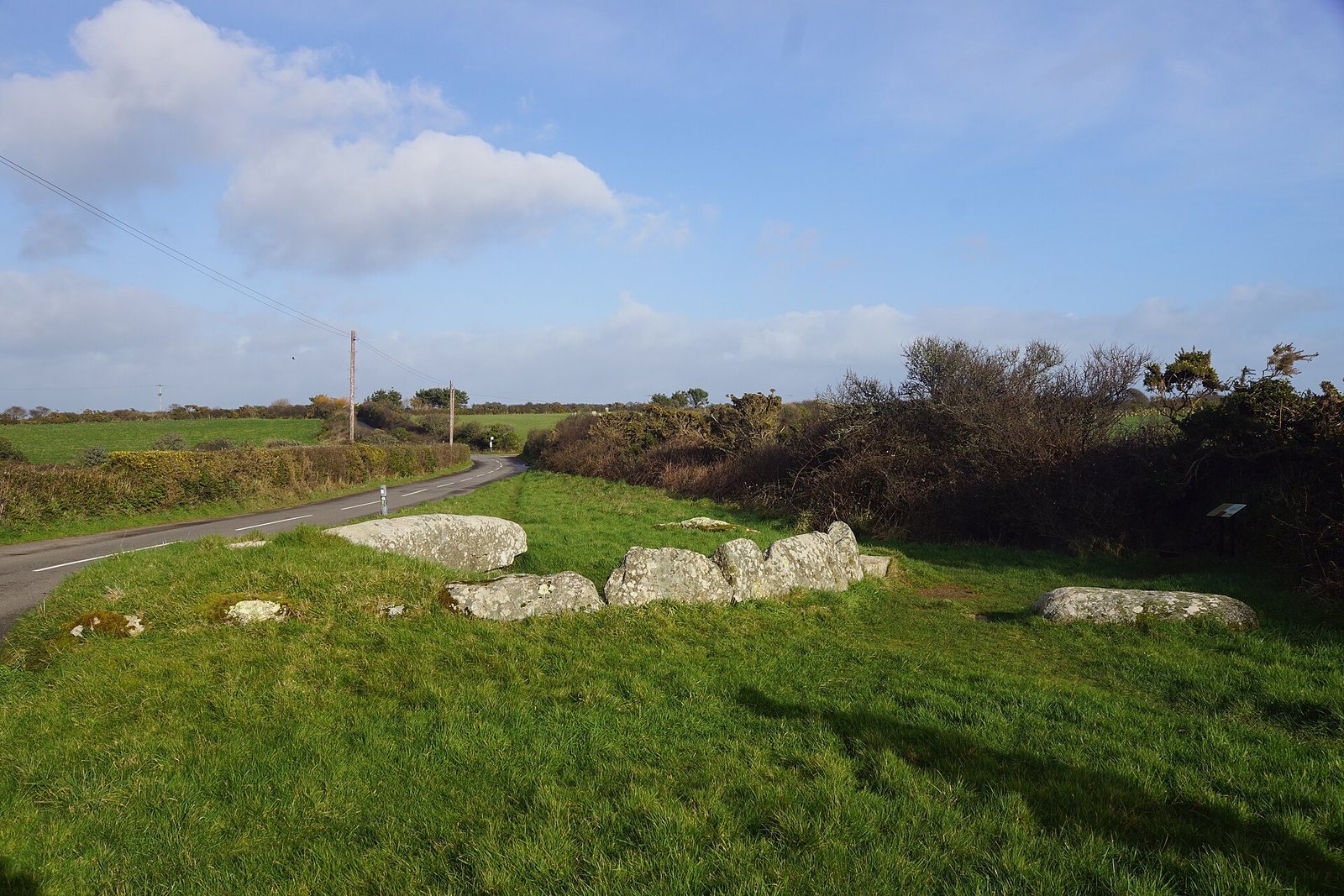
Kerb stones originally encircled the mound, and some remain in a quarter-circle on its southwestern side. Four stones, each about 3 metres long, covered the passage from the mound’s edge to the chamber. Three of the large covering stones remain in their original positions; the fourth has fallen and lies at the passage entrance. The B3315 partly covers the monument, and its construction removed the northwestern part of the mound.
Chamber and entrance
The tomb measures 4.9 metres long, up to 1.9 metres wide and 0.9 metres high. The chamber extends 4 metres inward and is slightly wider at its northern end. Its south-facing entrance is 0.8 metres wide and flanked by two stones. The eastern portal stone bears 25 cup marks, small hollows carved into stone: 13 circles and 12 elongated ovals. It once lay across the entrance as a barrier. A replica now stands there, while the original is held by the Cornwall Museum and Art Gallery in Truro, formerly the Royal Cornwall Museum. A separate stone outside the chamber also blocked the entrance during the Bronze Age.
Burial evidence
Excavations found a second cup-marked stone on the chamber floor, along with two small pits. One pit contained remains of an early Bronze Age cremation. Other finds included flints, ash, bone fragments and urns; the contents of the urns were dated to about 1900 BC.